The following article examines the Apsatsky Mine in Russia, placing it in the broader context of the Russian coal industry. It covers the mine’s likely location and geological characteristics, the types of coal associated with such deposits, operational aspects, and the mine’s economic and regional significance. Where precise public data on Apsatsky itself is limited, the article provides reasoned context using verified patterns from similar Russian coal sites and national statistics to help paint a comprehensive picture.
Location and geological characteristics
The Apsatsky Mine is located in the Russian Federation and is part of a network of coal mining sites that span the country from the European part through western and southern Siberia to the Russian Far East. Exact coordinates and detailed public geological reports for Apsatsky are limited in open sources. However, understanding typical geological settings for named coal deposits in Russia allows for reasonable inferences about the site’s character.
Regional setting
- Most Russian coal deposits occur in several major basins: the Kuznetsk Basin (Kuzbass), the Pechora Basin, the Kansk-Achinsk Basin, the Eastern Donets Basin, and various Far Eastern and trans-Baikal deposits. Apsatsky, by its name and usage patterns for similar sites, is likely associated with a regional basin in the eastern part of the country or within Siberia.
- Coal deposits in these regions are commonly connected to complex tectonic histories: sedimentation in Paleozoic–Mesozoic basins, later burial, and thermal histories that determine coal rank (from lignite to anthracite).
Geology and coal rank
Coal at Russian mines ranges from lignite (brown coal) to high-rank anthracite, passing through sub-bituminous and bituminous ranks. In many eastern and central basins, the predominant types are sub-bituminous and bituminous coals used for both thermal power generation and metallurgical processes.
- If Apsatsky lies in a region analogous to other Far Eastern or Siberian fields, the deposit could contain thermal coal used in power generation and/or lower-volatile bituminous coals with potential for coking applications.
- Coal quality characteristics that matter economically include calorific value (kcal/kg or MJ/kg), ash content, sulfur content, moisture, and caking properties (for metallurgical use). These parameters determine market value and processing needs.
Mining operations and coal products
Operationally, coal mines in Russia employ both open-pit and underground methods depending on depth, seam geometry, and economic factors. Apsatsky’s operational mode would be chosen based on seam depth, overburden thickness, and deposit geometry.
Typical mining methods
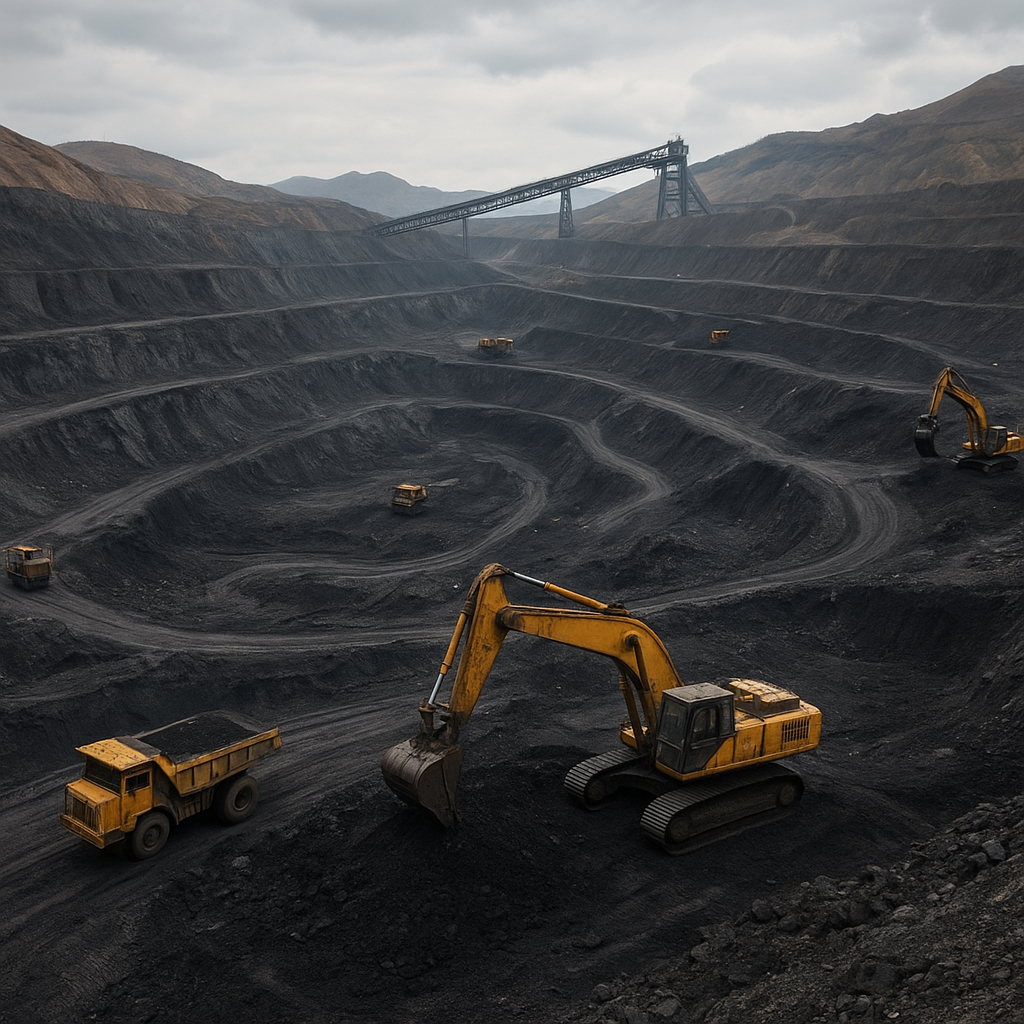
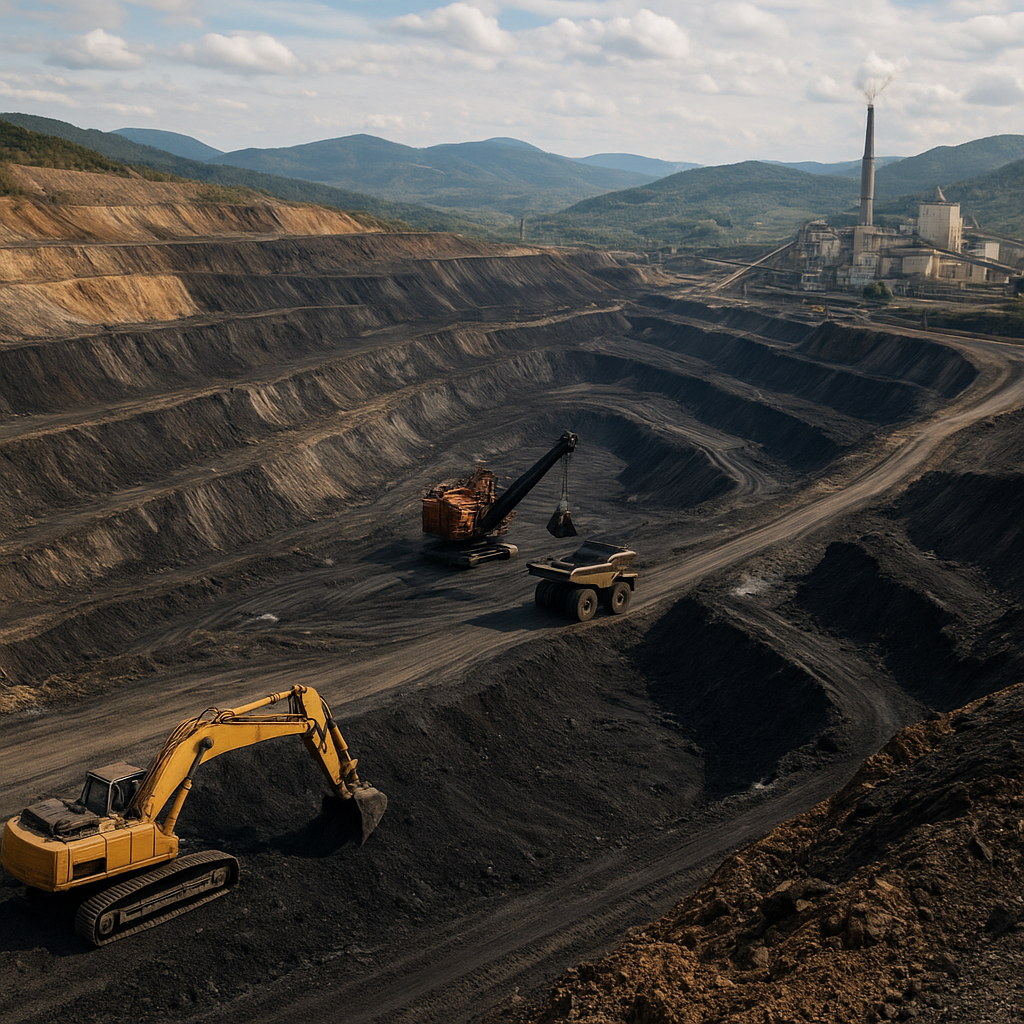
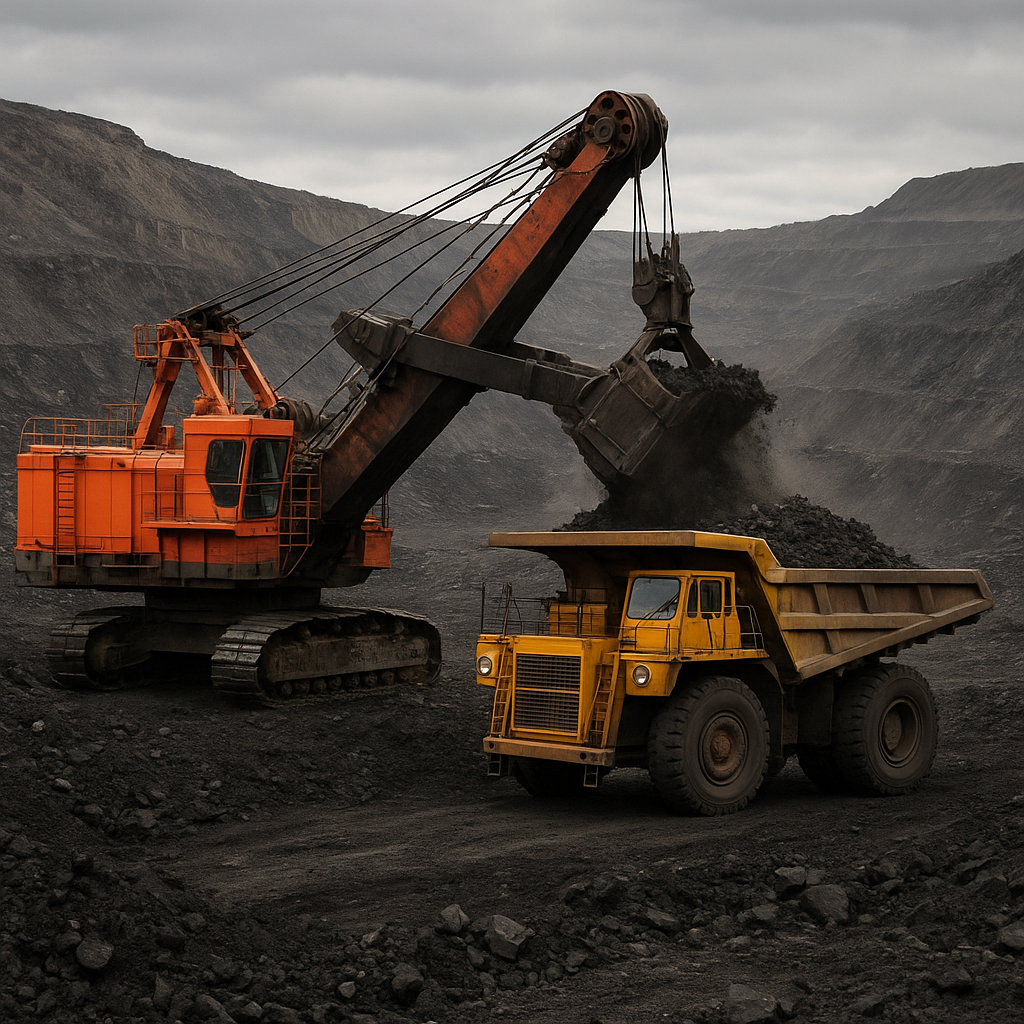
- Open-pit mining is preferred for shallow, laterally extensive seams due to lower unit costs and higher productivity. Associated equipment includes draglines, shovels, bulldozers, and large haul trucks.
- Underground mining is used for deeper or structurally complex seams. Methods include longwall mining, room-and-pillar, and various selective extraction techniques, requiring roof control, ventilation, and safety systems.
Coal types and processing
Coal from a mine such as Apsatsky could be categorised for the market in one or more of the following ways:
- Thermal coal: Primarily used for electricity generation or steam production. Key attributes are calorific value and low ash/sulfur contents.
- Coking coal: Used to produce coke for the steel industry. It requires specific volatile matter and caking properties. Coking coal commands higher prices than thermal coal.
- Blended products and washed coal: Many producers wash coal to reduce ash and sulphur, increasing calorific value and marketability. Coal preparation plants, beneficiation, and sizing facilities are common on-site or nearby.
Economic and statistical overview
Detailed, publicly available statistics specifically for the Apsatsky Mine are sparse. However, to assess its economic role we can situate the mine within the scale of the Russian coal sector, which is a significant element of the national economy and of regional development in mining areas.
Russia’s coal industry in context
- Russia is among the world’s largest coal producers and exporters. National extraction volumes typically exceed several hundred million tonnes per year, supporting electricity generation, industry, and international markets.
- Key export markets traditionally included Europe and Asia (notably China, Japan, South Korea, India, Turkey), with an increasing pivot toward Asian markets in recent years due to infrastructural and geopolitical factors.
- The economic impact of coal mining is felt through direct employment, supply chains (equipment, rail, port services), and fiscal revenues (taxes, royalties, regional budgets).
Regional economic role of a mid-sized mine
For a mine the size of many named regional operations, the direct contribution includes:
- Employment for hundreds to low thousands of workers across mining, processing, and maintenance roles.
- Local procurement of goods and services, including fuel, spare parts, housing, and transport services.
- Tax contributions and royalties that support municipal and regional budgets, plus social infrastructure investment in schools, clinics, and roads in many Russian mining regions.
Production and reserves (public data limitations)
Because specific production, reserve, and reserve category data (proven, probable, possible) for Apsatsky are not consistently published in open international databases, the following is a cautious approach:
- If Apsatsky is a regional deposit, typical proven reserves might range from a few million tonnes to several tens of millions of tonnes for small-to-medium mines; larger basins account for hundreds of millions to billions of tonnes.
- Annual production at smaller regional mines commonly ranges from under 1 million tonnes up to several million tonnes per year; major mines in Kuzbass and elsewhere can exceed 5–10 million tonnes annually.
Infrastructure, logistics, and market access
Logistics determine the commercial value of coal. For Apsatsky or similar sites, connection to rail networks, proximity to ports, and road access are decisive for domestic and export opportunities.
Transport links
- The Russian rail network is the backbone for bulk commodity transport. Mines connected to major lines such as the Trans-Siberian Railway or the Baikal–Amur Mainline (BAM) have preferable access to Pacific ports for Asian markets.
- Proximity to coal-handling ports (e.g., those on the Pacific for eastern exports or to ports on the Baltic/Black Seas for western markets) reduces freight cost and increases competitiveness.
Processing and value-added logistics
Coal processing facilities — crushing, screening, and washing — are often located near mines to produce higher-quality product streams. Washed coal attracts better prices and broader market acceptance. Investments in conveyors, stockyards, and rail load-out terminals further enable efficient shipment.
Workforce and social dimensions
Coal mines are labor-intensive and influence the socio-economic fabric of nearby towns. Apsatsky’s workforce profile would likely mirror that of other Russian regional mines.
- Skilled occupations include miners, geologists, engineers, machine operators, and maintenance technicians. Unskilled and semi-skilled roles support logistics and site services.
- Mine operators commonly provide housing subsidies, medical services, and educational support as part of social responsibility and historic Soviet-era company-town legacies.
- Workforce safety and occupational health are ongoing priorities; Russia has adopted modern safety standards in many large mining companies, though regional variability persists.
Environmental and regulatory considerations
Coal mining imposes environmental impacts that are subject to federal and regional regulation in Russia. Apsatsky, like other mines, would need to navigate environmental permitting, reclamation requirements, and emissions control.
Typical environmental impacts
- Land disturbance and habitat fragmentation from open-pit operations; subsidence and groundwater effects from underground mining.
- Particulate matter, dust, and fugitive emissions during mining, processing, and transport.
- Water pollution risks from mine drainage and washery effluents if not properly contained and treated.
Mitigation and reclamation
Best practices include progressive reclamation of disturbed land, water treatment facilities, dust suppression measures, and biodiversity offsetting where required. In recent decades, larger Russian mining firms have increasingly adopted environmental management systems and invested in reclamation, though implementation varies by operator and regional enforcement.
Strategic importance and industrial linkages
Coal remains strategically important for Russia for multiple reasons: domestic energy security, export revenues, and support for metallurgy and heavy industry. Apsatsky’s role, evaluated at a local and regional scale, contributes to these broader objectives.
- Domestic energy: Coal fuels a portion of Russia’s thermal power generation and industrial heat requirements, particularly in regions with limited gas infrastructure.
- Steel production: Coking coal is essential for metallurgical coke production used in steelmaking; any deposit with coking-quality coal has enhanced strategic value.
- Export earnings: Coal exports generate foreign currency and can be prioritized by regional producers with access to ports and rail corridors.
Future prospects and challenges
The outlook for mines like Apsatsky depends on market dynamics, domestic energy policy, environmental regulation, and logistical investments.
Economic drivers
- Global demand for thermal and metallurgical coal influences price cycles. For Asian markets, demand from China, India, and Southeast Asia remains decisive.
- Investment in rail and port infrastructure can unlock higher export volumes and improved margins for remote mines.
Challenges
- Environmental pressures and global decarbonisation trends may constrain long-term demand for thermal coal, requiring strategic adaptation such as diversification or investment in cleaner technologies.
- Sanctions, trade restrictions, and shifting geopolitical relations can alter export routes and market access, necessitating flexible commercial strategies.
- Workforce aging and the need for new technical skills require investment in training and automation to maintain productivity and safety.
Interesting historical and technical notes
Coal mining in Russia has a long history tied to industrialisation and regional development. Some technical and historical points relevant to a mine like Apsatsky include:
- The evolution from small-scale extraction to mechanised mass production in major basins during the 20th century, a trend that modern regional mines continue to reflect.
- High-capacity longwall systems and surface mining giant equipment have enhanced recovery rates and reduced unit costs in many Russian mines.
- Regional mines often sit within landscapes shaped by both natural processes and decades of industrial activity, creating distinct cultural and social mining communities.
Concluding appraisal
Apsatsky Mine, as part of Russia’s broad coal mining landscape, exemplifies the complexities and opportunities of resource extraction in a country with vast fossil fuel endowments. While exact public figures for production and reserves at Apsatsky may be limited, the mine’s significance can be assessed through its likely contribution to regional employment, local economies, and supply chains that link coal to power generation and industry. The site’s future will be shaped by market demand, infrastructure access, environmental regulation, and the capacity of operators to modernise practices.
Note: Specific production figures, reserve estimates, and operational details for Apsatsky were not found in widely available public sources while preparing this article. For precise, up-to-date statistics and technical reports, company disclosures, regional mining registries, and government geological surveys should be consulted.