The Majuba Coal Mine and its associated energy complex occupy an important place in South Africa’s coal-rich Highveld region. This article examines the mine’s location, geological setting, the type of coal extracted, operational and economic details, statistical context within South Africa’s coal economy, and broader industrial, environmental and social implications. Throughout the text, key concepts are highlighted to guide readers through the most important aspects of the Majuba site and its significance for regional power generation and the national energy mix.
Location and Geological Setting
The Majuba mining and power complex is located in the Mpumalanga province of South Africa, in the central Highveld coalfields that form the backbone of the country’s coal industry. The broader Highveld region contains some of the most extensive and economically important coal seams in South Africa. The Majuba site sits geographically near towns and transport routes that facilitate coal dispatch to power plants and export terminals.
The coal seams exploited in this area belong to the Karoo sedimentary basins formed during the Permian and early Triassic periods. These deposits are part of the Ecca and Beaufort groups of the greater Karoo Supergroup and are characterized by thick, laterally extensive layers of carbon-rich material. As a result the area yields coal of the rank typically used for combustion in large thermal power stations.
Majuba’s proximity to essential infrastructure (rail lines, major roads and the adjacent Majuba Power Station) makes it a strategically positioned mining site. The combination of geology and logistics is a primary reason why coal operations in this locale are economically viable and integral to the regional energy system.
What Is Mined: Coal Type and Quality
The principal product from the Majuba mine is thermal coal, used almost exclusively for electricity generation rather than metallurgical processes. This coal is generally medium to high energy content bituminous coal that performs well in pulverized fuel and circulating fluidized-bed boilers typical of South African power stations.
- Majuba supplies coal qualities tailored to large utility boilers: calorific values are commonly in the range expected for Highveld coal (suitable for electricity production).
- A focus on consistent particle size and ash content is typical for production destined for nearby power plants; blending regimes at the power station manage variability in calorific value and ash.
- Moisture, sulfur and ash contents vary by seam and working area, and these parameters are managed through beneficiation and operational adjustments to maximize thermal efficiency and minimize emissions.
The coal extracted at Majuba is therefore a cornerstone fuel for baseload power generation in South Africa, delivering the heat content required by large-scale turbines while being compatible with the existing boiler fleet at the adjacent Majuba Power Station and other consumers.
Mining Methods, Operations and Logistics
Operations at Majuba employ mining methods suited to the seam geometry and overburden conditions in the Highveld. The dominant approach in the region—reflected at Majuba—is opencast (open-pit) mining for shallow, laterally extensive seams, often supplemented by smaller-scale underground workings where seams are deeper or where opencast is impractical.
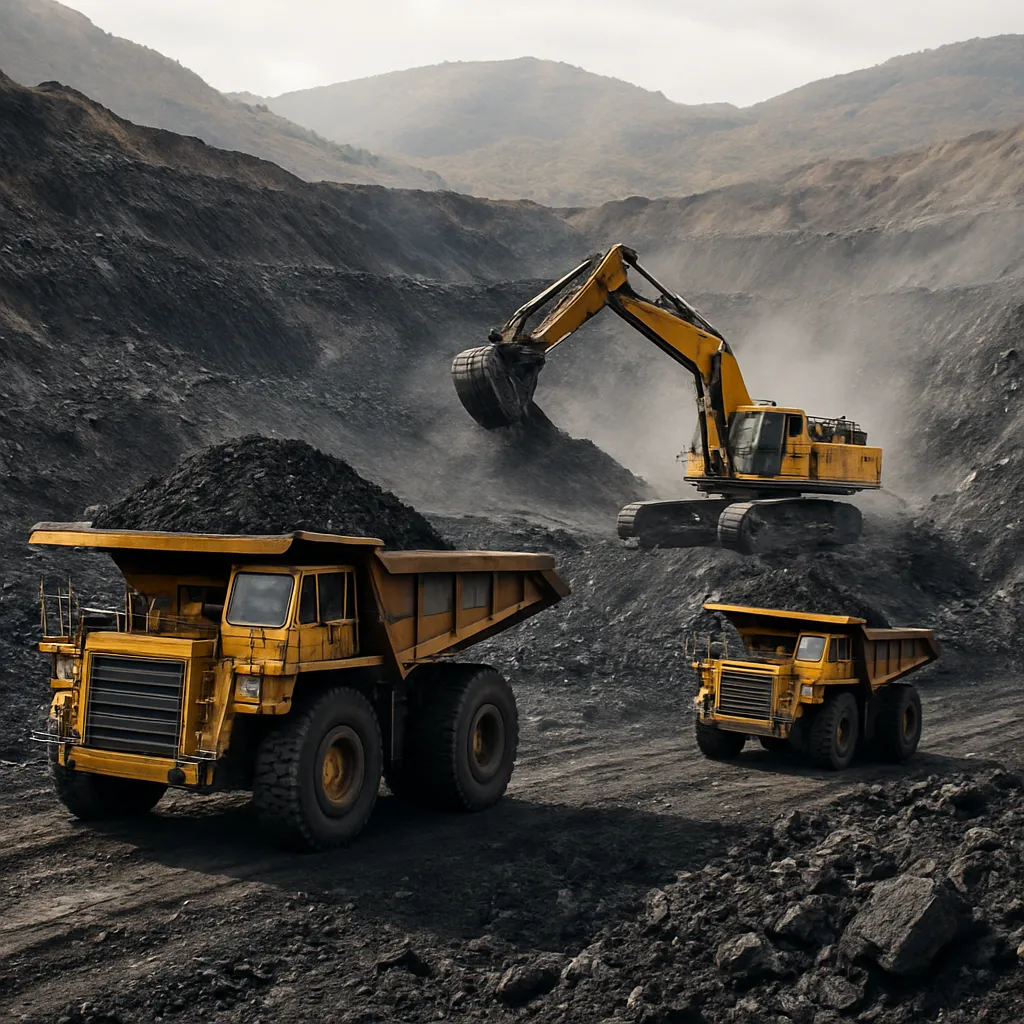
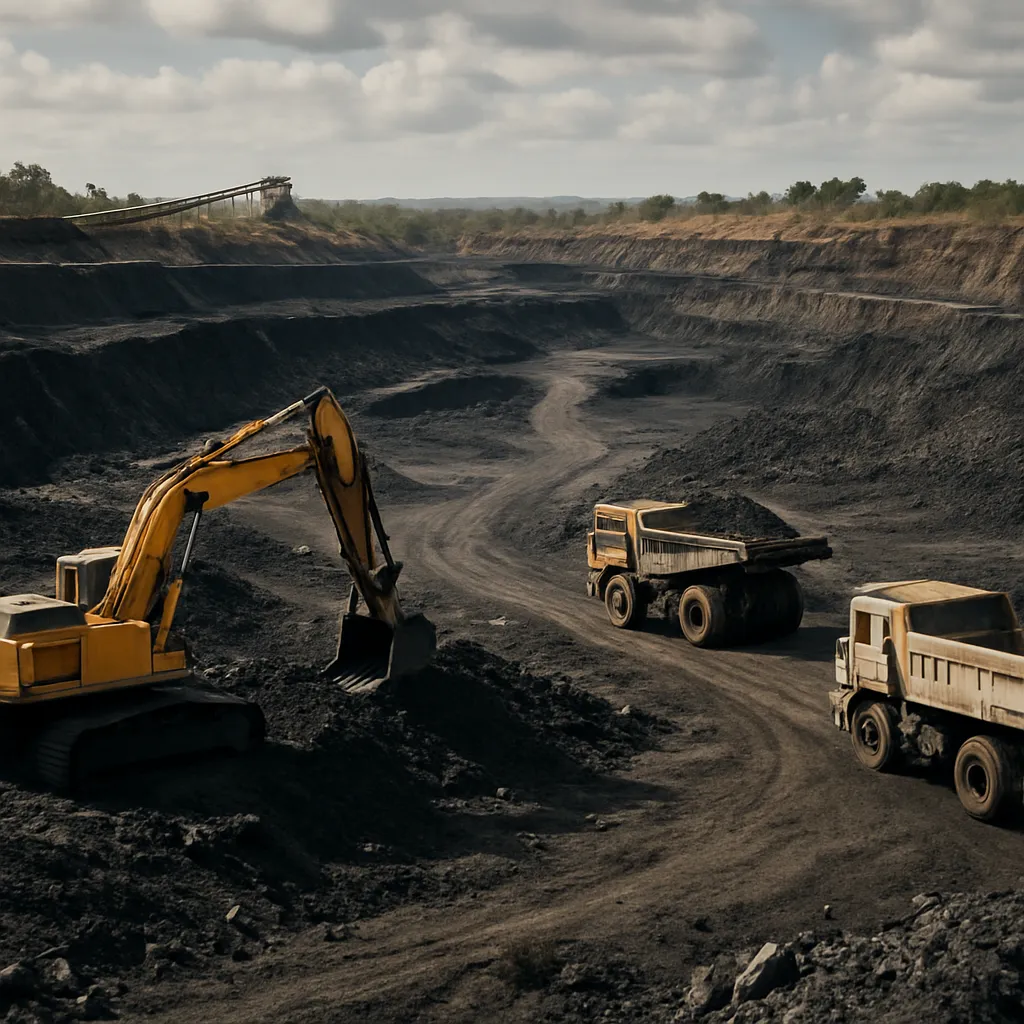
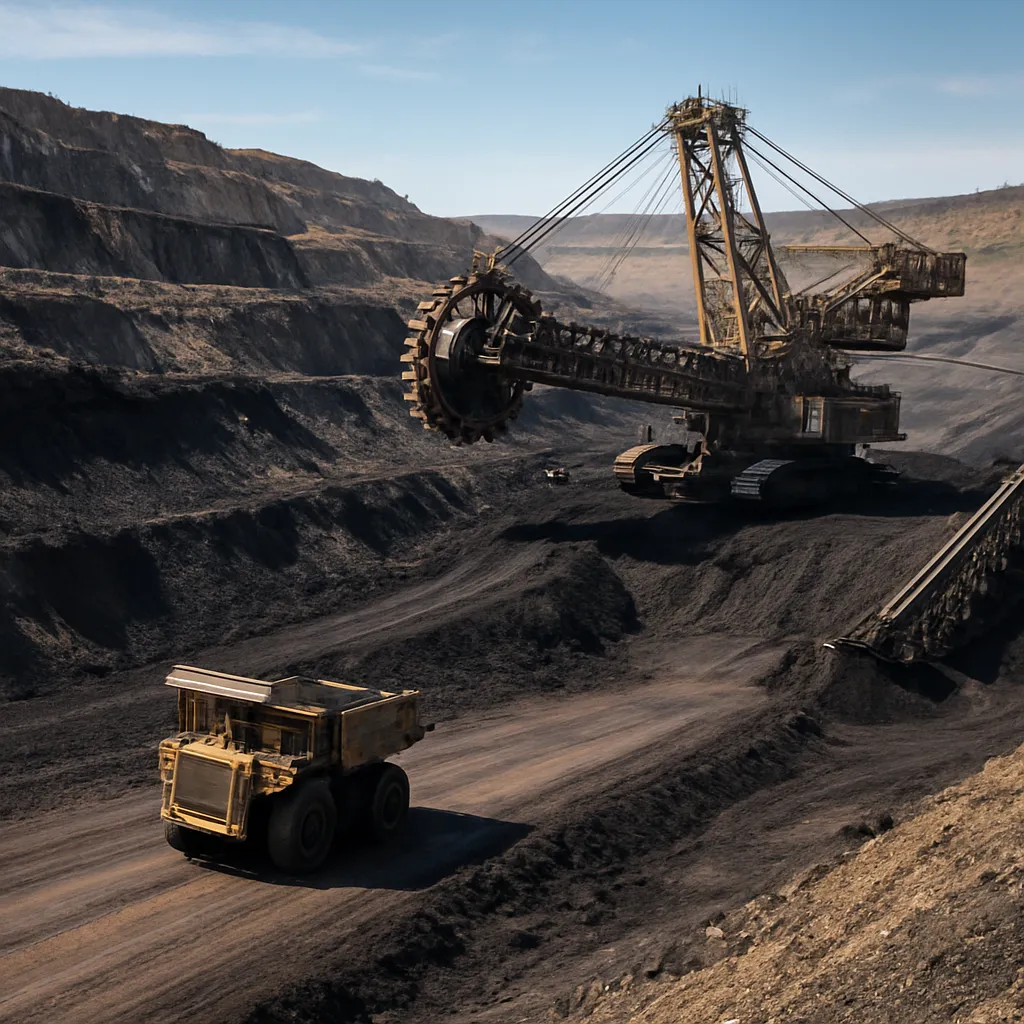
- Opencast mining at Majuba typically uses large excavators and truck fleets to remove overburden and extract coal, enabling high production rates and relatively low unit costs compared with underground methods.
- Site infrastructure includes coal handling plants, conveyors, stockyards and proximity to rail links or conveyor systems that transport coal to the adjacent Majuba Power Station, reducing haul distances and logistic costs.
- Material handling and processing facilities manage sizing and screening, ensuring product specifications meet end-user requirements for calorific value and acceptable ash levels.
Logistics are a critical aspect of Majuba’s economic model: direct lines to power generation minimize transport costs and supply-chain risk, while regional rail and road connectivity offer routes for occasional external sales or transfer to export terminals when market conditions justify it.
Economic and Industrial Significance
Majuba plays a dual role: as a supplier of essential fuel for electricity generation and as a local economic anchor. The adjacent Majuba Power Station—operated by the national utility—relies heavily on coal from local collieries, and this integrated supply chain keeps energy production costs lower than if coal had to be transported long distances.
- The Majuba power complex contributes to the national electricity grid’s baseload capacity and helps stabilize supply in a country where coal supplies roughly 70–80% of primary electricity generation.
- Local employment and procurement support are significant: mines like Majuba provide direct jobs in extraction, processing and maintenance and indirect jobs through contractors, transport services and local commerce.
- Revenue from coal mining and associated royalties contribute to provincial and national fiscal receipts, while wages and local spending support regional economies.
For South Africa at large, coal remains a major economic sector. The stability and performance of operations at sites such as Majuba influence utility operation costs, electricity tariffs and the viability of industrial consumers who depend on reliable power for manufacturing and mining activities elsewhere in the country.
Statistical Context and Known Figures
Precise, up-to-date statistics for individual mines can fluctuate with operational changes, ownership structures and reporting practices. However, several well-established national and regional statistics frame Majuba’s importance:
- Mpumalanga province—home to Majuba—contributes the bulk of South African coal production, typically accounting for roughly 80–85% of the country’s total mined coal. This dominance reflects the concentration of large, high-yield seams in the Highveld basin.
- National coal production in recent years has ranged around 200–250 million tonnes annually (pre-COVID and depending on market demand, domestic power station burn rates and export contracts). Thermal coal used for power generation represents the majority of this tonnage.
- The nearby Majuba Power Station has an installed capacity of approximately 4,110 MW, making it one of South Africa’s largest coal-fired stations; its operational availability is directly influenced by coal supply from adjacent mines.
At the mine level, annual production volumes are determined by seam thickness, mining method and contractual obligations to power utilities. Mines supplying dedicated stations often operate to meet baseload fuel contracts, with annual outputs calibrated to the power station’s coal consumption profile. Where available, company reports or government mineral resources statements provide mine-level reserve and production data.
Environmental, Social and Regulatory Issues
The environmental footprint of large coal mining operations is substantial and multifaceted. Majuba and similar sites are subject to South African environmental regulation, permit conditions and ongoing expectations for rehabilitation and pollution control.
- Environment: Open-pit mining alters landscapes, impacts local hydrology and generates dust, noise and waste rock. Water use for dust suppression and processing is substantial in a water-scarce region, requiring careful management to avoid stress on local water resources.
- Acid mine drainage (AMD) risk is a long-term environmental concern in coal regions. While AMD is more commonly associated with abandoned underground mines, modern operations must still implement drainage and water-quality controls to prevent contamination.
- Air emissions from coal-fired power stations (SOx, NOx, particulates and CO2) are a linked issue: coal that is mined locally and combusted nearby concentrates both mining and combustion impacts in the same regional ecosystems and communities.
- Social impacts include land use changes, potential displacement of smallholders, fluctuating employment cycles and the need for sustained community development programs. Mining companies often implement social and labor plans, local procurement strategies and training initiatives to increase local economic benefit.
Rehabilitation and closure planning are increasingly central to mining permits: progressive rehabilitation, post-mining landforms and financial provisioning for closure are regulatory expectations designed to minimize long-term environmental liabilities.
Role in Energy Security and Industrial Strategy
Majuba and its coal supply play a critical role in South Africa’s energy security. In a grid that remains heavily dependent on thermal coal, reliable coal supply to major baseload stations is a strategic priority. Interruptions in supply—whether from operational problems at the mine, logistic bottlenecks or labor disputes—can ripple through to generation outages, load-shedding and economic disruption.
- By serving a major power station, the mine helps ensure predictability of fuel supply and supports long-term planning for the national utility.
- Coal-fired plants like Majuba are also central to industrial planning: many manufacturing processes and energy-intensive industries rely on the predictability of baseload coal-fired generation.
- Conversely, the global and national shifts toward decarbonization increasingly frame coal operations within transition planning: gradual reductions in coal dependence will require strategic economic diversification for coal-producing regions.
Workforce, Safety and Community Relations
Mining operations remain labour-intensive relative to many modern industries, and Majuba is no exception. Workplace safety, training and labor relations are core operational considerations. South African mines operate under stringent safety regulations following decades of institutional development in mine safety and health.
- Health and safety programs address immediate workplace hazards (heavy machinery, dust, falls) and occupational health risks such as pneumoconiosis in dusty environments.
- Community relations and the management of benefits for host communities—including employment quotas, local contracting and social investment—shape the social license to operate for mines in the Mpumalanga region.
- Labor relations in the South African mining sector can be complex; strikes and collective bargaining outcomes influence production continuity and costs.
Challenges, Trends and Future Prospects
The future of coal mining at Majuba is shaped by several converging trends:
- Market dynamics: Domestic electricity demand and export markets determine coal demand. While domestic baseload needs remain strong, international markets are evolving with price volatility, changes in seaborne demand and competition from other exporters.
- Policy and regulation: South African energy and environmental policy, including emissions regulations and commitments under international climate agreements, affect the long-term outlook for coal-fired generation and the mines that supply it.
- Technological adaptation: Advances in mining efficiency, dust control, water recycling and emissions abatement at the combustion stage can improve environmental performance and prolong operational viability.
- Just transition: As South Africa explores pathways to a low-carbon future, coal-producing regions require economic diversification strategies to protect livelihoods and maintain social stability while reducing dependency on coal.
Strategic planning for Majuba therefore combines short- and medium-term operational efficiencies with longer-term transition frameworks designed to ensure economic resilience for the workforce and surrounding communities.
Interesting and Practical Notes
Several noteworthy points about Majuba and the broader context illustrate why this mine and its associated power complex matter:
- Integrated supply: The close integration of mine and power station reduces transport costs and logistical complexity, illustrating a common model for coal supply in South Africa.
- Regional dominance: The Highveld’s geology makes Mpumalanga a coal powerhouse, and mines like Majuba are a practical expression of that geological endowment.
- Energy resilience: The reliability of baseload coal-fired generation remains a central consideration for South Africa’s energy policy, even as diversification and renewables expand.
- Rehabilitation emphasis: Contemporary mining practice places increasing emphasis on restoration of mined land and on ensuring that end-of-life liabilities do not create enduring environmental damage.
In summary, the Majuba Coal Mine is a strategically located coal operation whose production of thermal coal supports substantial electricity generation in South Africa. It sits within a region that dominates the nation’s coal output, supplies a major power station with an installed capacity in the multi-gigawatt range, and is entwined with regional economic, environmental and social systems. The mine’s future will be shaped by evolving market conditions, regulatory frameworks and the national transition toward a more diversified and lower-carbon energy mix, making its operational, social and environmental management central to both local and national planning.