This article provides a comprehensive profile of the Great Northern Mine in Australia as a coal mining site, placing the operation in the broader context of Australian coal geology, production methods, economics, logistics and environmental issues. Because the name “Great Northern” has been applied to various historic and contemporary mining leases in Australia, this text treats the Great Northern Mine primarily as a coal-producing operation typical of the major coal-bearing provinces (notably the Bowen Basin and other Queensland/New South Wales basins), synthesizing available regional data and common characteristics of such mines. Where precise site-level statistics are publicly available they are noted; where not, regional and industry-standard figures are used to indicate scale and significance.
Location and geological setting
The label Great Northern Mine is associated in public records and local usage with several mining leases across eastern Australia, but coal operations carrying the name are most often linked to coalfields in central and northern Queensland — most prominently the Bowen Basin — and occasionally to coal-producing regions in New South Wales. The Bowen Basin is one of Australia’s most important coal provinces and hosts many medium- to large-scale open-cut and underground coal mines supplying both thermal coal (for power generation) and coking coal (metallurgical use in steelmaking).
Typical geological features for a Great Northern-style coal mine in these provinces include Permian-age sedimentary sequences with multiple coal seams. Seam thicknesses can range from less than one metre to several metres; high-yield seams suitable for longwall underground mining or large open-cut extraction are the economic drivers for site development. Coal rank commonly ranges from sub-bituminous and bituminous (thermal coal) to medium-volatile bituminous or higher-rank coking coals in certain Bowen Basin sub-basins.
Types of coal produced and quality characteristics
Coal produced at an operation referred to as the Great Northern Mine would typically fall into one or both categories:
- Thermal coal — used for electricity generation domestically and in international markets. Typical quality metrics include calorific value (gross calorific value) often between 5,000–7,500 kcal/kg, moisture, ash and sulfur content that determine market acceptance and pricing.
- Coking coal — metallurgical coal used in steel production. Key attributes are volatile matter, fixed carbon, ash, and swelling/semicoke properties. Coking coal commands a premium compared with thermal coal.
Regional variation matters: Bowen Basin operations frequently supply significant volumes of coking coal to Asian steelmakers as well as thermal coal to regional power utilities. Mine-specific coal quality is normally published in company mine factsheets and product specifications; these determine target markets and price premiums.
Mining methods and site infrastructure
Great Northern-style coal operations in Australia typically employ one or more of the following extraction methods depending on geology and seam depth:
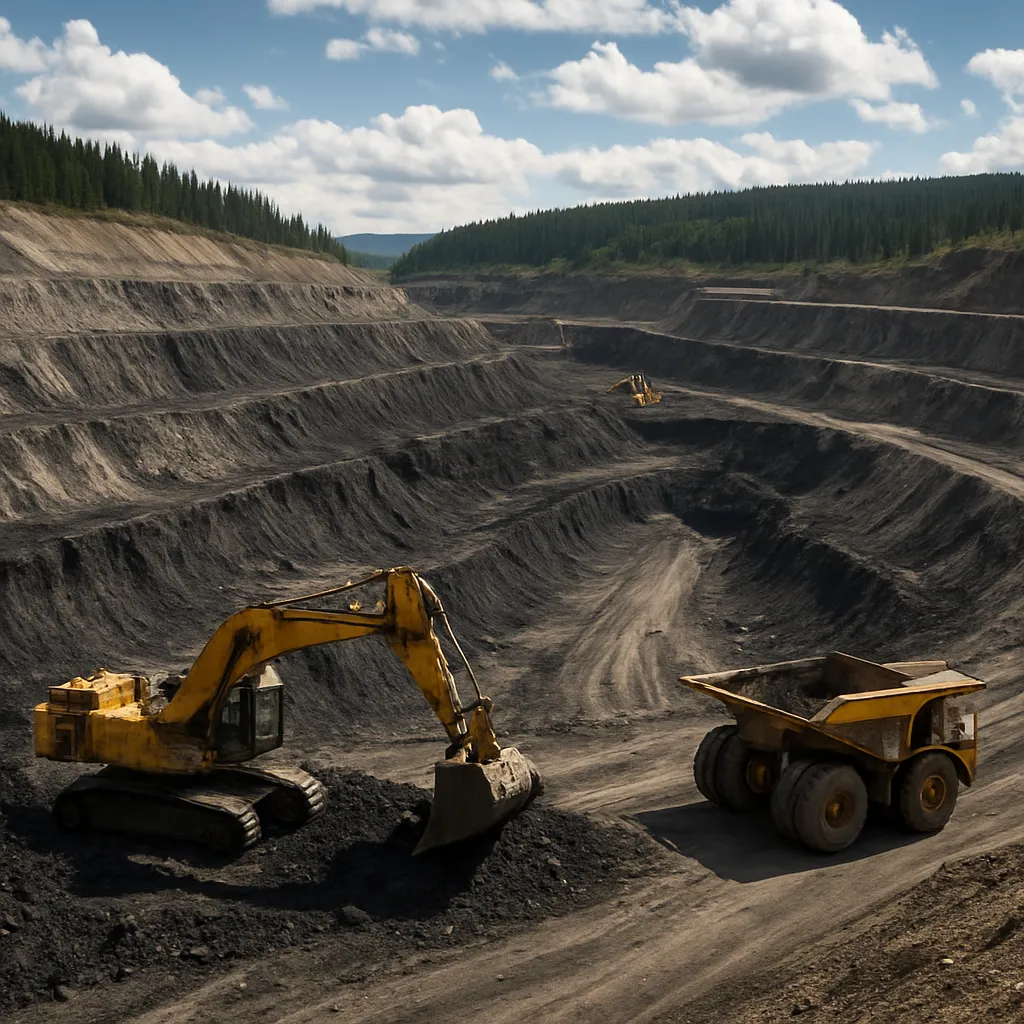
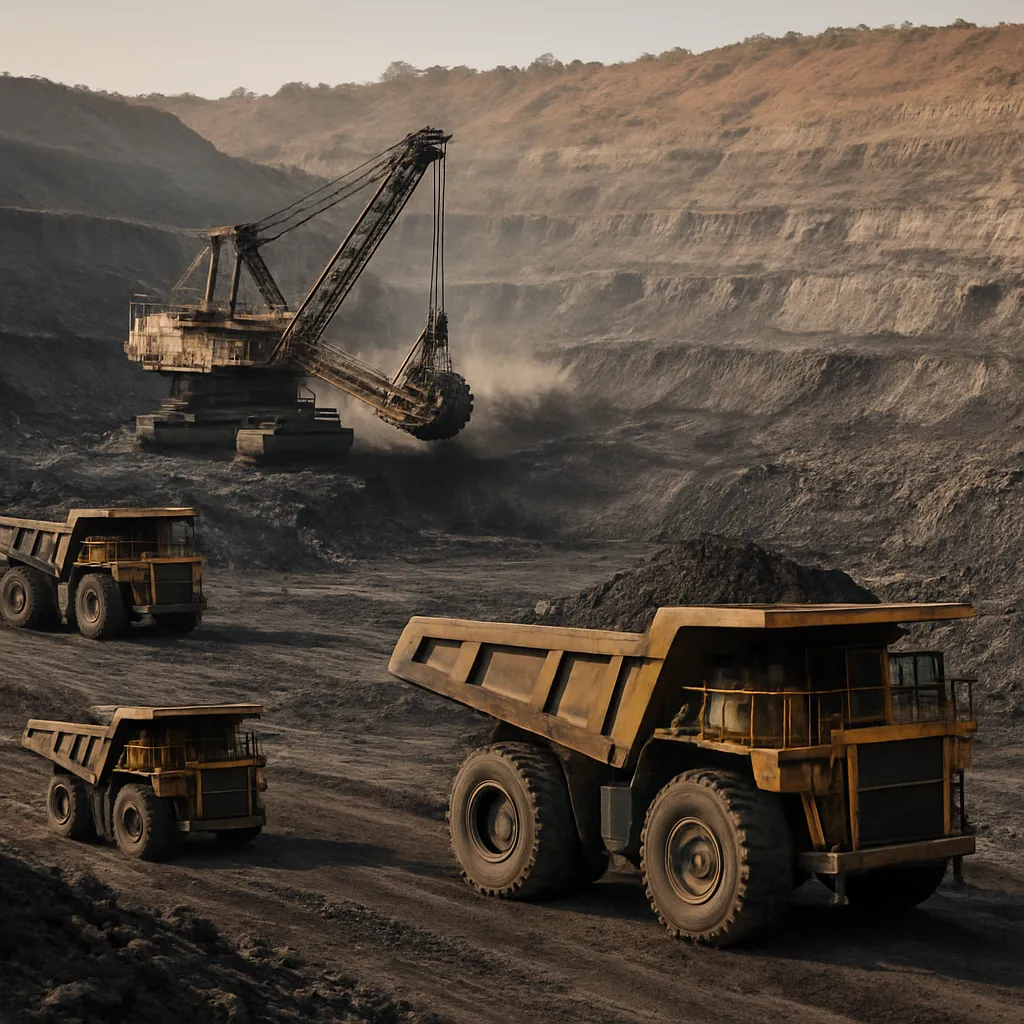
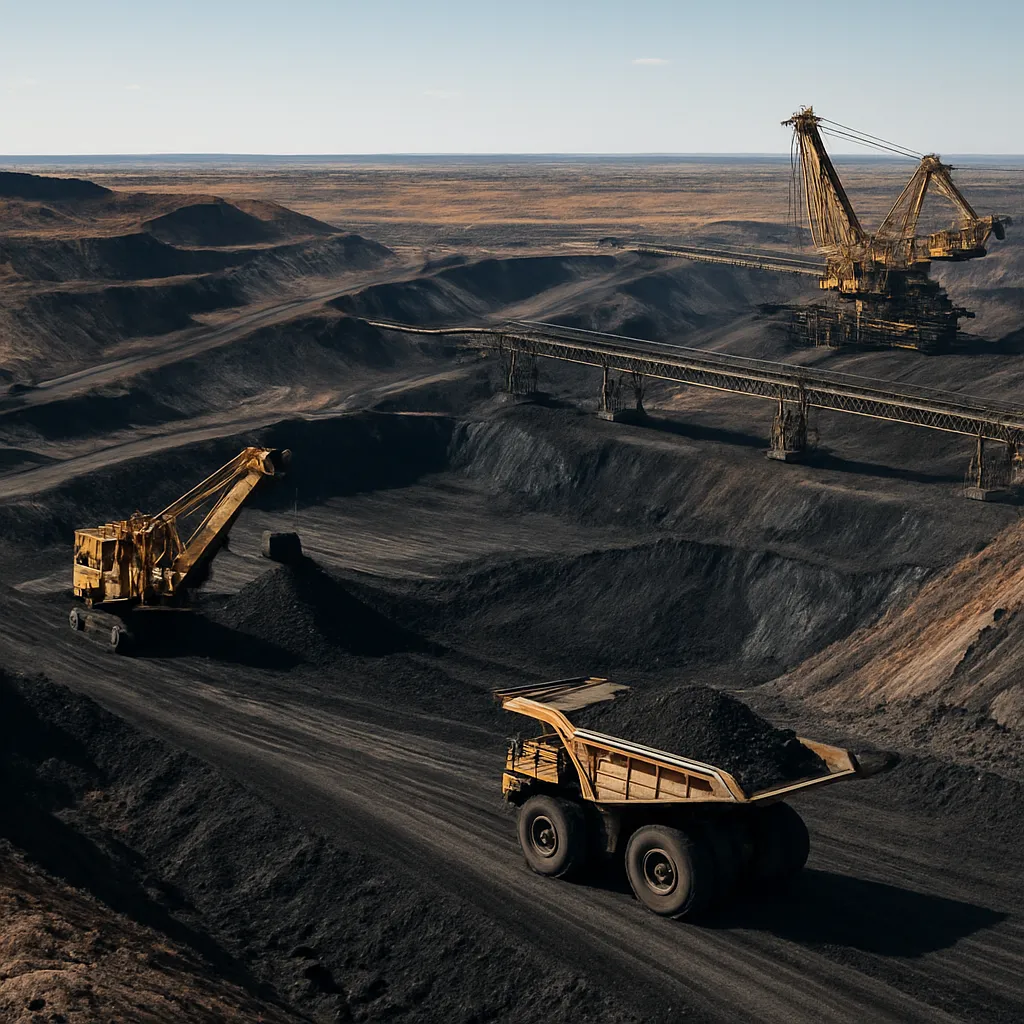
- Open-cut (surface) mining — heavy machinery (draglines, trucks, shovels, dozers) removes overburden to expose seams; common for shallow, laterally extensive seams and the dominant method for many Bowen Basin operations.
- Underground mining — longwall and bord-and-pillar techniques are used where seams are deeper or where surface disturbance must be constrained. Longwall operations can produce high tonnages from a single face but require more complex planning and ventilation systems.
- Hybrid operations — some mines combine open-cut extraction for shallower seams with underground access for deeper seams on the same lease.
Standard site infrastructure for a mine named Great Northern would include:
- On-site processing and washing plants (coal preparation) to improve product quality and remove impurities.
- Rail load-out facilities and a dedicated rail spur or conveyor link to regional rail networks.
- Water management and sedimentation dams, tailings or reject handling systems.
- Worker accommodation (camp villages), workshops, power generation or grid connection, and environmental monitoring stations.
Economic role and regional impact
A coal operation such as the Great Northern Mine plays multiple economic roles at local, state and national levels. Direct contributions include employment, royalties to state governments, and payments to service contractors and suppliers. Indirect contributions arise from local spending by employees and contractors and investment in transport and port infrastructure that often serve multiple mines.
Typical economic indicators for a mid-sized Bowen Basin coal mine — which serves as a useful proxy for a Great Northern-type site — include:
- Production scale: many established mines in the region operate at between 2–8 million tonnes per annum (Mtpa), while larger complexes can exceed 10 Mtpa. Very large open-cut operations in the basin may achieve peak outputs above this range.
- Employment: a single mid-sized operation will typically employ between several hundred to over one thousand full-time employees and a comparable or larger number of contractor staff on site for construction, haulage and services.
- Royalty and tax contributions: coal royalties are paid to state governments based on volume and value; corporate taxes and payroll taxes add further fiscal returns. Royalty rates and fiscal regimes vary by state and specific lease conditions.
Beyond the immediate site, coal exports support regional ports, domestic coal-fired power generation, and steelmaking supply chains. For many regional communities, coal operations provide the dominant employment base and fund local infrastructure projects (roads, schools, medical services) either directly or through corporate-community partnership programs.
Statistical context: national and regional coal figures
While mine-level statistics for “Great Northern Mine” vary depending on the specific lease, it is possible to situate such an operation within Australia’s broader coal industry context:
- Australia is one of the world’s largest exporters of coal by value and a key supplier to Asian markets. The country supplies both thermal coal for electricity generation and high-quality coking coal for steelmaking.
- Major coal-producing regions in Australia are Queensland (including the Bowen Basin) and New South Wales (including the Sydney and Gunnedah basins). Collectively these regions have significant measured and indicated coal resources supporting long-term extraction.
- Regional export infrastructure — rail corridors and major coal export terminals such as Abbot Point, Hay Point, and Dalrymple Bay — handle hundreds of millions of tonnes of coal annually from multiple mines.
Note: precise site-level production, reserves and reserves-to-production ratios for any specific Great Northern lease should be obtained from the most recent company annual reports, technical reports (JORC-compliant resource & reserve statements), and state government mining registries. Publicly listed companies and joint ventures typically publish detailed fact sheets with annual production and reserve tonnages.
Markets, logistics and trade flows
A coal mine bearing the Great Northern name would normally access domestic and export markets through the following logistics chain:
- Rail haulage from pit to port: bulk unit trains move raw or washed coal to coastal export terminals; efficient rail links are critical to competitiveness.
- Coal handling and shiploading facilities at export terminals: coal is stockpiled, blended if required, and loaded into Panamax or Capesize vessels for long-distance transport.
- Primary export destinations historically include Japan, South Korea, China, India, and increasingly Southeast Asia; market offtake depends on the product type (thermal vs coking) and coal quality.
The sales price realized by a mine depends on product quality, freight costs, global seaborne coal prices, and contract types (spot vs. long-term). Metallurgical coal grades typically fetch a premium per tonne compared to thermal coal and are therefore a strategic focus for many Bowen Basin operations.
Environmental, social and governance (ESG) issues
Coal mining operations in Australia operate under strict environmental and planning approvals administered by state governments and assessed under federal environmental law where relevant. Key ESG themes for a Great Northern Mine include:
- Land rehabilitation: progressive rehabilitation of disturbed areas, reshaping of landforms, and re-establishment of vegetation communities are statutory obligations tied to mine approvals.
- Water management: control of groundwater inflows, management of process water and tailings, and protection of local aquifers are ongoing technical challenges.
- Greenhouse gas emissions and methane: both in-situ emissions of methane from coal seams and combustion emissions from coal use are central to industry and policy discussions. Methane capture and fugitive emission reduction measures may be implemented at some sites.
- Community and indigenous engagement: social license to operate depends on constructive engagement with local communities and Traditional Owners, agreements on land access, and benefit-sharing mechanisms.
Regulatory requirements and voluntary corporate commitments increasingly push coal operations to publish sustainability reports, set emissions targets for their owned assets, and invest in biodiversity offsets or community development packages.
Workforce, safety and technology
Safety is a core operational focus. Australian coal operations apply rigorous health and safety practices, including incident reporting, hazard identification, and compulsory training for high-risk roles. Technological adoption in mines like Great Northern includes:
- Automation and remote operation of haul trucks and drills to improve safety and productivity.
- Real-time fleet management and optimisation software to reduce fuel use and improve throughput.
- Advanced coal-washing technologies and sampling protocols to meet customer specifications and reduce waste.
Workforce composition changes with automation and mechanisation; however, skilled roles in engineering, geology, environmental management and operations maintenance remain in high demand.
Significance for industry and future outlook
A Great Northern-style mine remains significant for several reasons:
- It provides raw materials critical for electricity generation and steel production both domestically and to global markets.
- It underpins regional economies by creating employment, driving secondary services and contributing to local infrastructure funding.
- It stimulates long-term investments in transportation and port infrastructure that benefit multiple mines and industries.
The medium-term outlook for a coal operation named Great Northern will be shaped by global commodity cycles, energy transition policies in importing countries, regional demand for steel, and Australia’s own policy and fiscal settings regarding fossil fuel extraction. Mines producing higher-quality coking coal generally have stronger long-term demand prospects tied to steelmaking, whereas thermal coal faces substitution pressure from lower-carbon energy sources in some markets.
Interesting historical and local aspects
The name Great Northern has historic resonance across Australian mining history: it has been used for multiple mines and companies dating back more than a century. Some noteworthy topical points that often apply to mines with this name include:
- Historic transitions from small-scale local pits to large, mechanised operations as exploration, capital and rail/port infrastructure matured in the 20th century.
- Community narratives where towns grew around mining activity, with boom-and-bust cycles tied to commodity price volatility.
- Adaptive re-use and rehabilitation stories where old mine sites have been reshaped for agriculture, conservation or recreational use after closure.
How to find specific mine data
For authoritative, site-level statistics on any particular Great Northern Mine (production, reserves, employment, environmental performance), consult:
- Company annual reports, investor presentations and technical (JORC) resource/reserve statements.
- State government mining registries and environmental approval documents (which publish approved mine plans and management conditions).
- Port authority throughput statistics and rail operator reports for regional export volumes.
These sources provide the most accurate and current quantitative figures for production tonnages, remaining reserves, workforce numbers and fiscal contributions at the lease level.
Summary
The Great Northern Mine, as a coal operation in Australia, exemplifies the technical, economic and social dynamics of the country’s coal sector. It typically produces either thermal or coking coal, relies on extensive infrastructure (rail, ports, wash plants), and contributes to regional employment and state revenues through royalties and taxes. Environmental management, community engagement and market access remain decisive factors for long-term viability. While specific production and reserve statistics vary by lease and owner, situating a Great Northern-style mine within the broader context of the Bowen Basin and Australia’s export-oriented coal industry makes clear its economic importance and the operational challenges it faces as global energy and materials markets evolve.