The following article offers a comprehensive overview of the Bentian Besar mine in Indonesia. It covers the mine’s location, geology, the type of coal produced, operational and economic aspects, logistical links, environmental and social considerations, and its role within the broader Indonesian and global coal industries. Where clear public figures are not available or vary among sources, ranges and qualifiers are used to reflect uncertainty. Key technical and economic terms are highlighted to help readers quickly identify important concepts.
Location, Setting and Geological Context
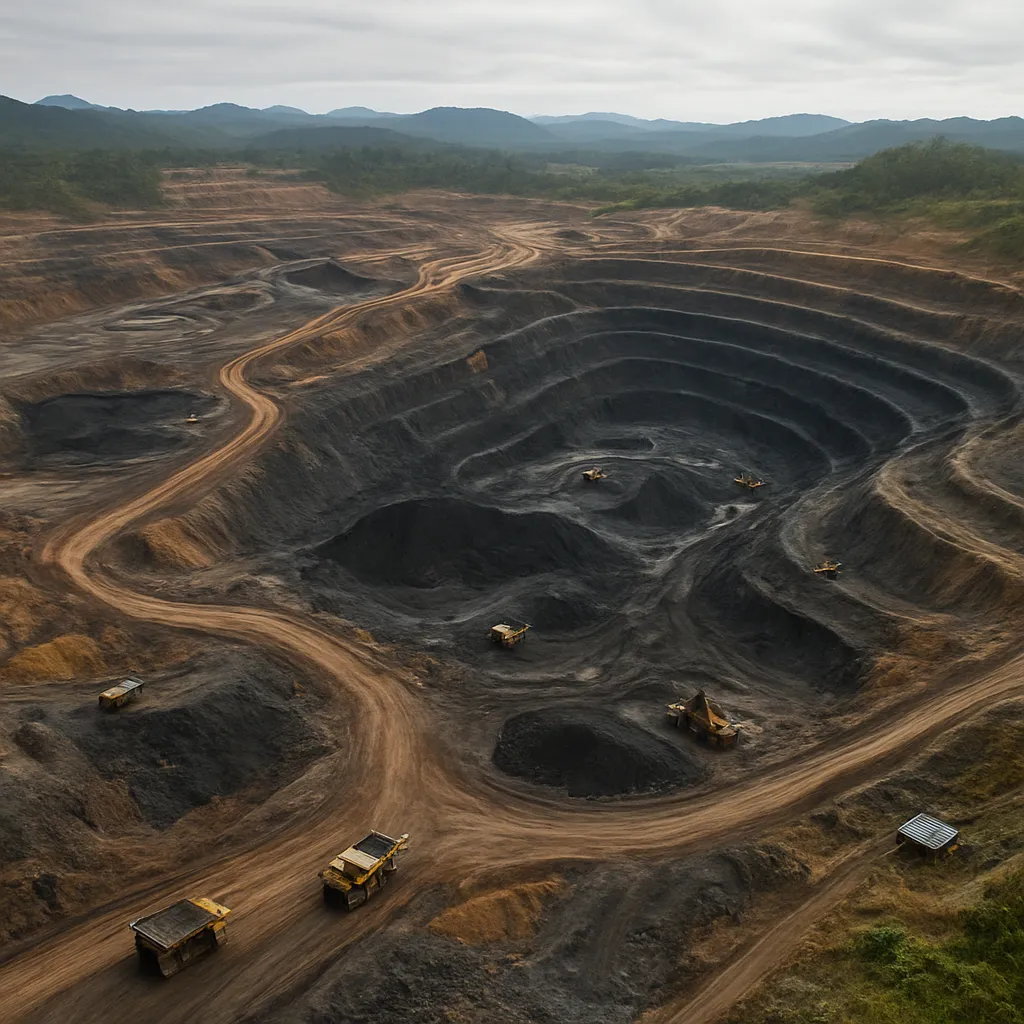
Bentian Besar is located on the island of Borneo in the Indonesian province of East Kalimantan. Like many Indonesian coal projects, it sits within the extensive Cenozoic coalbearing basins that run across Kalimantan and Sumatra. The mine area occupies tropical lowland terrain, often adjacent to peatlands and mixed dipterocarp forest, which historically provided both geological cover and ecological diversity.
Geologically, the coal seams exploited at Bentian Besar belong to the Tertiary successions typical of Kalimantan: largely deltaic and coastal plain depositional systems that produced extensive seams ranging in thickness from a few meters to tens of meters in stacked intervals. The depositional environment and subsequent burial history have generally produced thermal coals of low to medium rank (typically sub-bituminous to high-volatile bituminous on a broad scale in the region), with variable moisture and ash contents depending on seam and specific bench. The predominance of these depositional types influences mining method choice and overburden management.
Mining Method and Site Infrastructure
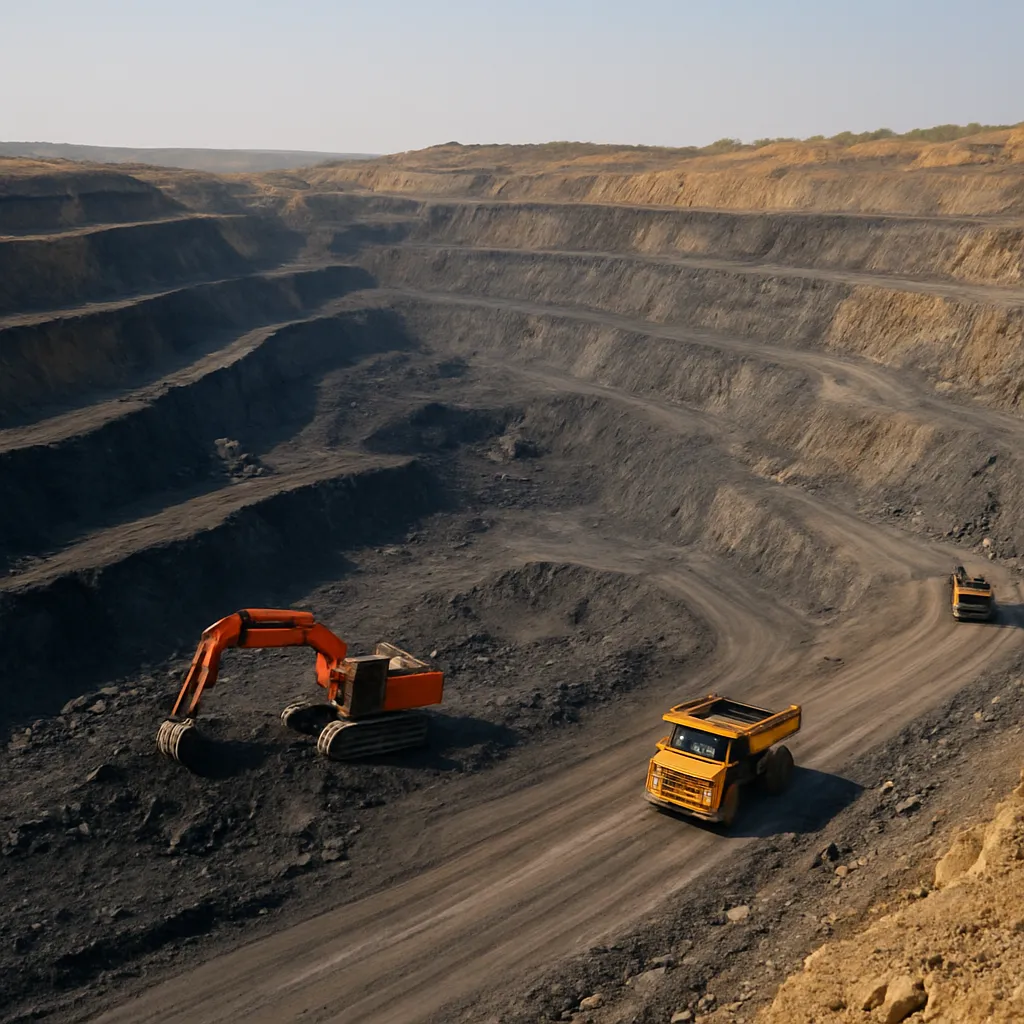
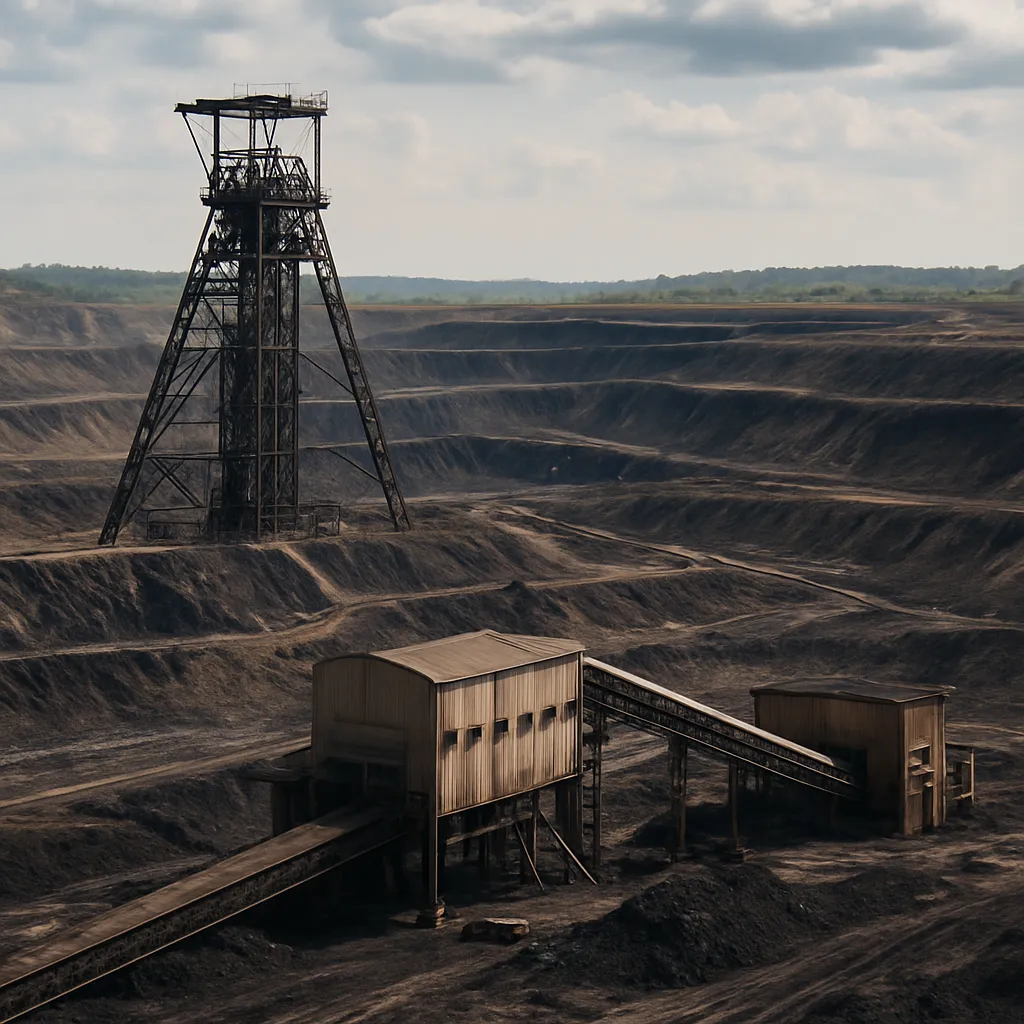
Bentian Besar operates as an open-pit coal mine, which is the dominant mining method for large-scale coal extraction in Indonesia due to the near-surface occurrence of many coal seams. Open-pit operations typically involve progressive stripping of overburden, bench-by-bench removal of coal, and the use of large fleets of hydraulic excavators, trucks, dozers and ancillary equipment. Typical site infrastructure includes workshops, fuel and oil storage, tailings or water management ponds, temporary settlement ponds for sediment control, and on-site processing for basic crushing and screening.
Logistics infrastructure often comprises internal haul roads connecting pits to stockyards and loadout points. At Bentian Besar, coal is generally transported from stockpiles to riverine barging points and coastal transhipment hubs, which is a common pattern in East Kalimantan where navigable rivers and coastal waters enable coastal shipping. From loadout terminals, coal is shipped to domestic power plants or exported to international customers via bulk carriers. Efficient port access and barging capacity are critical economic factors for the mine.
Coal Quality and End Uses
The coal from Bentian Besar is primarily used for power generation and other thermal applications. Key characteristics commonly reported for Kalimantan coals—and which typically reflect Bentian Besar’s product—include medium calorific values in the range of approximately 4,000 to 5,800 kcal/kg (gross as received basis), variable moisture content (sometimes relatively high due to tropical weathering), and ash content that can vary by seam from relatively low (<10%) to moderate (>15%–20%). Sulfur contents are often low to moderate, which can be advantageous in meeting emissions requirements for certain markets.
Because of these attributes, the coal is marketed largely as thermal coal to utility companies and industrial users in regional markets. Export destinations commonly served by Indonesian mines include China, India, Japan, South Korea and Southeast Asian countries, though exact customer mixes change with market conditions and contractual relationships. Some portions of production may also feed domestic power generation under Indonesia’s domestic supply policies.
Reserves, Production and Economic Data
Publicly available, mine-level reserve and production figures for Bentian Besar vary depending on reporting periods, operator disclosures and classification standards. As with many Indonesian mines, reserve estimates are typically reported in terms of proven, probable and possible categories under local or international reporting codes. Where detailed public disclosures are limited, analysts often report geological resources in the tens to low hundreds of millions of tonnes for deposits of comparable scale in East Kalimantan.
Annual production at mines of this class often ranges from under 1 million tonnes for smaller operations up to several million tonnes per year for larger, well-developed pits. For planning and economic modeling, operators consider operating cost per tonne (strip ratio, fuel, labour, maintenance), sales price (linked to international thermal coal benchmarks), and capital expenditure for mine development and infrastructure. Indonesian coal producers have historically been sensitive to global thermal coal price cycles; hence Bentian Besar’s financial performance depends heavily on international demand and shipping rates.
At the national level, Indonesia has been one of the world’s largest coal exporters, with seaborne exports historically exceeding 300–400 million tonnes per year in boom periods. The contribution of a single mid-sized mine like Bentian Besar to these totals is therefore relatively modest in percentage terms but can be significant locally in terms of employment, regional revenue and supply chain impacts.
Economic and Fiscal Importance
Coal mines such as Bentian Besar play several economic roles:
- Revenue generation through sales of coal to domestic and international buyers, contributing to company earnings and government royalties.
- Employment and local economic activity: mines create direct jobs in operations and maintenance and indirect jobs in transport, services and supply chains.
- Fiscal contributions: royalties, corporate taxes and land-use fees augment regional and national government finances.
- Support for energy security: by supplying domestic power plants and industrial users, the mine contributes to Indonesia’s energy mix.
Indonesia’s fiscal framework for mining also includes royalties, production sharing or concession arrangements, and requirements such as a domestic market obligation (DMO) that directs a portion of production to domestic consumers at regulated terms. These policies affect mine scheduling and the destination of shipments, and thus the mine’s cash flows.
Logistics, Export Routes and Market Access
Access to maritime shipping routes is essential for the viability of coal mines in East Kalimantan. Bentian Besar typically moves coal from pit to stockpile, then to barges or coastal transhipment points. Barges are loaded and move coal to larger bulk carriers or terminal facilities where it is loaded onto Panamax or Supramax vessels depending on volume.
Key logistical components that determine competitive position include:
- Distance to navigable rivers and to deep-water load-out terminals.
- Availability of barges and transshipment equipment, especially during peak seasons.
- Quality of internal haul roads and maintenance of heavy equipment fleets.
- Port charges, transhipment costs and shipping freight rates.
Seasonal weather patterns—monsoonal rains in Kalimantan—can affect river draft and terminal accessibility, creating operational windows that must be managed to maintain steady supply to markets.
Environmental and Social Considerations
Open-pit coal mining in tropical settings raises several environmental and social challenges that apply to Bentian Besar:
- Deforestation and habitat loss: clearing of primary and secondary forest for pits, waste dumps and infrastructure may reduce biodiversity and fragment habitats.
- Water management: sediment-laden runoff, alteration of surface water flows, and interactions with groundwater require careful management through settling ponds, sediment controls and progressive rehabilitation.
- Peatlands interaction: where shallow peat understories exist, drainage and disturbance can release carbon and cause subsidence, demanding special management practices to avoid fires and carbon losses.
- Air quality and dust: blasting, hauling and stockpiling generate dust that must be mitigated to protect workers and nearby communities.
- Social impacts: mines affect local communities through land use change, possible resettlement, shifts in local employment patterns and strains on local services.
To address these issues, mines in Indonesia typically develop Environmental Impact Assessments (AMDAL), implement progressive rehabilitation plans, operate community development and health programs (commonly referred to as CSR), and use water and dust control systems. International operators may also apply standards such as the Equator Principles, IFC Environmental and Social Performance Standards, or ISO management systems to improve environmental and social outcomes.
Regulatory and Policy Context
Bentian Besar operates within Indonesia’s mining legal and regulatory framework, which includes concession and licensing rules, environmental permitting, and fiscal obligations. Key policy drivers that influence operations include:
- Licensing and reclamation requirements: concession agreements typically carry obligations for mine closure and rehabilitation funding.
- Domestic market obligations and pricing frameworks that can shift volumes between export and domestic supply.
- Environmental permits (AMDAL) and monitoring requirements.
- Forest and land use regulations where mines intersect forestry or protected areas.
Changes in government policy—such as adjustments to DMO percentages, export regulations, or royalty rates—can materially affect mine planning and economics. Operators therefore keep close engagement with government and community stakeholders to ensure compliance and minimize disruption risks.
Role in the Indonesian Coal Industry and Supply Chains
While not as large as some of the country’s biggest producers, Bentian Besar contributes to Indonesia’s broader role as a major supplier of thermal coal to global markets. Its production supports:
- Regional energy systems by feeding local power plants and industrial users.
- Export earnings, foreign exchange and trade balance contributions.
- Ancillary industries such as shipping, terminal operations and equipment supply.
Competition within the Indonesian coal sector is strong, with cost efficiency, logistics optimization and product quality being decisive factors. Mines that achieve lower unit costs and reliable delivery schedules gain preferential access to contracted customers, which improves long-term commercial stability.
Health, Safety and Workforce
Mining safety is a primary operational concern. Typical safety measures at Bentian Besar include strict vehicle movement controls, routine equipment inspections, blast management procedures, training programs for the workforce, and emergency response readiness. Occupational health programs focus on respiratory protection, noise control, and other standard industrial health risks. Employment at the mine includes both skilled and unskilled roles; many operators invest in local hiring and training to build capacity and strengthen community relations.
Challenges and Risks
Key challenges facing Bentian Besar and similar operations include:
- Commodity price volatility: thermal coal prices are cyclical and influenced by global economic activity and energy policy shifts.
- Infrastructure constraints: limited port capacity or seasonal river access can create bottlenecks.
- Environmental regulation and social license: increasing expectations for environmental performance and community benefits can raise compliance costs.
- Market transition risks: long-term global decarbonization trends and competition from alternative energy sources may alter demand patterns for thermal coal.
Managing these risks requires operational flexibility, cost discipline, and active stakeholder engagement.
Future Prospects and Strategic Considerations
Short- to medium-term prospects for Bentian Besar are influenced by the near-term demand for thermal coal in Asia, Indonesia’s domestic energy requirements, and the mine’s ability to maintain cost-effective logistics. Strategic considerations include:
- Optimizing strip ratios and pit sequencing to reduce unit costs.
- Investing in water and dust control, and in progressive rehabilitation to meet stricter environmental standards.
- Diversifying customer base to reduce dependence on a single market.
- Exploring value-added processing or blending to reach higher-margin markets if local coal quality permits.
Longer-term, the global energy transition encourages coal-producing regions to consider economic diversification and transition planning. For communities dependent on mining, programs to develop alternative livelihoods, skills transfer and infrastructure improvements form part of a sustainable planning approach.
Interesting Facts and Contextual Notes
– Bentian Besar is one of many coal assets in East Kalimantan, a province that hosts a significant portion of Indonesia’s coal resources and mining activity. Its operations reflect common regional features such as riverine transport and open-pit extraction.
– Indonesian coal’s competitive edge historically stems from proximity to Asian markets and relatively low production costs compared with some other global suppliers.
– Mines like Bentian Besar frequently work under multi-decade concession terms that shape long-term regional development and infrastructure planning.
Summary
Bentian Besar is a representation of Indonesia’s extensive coal mining sector: an open-pit operation in East Kalimantan producing primarily thermal coal for domestic and international markets. Its significance lies in local economic contributions—employment, revenues, and logistics activity—and its role within regional supply chains. The mine faces typical challenges of tropical coal operations, including environmental management, logistical constraints, and exposure to volatile commodity markets. Future success will depend on operational efficiency, sound environmental and social management, and adaptability to evolving market and policy landscapes.
Keywords: coal, Indonesia, East Kalimantan, thermal coal, open-pit mining, production, exports, employment, infrastructure, environmental