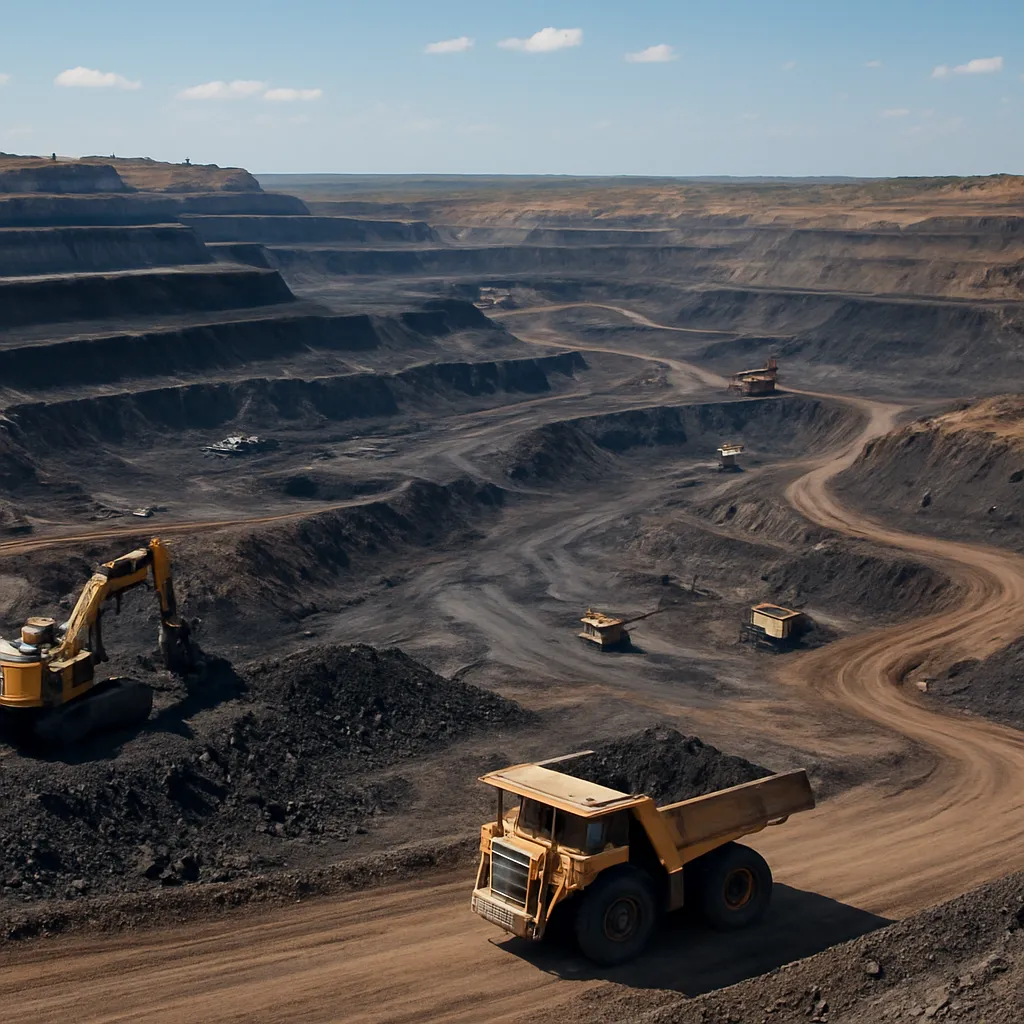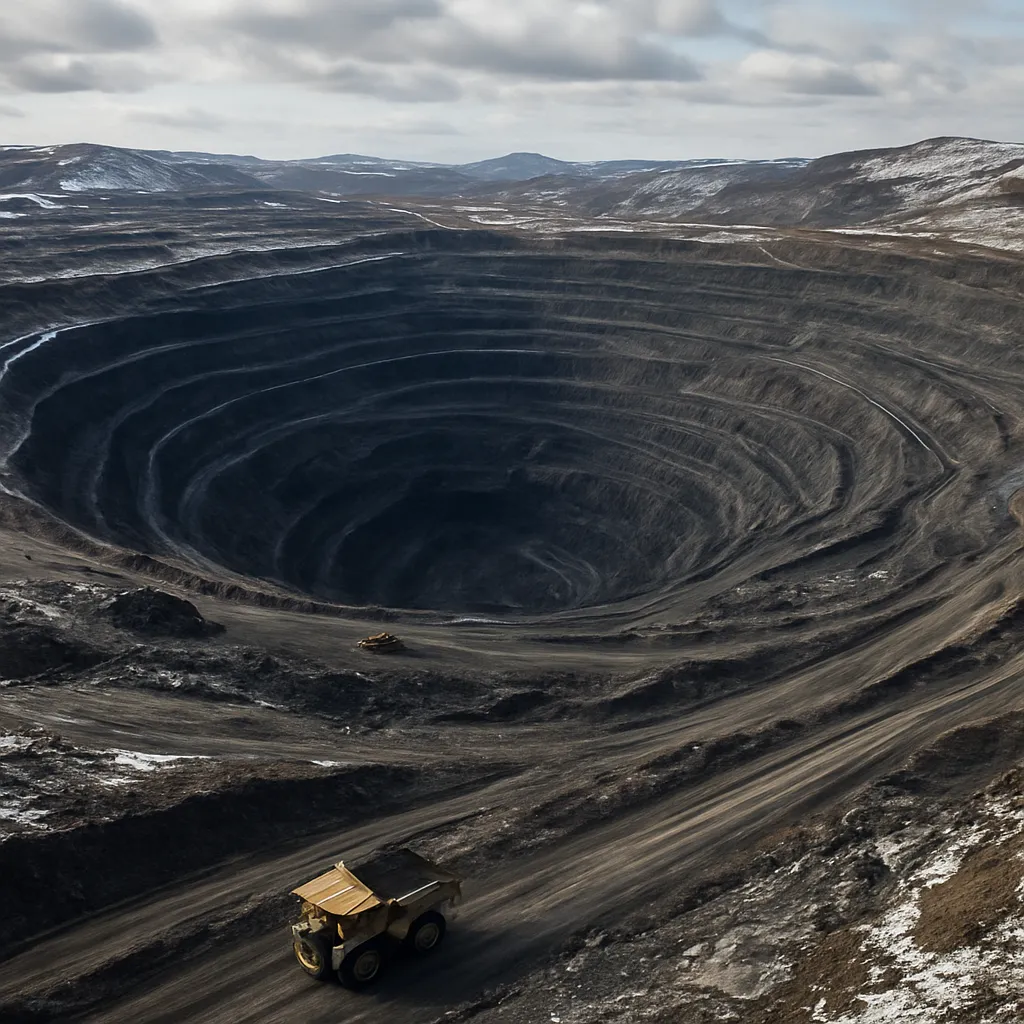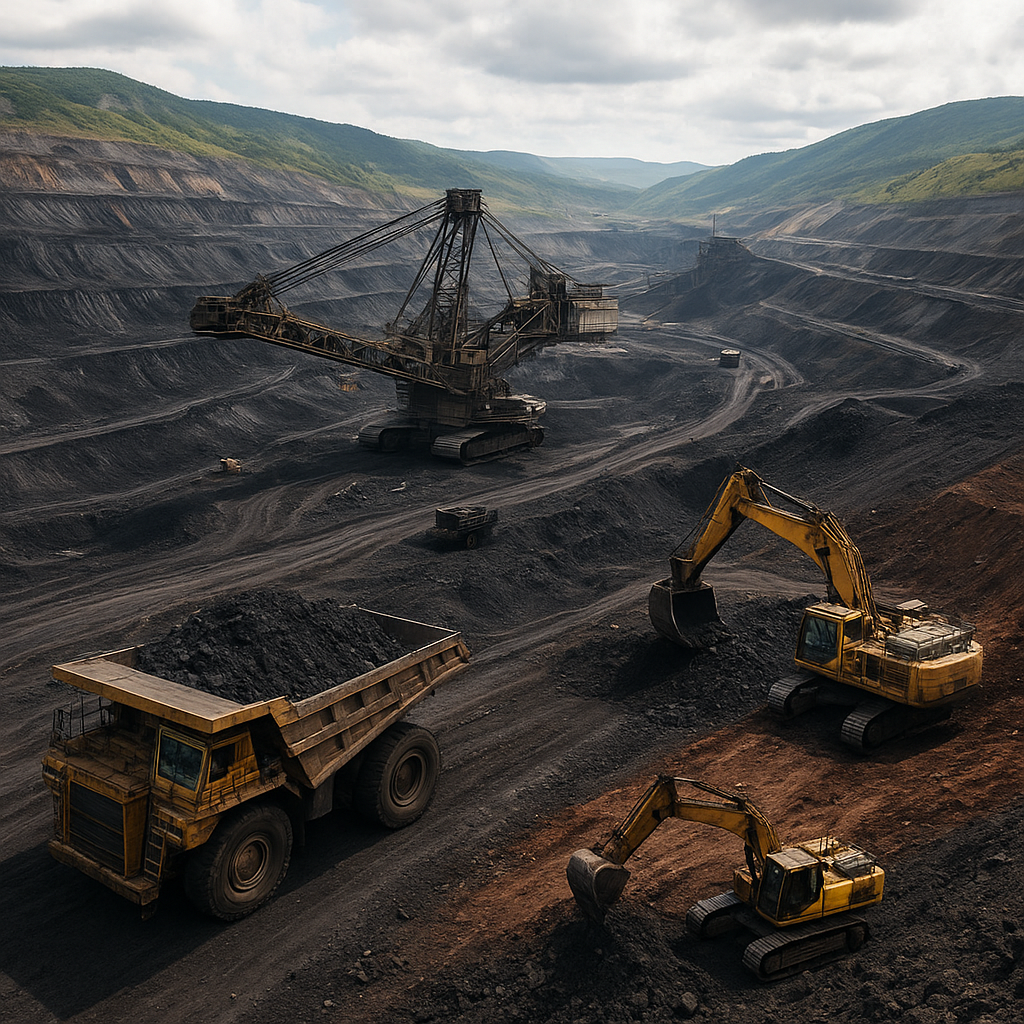
The Neryungrinsky coal mining area, centered around the town of Neryungri in the southern part of the Sakha Republic (Yakutia), is one of Russia’s important coal-bearing regions. The basin and its associated mines have shaped local economies, regional infrastructure and Russia’s coal export flows to the Asia-Pacific markets. This article describes the mine and the surrounding coal complex: its geographic and geologic setting, the types of coal produced, mining and processing methods, economic and statistical information where available, logistic links, environmental and social impacts, and prospects for the future.
Location, geology and mineral resources
The Neryungrinsky coal area lies in the southern margin of the Sakha Republic, near the border with the Amur Oblast and Khabarovsk Krai. The urban center of the region is the town of Neryungri, established in the 1970s and developed primarily as a mining town. The region is characterized by mountainous terrain, harsh continental climate, and extensive permafrost in some zones, which together influence mining design and infrastructure.
The geological setting includes Carboniferous, Permian and Mesozoic sedimentary sequences that host coal seams of varying rank and quality. Across the wider South Yakutia/Neryungri coal basin there are both steam (thermal) and metallurgical (coking) coal deposits. The nearby Elga deposit is one of the most prominent examples in the region and is often discussed alongside Neryungrinsky mining operations because of its scale and strategic importance.
- Neryungri region: central base for mining activity and logistics in southern Yakutia.
- Coal types: a mix of thermal and higher-rank coking coals across different deposits.
- Reserves: the broader South Yakutia / Elga system contains resources measured in the billions of tonnes; Elga alone is commonly cited with around 2.2 billion tonnes of recoverable coal.
Because of the geological variability, mining operations in the Neryungrinsky area exploit both open-pit deposits (for near-surface seams) and underground operations (for deeper, high-quality seams). Coal quality ranges from lower-rank thermal coals suitable for electricity generation and local heating, up to higher-volatile bituminous coals with coking potential used in steelmaking. The relative distribution of these types determines local beneficiation and washing practices.
Mining operations, technology and infrastructure
Mining in the Neryungrinsky area combines traditional heavy surface mining equipment with modern mine-planning and coal-washing plants. Surface open-pit methods are commonly used to extract large, relatively shallow seams, while underground mining and pillar-and-room techniques are employed where seams are deeper and of higher quality.
- Extraction methods: open-pit mining for large shallow seams; underground mining for deep, high-quality seams.
- Coal processing: washing and beneficiation facilities are used to improve product quality, reduce ash and sulfur contents and separate coking fractions from thermal coal.
- Power and utilities: on-site power generation, water treatment and winterized mine infrastructure are necessary due to cold climate conditions.
- Support equipment: draglines, electric shovels, haul trucks, continuous miners (underground) and crushers/screening plants are typical.
The region’s rail links are a crucial part of mining viability. The Amur–Yakutsk railway connects Neryungri to the broader Trans-Siberian and Baikal-Amur Mainline corridors, enabling coal to reach domestic consumers across Russia or travel to Pacific ports for export to East Asia. Export terminals used by producers in Yakutia include ports on the Russian Pacific coast—most frequently Vanino and other Far Eastern loadouts—allowing access to China, Japan, South Korea and other Asian markets.
Washing plants in the area improve coal quality for both domestic power plants and metallurgical customers. For higher-grade coking coal, additional sorting and blending are typical to meet strict coke-making specifications. Investment in rail and port capacity has been a recurring theme in regional development plans because the cost of transport to overseas markets strongly affects the economic return on coal exploitation.
Economic significance, production and statistics
The Neryungrinsky mining complex is a major employer and fiscal contributor in southern Yakutia. Mining operations support direct employment in extraction, processing and transport, and they underpin numerous indirect jobs in services, construction, and logistics. The town of Neryungri developed as a mono-industrial center around the coal industry and remains economically dependent on mining activity.
Available public figures vary by deposit and operator, and data are sometimes consolidated across the broader South Yakutia region rather than isolated for a single mine labeled “Neryungrinsky.” Nevertheless, some widely reported points provide a sense of scale and importance:
- Regional reserves: resources in the broader South Yakutia and Elga area are measured in the low billions of tonnes. The Elga field, often associated with the Neryungri coal complex in strategic discussions, is commonly cited as containing roughly 2.0–2.5 billion tonnes of coal.
- Production volumes: production at major operations in southern Yakutia has historically reached several million tonnes per year for individual large mines; combined regional output across mines has varied over time depending on investment, rail capacity and market demand.
- Exports: a significant portion of higher-quality coal from the region is destined for Asia-Pacific markets. In recent decades, export growth from eastern Russian coalfields has been a priority, supported by incremental increases in port and railway throughput.
- Employment: mining towns in the region often depend on a few thousand direct mining jobs plus many indirect posts; the overall employment effect depends on seasonal activity and mechanization levels.
Project-level plans and company reports for large deposits such as Elga have included staged ramp-ups to reach tens of millions of tonnes per annum in aggregate for the area. For example, development programs discussed for large regional deposits have targeted production capacities ranging from a few million tonnes per year up to 20–30 million tonnes per year for the largest integrated projects when infrastructure constraints are resolved. Such figures illustrate the potential scale, but actual outputs depend on financing, transport capacity and market conditions.
Role in industrial chains and markets
Coal from the Neryungri and adjacent deposits plays several roles in Russia’s energy and metallurgical sectors. Lower-rank thermal coals supply regional power plants, district heating and industrial boilers. Higher-rank coals and coking fractions feed steelmaking plants both inside Russia and abroad.
Key market dynamics that influence the economic position of Neryungrinsky coal include:
- Asia-Pacific demand: proximity to China, South Korea and Japan is strategically important. Increased Asian demand for high-quality coking coal has supported investment in Siberian and Far-Eastern export capacity.
- Rail and port bottlenecks: transport cost and capacity often determine which deposits are economic to develop. Projects that can secure reliable rail and port access gain a competitive advantage in export markets.
- Domestic energy policy: Russian domestic power generation patterns, coal-to-gas competition, and environmental regulations affect demand for thermal coal from far-eastern mines.
- Price cycles: global metallurgical coal prices and freight costs drive investment incentives; long-term contracts versus spot sales influence mine planning and cashflow stability.
Environmental, climatic and social challenges
Mining in the Neryungrinsky area faces distinctive challenges due to climate, remoteness and fragile northern ecosystems. Some of the principal concerns are:
- Permafrost: ground stability and infrastructure longevity are affected by permafrost. Construction and mine planning require thermosiphons, elevated foundations and special engineering to limit thawing.
- Water management: coal washing and mine dewatering must be carefully managed to avoid contamination of rivers and lakes; freezing temperatures complicate treatment and conveyance systems.
- Dust and emissions: open-pit mining and coal handling can generate dust; modern suppression and enclosure measures reduce impacts but require ongoing investment.
- Rehabilitation: post-mine land reclamation in taiga and steppe environments poses technical and ecological challenges; revegetation and soil restoration are long-term processes.
- Social issues: boom-bust cycles in mining centers affect employment, housing and services; attracting and retaining skilled workers often involves rotational workforce systems and subsidies for living in remote areas.
Regulatory frameworks and company programs have increasingly incorporated environmental monitoring, emission controls, and social investment into mine development plans. However, enforcement and implementation can vary, and mining in remote northern regions brings elevated operational and environmental costs.
Logistics, transport corridors and strategic connectivity
Transport connectivity is a major determinant of the Neryungrinsky mines’ competitiveness. The Amur–Yakutsk railway (and its connections to the Baikal-Amur Mainline and Trans-Siberian Railway) provides the principal overland route to Pacific ports. Key logistics elements include:
- Rail links: rail capacity is the bottleneck in many development scenarios. Enhancements to the Amur–Yakutsk and linked networks have been prioritized to increase throughput.
- Port infrastructure: ports on the Russian Pacific coast (for example, Vanino and other Far East loadouts) are primary export gateways. Expansion of export terminals and handling equipment directly affects how much coal can be sold overseas.
- Intermodal terminals: stockyards, washing plants located close to railheads and transshipment points are crucial to minimize demurrage and freight inefficiencies.
Insofar as export markets expand, investments in rail capacity and port modernization often accompany mine expansion. For very large deposit developments, synchronized planning across mine, rail, and port is essential to deliver coal to market at acceptable cost.
Historical context and socio-economic development
Many settlements in the Neryungri area were founded during the Soviet period as part of planned resource development. Neryungri itself grew rapidly with the construction of coal mines and associated infrastructure. During Soviet times, coal from Yakutia supplied regional power and industrial centers; after the Soviet era, the industry reoriented partly to export markets and private and state-backed investment programs.
Socially, coal mining shaped education, housing and public services in the region. Mining companies have historically invested in local amenities—schools, clinics and cultural centers—although contemporary financing and governance patterns have changed with economic reform and privatization phases. The towns remain sensitive to commodity price swings and to broader national investment priorities.
Future prospects, investments and strategic outlook
The future of the Neryungrinsky coal area depends on a combination of geology, markets, infrastructure and policy. Several trends will shape prospects:
- Market demand: continued demand in East Asia for high-quality coking coal is a potential tailwind for metallurgical coal deposits in the region. Thermal coal prospects depend on regional power demand and environmental policy trends.
- Infrastructure investments: railway upgrades and port expansions are prerequisites for large-scale export growth; public-private cooperation often underpins such investments.
- Technological improvements: automation, better cold-climate engineering and more efficient beneficiation can lower unit costs and make marginal seams economic.
- Environmental regulation: stricter emissions standards and carbon policy in some export markets could influence demand patterns for thermal coal, while coking coal demand may be more resilient if steel production remains robust.
Major projects in the broader South Yakutia zone have historically sought phased development to match transport capacity; future expansions are likely to follow similar staged approaches, tying production increases to confirmable improvements in logistics and market access.
Interesting facts and operational highlights
- The region combines extreme climate with industrial activity—mining equipment and facilities are adapted to long, cold winters and short summers.
- Permafrost engineering is a significant field of practice for construction and mining in Yakutia, leading to specialized techniques not common in temperate mining regions.
- Because of the long distances to major industrial centers and ports, cost-effective rail haulage is pivotal to the economic success of mines in the Neryungrinsky complex.
- Some large deposits in the region have become focal points for strategic energy policy discussions, as the Russian Far East seeks to develop export-led growth while balancing domestic energy needs.
Summary
The coal mining complex centered around Neryungri—often referred to in conjunction with the broader South Yakutia deposits—represents a strategically important part of Russia’s Far Eastern mineral resource base. The area contains a mix of thermal and metallurgical coals, with significant resource estimates in the billions of tonnes for some major fields (for example, the Elga deposit is commonly cited at around 2.2 billion tonnes). Operations rely on a combination of surface and underground mining, coal washing and extensive rail logistics via the Amur–Yakutsk and broader Siberian rail corridors to reach domestic users and export markets in the Asia-Pacific. Economic benefits for regional communities are substantial but come with environmental and infrastructural challenges, especially related to permafrost, water management and transport bottlenecks. Future development will hinge on market demand, investment in rail and port capacity, technological adaptation to cold climates, and evolving environmental policies.