The Khutala Mine, situated in South Africa’s prolific coalfields, stands as a representative example of the country’s long-established coal mining industry. This article examines Khutala’s location and geological setting, the type and quality of coal produced, the mine’s economic and industrial significance, operational characteristics, and the environmental and social challenges associated with coal mining in the region. Where direct public data about Khutala is limited, the discussion places the mine within the broader context of the Mpumalanga and Witbank/Highveld coalfields to give a clear picture of its likely role, output profile, and impact.
Location and geological context
The Khutala Mine is located in Mpumalanga province, the heartland of South African coal mining. Mpumalanga, and specifically the Witbank and Highveld coalfields, hosts many of the country’s large collieries. These basins lie within the greater Karoo Supergroup and are characterised by thick, relatively continuous coal seams formed during the Permian period.
The geology of the region is dominated by the Ecca Group and underlying Karoo deposits, where multiple coal seams of varying thickness and quality are found stacked vertically. Coal seams in Mpumalanga, including those exploited at mines like Khutala, typically display the following features:
- Multiple seam horizons offering mineable continuity over long distances.
- Seam thicknesses that vary from thin bands to economically important seams several metres thick.
- Coal rank generally in the bituminous to high-volatile bituminous range, suitable for thermal use and, in some cases, for metallurgical or chemical feedstock.
The strategic position of Khutala within Mpumalanga gives it logistical advantages: proximity to major power stations, railheads for export and domestic transfer, and established mining infrastructure. These factors reduce transport costs and strengthen ties with local utilities and industrial customers.
Types of coal and product quality
Coal produced in the Witbank/Highveld area — and therefore at mines such as Khutala — is predominantly thermal coal, used primarily for electricity generation and in some cases for industrial heat. The most common coal rank in the area is bituminous coal with a calorific value that typically falls within a moderate to high range compared with global averages.
Typical technical characteristics for coal from this region (representative, not mine-specific) are:
- Calorific value: commonly between approximately 18 and 28 MJ/kg (roughly 4,300–6,700 kcal/kg), with export-grade seams often towards the higher end.
- Ash content: variable; some seams have moderate ash contents that require beneficiation for premium markets.
- Sulfur: South African coal is generally low to moderate in sulfur, which benefits compliance with emissions and boiler fuel specifications.
- Volatile matter and fixed carbon values that make the coal suitable for pulverised fuel boilers and a wide range of thermal applications.
Depending on beneficiation and blending, product coal from Khutala-type operations can serve domestic power utilities (notably large publicly-owned generators), industrial boilers, and seaborne export markets. In some instances, higher-grade coal can be directed to metallurgical coke or to coal-to-liquids/chemicals feedstock if industrial integration exists.
Mining methods, infrastructure and operations
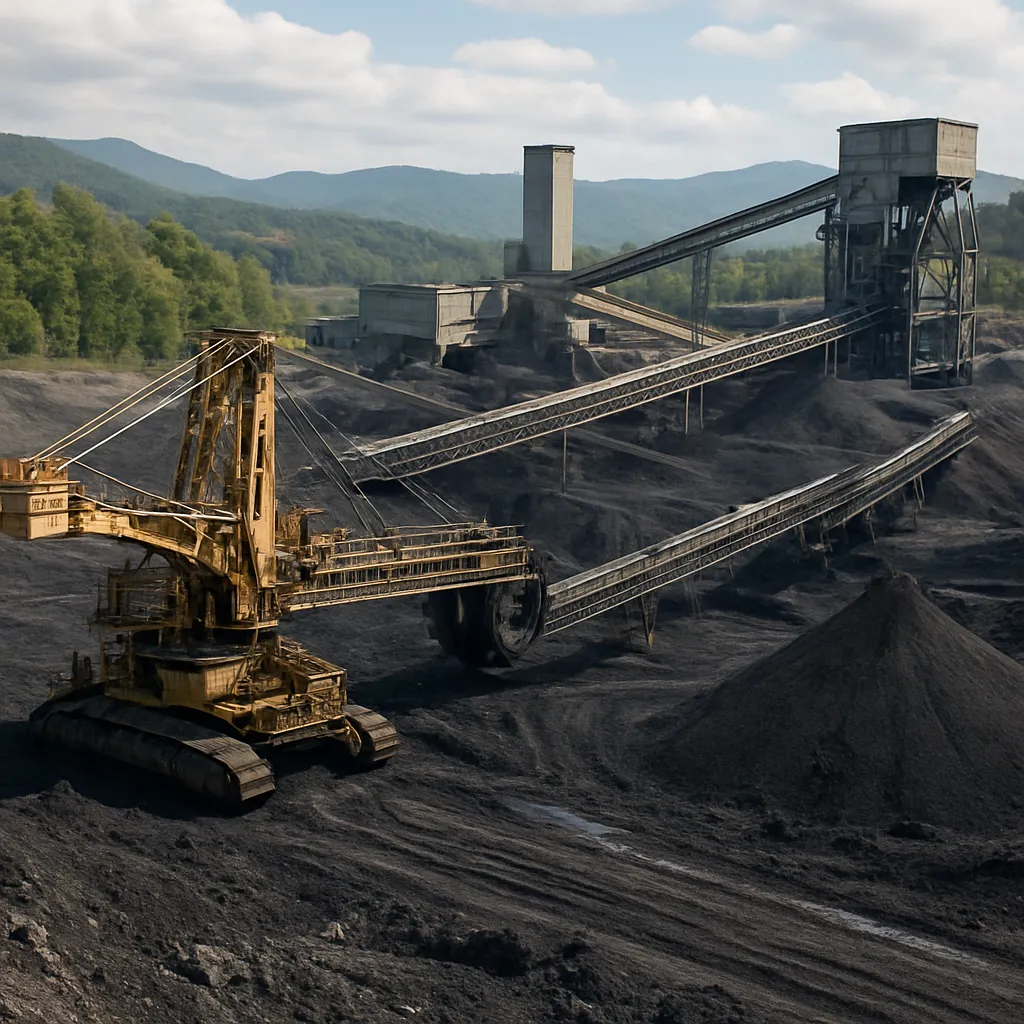
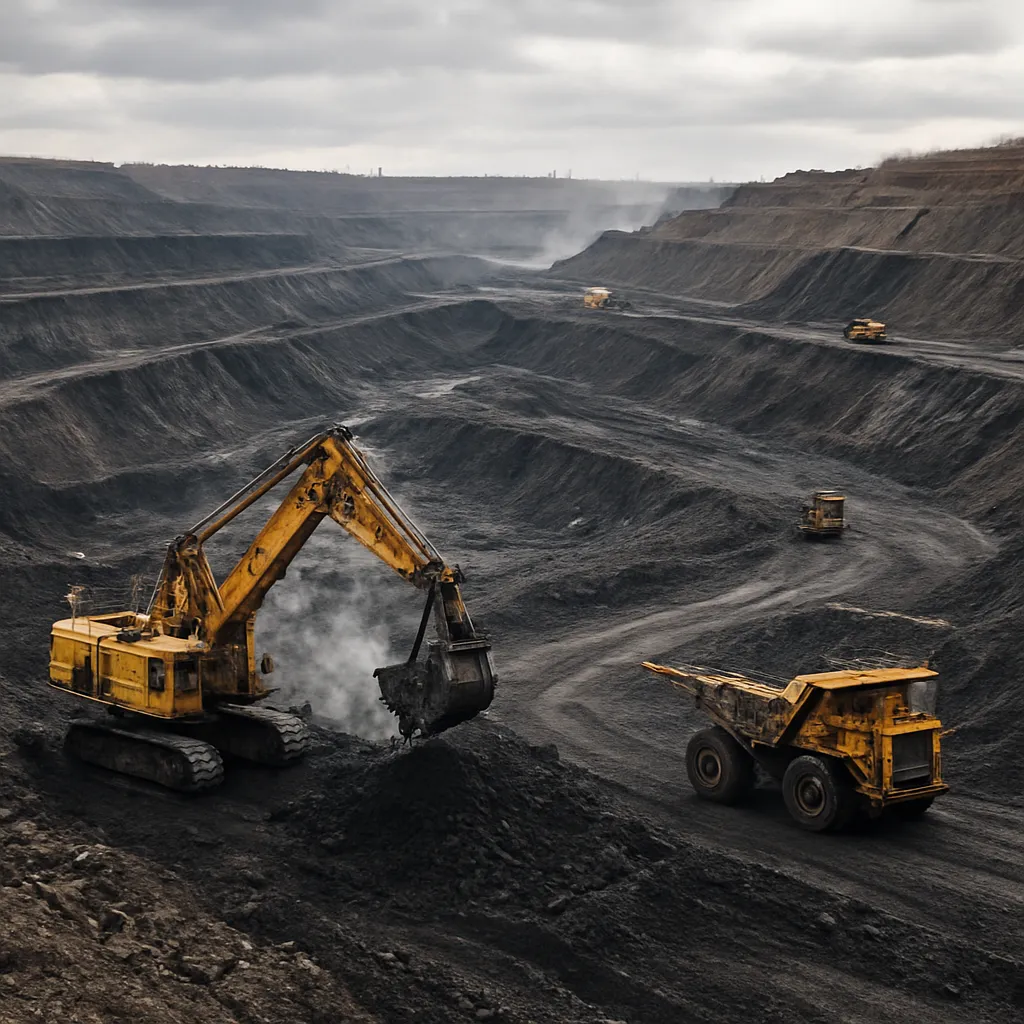
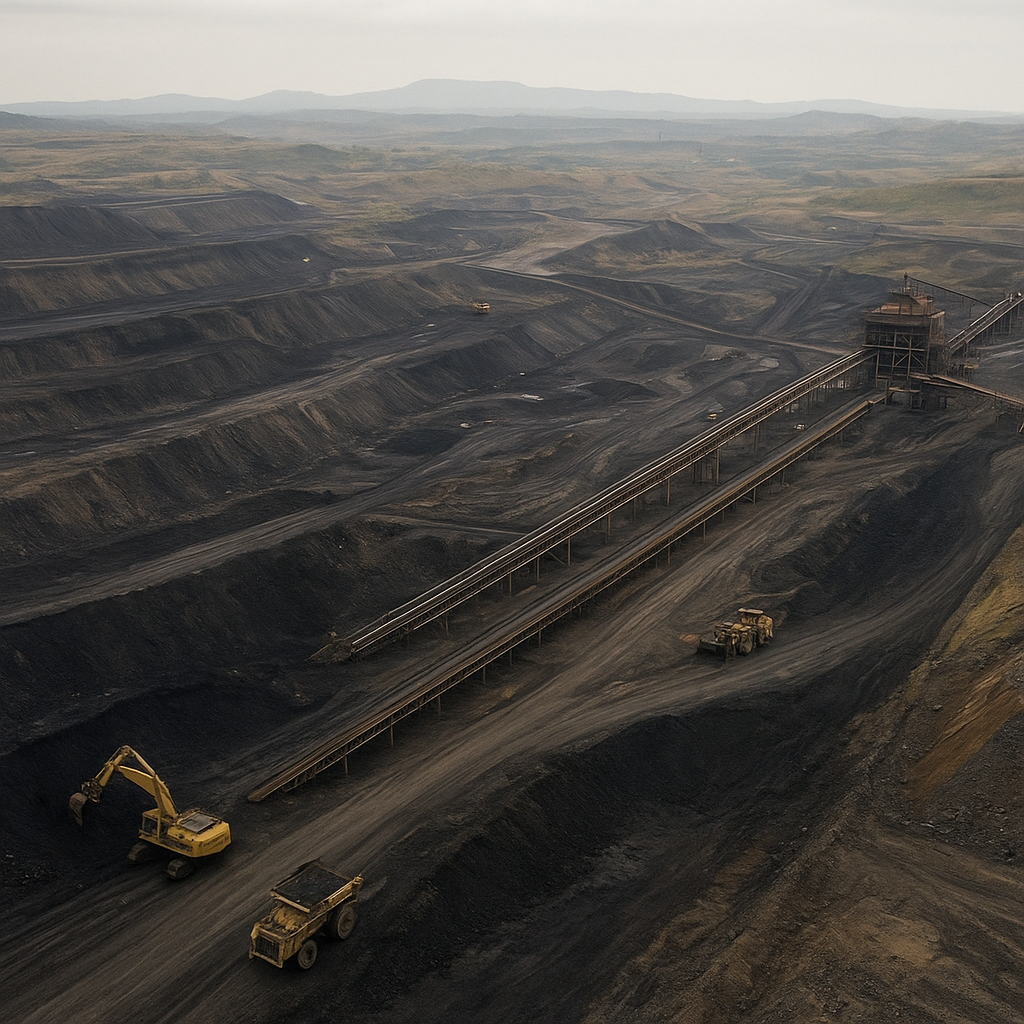
Mining operations in the region combine both underground and open-pit methods depending on seam depth, thickness and economics. Underground bord-and-pillar and longwall systems are common where seams are deeper, while opencast/strip mining is used where seams are near surface and economically recoverable.
Key operational components for a mine like Khutala include:
- Extraction and haulage systems (shuttle cars, conveyors, trucks).
- Crushing, screening and coal handling and preparation plants (CHPP) for washing and sizing.
- On-site water management, tailings and reject handling facilities.
- Access to rail infrastructure for transport to power stations and ports.
- Integration with local power-generating infrastructure — often supplying directly to regional power stations or to national grids.
Modern operations often employ mechanisation, real-time monitoring, and increasingly, digital tools for mine planning, ventilation control and safety management. Automation trends, while growing globally, are balanced in South Africa by the need to protect jobs in mining communities and maintain local skills bases.
Economic and industrial significance
Coal mining remains a cornerstone of the South African economy, and mines such as Khutala contribute to both regional livelihoods and national energy security. Key areas of significance include:
- Electricity supply: Coal is the dominant fuel for South Africa’s electricity, meaning mines in Mpumalanga are critical suppliers to the national grid and to major power generation complexes.
- Employment: Coal mines provide direct jobs in mining and processing, and indirect jobs in transport, maintenance and services in adjacent towns and municipalities.
- Local economies: Mining royalties, taxes and procurement support local suppliers, infrastructure, and municipal finances.
- Exports: South African coalfields serve international markets; export-quality coal supports foreign exchange earnings and trade balances.
At the national level, South Africa is consistently among the world’s top coal producers and exporters. The industry supports energy-intensive industries such as steel, chemicals and synthetic fuels (where applicable), and historically underpinned rapid industrialisation. The proximity of mines like Khutala to large power stations and export rail lines enhances their economic importance.
Statistical context and production figures
Specific, up-to-date production figures for Khutala Mine are not always publicly disaggregated in national datasets; many mines are privately reported or grouped under larger operating companies. Nevertheless, the broader statistics provide useful context:
- South Africa’s annual coal production in recent years has typically been in the order of several hundred million tonnes (often quoted around 200–250 million tonnes per year, with annual variation due to demand, strikes and operational factors).
- A significant fraction of this output supplies domestic electricity generation; the remainder is sold to industry or exported. Seaborne exports and cross-border sales to neighbouring countries vary year to year but historically constitute tens of millions of tonnes annually.
- Coal mining contributes several percent to national GDP directly and a larger share when indirect and induced effects are included; it remains one of the largest single contributors within the mining sector.
For mine-level statistics such as annual throughput, reserves, or workforce numbers, mineral company reports, state mining registries and environmental authorisations are primary sources. Where Khutala is part of a larger mining portfolio, its output and reserves may be reported within consolidated figures, requiring careful parsing of public disclosures to isolate mine-specific data.
Environmental, social and regulatory issues
Coal mining in Mpumalanga — including operations like Khutala — is subject to an evolving regulatory framework, community expectations and environmental constraints. Major issues include:
- Water resources and quality: Mining requires substantial water and can impact groundwater and surface water systems. Acid mine drainage and runoff from tailings are long-term risks requiring active management.
- Air quality: Dust from operations and particulate emissions from coal transport and handling can affect local air quality and public health.
- Greenhouse gas emissions: While mines emit methane and CO2 directly, the larger climate impact arises from the eventual combustion of coal. South African coal is central to national emissions profiles given the reliance on coal-fired power generation.
- Land disturbance and rehabilitation: Opencast workings and spoil heaps require progressive rehabilitation plans. South African legislation requires mine closure planning and rehabilitation obligations to be financed and enforced.
- Community relations and jobs: Mines are often focal employers in rural towns. Closure, downsizing, or mechanisation can create significant social challenges. Companies and regulators increasingly emphasise social labour plans, skills development and local procurement.
Regulatory oversight is provided by the national Department of Mineral Resources and Energy (DMRE), supported by environmental laws such as the National Environmental Management Act (NEMA) and sector-specific guidelines. Compliance, monitoring and community engagement remain central to sustainable operations.
Role in the energy transition and future prospects
The future of coal mines like Khutala is shaped by multiple, sometimes conflicting, pressures: the ongoing domestic dependence on coal for power generation and industrial heat; global and national commitments to reduce greenhouse gas emissions; and market dynamics that affect coal demand and prices.
Key dynamics likely to shape Khutala’s trajectory include:
- Domestic electricity policy: South Africa’s electrification and energy security needs keep coal relevant in the near to medium term; planned retirements and life extensions of power stations will influence coal demand.
- Export demand: International demand cycles, competition from other exporting nations and seaborne freight rates affect export-oriented coal sales.
- Decarbonisation pressures: Policies incentivising renewables, carbon pricing, and efficiency may reduce long-term coal demand, potentially prompting shifts to lower-emission technologies or mine diversification strategies.
- Technological adaptation: Mines can reduce environmental footprints through methane capture, water recycling, improved dust control and more efficient logistics; these measures can prolong economic life and reduce social friction.
For mines with attractive reserves and favourable logistics, a managed transition strategy — combining improved environmental performance, community support, and potential redeployment of assets (for example, to supply coal for metallurgical use or to support local industrial hubs) — can sustain value through changing markets.
Interesting operational and regional facts
Beyond headline economics, several practical and interesting aspects characterise operations in and around Khutala-type mines:
- Many mines in Mpumalanga operate near integrated clusters of mines and power stations, leading to shared rail and conveyor infrastructure that increases system-wide efficiency.
- Coal beneficiation plants often enable lower-grade seams to be upgraded for export, improving revenue and increasing the flexibility of mine planning.
- Community programmes around mining towns frequently include skills training, support for small businesses, and infrastructure projects that are financed either directly by mining firms or through social and labour plans.
- Seasonal rainfall and extreme weather events can affect mining schedules, water management and rehabilitation work, prompting investment in resilient designs.
Conclusion
The Khutala Mine, as part of South Africa’s Mpumalanga coalfields, illustrates the strengths and constraints of a mature coal-mining region: abundant, well-explored geology and logistical links to major consumers on one hand, and environmental, social and market pressures on the other. Coal from such mines — typically bituminous and thermal in nature — remains central to domestic power generation and to export markets, underpinning jobs, local economies and national energy security.
While mine-specific statistics for Khutala may be less prominent in public sources, the mine’s significance is best understood within the larger context of the Witbank/Highveld production basin and South Africa’s coal sector. Looking ahead, operators and stakeholders must balance continuing operational efficiency with decarbonisation imperatives, rigorous environmental management and support for affected communities to navigate a sustainable transition.
Key words: Khutala Mine, Mpumalanga, coal, bituminous, thermal coal, exports, Eskom, employment, rehabilitation, reserves