The Raniganj Coalfield is one of the oldest and most historically important coal mining regions in India. Located in the eastern part of the country, it played a central role in the early industrial development of Bengal and later contributed significantly to India’s national coal industry. This article examines the Raniganj Coalfield from multiple angles: its location and history, geology and coal characteristics, mining methods and infrastructure, economic and industrial significance, social and environmental impacts, and prospects for the future. Throughout the text several key terms related to mining and regional development are emphasized to help readers quickly identify central themes.
Location, Historical Background and Administrative Context
The Raniganj Coalfield lies in the Paschim Bardhaman and Paschim (West) Burdwan area of the state of West Bengal, near the urbanized belt including the cities of Asansol and Durgapur. The coal-bearing belt of Raniganj stretches across a landscape of industrial towns, rail corridors and former private collieries. Historically this basin was among the first places in India where coal was extracted and marketed on a commercial scale during the late 18th and 19th centuries, supplying fuel for steamers, railways and early industries.
Mining in Raniganj expanded significantly under private entrepreneurs and the colonial administration. During the 20th century, especially after India’s independence, the coal industry went through phases of consolidation and nationalization. In 1975 the Government of India reorganized its coal assets and created companies under Coal India Limited; the operations in this region came under the aegis of Eastern Coalfields Limited (ECL), a major subsidiary of Coal India. This administrative change shaped modern production, safety regimes and labour relations in Raniganj.
Geology and Coal Characteristics
Geological setting
The Raniganj Coalfield is part of the Gondwana coal-bearing sequences that underlie much of eastern and central India. Coal seams are hosted within Permian to Carboniferous age formations, typically occurring in multiple stacked layers that vary in thickness and lateral continuity. The geological structure includes a mixture of flat-lying seams and folded, faulted zones—conditions that historically made some areas suitable for underground mining while others were more amenable to surface extraction.
Type and quality of coal
The coal mined in Raniganj is predominantly bituminous, generally classified as non-coking or weakly coking in nature. Much of it is used as thermal coal for electricity generation and for industrial steam and process heat. Typical properties include a moderate calorific value and a relatively high ash content compared with some high-grade metallurgical coals; calorific values commonly range in the mid-ranges of Indian coals and ash contents can be substantial, influencing how and where the coal is used and the type of preparation required before use.
Because of this composition, Raniganj coal has historically been more valuable to power plants, brick kilns, and certain industries such as cement and paper, rather than to steelmakers who require higher-grade coking coal. Nonetheless, the presence of multiple seams and variable coal ranks across the field has meant that a diversity of coal types can be found and selectively exploited.
Mining Methods, Infrastructure and Safety
Mining techniques
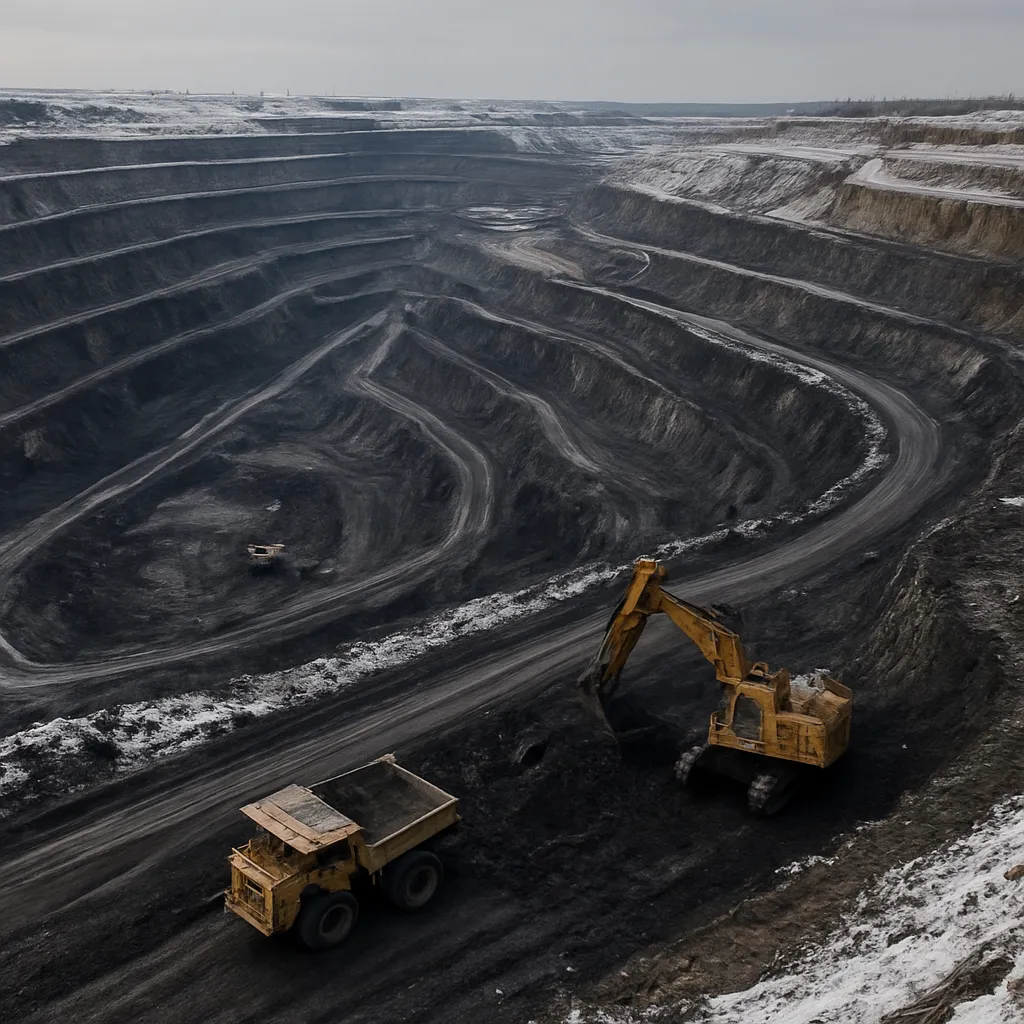
Mining practices in Raniganj have evolved from primitive, labour-intensive methods to mechanized operations. Historically the field was dominated by underground mining using room-and-pillar or bord-and-pillar techniques. From the late 20th century, open-cast (surface) mining expanded significantly where geology and land availability allowed, because of its higher productivity and lower immediate cost per tonne.
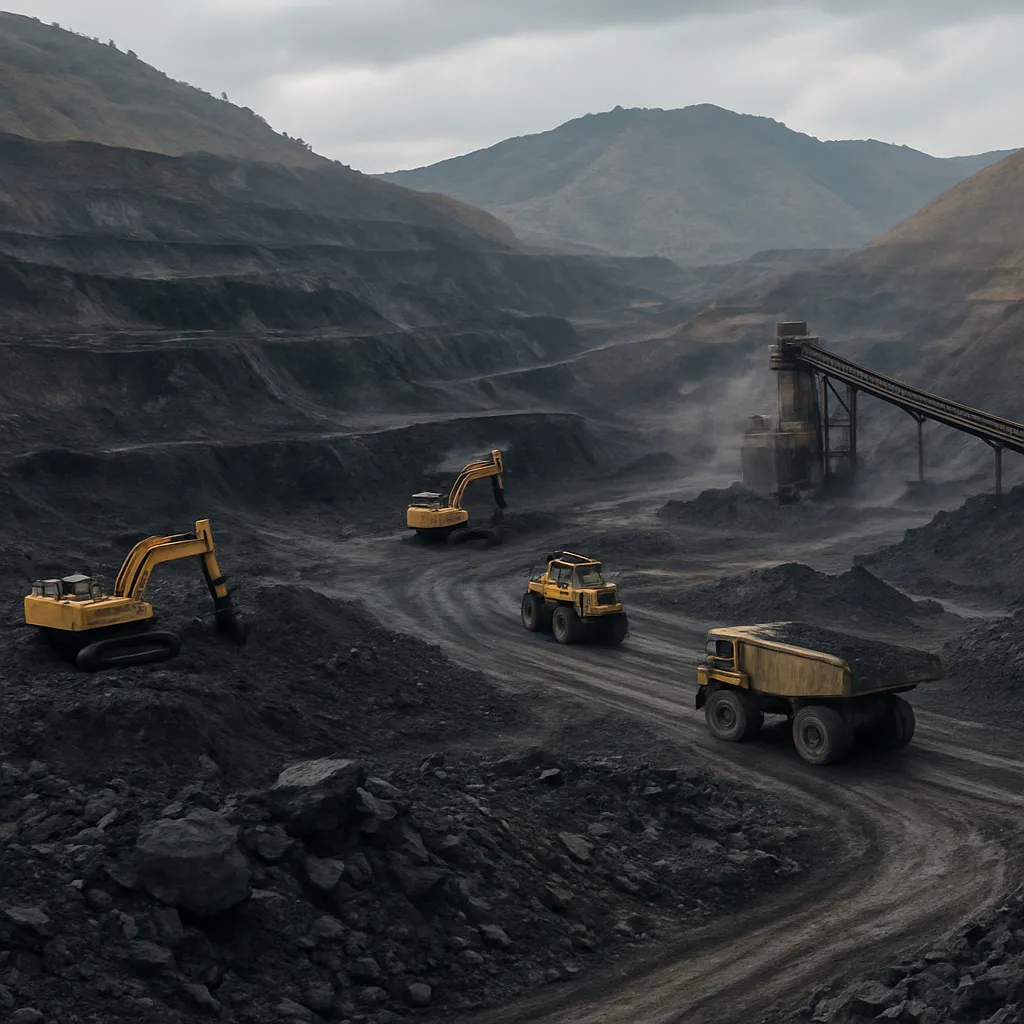
Modern operations typically combine both modes: underground mines with mechanized longwall or bord-and-pillar systems in structurally complex zones, and large-scale open-cast projects that use excavators, dozers and fleet haulage. Mechanization and improved geological surveying have increased production rates, but mechanized mining also demands enhanced training, equipment maintenance and safety protocols.
Transport and processing
One of the strengths of Raniganj is its connectivity. The coalfield lies on major railway corridors, with Asansol serving as a principal rail junction that links mines to thermal power plants, industrial customers and ports. Coal handling and preparation plants (washing units) are used where economically viable to reduce ash and improve calorific value. Road networks, conveyors and rail sidings form a dense logistics system that supports continuous dispatch of coal.
Safety and hazards
Like many older coalfields, Raniganj has faced safety challenges: mine roof collapses, methane pockets, inundations, and problems associated with legacy workings. While mechanization, better ventilation systems, methane monitoring and stricter regulatory oversight have reduced some risks, abandoned and shallow workings can still produce incidents of surface subsidence and local instability. Routine safety audits, investment in disaster management and rehabilitation of worked-out areas remain priorities for operators and regulators.
Economic and Industrial Significance
Raniganj has been a major contributor to regional economic development for over two centuries. Its coal powered early industries in eastern India and continues to feed a wide range of industrial consumers. Key areas where Raniganj coal has had economic impact include:
- Energy supply: Thermal coal from Raniganj supports local and regional power stations, stabilizing grid supplies and reducing dependence on imported coal for some consumers.
- Industrial feedstock: Manufacturing sectors—cement, brick-making, textiles, chemicals and small-scale industries—rely on locally sourced coal for process heat.
- Employment: Mining and allied activities provide direct jobs in collieries and indirect employment in logistics, equipment services, maintenance, and local commerce.
- Urbanization: Cities such as Asansol, Raniganj and Durgapur expanded because of mining, with investments in housing, schools, transport and health infrastructure linked to the coal economy.
Administratively, the formation of Eastern Coalfields Limited centralized operations, enabling coordinated investment in new projects, safety and environmental controls. National policies on coal pricing, allocation to power plants, and railway freight tariffs impact Raniganj’s economics; changes in these policies ripple through local communities and industries that depend on predictable coal supply.
Statistical Profile and Production Trends
Precise year-by-year production figures for the Raniganj sub-area can vary and are reported by companies such as ECL and Coal India in their annual reports. Broad trends that have characterized Raniganj in recent decades include:
- Transition from predominately underground production to an increasing share of open-cast production where geology permits, leading to higher annual tonnages from fewer, larger projects.
- Steady modernization which raised productivity per worker even as mechanization altered local employment patterns.
- Periodic declines in output from older, deeper underground mines as seams were exhausted or became uneconomic to mine compared to surface options, balanced by commissioning of new open-cast blocks.
In national context, Raniganj has traditionally been among the important producing fields under ECL’s portfolio. For authoritative, up-to-date numerical statistics—reserves (proved and probable), annual production, workforce size and washery capacity—company annual reports from Eastern Coalfields Limited and consolidated documents from Coal India Limited are the recommended primary sources.
Social, Environmental and Heritage Issues
Community and socio-economic impacts
Coal mining has shaped local demographics, livelihoods and urban form. While mines have created wages and commerce, they have also caused displacement, changes in traditional agriculture, and sometimes stressed public services. Retraining, alternative livelihoods and land compensation remain central social-policy issues for the region.
Environmental footprint
Environmental consequences include land degradation, loss of topsoil, groundwater changes and air pollution from dust and coal handling. The relatively high ash content of Raniganj coal contributes to large volumes of coal combustion residues (fly ash and bottom ash) when burnt in power stations. Open-cast mining can produce altered drainage patterns and biodiversity loss if not rehabilitated.
Subsidence from legacy underground workings can damage surface infrastructure; seal-off and reclamation are necessary but costly. Acid mine drainage is comparatively less prominent than in some metalliferous mining areas, but local water quality issues require ongoing monitoring. On the positive side, improved regulations, use of tailings management, and progressive reclamation measures are increasingly part of project planning.
Heritage and culture
The Raniganj-Asansol industrial belt contains a distinct mining culture: old collieries, workers’ colonies, religious and community institutions, and a living heritage of mining-related crafts and music. Some disused sites and colonial-era installations are of historical interest; preserving this heritage while planning land reuse is an emerging concern for local planners and historians.
Regulatory Framework, Rehabilitation and Community Initiatives
Operations in Raniganj are governed by national mining laws, environmental regulations and labour statutes. Post-nationalization institutions—ECL and Coal India—implement corporate social responsibility (CSR) projects, including health camps, education initiatives, community infrastructure and sometimes livelihood training to offset mining impacts.
Mine closure planning and reclamation are now integral to project approvals. Reclamation techniques include reshaping spoil heaps, topsoil replacement, planting native vegetation, converting old pits into reservoirs for irrigation or aquaculture, and stabilizing subsidence-affected land. Rehabilitation is both a technical and social process involving dialogue with affected communities to determine suitable land uses after mining ends.
Challenges and Opportunities: The Road Ahead
Several interlinked challenges and opportunities will shape Raniganj’s future:
- Transition pressures: National and global policies encouraging lower carbon intensity will influence demand for thermal coal. Raniganj’s long-term prospects will depend on balancing coal extraction with economic diversification for local communities.
- Technological upgrades: Adoption of cleaner coal technologies, improved coal beneficiation (washing), methane capture and utilization, and mechanized safety systems can raise efficiency and lower environmental impact.
- Land-use planning: Creative post-mining land uses—industrial parks, renewable energy installations (solar farms on reclaimed land), and community-use spaces—offer pathways to sustainable redevelopment.
- Social resilience: Investments in education, healthcare and alternative livelihood training can ease transitions as old underground operations decline and as mechanization alters employment patterns.
Opportunities also exist in harnessing by-products and creating value chains: washed coal for specialized industrial uses, fly ash utilization in cement and bricks, and using mined-out pits for water storage and aquaculture. Strategic investment and public–private partnerships could convert former liabilities into assets for the region.
Interesting and Lesser-Known Facts
– Raniganj is frequently cited among the earliest locations in India where coal mining developed on a commercial scale, and its growth was tightly linked with the arrival of railways and early industry in Bengal.
– The Asansol-Raniganj-Durgapur industrial corridor is sometimes described as one of India’s classic coal-to-industry belts, illustrating how mineral resources shape urban development.
– Several villages and towns in the coal belt retain distinctive cultural practices shaped by decades of migration: labourers from different regions who came to work in the collieries added linguistic and culinary diversity to the area.
– Rehabilitation experiments in the coalfield have included converting exhausted opencast sites into water bodies and community parks, demonstrating adaptive reuse possibilities.
Concluding Perspective
The Raniganj Coalfield remains a symbol of India’s industrial past and a continuing contributor to its energy and industrial systems. While the field faces environmental, social and economic changes, its future will be determined by how well stakeholders—government, companies, workers and communities—manage the twin tasks of responsibly extracting remaining coal resources and preparing for a diversified, sustainable regional economy. With focused investment in technology, safety, rehabilitation and community development, Raniganj can evolve from a legacy coal basin into a region that balances resource use with long-term social and environmental wellbeing.