The Pingshuo coal mining complex is one of the best-known large-scale coal production centres in the People’s Republic of China. Located in northern Shanxi Province, the Pingshuo deposits form a major part of China’s inland coal production system and have played a significant role in supplying fuel for power generation, industry and regional economic development for decades. This article summarizes where the mine is, what type of coal it produces, the scale of mining activities, economic and industrial significance, environmental and social considerations, and emerging trends affecting the site and similar large open-pit operations.
Location, geologic setting and resource characteristics
Pingshuo lies in the northwestern sector of Shanxi Province, an area historically renowned as one of China’s principal coal-bearing regions. The deposit is part of a broader coal-bearing basin that includes other major mines and coalfields across Shanxi and neighbouring Inner Mongolia. The mine is developed primarily as a large-scale open-pit operation exploiting near-surface, extensive coal seams that outcrop or lie at shallow depths over wide areas.
Geologically, the Pingshuo coalfield contains multiple stratified seams that are typical of the Carboniferous–Permian coal measures found across northern China. The coal at Pingshuo is predominantly thermal in character—used for electricity generation and heating—falling broadly in the grade ranges from higher-volatile bituminous to more intermediate/sub-bituminous compositions depending on seam and depth. The coal is generally characterized by:
- Moderate to high calorific value compared with low-rank lignites, making it well suited for power plants and industrial boilers.
- Variable ash and sulfur contents that require coal-washing and handling to meet environmental and combustion quality standards.
- Large in-place reserves that have been described in literature and planning documents as substantial—measured in the hundreds of millions to billions of tonnes across the whole field—supporting decades of extraction at industrial scales.
Because the deposit is extensive and relatively shallow in many places, surface mining methods have been the dominant technique, allowing very high output rates compared with underground workings.
Mining operations and production scale
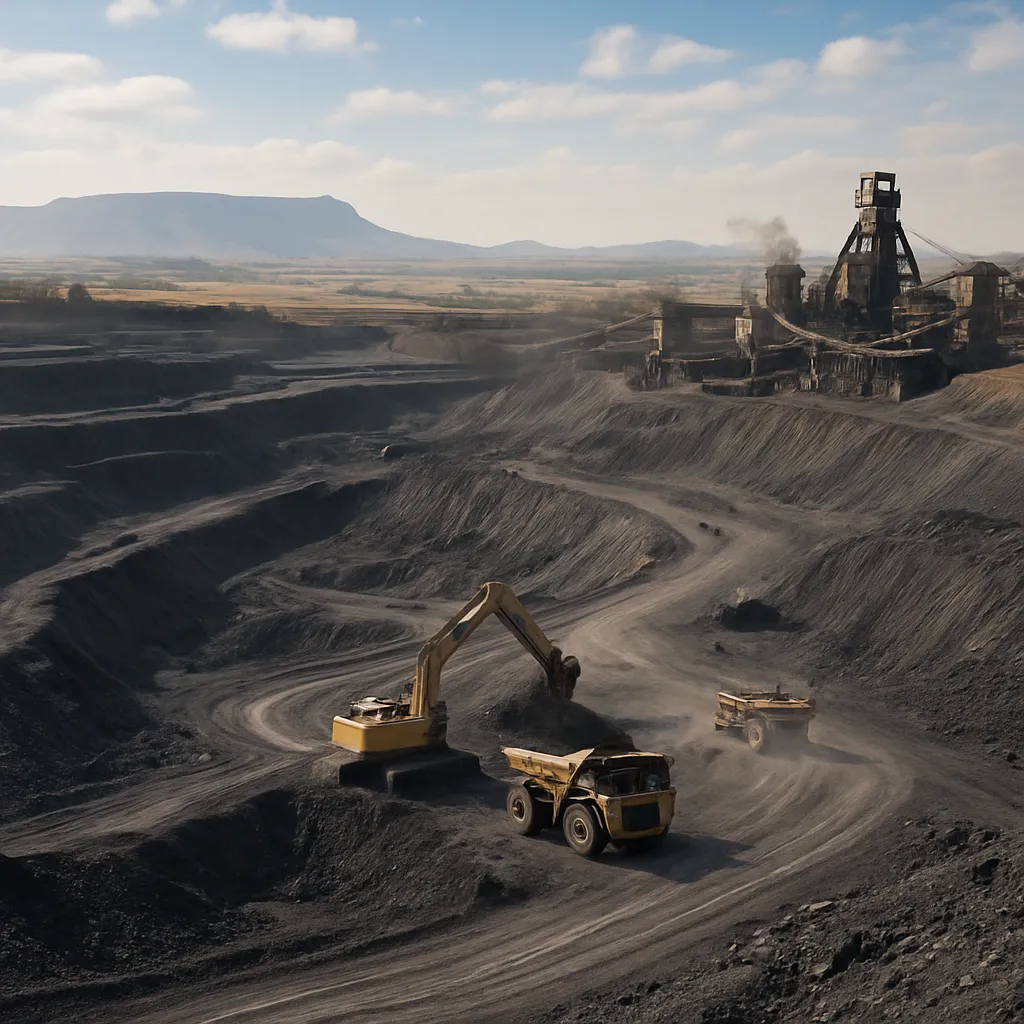
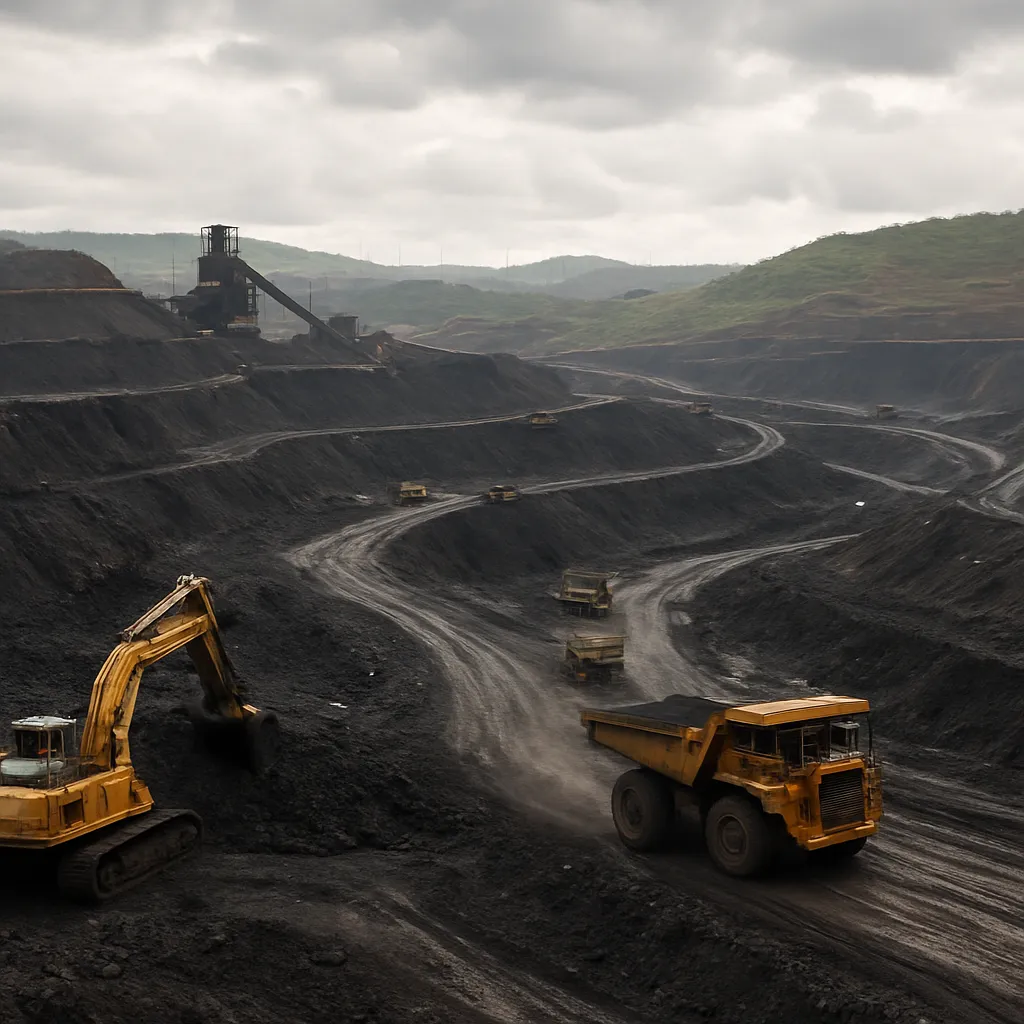
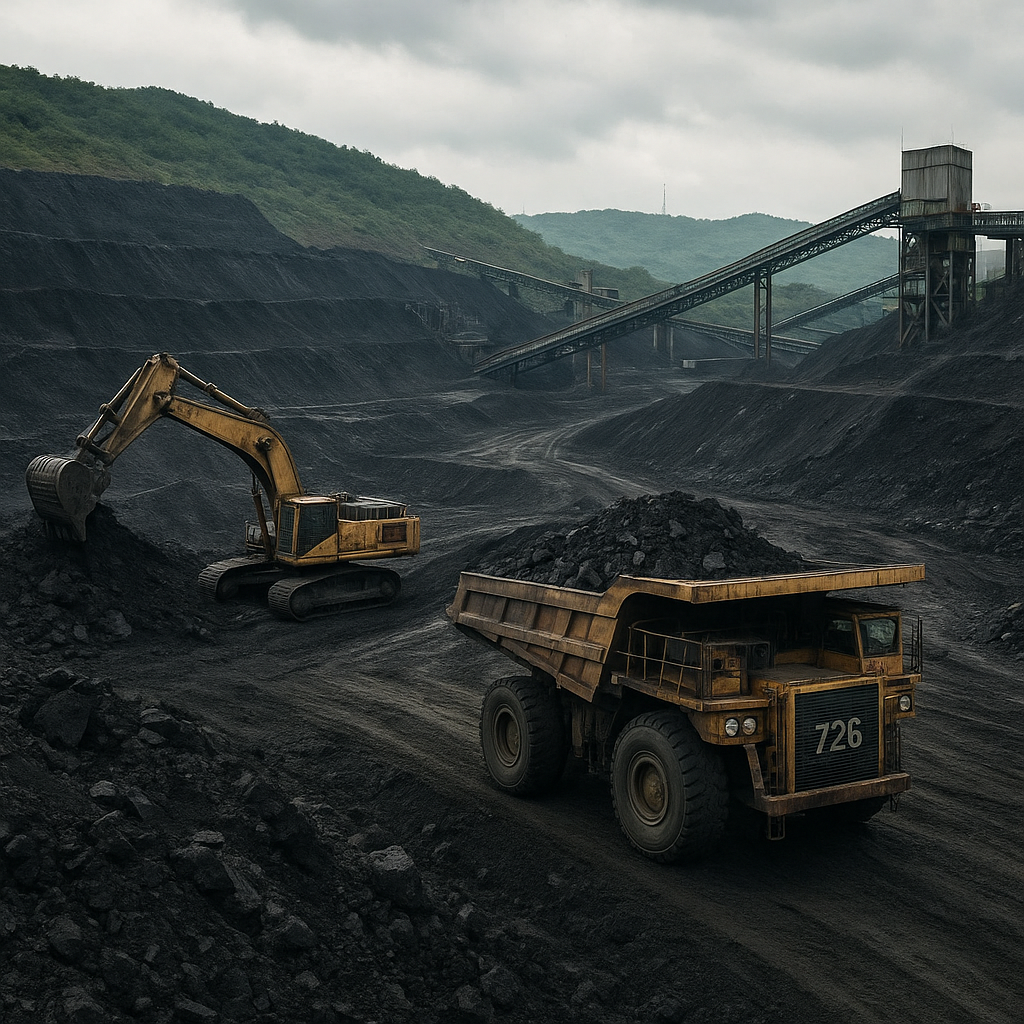
Pingshuo became notable for both its size and its level of mechanization. As an open-pit complex, its operations typically include stripping overburden, using large shovels and draglines where appropriate, fleet operations with heavy haul trucks, in-pit crushing and conveyor systems, and coal processing and washing facilities to improve product quality. Over the decades the mine has modernized many aspects of its operation, automating material handling and improving efficiency.
Production characteristics
- Annual production at Pingshuo has historically been in the range typical for very large Chinese open-pit mines—i.e., in the tens of millions of tonnes per year. This makes it one of the more productive single points of coal supply within the national system.
- The mine supplies primarily steam (thermal) coal to nearby and distant power plants, as well as industrial consumers; some product is adapted through washing and blending to meet specific power station or industrial fuel specifications.
- Coal transport from Pingshuo relies on robust logistics networks: integrated conveyor belts (for short distances), heavy truck haulage inside the mine complex, and rail connections that link the field to regional power plants and coastal ports for longer-distance shipment.
Exact year-by-year tonnages can vary with national policy, market demand, and mine sequencing of pit areas. Chinese official statistics and provincial planning documents periodically list production and capacity figures for major mining enterprises; Pingshuo has consistently appeared among the top producers in Shanxi and in national tallies for open-pit output.
Economic importance and industrial role
The Pingshuo complex has been an important economic engine for the local and provincial economy in several ways:
- Employment and livelihoods: The mine and associated facilities (processing, transport, maintenance, administration) provide direct and indirect employment to thousands of workers. The multiplier effects support local service industries, housing, and public infrastructure.
- Local and provincial government revenues: Taxes, royalties and enterprise-related fees from large coal operations have historically contributed to local fiscal income, supporting public spending on roads, schools and healthcare in the region.
- Energy supply and industrial fuel: As a stable supplier of thermal coal, Pingshuo has helped underpin electricity generation in northern and eastern China and supported heavy industry, cement production, and district heating—contributing to the nation’s industrialisation.
- Integration with national transport and power systems: Large volumes produced at Pingshuo have justified investment in rail and conveyor infrastructure, integrating the site into national coal distribution chains and enabling exports or inter-regional transfers when needed.
From a strategic perspective, the existence of very large mines like Pingshuo supports China’s broader concept of energy security by diversifying supply sources and enabling large centralized extraction that can be dispatched to match demand centers across the country.
Environmental, social and technical challenges
Large-scale open-pit coal mining presents multiple environmental and social challenges; Pingshuo is no exception. These include landscape alteration, dust and particulate emissions, groundwater and surface water impacts, and greenhouse gas (GHG) emissions primarily from coal combustion downstream and from methane release during mining. Specific concerns and mitigation approaches at Pingshuo-like operations include:
- Land disturbance and reclamation: Open pits create large disturbed areas. Progressive reclamation is used to reduce long-term land loss—backfilling where feasible, reshaping spoil heaps, and revegetating with local species to reduce erosion and restore ecosystem functions.
- Water management: Because northern China is water-stressed in many areas, mine water use and the potential for groundwater drawdown or contamination have been material concerns. Modern operations emphasize closed-circuit water handling, sediment control, and treatment of process effluents.
- Air quality: Dust control measures (wet suppression, covered conveyors, progressive revegetation) and particulate capture at coal-handling facilities are key for reducing local air pollution impacts.
- Methane and greenhouse gases: Coal mining releases methane; large mines adopt methane drainage and capture where economics and safety allow. At the national level, coal combustion from products contributes significantly to CO2 emissions, meaning sites like Pingshuo are embedded in broader debates on decarbonization.
- Community impacts and resettlement: Expansion of open pits can lead to resettlement of local populations. Managing social impacts, compensations and community development programs are part of modern mining governance practices.
Technically, Pingshuo has been a site where large-scale mining equipment and optimisation methods have been deployed. Conveyor systems, in-pit crushers, and fleet management software improve efficiency and reduce unit costs. At the same time, any large operation must continually adapt to tighter environmental regulations and changing market conditions.
Statistics, ownership and workforce (overview)
While official ownership and management arrangements have changed over the decades in line with China’s restructuring of the coal sector, Pingshuo has generally been run by large state-controlled mining groups or provincial coal enterprises—reflecting the strategic nature of large coalfields. Workforce numbers vary with mechanization and the mine’s production stage, but several thousand employees on-site and in associated services is typical for a complex of this size.
- Production volumes: Historically recorded in the tens of millions of tonnes per year for a major open-pit complex like Pingshuo; exact annual figures fluctuate with policy and demand.
- Reserves: The Pingshuo area is understood to hold very large in-place resources—enough to support multi-decade extraction at industrial scales.
- Logistics capacity: The site’s integration into national rail networks allows shipment of millions of tonnes annually to power plants and ports.
Because the Chinese coal sector aggregates production statistics across many mines and enterprises, the most authoritative and up-to-date numbers are usually published by provincial bureaus, national statistical agencies and company annual reports. These sources provide detailed tonne-for-tonne production, reserve certification, employment and investment data.
Role in domestic and global energy context
Pingshuo’s significance is partly local/provincial (supporting Shanxi’s economy) and partly national: as a robust node in the bulk coal supply chain, it has contributed to the steady availability of thermal coal across northern China. In international terms, while most of the coal produced is used domestically, availability from large inland mines indirectly influences global markets by underpinning China’s import needs and timing—i.e., when domestic supply is ample, import demand can moderate.
The mine also exemplifies broader themes in China’s energy transition: reconciling ongoing reliance on coal for power and industry with targets to reduce carbon intensity and air pollution. Large mines can be part of a managed transition: improving efficiency, reducing methane emissions, investing in environmental controls, and participating in programs to repurpose reclaimed land or co-develop renewable projects on stabilized areas.
Technological and operational innovations
Large modern open-pit operations like Pingshuo have implemented or trialed various technological measures to increase productivity and reduce impacts:
- Fleet automation and optimisation systems to reduce fuel use and increase hauling efficiency.
- Conveyorisation to minimize truck haulage distances and reduce dust and emissions from diesel fleets.
- Advanced coal-washing and blending to meet ever stricter plant input specifications and lower pollutant emissions at the combustion stage.
- Methane capture programs where geology and economics permit, turning fugitive gas into electricity or pipeline gas where infrastructure exists.
- GIS and remote-sensing tools for progressive reclamation planning and monitoring of environmental performance.
These innovations help lower the mine’s unit costs while addressing regulatory and social expectations on environmental performance.
Socio-economic benefits and regional development
Beyond direct mining activity, Pingshuo has supported regional development through infrastructure projects and local procurement. High-volume coal production generates demand for rail and road improvements, power grid reinforcement, and services (maintenance yards, workshops, and housing). These investments have second-order benefits: improved transport can enable diversification of the local economy, while corporate community programs may fund education, health and small-business opportunities.
However, dependency on a single large extractive industry introduces vulnerability: downturns in coal demand, policy-induced production cuts, or closure of pits can generate employment shocks. Regional planning in coal provinces increasingly focuses on diversification, reskilling programmes and encouraging new industries to provide more sustainable economic bases over the long term.
Environmental rehabilitation, reuse and future planning
Reclamation and land reuse at a site the size of Pingshuo are long-term projects that require planning decades ahead. Typical post-mining land uses include:
- Revegetated grasslands or forests for erosion control and carbon sequestration.
- Industrial parks or logistics hubs that can use stabilized ground and existing transport links.
- Water bodies or wetlands created in appropriately engineered depressions to provide biodiversity benefits and water storage.
- Renewable energy installations—such as solar arrays—on reclaimed or marginal lands as a complementary use to support regional energy transitions.
Financing rehabilitation is an important policy issue; ensuring adequate reclamation bonds and corporate accountability is central to avoiding long-term environmental liabilities.
Outlook and strategic considerations
The coming decades will determine the long-term role of Pingshuo and similar mines in China’s evolving energy mix. Several factors will shape this:
- National policy on coal production and air quality: Regulatory pressure to reduce emissions and improve air quality can encourage cleaner combustion technologies, tighter quality controls on coal and, in some periods, production curtailments.
- Energy transition and demand trajectories: If China accelerates deployment of renewables and nuclear power, long-term thermal coal demand could decline, altering the economics of large inland mines. Conversely, if thermal generation remains necessary for baseload and heating, such mines will retain strategic importance.
- Technological advances: Lowering mining costs, increasing methane capture, and deploying carbon capture at coal-fired plants (where feasible) can change environmental profiles and extend operational lifetimes under stricter emissions regimes.
- Local economic planning: Successful diversification of the local economy and effective reclamation practices can mitigate social risks from eventual declines in production.
For policymakers and mine operators, balancing immediate fuel-supply needs with long-term sustainability is the core challenge. Large producers like Pingshuo will likely be focal points for demonstrating how coal regions can modernize operations, reduce environmental footprints and prepare for diversified regional futures.
Interesting facts and contextual notes
- Pingshuo’s scale places it among the largest open-pit coal operations historically developed in northern China.
- Because of the geology, the mine has been amenable to highly mechanized, continuous surface extraction—contributing to very high labour productivity per tonne compared with many underground operations.
- The mine has been part of national discussions on how to balance coal-dependent regional economies with carbon-reduction commitments and air-quality improvement programmes.
- Its logistical footprint—rail spurs, conveyor corridors and processing yards—illustrates how major mines are tightly coupled with national infrastructure decisions.
In summary, the Pingshuo coal complex is a major example of industrial-scale coal mining in China: geologically endowed, economically significant for its region and the nation, technologically advanced in many respects, but also facing the environmental and social challenges common to large open-pit operations. As China’s energy landscape evolves, mines like Pingshuo will remain important reference points for how the country manages the twin imperatives of energy security and environmental sustainability.