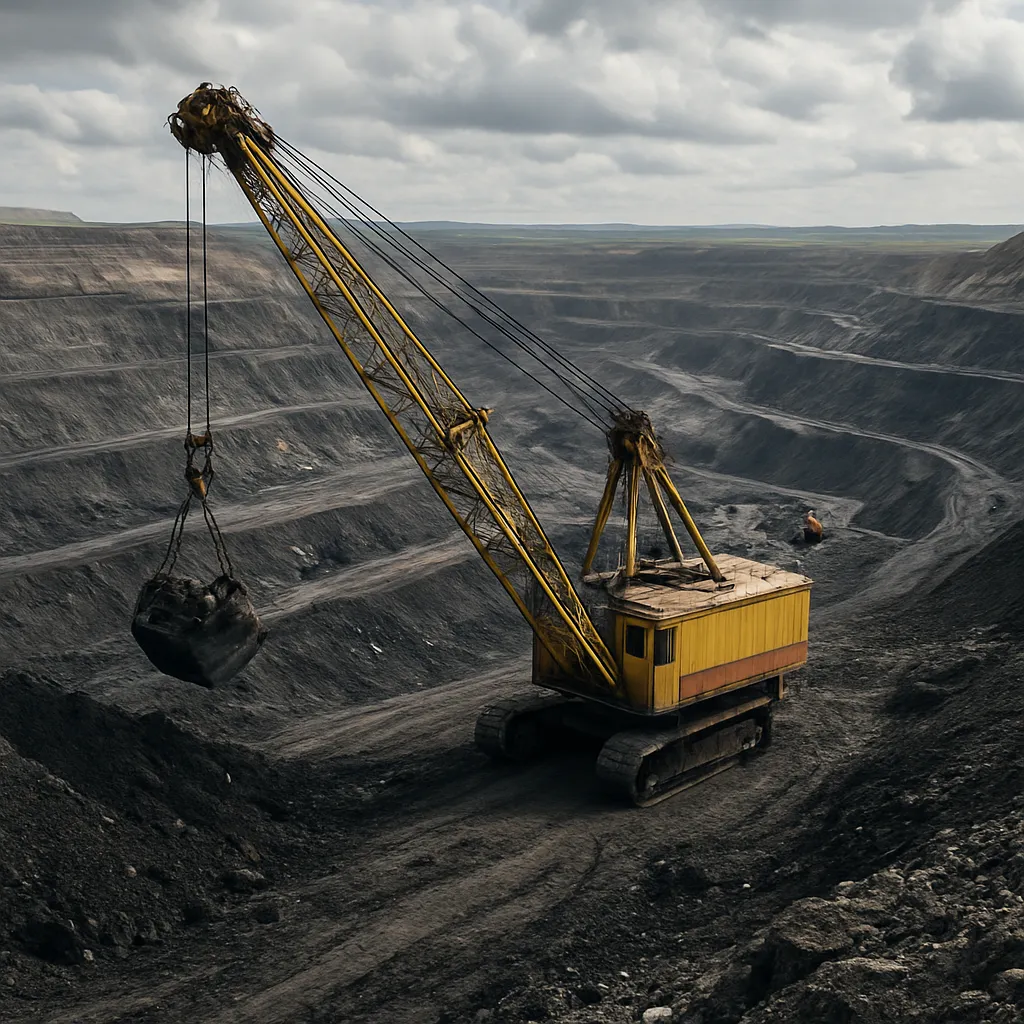
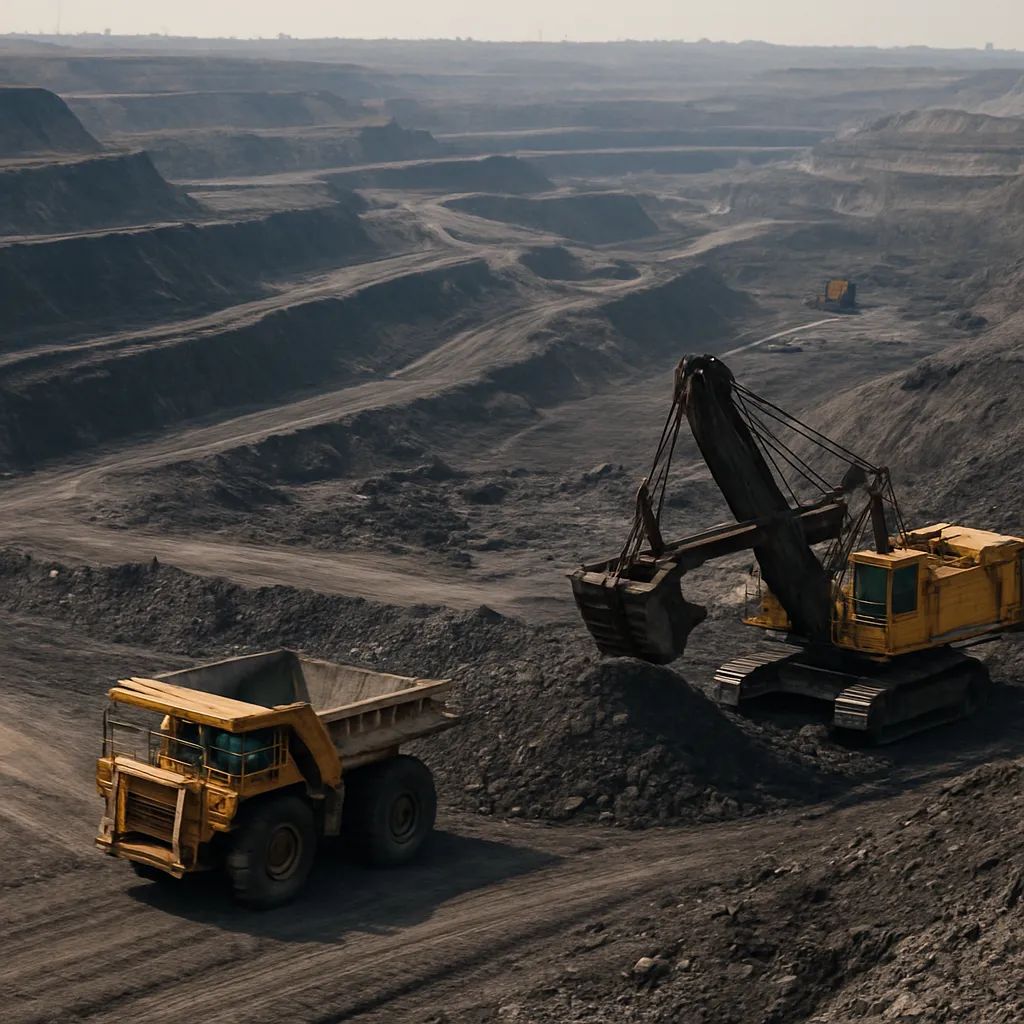
The Saraji coal mine is a major open-cut mining operation in central Queensland, Australia. It is an important asset in the Bowen Basin coalfields and has played a significant role in Australian coal production for decades. This article outlines the mine’s location and geology, the type and quality of coal produced, ownership and operational history, economic and statistical data, infrastructure and logistics, environmental and safety practices, and its broader role and outlook in the global coal and steelmaking industries.
Location, Setting and Geological Context
Saraji is situated in the heart of the Bowen Basin, a prolific coal-bearing region in central Queensland. The mine lies within a regional cluster of large coal operations that supply both metallurgical coal for steelmaking and thermal coal for power generation. The Bowen Basin’s sedimentary sequences contain multiple coal seams of commercial interest; Saraji exploits several of these seams using open-cut techniques combined with in-pit and out-of-pit processing facilities.
Regional connectivity and townships
- The mine is accessible via the regional road and rail network that connects coalfields to export terminals on the Queensland coast.
- Nearby service towns and regional centres provide the workforce, accommodation and support services required by large-scale mining operations.
- Saraji’s operations are integrated with the longer-distance Goonyella rail system and coastal export infrastructure, enabling high-volume export shipments.
Resources and Coal Type
Saraji primarily produces high-quality coking coal (also referred to as metallurgical coal), which is essential for blast-furnace steelmaking. The coal mined at Saraji is typically medium- to high-volatile bituminous coal that, after washing and preparation, yields products suited to the steel sector. Product specifications from Saraji-type seams generally feature:
- Good coke strength and low impurities relative to many thermal coals
- Relatively low sulphur and moderate ash content after processing
- Several product grades tailored to customers’ metallurgical requirements
The mine operates a Coal Handling and Preparation Plant (CHPP) that washes run-of-mine coal to produce export-grade products, separating higher-value coking streams from lower-value middlings.
Ownership, History and Operations
Saraji has been developed and operated within the corporate structures typical of large Australian coal mines. Historically the mine has been operated by a major joint venture which has invested in long-term mine planning, processing facilities and continuous improvements in mining technology. Saraji’s modern operations reflect decades of investment and incremental expansion of pit footprint and processing capacity.
Operational methods
- Large-scale open-cut mining using drill-and-blast, truck-and-shovel fleets, and conveyor haulage where feasible.
- On-site coal washing and screening to produce multiple saleable product streams.
- Use of contractors for specialised roles and a substantial direct workforce for core operations and maintenance.
Production, Reserves and Economic Significance
Saraji is one of the significant producers within the Bowen Basin and contributes materially to Australia’s metallurgical coal export volumes. While annual output varies with market demand, mining schedules and project life decisions, Saraji has historically produced several million tonnes of saleable coal per year. The mine’s reserves and resources are substantial, providing a multi-decade life at current production rates in many assessments.
Employment and regional economic impact
- Saraji supports direct employment on site and indirect employment through contractors, logistics, maintenance and regional services. The total employment footprint often numbers in the hundreds to low thousands when contractor roles are included.
- The mine contributes royalties and taxes to state and federal budgets, which fund regional infrastructure, health and education services.
- Local procurement and community investment programs stimulate the economies of nearby towns and service centres.
Export markets and revenue
Export sales typically target major steelmaking nations in Asia, including Japan, South Korea, China and increasingly South East Asia and India. Revenue is driven by global metallurgical coal pricing, which is sensitive to steel production cycles, scrap availability and alternative feedstocks. The strategic role of Saraji lies in delivering consistently specified coking coals to this international market.
Infrastructure, Logistics and Processing
Saraji’s supply chain includes on-site processing, stockpiling, rail haulage and export terminal loading. Key infrastructure elements include:
- Coal Handling and Preparation Plant (CHPP) — washing and sizing coal to produce multiple saleable grades.
- Rail loading facilities linked to regional export corridors; coal is typically railed to coastal ports such as those served by the Dalrymple Bay and Hay Point terminals.
- Stockyard and blending systems to manage customer specifications and shipping schedules.
Investment in haulage efficiency, load-out technology, and predictive maintenance reduces unit operating costs and improves on-time delivery to customers.
Environmental Management and Safety Practices
Large coal operations like Saraji are subject to stringent environmental approvals and ongoing monitoring. Environmental management practices typically include:
- Progressive rehabilitation of disturbed land, with recontouring, topsoil management and replanting to return land to agreed post-mining land uses.
- Water management systems to control sediment, manage onsite water balance and protect downstream water quality.
- Air quality controls, dust suppression and monitoring to reduce community and occupational exposure.
- Greenhouse gas accounting and measures aimed at reducing fugitive methane emissions and improving energy efficiency.
On safety, the mine implements rigorous standards, training programs and incident reporting regimes to lower operational risk. Continuous improvement in safety performance is a significant focus area and includes automation, remote monitoring and fatigue-management systems.
Statistical Snapshot and Typical Metrics
While exact figures change year to year, the following types of metrics are commonly reported for large Bowen Basin operations like Saraji:
- Annual saleable production: typically several million tonnes per annum (range depends on pit sequencing and market demand).
- Proved and probable reserves: usually expressed in the hundreds of millions of tonnes for long-life operations.
- Average coal quality metrics: calorific value (kcal/kg), ash percentage, volatile matter, sulphur and moisture content reported by product stream.
- Workforce: direct employees plus contractors, often totalling a figure commonly in the high hundreds to low thousands.
- Logistics throughput: daily rail wagon numbers and peak shiploading rates at export terminals affect the mine’s export capacity.
These metrics are important for investors, regulators and customers and are regularly published in corporate reports and regulatory filings by mine owners and operators.
Role in the Industry and Strategic Importance
Saraji’s principal strategic value lies in supplying high-quality coking coal to steel producers. Metallurgical coal is relatively scarce globally compared to thermal coal, and mines that supply consistently performing product grades have outsized importance to blast furnace and cokemaking customers. Key aspects of Saraji’s industry role include:
- Supporting the global steel supply chain by delivering feedstock for coke ovens and blast furnaces.
- Providing long-term contractual supply relationships that underpin customer mill planning and shipper logistics.
- Acting as a regional economic anchor through employment, infrastructure development and local procurement.
Challenges, Trends and Future Outlook
The future of mines such as Saraji will be shaped by a mix of market, regulatory and technical influences:
- Market demand: Global steel production levels, the pace of infrastructure investment and shifts to electric-arc-furnace (EAF) steelmaking affect metallurgical coal demand.
- Decarbonisation pressures: As steelmakers move toward lower-emissions routes, demand for traditional coking coal may evolve. Transitional demand for high-quality metallurgical coal is expected to persist while low-emission steel technologies scale.
- Cost and productivity: Sustained investment in productivity, automation and cost control will be key to competitiveness against alternative global suppliers.
- Regulatory and social licence: Ongoing engagement with regulators, traditional owners, local communities and other stakeholders will determine permitted expansions and mine-life extensions.
Given its resource base and integration into established export corridors, Saraji is positioned to continue supplying metallurgical coal in the near to medium term, while adapting to longer-term changes in steelmaking technology and climate policy.
Additional Interesting Facts and Observations
- Saraji exemplifies the large-scale, heavily engineered approach to coal mining practiced in the Bowen Basin, combining bulk excavation with sophisticated processing.
- Mines in this region have been at the forefront of adopting technologies such as fleet management systems, predictive maintenance and remote operations to enhance safety and efficiency.
- Regional coal projects often establish long-term partnerships with local communities and First Nations groups, incorporating employment, training and land use agreements.
Conclusion: Saraji is a major coal operation in central Queensland’s Bowen Basin, producing high-value metallurgical coal that supports global steelmaking. Its economic footprint includes substantial export revenue, regional employment and contributions to public revenues. Like other large coal mines, Saraji faces an evolving future shaped by market trends, technological change and environmental imperatives, but it remains an important component of Australia’s mining industry and the international metallurgical coal market.