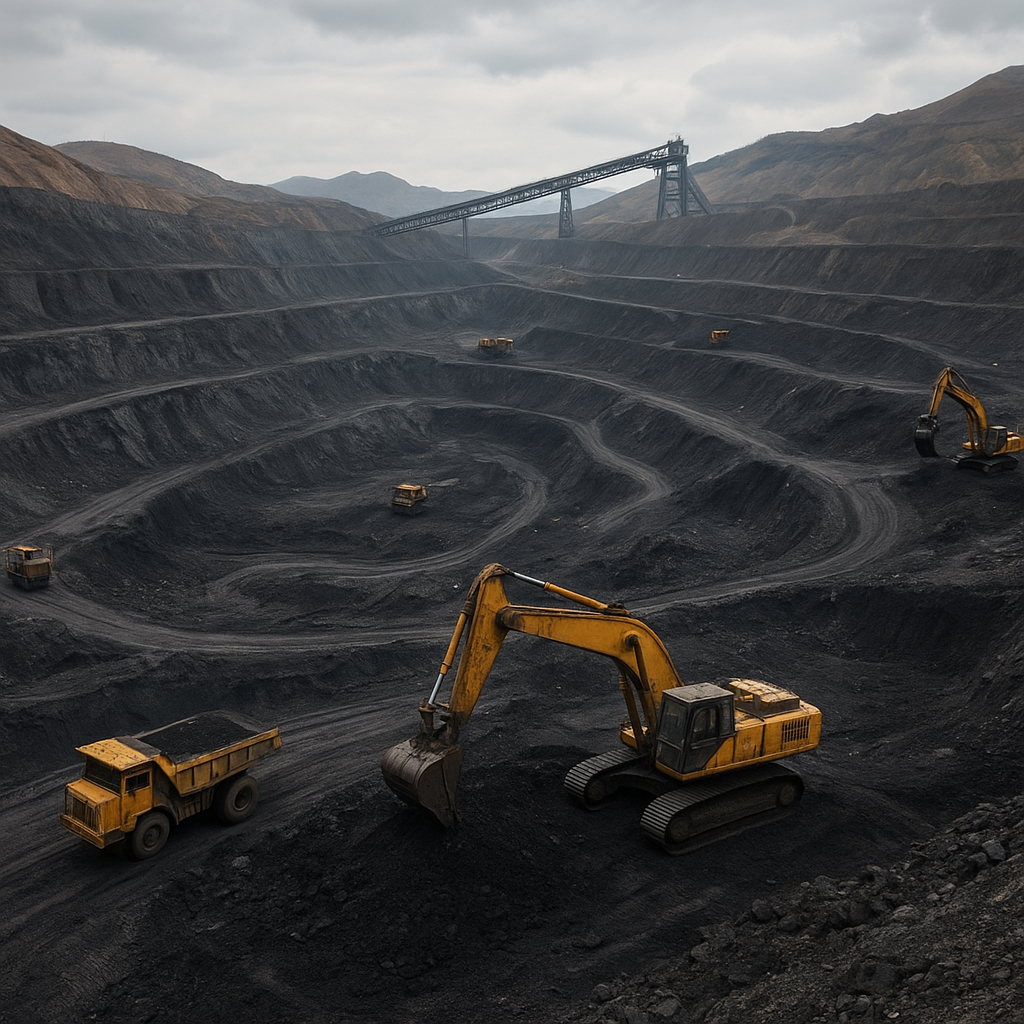
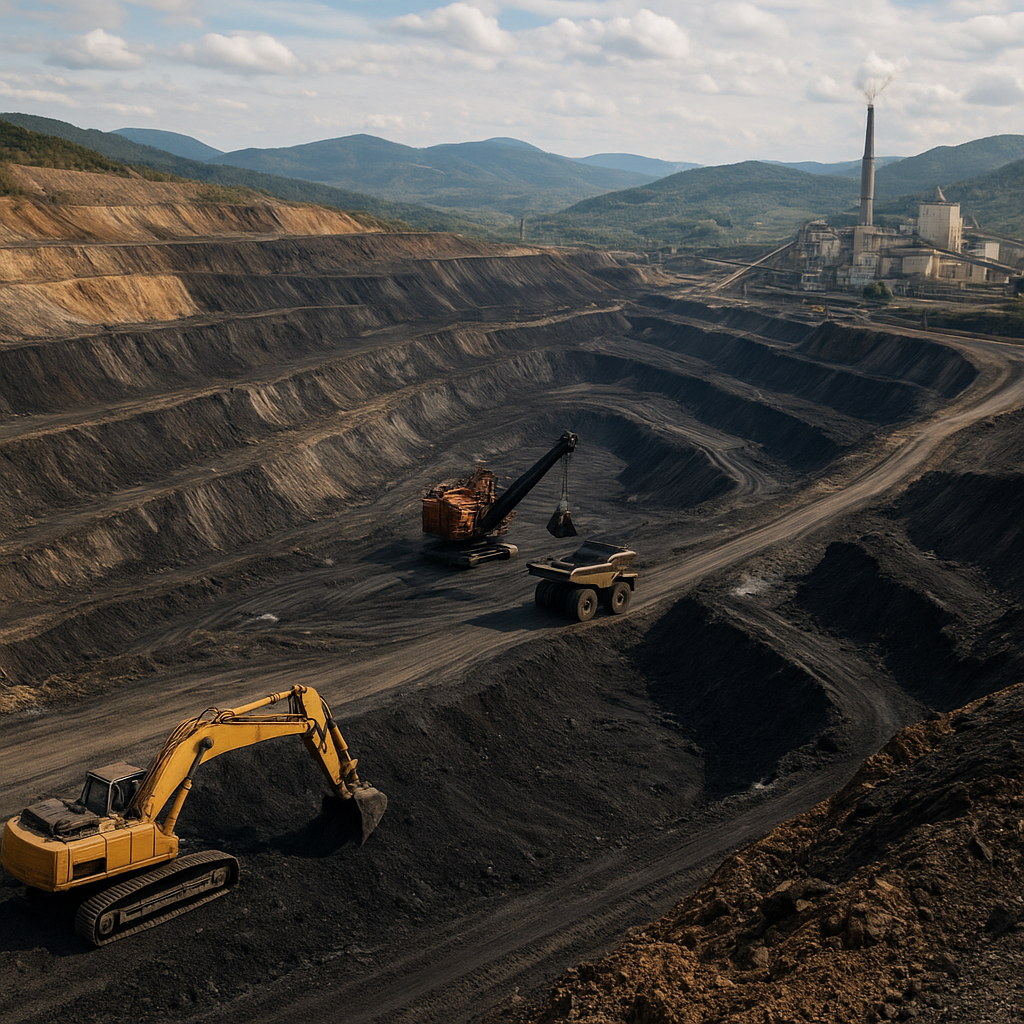
The Wanli No. 1 Mine is one of the numerous coal production sites in the People’s Republic of China. Located within a region characterized by long-established coal-bearing basins, this mine contributes to local energy supply, employment and industrial chains that support power generation and metallurgy. While publicly available detailed operational statistics for Wanli No. 1 are limited in open sources compared with China’s largest state-owned mines, the site can be described through its geological setting, mined products, historical development, economic role and the environmental and social issues that accompany modern coal extraction in China. This article provides a comprehensive overview, placing the mine in regional and national context and summarizing what is known or reasonably estimable about its operations, significance and future outlook.
Location and geological setting
The Wanli No. 1 Mine sits within one of China’s coal-producing provinces—many medium-sized mines bearing the Wanli name are found in areas with sedimentary basins that formed in Paleozoic to Mesozoic eras. Coalfields in eastern and northern China are often associated with Carboniferous–Permian coal-bearing strata, whereas some basins in the interior and south contain younger Tertiary coal seams. The mine extracts coal from sub-horizontal to gently folded seams that are accessible by underground tunnels or open-pit benches depending on seam depth and overburden thickness.
Geologically, the common characteristics for mines like Wanli No. 1 include:
- presence of multiple coal seams of variable thickness;
- coal rank ranging from bituminous to anthracite in some basins;
- associated rock strata composed of sandstone, siltstone, shale and occasional volcanic interlayers;
- groundwater pressures and roof conditions that influence mining method choice.
These geological factors determine mining techniques, ventilation needs and safety protocols, as well as the quality classification of the extracted coal.
History and development
The development timeline of Wanli No. 1 typically follows a regional pattern: initial discovery and small-scale exploitation in the mid-20th century, expansion during industrialization phases, and modernization or consolidation after the 1990s as China restructured its coal sector. Many mines with the “No. 1” designation originally marked the first or principal shaft developed in a local mining area.
Key phases in such a mine’s history often include:
- early manual or mechanized extraction to meet local fuel needs;
- post-1949 nationalization and integration into state planning where relevant;
- 1980s–2000s modernization with improved mechanized longwall or room-and-pillar systems;
- recent decades’ emphasis on safety upgrades and environmental control under stricter regulations.
Historical records often show progressive increases in mechanization and improvements in ventilation, water control, and haulage infrastructure. Where local ownership shifted to larger mining groups, capital investments brought more efficient production but also pressures to meet output targets.
Coal type, quality and mining methods
Coal from Wanli No. 1 Mine is typically used for thermal power generation and industrial heating, and in some cases for coking if the rank and volatile matter content are suitable. The primary coal characteristics to note are:
- Type: predominantly thermal coal, with possible occurrences of higher-rank seams (semi-soft coal to bituminous); in select basins anthracite may occur but is less common.
- Heat value: mid-range for thermal use (often in the 4,500–6,500 kcal/kg range for many Chinese coalfields), though exact calorific values vary by seam and washing processes.
- Moisture and ash: raw seam ash content influences whether coal undergoes washing before sale; washing lowers ash and improves calorific value but increases water use and slurry management needs.
Mining methods employed depend on the depth and angle of seams:
- open-pit (surface) mining where seams are shallow and overburden is economical to remove;
- underground longwall mining for thick, laterally extensive seams, providing high productivity but necessitating robust roof control and ventilation;
- room-and-pillar or bord-and-pillar systems in more structurally complex seams or where seam geometry limits longwall adoption.
Mechanization levels vary. Modernized Wanli No. 1 operations might use shearers, conveyors, roof supports and automated monitoring systems; less modernized operations rely on continuous miners and shuttle cars.
Economic and statistical overview
Detailed mine-level statistics for Wanli No. 1 are not always publicly disclosed, particularly for mid-sized or privately-managed operations. Nonetheless, its economic role can be considered at three scales: local, regional and national.
Local economic role
At the local level, the mine is typically a significant employer and a purchaser of local goods and services. Employment at a single medium-sized mine can range from a few hundred to several thousand direct jobs when including surface plant, underground crews, maintenance and administrative staff. Indirect employment in transport, equipment supply and catering multiplies the mine’s economic footprint. Income from wages, royalties and taxes helps sustain municipal budgets and public services in mining towns.
Regional and industrial linkages
Regionally, coal from Wanli No. 1 feeds power plants, cement works, brickmaking operations and small metallurgical furnaces. It may be transported by rail, conveyor or truck to nearby industrial centers. The mine supports local coal-processing plants (coal washing and grading), logistics enterprises and, in some instances, chemical conversion facilities where coal is a feedstock.
National context and statistics
To place the mine in a wider frame, China’s coal production is enormous and remains central to the national energy mix. China produces several billion tonnes of coal annually—representing roughly half of world production—and coal supplies around 55–60% of the country’s primary energy and a larger share of electricity generation. These macro figures highlight why even modest mines are part of a strategic industry.
Estimated production scale for a mine like Wanli No. 1:
- small to medium operation: typically 0.5–3 million tonnes per year;
- large integrated mines: can exceed 5–10 million tonnes per year (for comparison only).
These are generalized ranges—actual numbers for Wanli No. 1 depend on seam thickness, mechanization and permitted output.
Social impacts and workforce
Coal mining communities are shaped by shifts in employment, safety culture and municipal services. Wanli No. 1 has likely followed national trends in workforce transformation:
- a historical reliance on local labor pools, sometimes augmented by migrant workers;
- a steady move toward mechanized operations requiring technicians and specialists;
- training programs to raise skill levels, often supported by the owner company or local government;
- health programs to monitor respiratory and occupational hazards among miners.
Social benefits include steady wages, contributions to local infrastructure and corporate social responsibility projects. However, mines also bring challenges: mine closures or production cuts cause economic stress, while long-term health issues and the legacy of subsidence or pollution can burden communities.
Environmental management and impacts
Environmental concerns associated with Wanli No. 1 mirror those of coal mines globally: land disturbance, dust generation, wastewater and slurry from coal washing, groundwater impacts and greenhouse gas emissions. Specific impacts and mitigation measures include:
- Land use and reclamation: open pits or spoil tips alter landforms; reclamation plans, topsoil storage and re-vegetation are standard mitigation measures.
- Water management: dewatering of pits and management of mine water require treatment to remove suspended solids and contaminants; proper handling of washery effluents is essential.
- Air quality: fugitive dust and combustion emissions can be controlled by dust suppression, covered conveyors and emission controls at coal preparation plants.
- Greenhouse gases: coal combustion is a major source of CO2; methane released during mining is an additional potent greenhouse gas that many Chinese mines now capture for power or flaring where feasible.
Chinese regulatory frameworks have tightened over recent decades, forcing mines to adopt cleaner tech, improved tailings management and stricter discharge standards. Wanli No. 1’s actual environmental performance would depend on operator investments and enforcement at the provincial level.
Safety record and technical innovations
Coal mining safety has been a major focus in China following decades of progress in reducing fatality rates. Modernization of ventilation, gas monitoring, automated roof support and remote-controlled equipment has reduced many traditional risks. Typical safety and innovation measures include:
- real-time gas monitoring systems and automated shutoffs;
- digitized information systems for tracking personnel and critical parameters underground;
- use of methane drainage and utilization to reduce explosive hazards and greenhouse gas release;
- improved emergency response training and rescue infrastructure.
Wanli No. 1, if modernized, would incorporate many of these elements. Conversely, smaller operations with constrained capital have continued to be the focus of regulatory inspections and improvement mandates.
Infrastructure, logistics and markets
The mine’s ability to serve end-users depends on infrastructure:
- Transport links: connection to regional rail networks is crucial for moving bulk coal economically; road haulage supplements or substitutes where rail is absent.
- Power and water supply: mining and processing require reliable electricity and water; disruptions can limit output.
- Coal preparation: on-site washing plants improve product quality, enabling access to higher-value markets and lowering transport costs per energy unit.
Markets for the coal can be domestic utilities, nearby industrial consumers or, in some cases, export markets via coastal ports. Domestic demand profile—seasonal peaks for heating and steady demand from power sector—affects pricing and dispatch.
Regulatory environment and policy influences
China’s national and provincial policies shape the mine’s prospects. Key policy factors include:
- permits and safety compliance: central authorities issue stricter standards that mines must meet to continue operating;
- capacity consolidation: incentives and directives have encouraged slashing of inefficient small mines and consolidation into larger, more efficient enterprises;
- environmental targets: emissions reduction and water-saving targets force investments in cleaner processing and methane capture;
- energy transition policies: long-term pressure to reduce coal dependency may change investment incentives and future market demand.
These forces create both challenges and opportunities: compliance costs rise, but access to capital and technology improves for compliant operators.
Significance in the industry and comparative context
While not necessarily among China’s largest mines, Wanli No. 1 is representative of the many mid-sized operations that collectively sustain regional economies and provide feedstock for power and industry. Its presence illustrates several broader industry themes:
- Decentralized production: thousands of medium and small mines historically distributed supply close to demand centers.
- Modernization drive: the national push toward mechanized, safer and cleaner mining continues to reshape the sector.
- Market integration: better logistics and coal preparation allow mid-sized mines to compete more effectively with large integrated producers.
The aggregate role of mines like Wanli No. 1 is significant: many regions depend on their output for energy security and employment even as national energy strategies evolve.
Challenges and future outlook
Major challenges facing Wanli No. 1 and similar operations include:
- managing environmental liabilities and meeting increasingly strict environmental standards;
- investing in modern equipment and training to maintain competitive production costs;
- adapting to policy-driven demand shifts as China expands renewable energy and pursues carbon peaking and neutrality goals;
- ensuring social stability and economic diversification for dependent mining communities.
Future scenarios for the mine might include continued operation with incremental upgrades and environmental investments, consolidation into a larger mining group to achieve economies of scale, a gradual decline in output aligned with regional diversification programs, or eventual closure and reclamation if policy and market conditions mandate pivoting away from coal in the longer term.
Interesting facts and lesser-known aspects
- Community heritage: many coal-mining towns associated with mines like Wanli No. 1 have rich cultural histories tied to mining innovations, folk traditions and local cuisine shaped by the workforce.
- Coal chemistry: variations in coal chemistry across seams allow selective marketing—higher-volatile coals for power plants and lower-volatile for certain industrial uses—so mines with multiple seams can target different buyers.
- Methane utilization: capturing mine gas both improves safety and provides a supplementary energy source; successful projects can use methane for heating or power generation, reducing greenhouse impact.
- Rehabilitation experiments: some rehabilitated mining areas have been converted to lakes, wind farms, or industrial parks as part of regional redevelopment strategies.
These aspects highlight the multifaceted role of mines beyond mere commodity extraction.
Concluding remarks
The Wanli No. 1 Mine exemplifies a class of Chinese coal operations that remain crucial for local economies and the national energy supply, even as the broader energy landscape adapts to environmental and policy pressures. While precise production and employment figures for the mine are not always published publicly, its geological setting, operational methods, socio-economic impacts and environmental challenges mirror those found across China’s coalfields. The mine’s future will depend on its ability to modernize, comply with environmental and safety regulations, and integrate into changing energy markets. As China transitions toward cleaner energy sources over coming decades, the legacy and adaptation of mines like Wanli No. 1 will be an important chapter in the country’s industrial and social evolution.