The following article provides a comprehensive overview of the Tashan Coal Mine in China, examining its location, the types of coal produced, economic and industrial roles, available statistical information, environmental and safety considerations, and its future prospects within China’s evolving energy landscape. Where exact figures are not publicly available, the text indicates the typical ranges and regional context to give a clear picture of the mine’s importance. Throughout the text, key concepts are highlighted for emphasis, helping readers quickly identify the most relevant points.
Location and geological setting
Tashan Coal Mine is located in the northern or northeastern regions of the People’s Republic of China, within one of the country’s prolific coal-bearing provinces. While specific administrative coordinates and county-level placement can vary in published sources, mines with the name “Tashan” are commonly associated with areas that have complex geological formations favorable to coal accumulation. The surrounding geology typically consists of Paleozoic and Mesozoic sedimentary basins where peat-forming environments once existed, later transformed into coal seams through prolonged burial, heat and pressure.
The mine is often situated in a region with existing coal infrastructure: rail links, conveyor systems, and coal-processing plants. Proximity to industrial centers and power stations enhances the mine’s logistical value. The local stratigraphy generally includes multiple seams of varying thickness, with interbedded layers of sandstone, shale and occasional roof and floor anomalies that affect mining methods and safety considerations.
Coal type, quality and mining methods
Tashan produces commercially valuable grades of coal. The most commonly extracted types at mines in similar geological settings are bituminous and, in some seams, higher-grade coking coal (metallurgical coal). These coals are used both for power generation and in heavy industry, notably steelmaking. The exact rank—ranging from sub-bituminous to medium-volatile bituminous—depends on seam depth, maturity and local geological history.
Typical coal qualities
- Calorific value: mid-to-high range for bituminous coal, generally appropriate for both thermal and partial metallurgical uses.
- Volatile matter and fixed carbon: balanced to suit combustion and coking processes in regional plants.
- Ash and sulfur content: variable; many Chinese mine coals have moderate ash content, requiring washing and beneficiation to meet industrial specifications.
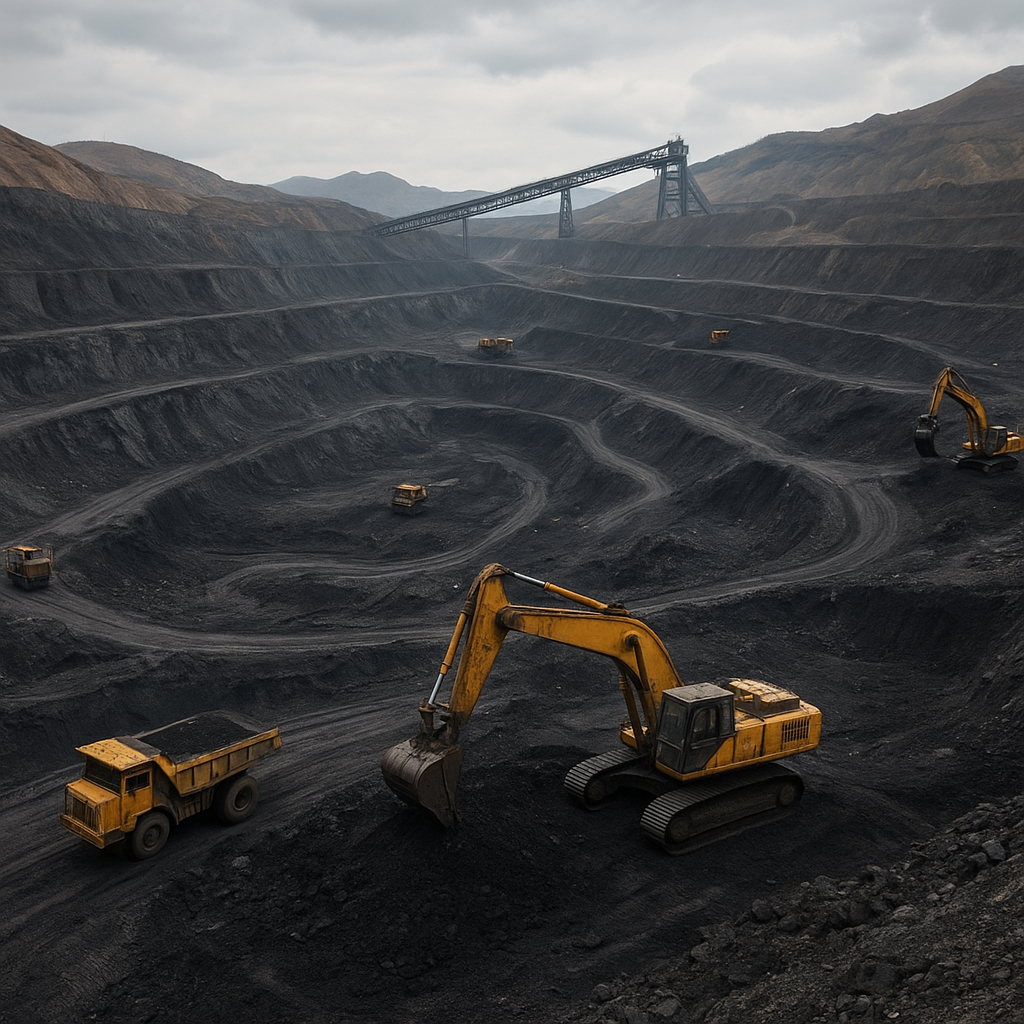
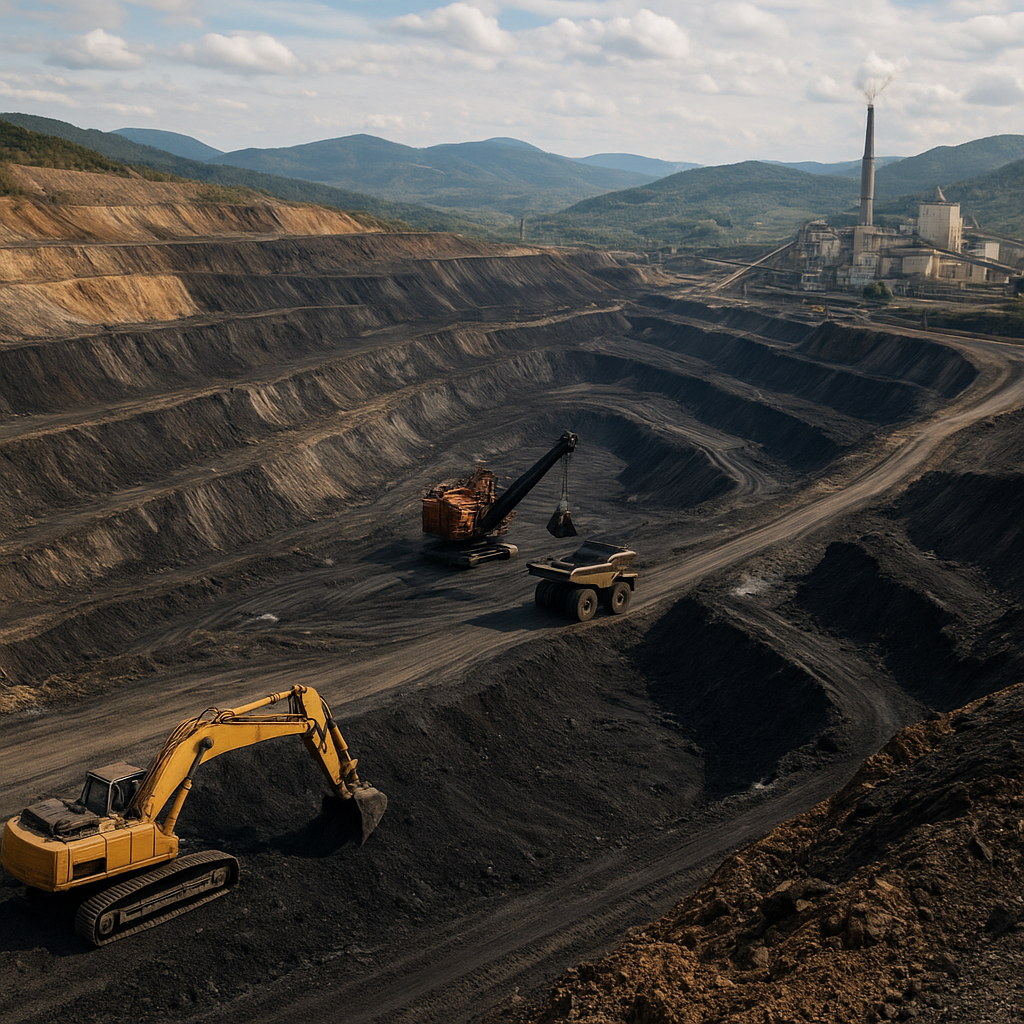
Mining methods at Tashan are likely a combination of modern underground longwall systems and surface (open-pit) techniques where geology permits. China’s coal industry has invested heavily in mechanized longwall technology, roof support systems and automated haulage to improve productivity and safety. Supported by coal preparation plants, the mine’s production chain typically includes crushing, washing, and sizing to deliver marketable coal products.
Economic importance and industrial linkages
The Tashan Coal Mine contributes to both local and national economic activity. At the local level, it provides significant employment and supports a network of ancillary services: transport operators, repair and maintenance, supply of explosives and equipment, and energy provision. On a broader scale, the mine feeds into regional power stations, steel mills and industrial consumers, making it part of a critical supply chain in China’s heavy industry and electrical generation systems.
Important economic roles include:
- Employment: Direct jobs in mining, engineering and processing; indirect jobs in logistics, maintenance and local services.
- Revenue: Sales of coal to state-owned and private utilities and industrial customers; local tax revenues and royalties that support municipal budgets.
- Industrial linkage: Supplying metallurgical coal for steel production and thermal coal for power plants and chemical feedstocks.
Given the continued centrality of coal in China’s energy mix—despite growth in renewables—mines like Tashan help underpin energy security by providing domestically sourced fuel and reducing import dependence for certain coal grades.
Production statistics and workforce
Precise, up-to-date production figures for Tashan Coal Mine are subject to reporting by provincial coal bureaus or the mine’s operating company. Publicly accessible, mine-level data can be limited. However, several contextual points are useful:
- China produces over 3.5–4.0 billion tonnes of coal annually (recent national-level range), with major coal-producing provinces such as Shanxi, Inner Mongolia, Shaanxi and Xinjiang accounting for a substantial share.
- Mines of Tashan’s class in productive provinces often produce in the range of several hundred thousand to a few million tonnes per year, depending on reserve size, seam thickness and level of mechanization.
- Workforce size varies widely: modern mechanized operations require fewer miners per tonne produced than small, older mines. A mid-sized, mechanized mine might employ several hundred to over a thousand workers directly.
When available, official reports from the owning company or provincial coal administration provide the most reliable production and employment figures. In the absence of mine-specific disclosures, industry analysts use regional production averages and reserve estimates to infer output ranges.
Infrastructure, logistics and market channels
Efficient movement of coal from Tashan to customers depends on an integrated logistics network. Key components include:
- Rail: Heavy-haul rail lines connecting mines to power plants, steel mills and export terminals are essential. Tashan is typically linked to regional rail arteries that feed into national corridors.
- Road: Trucking for short-haul distribution and last-mile delivery to local consumers.
- Conveyors and stockyards: On-site handling minimizes coal degradation and supports continuous loading operations.
- Coal preparation plants: Washing and sizing facilities to improve quality, reduce ash and sulfur, and meet contractual specifications.
Market channels for the mine’s coal often include domestic power generation companies, steelmakers, and industrial users. Depending on quality and logistics, some coal can be exported via nearby ports, though many inland mines prioritize domestic markets due to transport economics.
Environmental impact and mitigation
Coal mining, including operations like Tashan, has well-documented environmental impacts. These include surface disturbance, subsidence from underground extraction, water pollution from mine runoff and acid mine drainage, particulate emissions from stockpiles and transport, and greenhouse gas emissions associated both with mining and subsequent coal combustion.
Mitigation measures and modern practices often implemented at established operations are:
- Land reclamation and progressive rehabilitation of disturbed areas.
- Water treatment facilities to manage effluents and protect local groundwater.
- Dust suppression systems, covered conveyors and water sprays to reduce particulate emissions.
- Methane capture and ventilation control in underground workings to improve safety and reduce greenhouse gas release; captured methane can be used for power generation.
- Efforts to improve energy efficiency and reduce the mine’s carbon footprint, consistent with national policies encouraging cleaner production in heavy industries.
China’s regulatory framework increasingly demands stricter environmental performance from coal mining companies, including emissions monitoring, rehabilitation bonds, and penalties for non-compliance. Tashan, like other modern mines, is expected to operate under these evolving standards.
Safety record and labor conditions
Safety remains a central concern for China’s coal sector. Over the last two decades, the industry has made significant progress in reducing accident rates through mechanization, improved training, better ventilation and emergency response systems. Nonetheless, coal mining retains inherent hazards: roof falls, gas explosions, fires and water inrush.
Mines such as Tashan typically implement comprehensive safety programs including:
- Regular safety drills and training programs for miners.
- State-of-the-art monitoring systems for gas and ground stability.
- Strict enforcement of operational standards by state safety inspectors.
Labor conditions have improved as mechanization reduces reliance on arduous manual tasks. Worker welfare programs, healthcare, and community support initiatives are often part of the operating company’s responsibilities, especially in state-owned or large private mining enterprises.
Significance in the national and regional energy mix
Tashan Coal Mine is a node in China’s broader energy network. Coal remains a dominant fuel for power generation and industrial heat, and as such operations contribute to the stability of electricity supply and industrial inputs. The mine contributes to:
- Regional energy security by ensuring a steady supply to nearby power plants and industrial consumers.
- Industrial competitiveness by supplying feedstock to steel and chemical industries, sectors where domestic coal availability matters for cost structure.
- Commodity supply stability during seasonal demand peaks (e.g., winter heating) and in times of elevated global energy prices.
While China is actively expanding renewables and nuclear power, coal-fired generation remains a key transitional and baseload resource. Mines such as Tashan thus continue to play a significant role until alternative energy capacity and storage solutions fully displace coal in the grid.
Regulatory environment and policy drivers
The operation of Tashan Coal Mine is influenced by national policy and provincial regulation. Key policy themes affecting the mine include:
- Production controls: Regional quotas and permit systems designed to balance supply, reduce overcapacity, and manage market stability.
- Environmental compliance: Emission limits, mine rehabilitation requirements and monitoring to align with China’s environmental targets.
- Workforce standards: Labor laws and safety regulations enforced through inspections and penalties.
- Technology promotion: Incentives for mechanization, methane capture and clean-coal technologies to improve productivity and reduce impacts.
Recent national strategies emphasize a dual approach: secure energy supplies while progressively reducing emissions intensity. This creates both challenges and opportunities for mines to upgrade facilities and adopt cleaner practices.
Future prospects and challenges
The future trajectory for Tashan Coal Mine hinges on several factors:
- Reserve size and seam quality: Long-term viability depends on accessible reserves and economic seam thickness.
- Market demand: Shifts in domestic power generation mix, steel demand and export opportunities will influence production levels.
- Regulatory pressure: Tighter environmental and safety regulations could raise operating costs or require capital investments in mitigation technologies.
- Technological adoption: Greater mechanization, digital mine management and emissions control systems will enhance competitiveness and compliance.
Challenges include the global trend toward decarbonization, which may reduce long-term demand for thermal coal, and increasing competition from lower-cost mines or alternative energy sources. Opportunities include supplying higher-quality metallurgical coal for steelmaking, participating in coal-to-chemical projects when economically viable, and leveraging methane capture as a co-product for onsite power.
Interesting facts and contextual observations
– The name “Tashan” appears in multiple localities across China, reflecting common geographical naming conventions; therefore, specific references can sometimes conflate mines with similar names unless clarified by province or operator.
– China’s coal industry has transitioned from a fragmented set of small operations to large, consolidated enterprises with advanced equipment, changing the labor dynamics and productivity metrics of mines like Tashan.
– Mines in the region often coexist with cultural and historical sites; modern operations typically coordinate with local communities on land use, compensation and infrastructure improvements.
– Innovations such as digital mining, remote monitoring and predictive maintenance are becoming mainstream, improving safety and reducing downtime in contemporary coal operations.
Summary
Tashan Coal Mine plays an important role as part of China’s extensive coal-producing system, supplying valuable thermal and possibly metallurgical coal to domestic markets. While specific public statistics for the mine can be limited, its significance is reflected in employment, regional economic contributions, and integration into logistics and industrial networks. Environmental, safety and regulatory pressures are shaping the mine’s operational choices, prompting investments in cleaner technology and improved practices. In the medium term, Tashan—like many Chinese coal operations—will balance sustaining energy supply and industrial needs with adapting to policy-driven environmental targets and market transformations.
Key terms highlighted: coal, China, Tashan, geological, bituminous, coking coal, underground, energy security, production, employment