The following article provides a detailed overview of the Shenbei coal mining area in China, covering its geographic setting, the types of coal extracted, operational practices, economic and statistical context, environmental and social dimensions, and its broader significance for regional and national industry. The aim is to synthesize available knowledge about mining activity in the Shenbei area while placing it within the larger framework of China’s coal sector and industrial development.
Location and Geological Setting
The Shenbei mining area is located within the northern districts of the prefectural-level city of Shenyang, in Liaoning province, northeastern China. Shenbei is principally associated with the Shenbei New Area and surrounding coal-bearing districts that historically hosted a variety of small to medium-sized mines serving regional industrial demand. The geology of the region is part of the broader northeastern Chinese coal-bearing basins, where coal seams occur in sedimentary sequences ranging from Carboniferous to Permian age in many adjacent basins.
Key geological characteristics relevant to coal mining in Shenbei and nearby fields include:
- Coal seams of variable thickness, often interbedded with sandstones, shales and occasional roof and floor partings.
- Coal ranks predominantly in the sub-bituminous to bituminous range, with some deposits suitable for both thermal and metallurgical use depending on rank and impurity content.
- Methane gas content and ground-water conditions that require standard Chinese underground mine control measures such as ventilation, gas drainage and water management systems.
Although Shenbei itself is not the single largest coalfield in China, its proximity to heavy industry clusters in Liaoning—steel, cement and power generation—has historically made local coal extraction strategically important for local energy security and industrial feedstock supply chains.
Types of Coal, Reserves and Extraction Methods
Coal mined in the Shenbei area and its environs typically falls into the following categories:
- Thermal coal used primarily for power generation and heat production in industrial facilities.
- Coking coal or metallurgical coal of varying quality, used as a feedstock in steelmaking—where present, these seams are more valuable due to their role in the regional metallurgy sector.
- Lesser quantities of low-grade coal and mixed material that can be blended or used in local industry after processing.
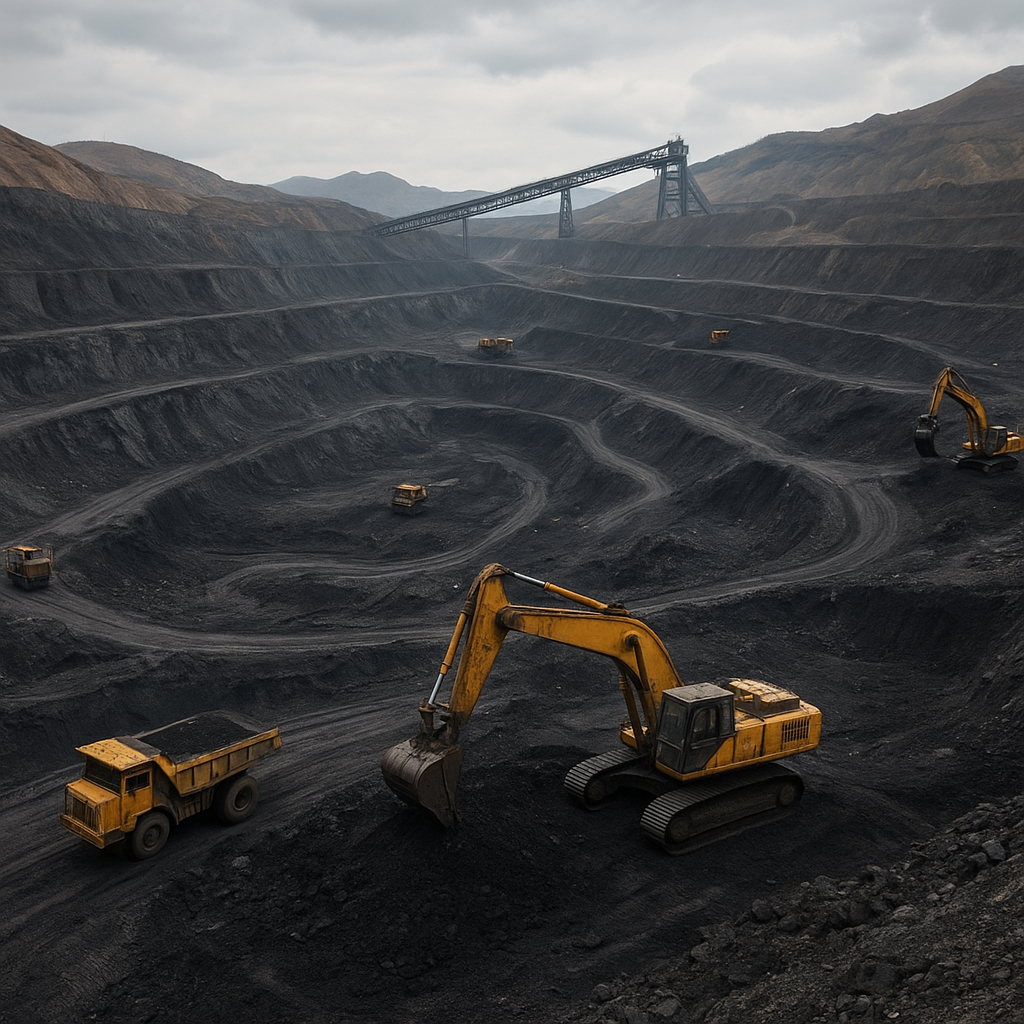
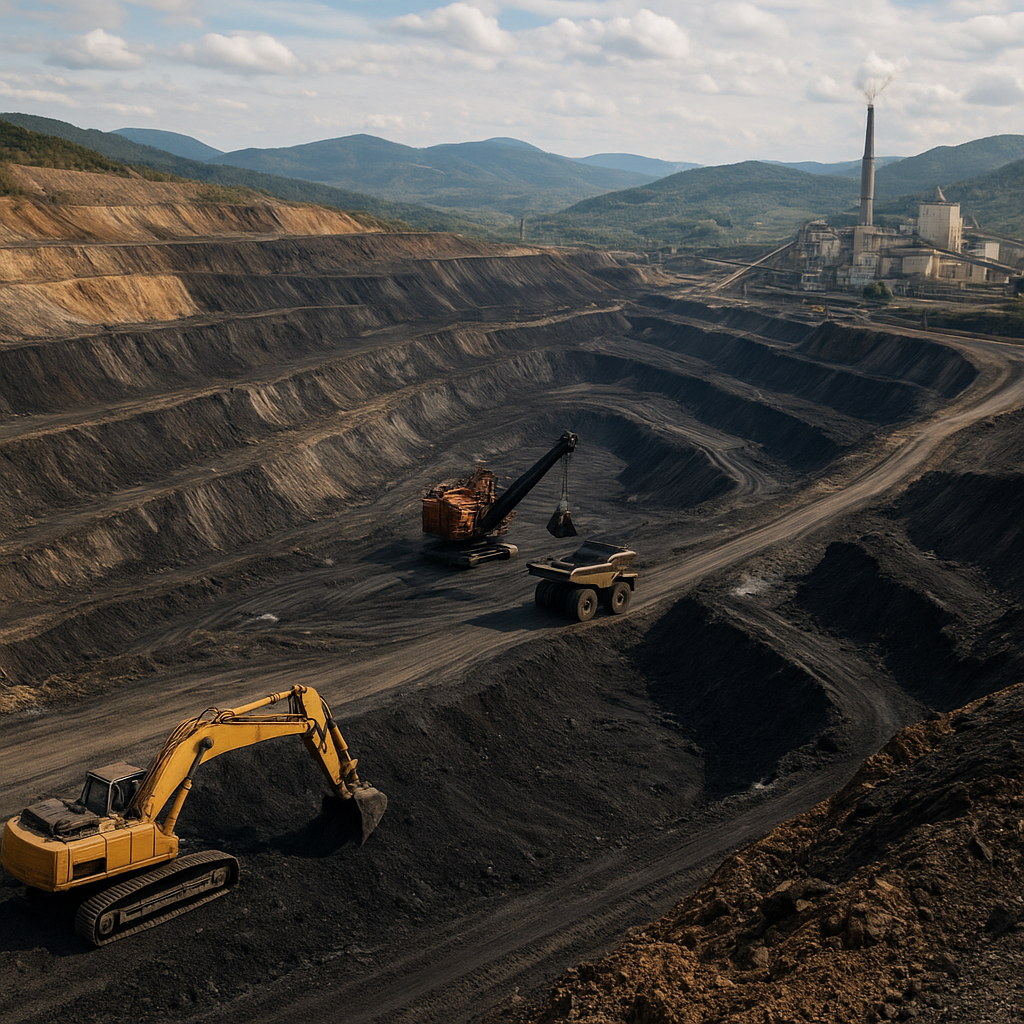
Extraction methods historically and currently used in the Shenbei area include underground mining (longwall and room-and-pillar) and, where geology and overburden allow, small-scale open-pit operations. Modernization across China has led many regional mines to adopt mechanized longwall systems for higher-efficiency extraction, while smaller shafts may still rely on more traditional methods. Standard safety and environmental control technologies applied in these mines include methane drainage and utilization, dust suppression systems, and water inflow control.
Reserves figures specifically labeled “Shenbei Coal Mine” may not be consistently published in international databases. In general, coalfields in Liaoning host reserves that are important on a provincial scale but are modest compared to the giant basins of Shanxi, Inner Mongolia, Shaanxi and Xinjiang. Local reserves have historically supported decades of production at variable rates depending on demand, investment and regulatory factors.
Economic Role and Industrial Significance
The Shenbei mining complex contributes to the local and regional economy in several ways:
- Fuel supply for nearby power plants, factories and district heating systems—reducing transportation costs and ensuring reliability of energy and process heat.
- Provision of coal for the regional steel and metallurgical sector where coking grades are available.
- Employment opportunities in extraction, processing, transportation and administration, supporting local communities and secondary service industries.
- Support for rail and logistics sectors stemming from coal shipments bound for other provinces or coastal export terminals.
At the national level, the Shenbei area forms part of China’s vast mosaic of coal production zones that together supply a country which, in recent decades, has been by far the world’s largest coal producer and consumer. China’s annual coal production is measured in the billions of tonnes (over 3.5–4.0 billion tonnes in most recent years), with production concentrated in a number of major provinces. Liaoning’s contribution is significant at a regional level and integrates closely with the heavy industrial base of northeast China.
While definitive, up-to-date production figures for a particular Shenbei operation vary with ownership, consolidation and government reporting cycles, the local mines historically produced at levels sufficient to serve municipal and industrial demand rather than nationwide export needs. The importance of Shenbei is therefore often measured in terms of strategic local supply, job preservation and its role in the broader industrial ecosystem of Shenyang and Liaoning.
Infrastructure, Logistics and Market Links
Coal from Shenbei is typically transported by a combination of dedicated mine rail spurs, regional rail networks, road haulage and conveyor systems where mines are linked directly to nearby processing facilities. The Chinese state-owned and regional rail networks make it possible for coal to feed larger markets across northeastern China and beyond.
Important logistical characteristics include:
- Rail connectivity to Shenyang’s industrial zones and to national trunk lines that carry coal to ports and other provinces.
- Road networks facilitating short-haul deliveries to nearby power plants, factories and urban heating systems.
- On-site or nearby coal washing and preparation facilities that improve product quality (reducing ash and sulfur) to meet buyer specifications.
These logistical links increase the economic value of Shenbei coal by lowering transport costs and enabling efficient supply chains to the steel, cement, power and chemical industries concentrated in the region.
Statistical Context and Employment
Specific statistics for Shenbei Coal Mine operations—such as annual tonnage, reserve size, or headcount—are sometimes reported only in local government or company filings and may not be widely distributed internationally. Nevertheless, a general statistical context helps explain its role:
- China’s national coal output: often in the range of 3.5–4.2 billion tonnes per year in the 2010s and early 2020s, making the country responsible for the majority share of global coal production.
- Liaoning provincial output: historically in the tens of millions of tonnes annually, supporting heavy industries in the northeast. The province’s production is considerably smaller than the top coal-producing provinces but is critical locally.
- Employment: coal mines in Shenbei and the greater Shenyang area provide thousands of direct and indirect jobs, ranging from underground miners, equipment operators and engineers to logistics, maintenance and administrative staff. Modernization has tended to reduce direct mining headcount while increasing the demand for technical and safety personnel.
Because coal mining operations in China have undergone frequent cycles of consolidation, closure of smaller inefficient mines, and investment in safer, larger-scale mines, local employment and production figures have fluctuated—often influenced by national policies on capacity control, environmental regulation, and energy security.
Environmental, Safety and Social Aspects
The environmental and social aspects of mining in Shenbei reflect broader challenges facing coal regions in China:
- Air quality and particulate emissions associated with mining, coal handling and combustion. Local authorities and companies implement dust suppression and enclosed handling systems to mitigate impacts.
- Water management challenges, including control of mine drainage and prevention of contamination. Efforts include treatment plants, controlled discharge and reuse systems.
- Methane and greenhouse gas emissions—an issue addressed through methane drainage technologies, possible utilization of captured methane for power generation, and increasingly stringent monitoring driven by national climate commitments.
- Land subsidence in some underground mining districts, which necessitates monitoring, engineered mitigation, and reclamation programs when mines are exhausted.
- Worker safety and modernization: historical safety records in many Chinese coalfields have improved markedly in recent decades thanks to better regulation, mechanization (reducing manual exposure to hazards), emergency response systems and stricter enforcement.
Local communities are often affected by mine life cycles: when mines expand, jobs and local revenues increase; when mines close or consolidate, communities can experience economic stress. The regional strategy has included attempts to diversify local economies by encouraging manufacturing, services and higher-value industrial activity in Shenyang and surrounding areas.
Technological Trends and Modernization
Recent trends in mines like those around Shenbei include:
- Increased mechanization and adoption of longwall technology to raise productivity and improve safety.
- Automation and remote monitoring systems—allowing control rooms to manage multiple operations and improving response times to incidents.
- Greater emphasis on coal preparation and washing to meet quality standards and reduce emissions at the point of combustion.
- Deployment of gas extraction and utilization systems to capture methane and convert it into energy or pipeline gas where viable.
- Digitalization initiatives—ranging from predictive maintenance using sensor data to scheduling and logistics optimization across the supply chain.
These technological improvements raise productivity per worker, reduce accident rates and improve environmental performance, but also require retraining of the workforce and capital investment by operators and local authorities.
Regional and National Significance
While Shenbei is one among many coal-producing localities in China, it contributes to several strategic goals at the regional level:
- Maintaining reliable energy and feedstock supply for heavy industry in northeast China.
- Supporting local employment and tax revenues that underpin municipal services and infrastructure.
- Acting as a node in transportation networks that link coal supply to national markets and industrial users.
- Serving as a platform for the adoption of improved safety and environmental practices that can be replicated in other regional mines.
At the national level, smaller coalfields like Shenbei help buffer the national system—providing redundancy and supply flexibility that complement larger basins when market or policy conditions change.
Interesting and Lesser-Known Facts
Some notable and less obvious aspects of mining activity in and around Shenbei include:
- Integration with urban heat systems: In cold climates of northeastern China, mines supplying nearby district heating and industrial steam systems can play a role in winter energy resilience.
- Legacy mining and cultural landscape: Many coal districts in Liaoning have a mining heritage, with former mining towns, worker communities and industrial architecture that reflect decades of regional development.
- Reclamation and “post-mine” land use: Some exhausted or closed sites undergo reclamation and conversion to parks, industrial parks or agricultural land—efforts driven by provincial and municipal planning.
- Role in supply chain resilience: Local mines reduce the need for long-distance coal transport for immediate industrial demand, which can be especially valuable during times of logistical disruption.
Outlook and Future Challenges
The future of Shenbei-area mining will be shaped by several interacting forces:
- Energy transition pressures: National and international climate goals are prompting China to diversify its energy mix and reduce carbon intensity, which affects long-term coal demand trajectories.
- Policy and regulation: Capacity controls, mine safety regulations and environmental standards drive consolidation, modernization and sometimes closure of smaller, less efficient mines.
- Economic diversification: Local governments increasingly seek to diversify regional economies, reducing dependence on mining and encouraging higher-value manufacturing and services.
- Technological adoption: Continued uptake of mechanization, methane utilization and digital mine management will improve efficiency and lower environmental impacts, but require capital investment and skilled labor.
In short, Shenbei’s coal operations will likely remain an important local economic component in the near term while adapting to national policy directions and market forces that emphasize cleaner energy, improved safety and supply-chain efficiency.
Practical Data Notes and Caveats
Readers should note that data for specific, individual mines—including production tonnages, reserve estimates and employment numbers—are often published in company reports, local government statistics, or industrial yearbooks. For international and comparative analyses, aggregated provincial and national data (e.g., China’s annual coal production of several billion tonnes) are more consistently available. For the Shenbei mines specifically, publicly available statistics may be intermittent, and the exact operational footprint can change with corporate consolidation, regulatory actions, and the closing or opening of shafts.
Where to find more precise data
- Local government statistical yearbooks and provincial energy bureaus (Liaoning Statistical Yearbook).
- Company reports from the operating enterprise (if the mine is run by a named corporation or a state-owned enterprise).
- Academic and industry publications on northeastern China coal geology and mining activity.
- National databases such as the National Bureau of Statistics of China for aggregated production figures.
Overall, the Shenbei coal mining area represents an illustrative example of a regional Chinese coal district: modest in scale compared with China’s largest basins, yet integral to local industry, employment and energy supply, and subject to the same modernization and environmental challenges that shape the country’s broader coal sector. Ongoing modernization, regulatory pressure and economic shifts will determine the pace of change for Shenbei’s mines and their role in the region’s industrial future.