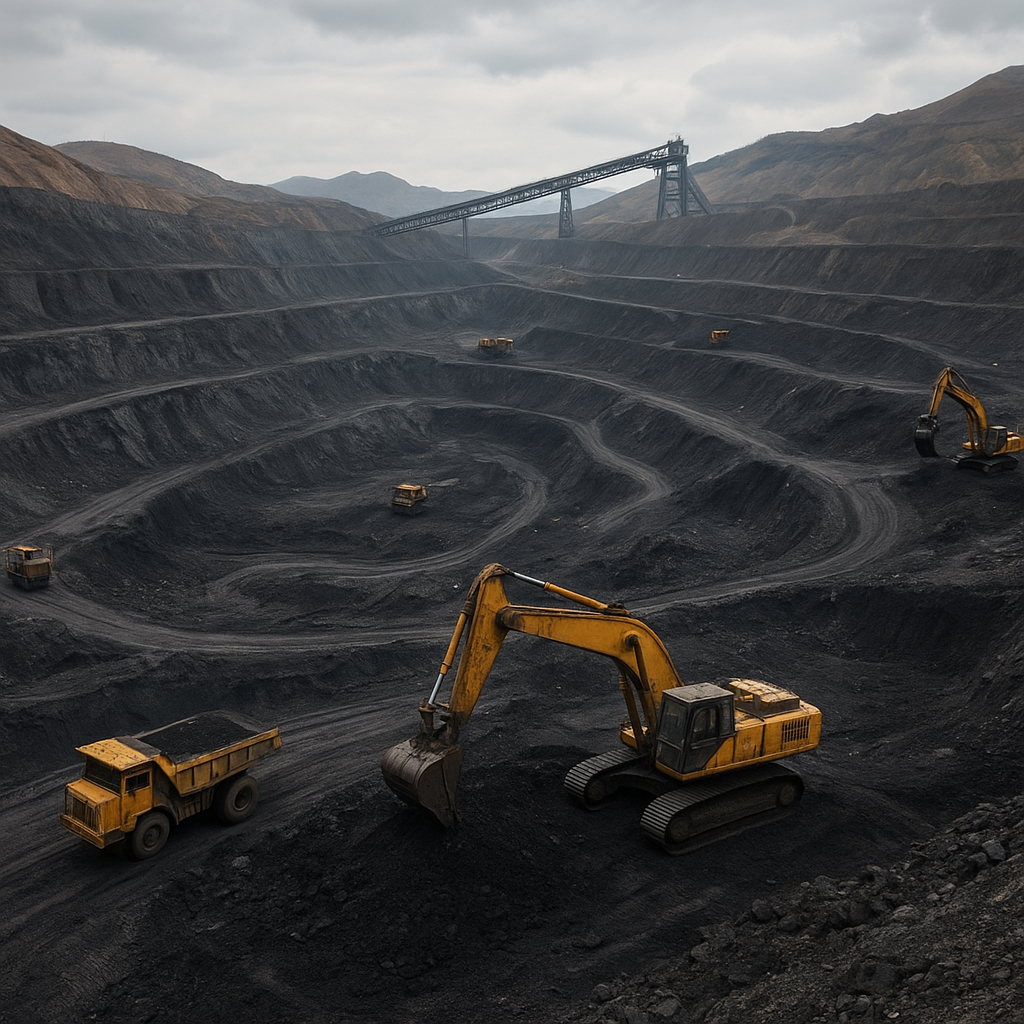
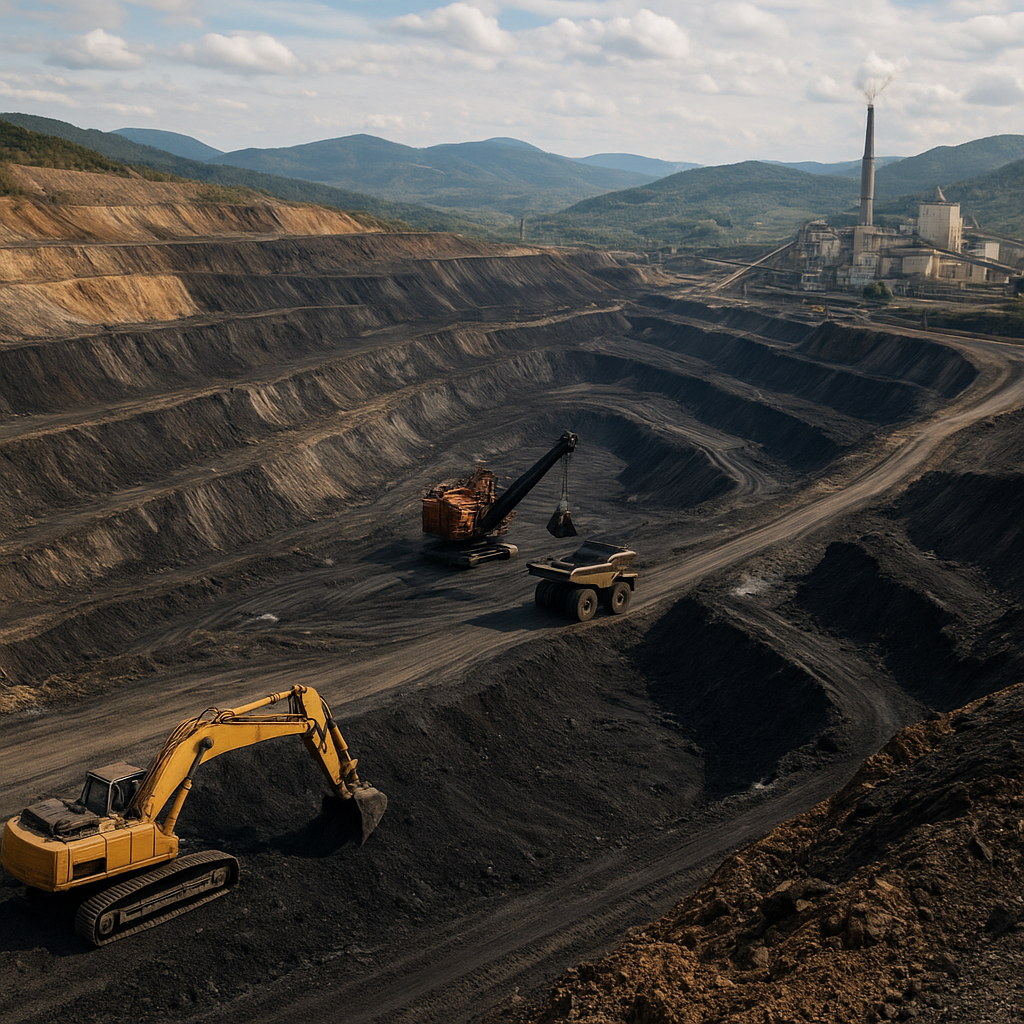
The Moatize coal complex in central-western Mozambique is one of the country’s best-known and most strategically important mineral projects. Located in the heart of the Tete coal basin, the site has attracted major international investment and large-scale infrastructure projects since its modern discovery and development in the early 21st century. This article examines the mine’s geology, ownership history, coal characteristics, production and export statistics, logistical frameworks, economic impacts, and the environmental and social issues associated with large-scale mining in the region.
Location and geological setting
The Moatize deposit lies in the province of Tete, northwestern Mozambique, roughly 40–50 km from the town of Moatize and several hundred kilometers from port facilities on the Indian Ocean (depending on the export corridor used). The deposit forms part of the broader Tete Coal Basin, a geologically significant inland basin containing multiple seams of Mucanha and Lower Dwyka-aged carboniferous and permian sediments. The basin is connected to several other coal occurrences across the southern African interior, making it a regional energy resource.
History, discovery and ownership
Modern, large-scale interest in Moatize began in the early 2000s, when international exploration companies performed systematic drilling and resource estimation. Several exploration and development companies, including Australian-listed firms, were early players in the basin. A major turning point came in 2011 when Brazilian multinational mining company Vale completed the acquisition of Riversdale Mining, consolidating control over the Moatize licences and associated assets.
Since Vale’s acquisition, the mine has been developed as part of Vale’s global portfolio, with accompanying investments in transport infrastructure (notably rail and port upgrades) and coal handling facilities operated through logistics partnerships and consortia. Other stakeholders in the logistics corridors and mining services have included international trading and shipping companies as well as regional consortia.
Coal type and quality
The Moatize deposit contains predominantly **thermal coal** with variable characteristics across the seams. Key coal attributes include:
- Rank: primarily sub-bituminous to lower bituminous ranges, suitable for steam generation and power plants.
- Calorific value: varies by seam and washability; many commercial descriptions indicate mid-range calorific values commonly used in thermal markets (several seams yield calorific values that make them attractive for export power generation markets).
- Ash and sulfur content: relatively moderate to low in several seams, improving the commercial attractiveness for international buyers after washing and blending.
- Washability: many seams are amenable to washing and beneficiation, improving calorific value and lowering ash content for higher-value saleable products.
Some parts of the basin also report seams with characteristics closer to semi-soft coking or metallurgical coal, but the overwhelming commercial production focus at Moatize has been on export thermal coal for power generation and industrial steam use.
Reserves, resources and production statistics
Estimations of the Moatize basin’s coal resources have varied between studies. Most public and company reports put recoverable resources in the order of hundreds of millions to a few billion tonnes. Typical figures cited in various technical and company reports over the last decade put the total resource base in the range of approximately 1.5 to 2.5 billion tonnes (measured, indicated and inferred combined), depending on classification and mining constraints.
Production has evolved since Vale’s takeover and subsequent ramp-up phases. Vale set multi-stage production targets during development:
- Early operational targets were in the single-digit millions of tonnes per annum (Mtpa) during initial commissioning and early years.
- Planned and later operational capacity aimed at around 11 Mtpa from the main Moatize mine infrastructure, with phased expansion plans envisaging higher combined throughput across the region through logistics enhancements.
Actual annual output has fluctuated with market conditions, logistics availability, and investment in rail and port capacity. Exports have primarily been directed to high-demand markets in Asia (notably India and China) and other global importers of thermal coal. Over the 2010s, Moatize became a significant contributor to Mozambique’s coal export volumes, which at times placed the country among the larger African coal exporters by tonnage.
Infrastructure and logistics
Logistics have determined much of Moatize’s economic viability. Two primary export corridors have been essential to the project:
- The Sena corridor to the port of Beira (a historically important route but subject to capacity and rehabilitation constraints).
- The Nacala Logistics Corridor, a longer but strategically developed route terminating at the deepwater port of Nacala-a-Velha on Mozambique’s northern coast, which includes upgraded rail links and a dedicated coal terminal.
Major investment in the Nacala Corridor by Vale and partner companies (including Japanese trading houses and other stakeholders) was aimed at creating an efficient, higher-capacity export route that could support projected production and reduce dependence on the more congested or rehabilitated Sena line. Rail capacity expansions, dedicated wagons, terminals, stockyards and port-wide upgrades were all part of the integrated logistics solution.
The logistical investments were significant: rail rehabilitation, construction of coal terminals, and investments in rolling stock and beneficiation plants represent hundreds of millions to several billion dollars in capital expenditures across the integrated project and corridor networks (depending on the phase and accounting scope). Timelines for full corridor availability and capacity were staggered, which translated into variable export capacity in early operational years.
Economic and social significance
The Moatize coal complex has had substantial economic and fiscal impacts for Mozambique:
- Direct and indirect employment: the mine and associated logistics operations created jobs both during construction and operations phases, employing thousands directly and supporting many more through local services and supply-chain contracts.
- Government revenues: royalties, corporate taxes, and other fiscal payments have provided tangible—but fluctuating—revenue streams for provincial and national budgets, linked to global coal prices and operational throughput.
- Local economic stimulus: investment in roads, community projects, and local procurement has stimulated secondary economic activity in Tete province and surrounding areas.
At a macro level, Moatize and other mineral developments in Tete have contributed to Mozambique’s export earnings diversification away from traditional commodities, providing foreign exchange inflows and attracting further foreign direct investment into the country’s mining and associated infrastructure sectors. However, the scale of benefits has been shaped by global coal market cycles and by how project revenues are managed and reinvested at national and regional levels.
Social and environmental considerations
Large-scale coal mining inevitably raises social and environmental challenges and controversies:
- Resettlement and community impacts: development of the open-pit operations and logistics corridors required resettlement plans for affected communities. Compensation, livelihood restoration and community engagement have been ongoing and, in some cases, contested processes.
- Environmental footprint: open-cast mining, associated infrastructure, and increased traffic have local impacts such as habitat loss, dust, noise and potential water quality changes. Companies operating in the basin have implemented mitigation and rehabilitation plans, water management, and dust suppression measures, but NGOs and communities continue to monitor compliance and outcomes.
- Health and safety: mine safety regimes, occupational health programs and emergency preparedness are core to operations. Ensuring consistent standards across contractors and subcontractors remains essential.
Corporate social responsibility programs, partnerships with government agencies, and donor-supported initiatives have sought to address education, health, and livelihood diversification. Nonetheless, the balance between local development outcomes and the long-term environmental legacy of coal extraction remains a major policy and civil-society concern in Mozambique.
Markets, pricing and global context
Moatize coal is predominantly targeted at international thermal markets. Key market dynamics affecting the mine include:
- Demand from South and East Asia: India, China and other Asian importers have been primary buyers; their demand trends influence prices and contracted volumes.
- Global coal prices and competition: prices are influenced by global supply/demand balances, freight costs, exchange rates and competition from other exporters (e.g., Australia, Indonesia, South Africa).
- Logistics costs and reliability: long-distance shipping and rail freight costs are a major component of delivered price competitiveness.
Coal product differentiation through washing, blending and logistics reliability has allowed Moatize coal to be marketed across a spectrum of buyers, though the global energy transition and decarbonization policies in many importing countries present medium- and long-term risks to thermal coal demand.
Governance, regulation and community relations
The governance context for Moatize combines national mining law, provincial regulations, and contractual provisions in concession agreements. Key governance themes include:
- Licensing and royalties: concession agreements specify royalty rates, taxes and obligations to the state, and periodic review and monitoring by regulators is required.
- Local content and employment: national policy emphasizes local hiring, training and procurement, though capacity gaps and logistics constraints affect implementation.
- Community engagement: continuous dialogue with affected populations over resettlement, compensation and development projects is a governance priority with ongoing implementation challenges.
Future prospects and strategic importance
Moatize remains strategically important to Mozambique’s mining sector for several reasons:
- Resource base: the sizeable resource estimates in the basin mean Moatize could underpin decades of production, subject to market conditions and investment choices.
- Infrastructure legacy: investments in rail, ports and terminals create transport capacity that can support other commodities and regional trade, potentially catalyzing wider economic activity.
- Development potential: opportunities exist to add value via washing plants, product blending, and possibly downstream energy projects, although capital intensity and market risks must be carefully evaluated.
However, long-term prospects are tempered by broader market shifts—particularly the global push towards decarbonization and renewable energy—which could structurally reduce demand for thermal coal in some export markets. Adaptation strategies may include diversifying product mix, optimizing logistics efficiency, and applying revenue to long-term development and diversification efforts at national and provincial levels.
Key statistics and figures (summary)
The following summary provides an indicative snapshot; figures vary depending on the reporting source and the year:
- Estimated coal resources (measured, indicated and inferred): roughly 1.5 to 2.5 billion tonnes (range from various public and company reports).
- Planned production capacity (targeted in development plans): around 11 Mtpa for initial phases, with staged expansion ambitions to higher throughput depending on logistics upgrades.
- Export corridors: Sena corridor (to Beira) and the upgraded Nacala Corridor to the port of Nacala-a-Velha, including dedicated terminals and rolling stock investment.
- Primary operator since 2011: Vale (after acquisition of predecessor Riversdale), with logistics partners and corridor investors.
- Main product focus: thermal coal for power generation and industrial steam markets, with some potential seams for higher-grade uses within the basin.
Interesting facts and notable events
- The Moatize discovery and development triggered one of the most significant waves of mining investment in Mozambique in the 2000s and 2010s, with wide-ranging implications for regional infrastructure.
- Transport and logistics solutions—particularly the rehabilitation and upgrade of long-distance rail links—became nearly as critical as the mine itself in determining the speed and scale of commercialisation.
- The project highlighted the complex interplay between multinational capital, national policy objectives, and local community expectations in large-resource developing economies.
Concluding remarks
The Moatize coal mine is a major mineral asset for Mozambique and a case study in modern large-scale mining in a developing-country context. Its commercial success has depended not only on geological potential but on large and sustained investments in transport infrastructure, strategic partnerships, and governance arrangements. While Moatize has generated significant economic activity and export earnings, it has also raised difficult questions about environmental management, social impacts and the long-term sustainability of reliance on thermal coal revenues. The coming decade will be decisive in determining how Moatize’s remaining resource value is realized amid changing global energy priorities and the need for socio-economic development within Mozambique.