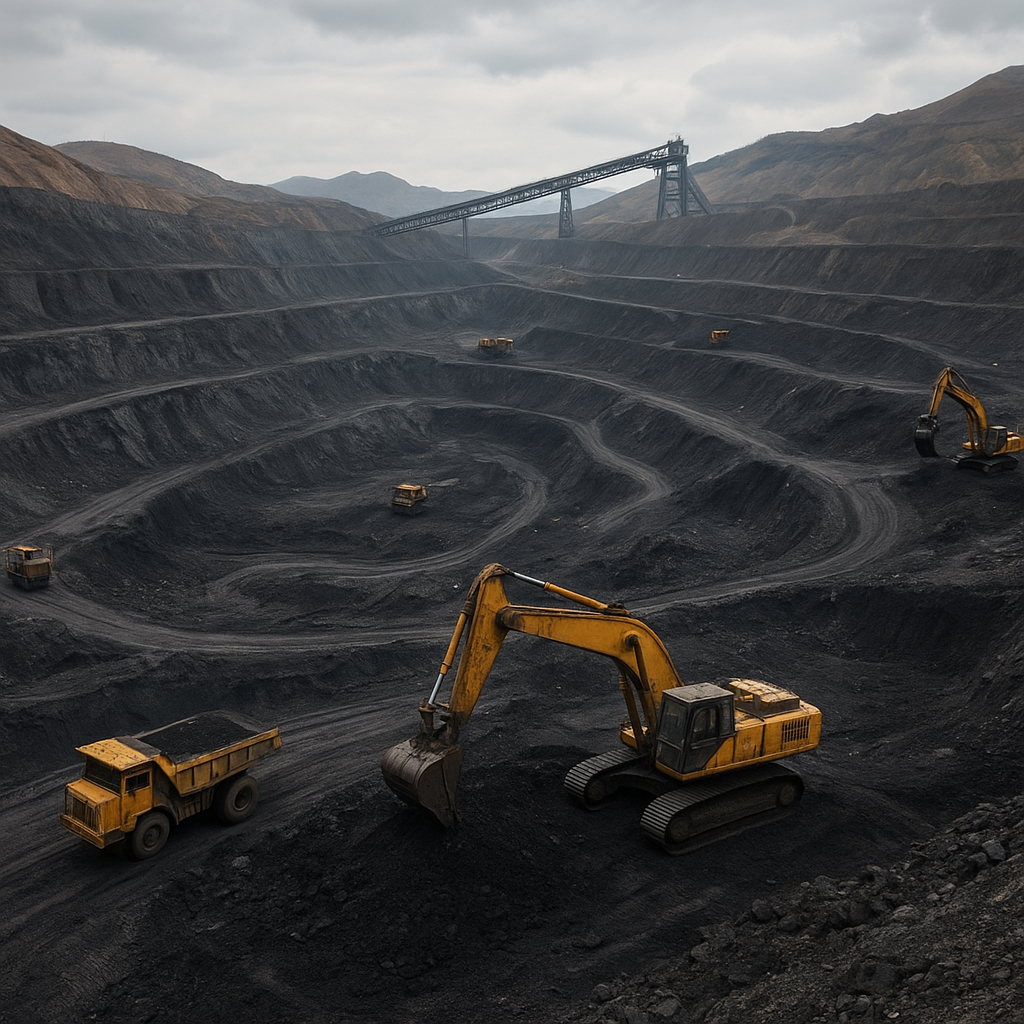
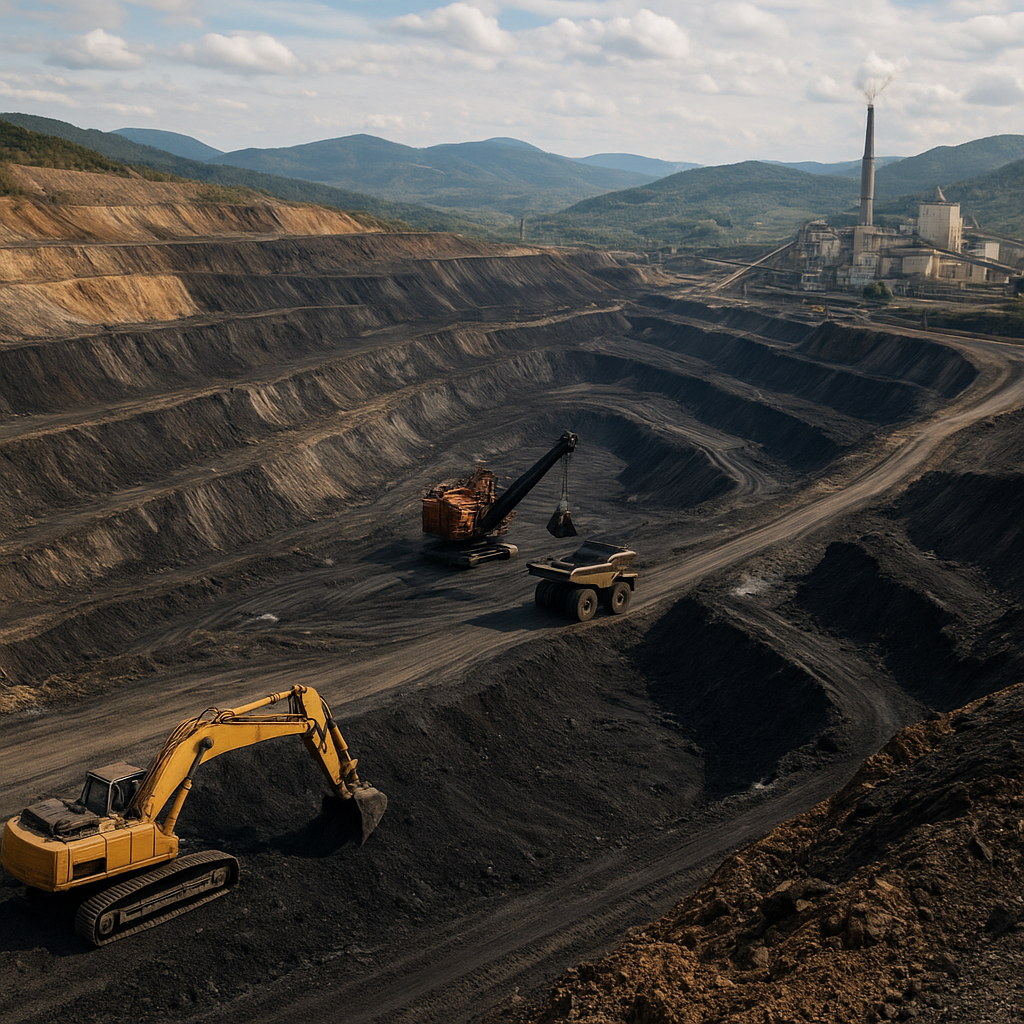
The Kharia Coal Mine is one of the many coal-producing sites in India that contribute to the country’s complex energy matrix and local economies. While specific public data about Kharia may be less accessible than that of major flagship mines, this article compiles geological, operational, economic, environmental and social information typical for mines in the region, and places Kharia in the wider context of Indian coal mining. The following sections present an overview of location and geology, mining and coal quality, economic and statistical context, plus social and environmental considerations and future prospects.
Location, Geological Setting and Historical Context
The Kharia Coal Mine is situated in the coal-bearing regions of eastern India. Coalfields in this part of the country—most notably in the states of Jharkhand, West Bengal, Odisha and Chhattisgarh—form part of the vast Gondwana coal deposits that were formed during the late Paleozoic and early Mesozoic eras. The term Kharia itself is associated with villages and localities across Jharkhand and adjacent areas; as such, the Kharia Coal Mine can be characterized as part of the broader stratigraphic and structural setting of India’s coal-bearing Gondwana basins.
Geologically, mines in this region exploit Pennsylvanian to early Permian sequences where alternating layers of sandstones, shales, and coal seams occur. The coal seams at mines like Kharia are typically buried at shallow to moderate depths and show lateral continuity over several kilometers in many local coalfields. These deposits have historically been mined through a combination of underground (bord-and-pillar, longwall in limited situations) and opencast methods depending on depth, seam thickness and economic factors.
Historically, many small and medium mines in the eastern coal belt were developed during the late 19th and 20th centuries and expanded after Indian independence. Ownership and operational models range from public-sector units to private contractors and joint ventures. Kharia, like similar mines, would have evolved in phases—exploration, pilot extraction, then scale-up in response to demand from nearby thermal power plants, industries and the domestic market.
Mining Operations, Coal Type and Quality
Operations at the Kharia site are likely to combine surface and underground techniques depending upon seam geometry and overburden thickness. For seams near the surface, modern opencast methods are used to maximize recovery at lower cost and higher productivity. For deeper seams, mechanized or semi-mechanized underground workings with appropriate ventilation and safety systems are common.
The coal produced at mines in this geological setting is typically bituminous in rank—ranging from sub-bituminous to medium/high volatile bituminous—suitable primarily for thermal use in power generation and some industrial processes. Typical properties for such coal generally include:
- Calorific value often in the range of 4,000–6,000 kcal/kg (varies by seam and washing)
- Moisture that can range from moderately high in raw form, often reduced by drying or washing
- Ash content that can be variable—one of the defining economic characteristics for Indian coals; ash may range widely (e.g., 20–40% or more in some seams) and is often reduced by beneficiation
- Sulfur content usually low to moderate, which is beneficial for combustion control and emissions
To improve quality and marketability, coal from Kharia-type mines is often beneficiated through washing and separation processes to lower ash and improve calorific value. The presence of multiple seams may allow blending strategies to meet customer specifications for thermal power plants or industrial buyers.
Economic Role and Output — Contextual and Statutory Data
Specific, up-to-date production and reserve figures for Kharia Coal Mine are not always publicly available in consolidated national databases, especially for smaller mines. Nevertheless, it is possible to assess the mine’s likely economic role from regional patterns:
- Mines of the Kharia type typically supply coal to nearby thermal power stations, steel plants, brick industries and local markets. This supply chain helps reduce transportation costs and aids regional energy security.
- Employment generation is both direct (miners, technical staff, contractors) and indirect (transport, services, small-scale industries). A medium-size mine can directly employ hundreds to over a thousand workers on-site and support several times that number through ancillary economic activity.
- Revenue contribution depends on production tonnage, coal quality and contractual arrangements. In India, coal pricing includes components related to quality, transportation (rail or road), royalties and taxes payable to state governments where mining leaseholds operate.
In the national framework, India’s coal sector (dominated historically by Coal India Limited and its subsidiaries, alongside captive and private mines) produced roughly 700–800 million tonnes annually in the early 2020s. While Kharia is a local producer relative to these national volumes, local mines cumulatively form the backbone of India’s coal supply for power and industry.
Statistical Indicators and Available Figures
Because granular public statistics for individual small and medium mines are uneven, the following are representative statistics to place Kharia in context (national/ regional reference points):
- India’s total proved coal reserves (Gondwana plus Tertiary) run into tens of billions of tonnes; the economically mineable reserves are concentrated in eastern and central India.
- Major consuming sectors: thermal power plants account for over 70% of coal consumption nationally, with industry (steel, cement, brick kilns) consuming the remainder.
- Production methods: the trend in the last two decades has been toward more opencast production because of higher productivity and lower cost per tonne; Kharia-type mines often follow this trend.
- Local employment and royalties: royalties vary by state and quality band but represent a meaningful fiscal contribution to state budgets, often redistributed to local development when properly implemented.
If site-level production data is required for Kharia—annual tonnage, reserves, grade analyses, or employment numbers—these are typically reported by the mine operator (public sector company or private owner) to state regulators and in environmental clearances. National agencies such as the Ministry of Coal, Geological Survey of India and state mineral departments may hold formal records.
Infrastructure, Transport and Logistics
Transport logistics are a critical factor shaping the economics of Kharia Coal Mine. Typical infrastructure elements associated with mines in the region include:
- Rail sidings and branch lines to connect to the Indian Railways network for bulk movement to power plants and industrial customers.
- Road networks for shorter-haul deliveries, heavy vehicle movement and labor access.
- On-site processing facilities (crushing, screening, washing) to meet buyer specifications and reduce freight costs per unit of energy delivered.
- Ancillary facilities such as workshops, fuel storage, weighbridges, and administrative offices.
Investment in logistics can make a mine more competitive. For Kharia, the proximity to trunk rail lines or major thermal power stations would increase its strategic value. Mines that invest in beneficiation facilities often achieve higher realisable prices for their product by reducing ash and improving calorific value.
Socioeconomic and Environmental Impacts
The socio-environmental dimension of coal mining around Kharia is multifaceted. Mining delivers employment and local revenue, but it also brings challenges that require careful management:
Social and Community Aspects
- Employment and livelihoods: Mining can be a major employer in otherwise agrarian or forest-dominated districts, providing wages, skills and infrastructure.
- Resettlement and rehabilitation: Where opencast operations encroach on villages or agricultural land, properly planned rehabilitation and compensation schemes are essential. The social cost of displacement can be high without transparent, participatory processes.
- Health and occupational safety: Coal mining introduces occupational hazards (pneumoconiosis, accidents) and community health issues (dust, water contamination) that must be mitigated through regulation, monitoring and health services.
Environmental Effects
- Land disturbance: Opencast mining removes topsoil and vegetation, requiring reclamation plans to restore land use after mining ceases.
- Air quality: Dust generation and emissions from coal handling and transport affect local air quality; mitigation includes dust suppression, covered conveyors and monitoring.
- Water resources: Groundwater drawdown, contamination from runoff and impacts to surface flows are common concerns. Effective water management plans, sedimentation controls and treatment facilities are necessary.
- Biodiversity: Mining near forested or ecologically sensitive areas can fragment habitats; environmental impact assessments are designed to identify and minimize such effects.
Regulatory frameworks in India require environmental clearances and environmental management plans (EMP) for most mining projects. Responsible mines implement ongoing monitoring, progressive reclamation, afforestation and community development programs to reduce the ecological footprint and improve local outcomes.
Significance for Industry, Energy Security and Regional Development
On a local and regional scale, mines like Kharia are significant for several reasons:
- Energy supply: By providing domestic coal to thermal power plants and industries, such mines contribute to regional energy security and reduce dependence on imported fuels.
- Industrial feedstock: Steel plants and other large industries often rely on locally sourced coal or washed products from regional mines, linking the mining sector to broader industrial competitiveness.
- Fiscal contribution: Royalties, taxes, and employment generate revenue for state and local governments, potentially funding infrastructure and public services.
- Skills and backward linkages: Mining spurs ancillary services—engineering, transport, workshops—which diversify the local economy beyond extraction.
However, the long-term sustainability of coal-dependent regions requires planning for economic diversification, especially as global and national energy transitions accelerate. Mines can play a role in this transition by funding local development, investing in cleaner technologies and supporting workforce retraining programs.
Regulation, Safety and Technological Trends
Mining operations at Kharia are subject to Indian mining laws, safety regulations and environmental norms. Important regulatory and operational trends relevant to mines in the region include:
- Increased mechanization to improve productivity and safety in both underground and opencast operations.
- Adoption of continuous monitoring systems for ventilation, methane, and ground stability in underground mines.
- Improvements in coal beneficiation technology to lower ash, moisture and improve calorific value for end-users.
- Implementation of stricter environmental controls, including progressive mine closure planning and biodiversity offsets where necessary.
- Digitalization and remote monitoring, with use of GIS, drones and real-time dashboards to enhance operational oversight.
These technological and regulatory shifts aim to reduce the environmental footprint, increase worker safety and boost the economic viability of mines in an era of rising environmental scrutiny.
Future Outlook and Challenges
The medium-term outlook for mines like Kharia will be shaped by a combination of factors:
- Domestic demand for coal driven primarily by power generation and industrial activity. If renewable energy adoption and energy efficiency measures grow rapidly, marginal coal mines may face reduced demand.
- Policy and regulatory pressures to limit emissions and rehabilitate mined land, which can increase compliance costs but also create opportunities for sustainable reclamation projects.
- Investment needs for mechanization, environmental controls and worker safety infrastructure; access to capital can determine which mines modernize versus those that remain economically marginal.
- Community expectations for local development, livelihoods and environmental protection—mines that engage transparently tend to have better social license to operate.
To remain viable and contribute positively to local development, mines must balance production goals with responsible environmental management, workforce development and forward-looking post-mining land-use planning.
Conclusion
The Kharia Coal Mine, representative of many small to mid-sized mines in India’s eastern coal belt, plays a pragmatic role in local and regional economies by supplying thermal coal, creating jobs and providing fiscal revenues. Its geological setting—within the Gondwana coal sequences—typically yields medium-rank bituminous coals that are central to power generation and industry. While specific site-level statistics may require consultation of operator reports or government databases, the broader picture highlights the mine’s role in regional supply chains, the need for sustainable environmental and social practices, and the importance of upgrades in technology and infrastructure to ensure long-term viability. Addressing environmental impacts, ensuring worker safety, and planning for post-mining land use will be crucial for Kharia and similar mines as India navigates its energy transition while meeting development objectives.