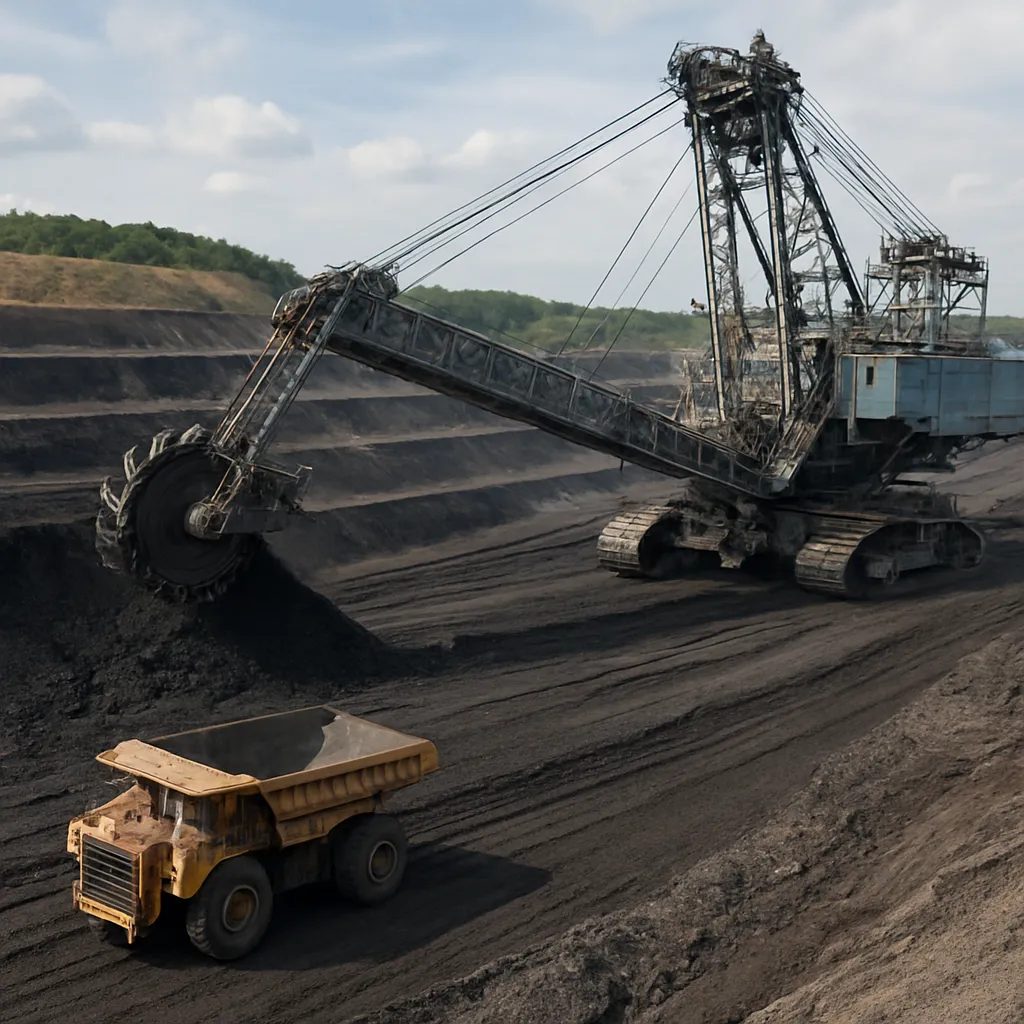
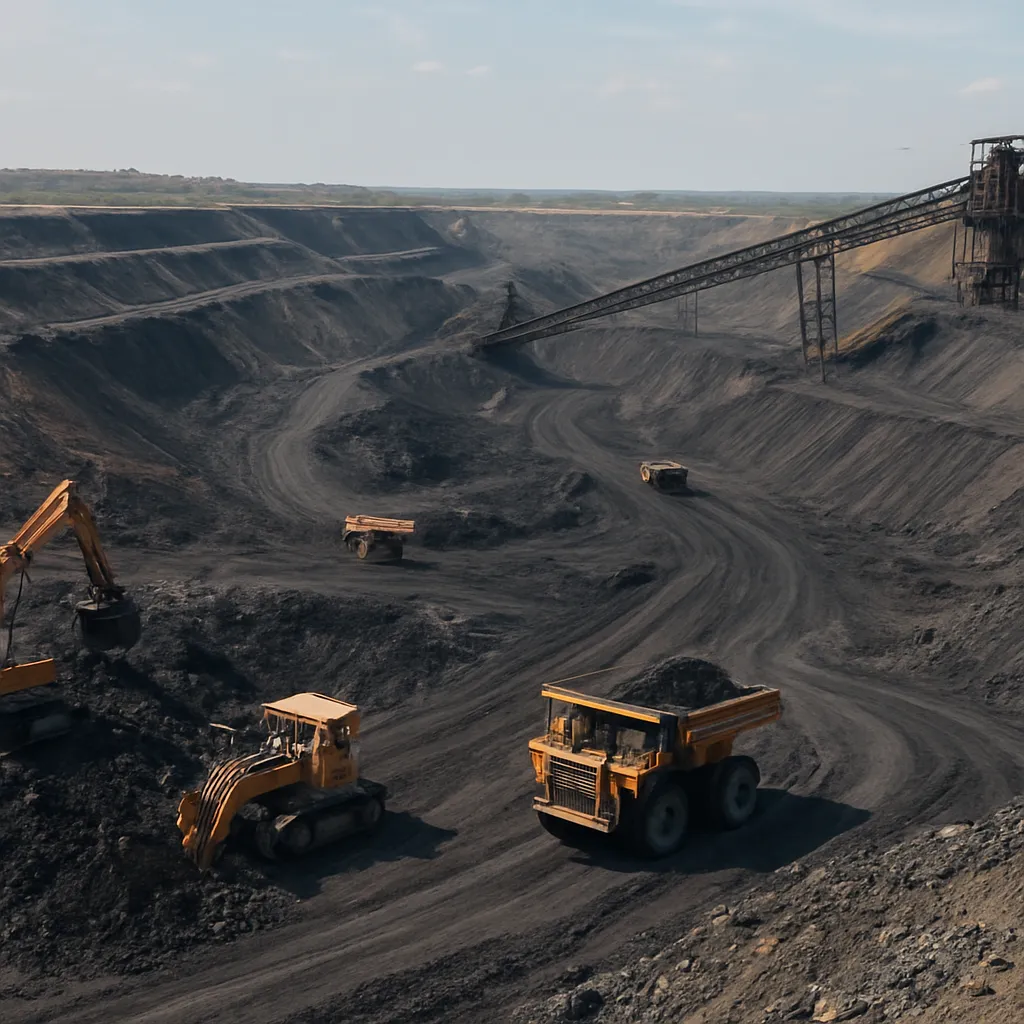
The Greenhills coal operation is one of the notable mining sites within Canada’s western coalfields. Located in a region known for producing high-quality coal for steelmaking, Greenhills plays a role in regional employment, export revenues and the wider metallurgical coal market. This article outlines the mine’s location and geology, the types of coal produced, operational and economic data, environmental and social considerations, and the mine’s role in the global steel supply chain, offering both factual overview and contextual analysis.
Location, ownership and geological setting
Greenhills is located in the mountainous interior of western Canada, within the coal-bearing basin of the Rocky Mountain region. The mine sits in the broader Elk Valley area, a corridor of rich coal deposits running through southeastern British Columbia. The operation has historically been part of an integrated group of mines in the valley and is associated with large coal producers active in the region.
The coal-bearing sequence in the area belongs to the Cretaceous coal measures commonly referred to in technical literature as the Mist Mountain Formation and related strata. These units are characterized by thick, laterally extensive coal seams formed in ancient coastal and fluvial swamp environments. The region’s coals are classified as high-quality metallurgical coal used primarily for steel production; within that category, much of the coal mined from the Elk Valley is marketed as coking coal, including grades that range from medium-volatile to low-volatile bituminous coals suitable for making coke.
Ownership and operation of Greenhills have been linked with major Canadian coal companies. The dominant operator in the Elk Valley has been Teck Resources (often referred to simply as Teck), which manages multiple adjacent operations and consolidates coal from several sites for processing and export. Greenhills functions as one asset within that regional portfolio, benefiting from shared infrastructure such as processing plants, rail access and port arrangements.
Mining methods, processing and transport
Greenhills uses conventional large-scale surface mining methods typical for the region’s geology: open-pit excavation, drilling and blasting, followed by load-and-haul operations with large shovels and haul trucks. Where underground workings exist or have existed historically in the region, surface mining remains the primary method at Greenhills due to the thickness and shallowness of many coal seams in the immediate area.
After excavation, run-of-mine material is processed in on-site facilities to produce saleable coal products. Processing steps usually include primary crushing, sizing, dense media separation or froth flotation in some cases, and blending to meet specific customer specifications. The final product is typically categorized into coking coal products and other coal grades; the emphasis at Greenhills is on coking products for steelmakers.
Transport logistics are a core element of the operation’s commercial model. Coal is loaded into unit trains and moved by rail to west coast terminals for export. From there, shipments travel across the Pacific to major steel-producing markets in East and Southeast Asia — especially to countries such as Japan, South Korea, China and Taiwan. The combination of rail and port infrastructure is crucial for maintaining steady export flows and for meeting contractual obligations to international buyers.
Production volumes, reserves and workforce
Precise production volumes for Greenhills fluctuate year to year according to market conditions, operational decisions and constraints such as weather and permitting. Historically, Greenhills has contributed several million tonnes annually to the Elk Valley’s total metallurgical coal output. The broader Elk Valley operations have produced in the order of tens of millions of tonnes per year when aggregated, and Greenhills represents a meaningful share of that regional output.
Reserve estimates vary with ongoing exploration and economic evaluations, but Greenhills’ accessible coal endowment is commonly described in the tens of millions of tonnes category for proven and probable reserves, with additional resources defined further afield. These reserves underpin medium-term planning and justify capital expenditures on processing and environmental management systems.
The workforce at Greenhills includes a mix of direct employees and contractors. Combined direct employment numbers for individual operations in the Elk Valley have ranged from several hundred to over a thousand people depending on the operational stage and whether adjacent operations are considered together. The mine generates indirect employment in related sectors — rail, port services, equipment maintenance, and local services — amplifying its socioeconomic footprint in nearby communities.
Economic significance and trade impacts
Greenhills contributes to local and provincial economic activity through wages, procurement of goods and services, royalties and taxes. Metallurgical coal is a high-value export commodity for Canada; the sale of coking coal provides significant foreign exchange earnings and supports manufacturing sectors in buyer countries by supplying a feedstock for steel production.
- Exports: A substantial portion of the coal produced at Greenhills is destined for export markets in Asia. Export revenues are sensitive to global steel demand, freight costs and pricing benchmarks for metallurgical coal.
- Royalty and tax contributions: Provincial royalties on coal and corporate taxes paid by operators form part of the public revenue stream that supports infrastructure, health and education in the resource-producing regions.
- Local procurement: Mining operations purchase goods and services locally whenever feasible, supporting regional contractors, equipment suppliers and service industries.
At the national level, metallurgical coal is one component of Canada’s mining export basket. While thermal coal (used for power generation) has a different market trajectory, high-quality metallurgical coal retains strategic relevance because of its direct link to steel production. Prices for coking coal can be volatile and have at times spiked dramatically in response to supply disruptions or surges in steel demand, directly affecting revenues for operations like Greenhills.
Environmental management and community relations
Mining in the Elk Valley, including Greenhills, has attracted close attention from regulators, Indigenous groups and environmental organizations. Key environmental topics include water quality in downstream rivers and lakes, land reclamation, dust and air emissions, and biodiversity impacts.
One specific environmental challenge in the region has been elevated levels of selenium and other trace elements in surface waters resulting from mining activities that expose sulfide-bearing and trace-element-containing rocks. Elevated selenium can affect aquatic life, and addressing this issue has led to substantial investments in water management approaches. Companies operating in the valley have implemented a range of measures, including:
- progressive reclamation of disturbed land to reduce long-term erosion and runoff;
- constructed treatment wetlands and engineered water treatment plants designed to remove selenium and other contaminants;
- investment in monitoring programs for water quality, aquatic health and sediment;
- collaborative efforts with provincial regulators and local communities to set and meet water quality objectives.
Financial investments in environmental mitigation have been significant for operators in the region. For example, major companies in the Elk Valley have publicly committed and spent sums in the order of hundreds of millions to more than a billion Canadian dollars over time on water treatment, monitoring and remediation infrastructure. These investments are framed both as regulatory obligations and as steps to maintain social license to operate.
Community relations are a core operational consideration. Mines like Greenhills engage with nearby towns, municipalities and Indigenous communities through consultation processes, employment and training programs, business contracting opportunities and support for local initiatives. Socioeconomic programs often seek to balance the economic benefits of resource activity with the need to minimize social and environmental impacts.
Regulatory context and permitting
Mining activities in British Columbia are subject to a suite of provincial and federal regulations covering land use, water management, environmental assessment, wildlife, cultural heritage and workplace health and safety. Permitting for expansions, transfers and long-term operations involves multi-staged reviews, public consultation and environmental assessments in many cases.
Operators must comply with provincial coal royalty regimes and with permit conditions that may specify limits on water discharges, obligations for progressive reclamation and requirements for post-closure management. Periodic reviews and cumulative effects assessments are more common in modern regulatory practice, reflecting concerns about the aggregated impacts of several large mines operating in a single watershed.
Market dynamics and strategic importance
Greenhills’ primary market orientation is tied to the global steel industry. Demand for metallurgical coal is driven by trends in steel production, which in turn are affected by infrastructure cycles, automotive manufacturing, construction, and broader industrial policies. Pricing for coking coal is typically negotiated on contract bases, but there are also market indices and spot market episodes that cause price swings.
Strategically, supply from the Elk Valley — including Greenhills — is important because it provides high-quality coking material that some steelmakers rely on to produce specific grades of steel. The concentration of several large metallurgical coal mines in the region means that operational changes, expansions or disruptions can have outsized impacts on global supply balances and benchmark prices.
Innovation, safety and operational efficiency
Modern mining operations continually pursue improvements in safety, efficiency and environmental performance. At Greenhills and across similar operations, this has included:
- investment in automation and fleet management systems to improve equipment utilization and reduce operating costs;
- digitalization of monitoring systems for real-time tracking of production, equipment health and environmental metrics;
- advanced geological modeling to optimize pit design and to better estimate resource quality and distribution;
- enhanced safety programs to reduce lost-time incidents and to address occupational hazards associated with large-scale surface mining.
Operational efficiency measures help maintain competitiveness in cycles of lower commodity prices, while safety improvements remain a top priority to protect workers and reduce indirect costs associated with accidents.
Future prospects and challenges
Looking ahead, Greenhills’ prospects will be shaped by a combination of market conditions, regulatory developments and the evolution of environmental and social expectations. Key considerations include:
- global steel demand trends and substitution effects from scrap-based electric arc furnace (EAF) steelmaking, which can change the relative demand for coking coal;
- ongoing investments and regulatory requirements to manage water quality and other environmental impacts;
- community and Indigenous partnerships that influence permitting, workforce development and supply chain participation;
- potential technological shifts in steelmaking that may reduce or change the type of metallurgical coal required in the longer term.
While the long-term future of metallurgical coal is subject to uncertainty driven by climate policy and technological change, in the near to medium term high-quality coking coal remains an essential input for a large share of global steel production. Operations such as Greenhills therefore retain importance both commercially and strategically, provided they continue to manage environmental responsibilities and maintain good stakeholder relationships.
Interesting facts and context
Beyond core operational and economic aspects, a few additional items of interest include:
- Geological heritage: The coal seams in the Elk Valley are remarkably thick and laterally continuous relative to many other coal basins, which is why large-scale surface operations are practical and economically viable.
- Climate and seasonality: Winter conditions in mountain valleys impose seasonal operational challenges — including access, equipment maintenance and worker safety — that require specialized planning and logistics.
- Integrated regional operations: Greenhills benefits from being part of a network of mines in the Elk Valley; shared processing and rail loading facilities improve overall cost-efficiency.
- Supply chain importance: Because metallurgical coal is less fungible than thermal coal (different coals have distinct coking properties), producing consistent quality at scale is a competitive advantage.
Greenhills exemplifies many of the broader themes of modern metallurgical coal mining in Canada: significant economic value, strong export orientation, intensive environmental management obligations, and the need for continuous technical and social investments to remain viable in shifting global markets.
Summary
Greenhills is a representative metallurgical coal operation within western Canada’s Elk Valley, producing high-quality coking coal used in steelmaking. Operated in the context of a larger regional portfolio (notably associated with Teck Resources), the mine contributes to provincial exports and local employment while facing environmental challenges — particularly related to water quality and trace elements such as selenium. Ongoing investments in treatment, reclamation and operational innovation are central to its future. As global steel demand and technology evolve, Greenhills and similar mines will continue to play a role in supply chains, balanced by regulatory and community expectations regarding environmental stewardship and economic benefits.