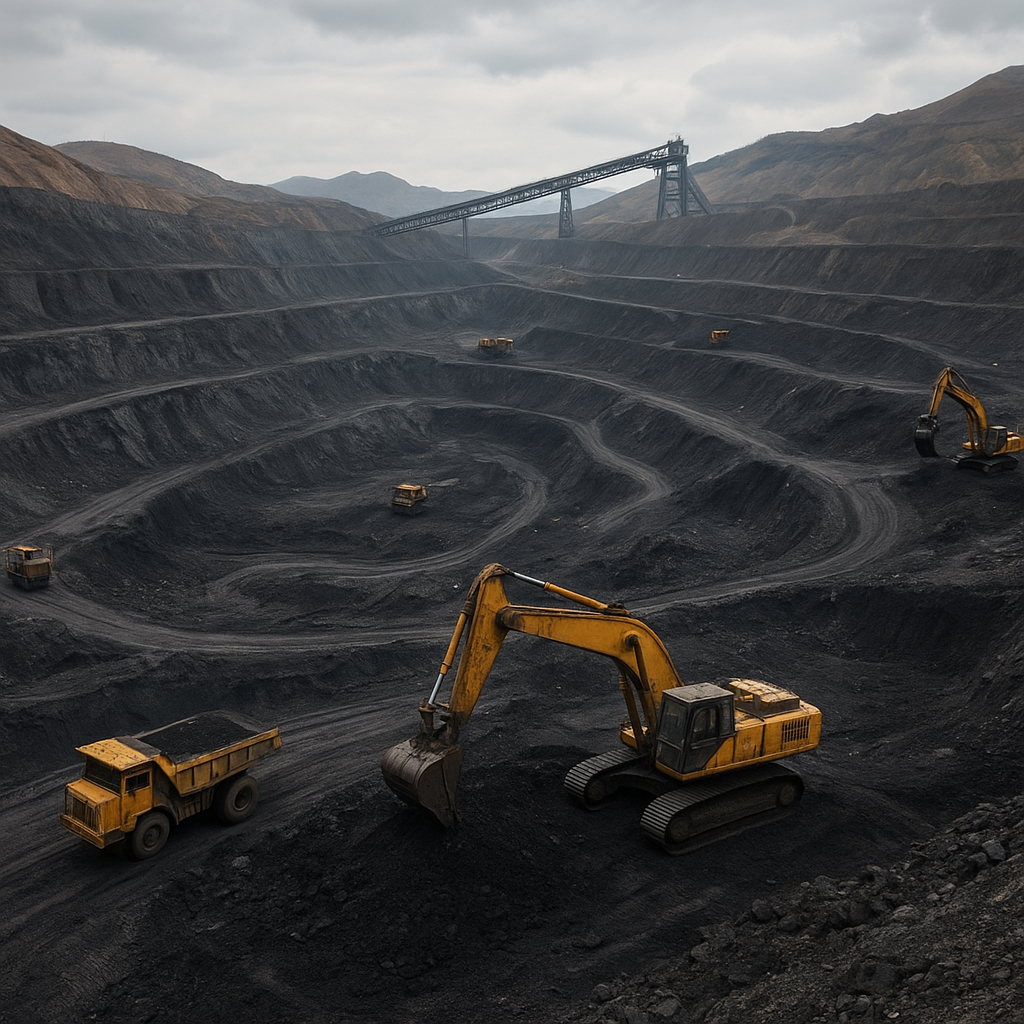
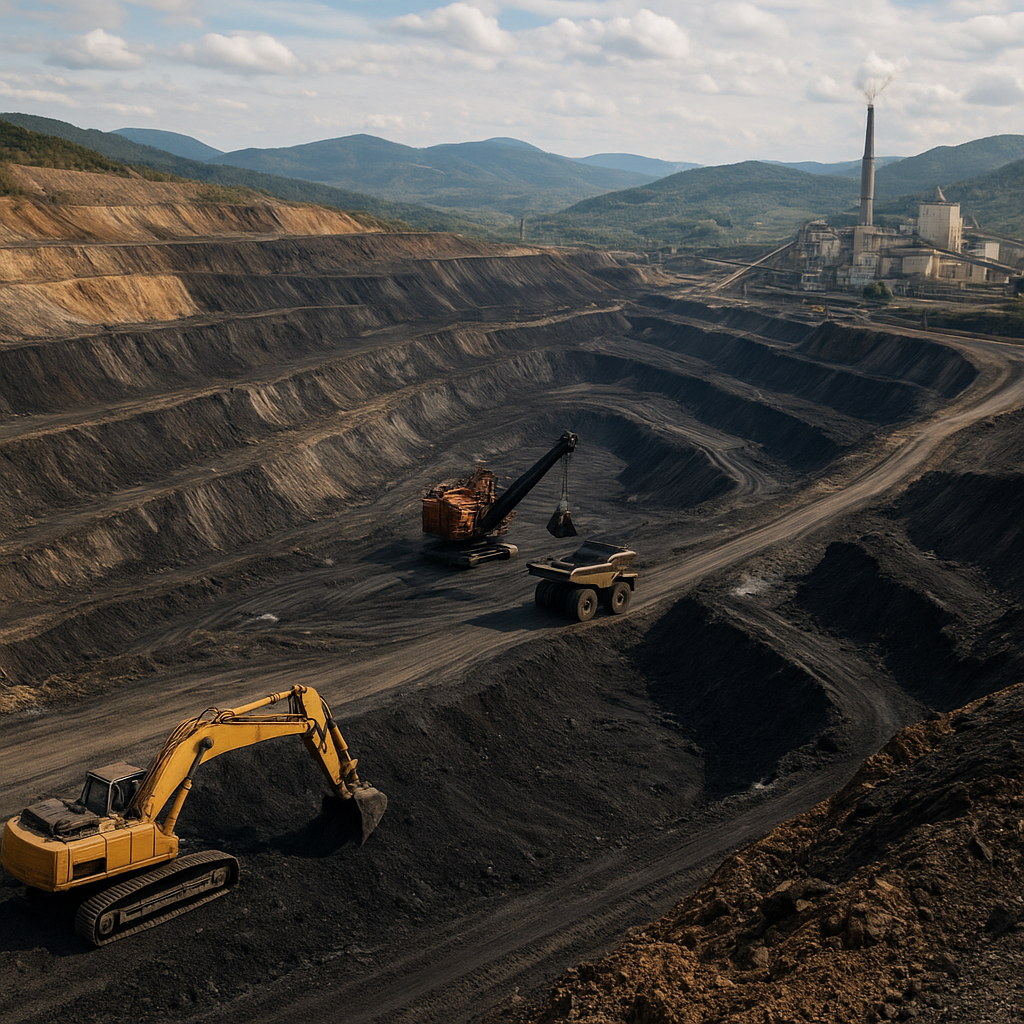
The Datong coal mining complex, centered in Datong City in northern Shanxi Province, China, is one of the country’s most important and long-established coal-producing regions. For decades it has supplied large volumes of coal — particularly **coking** and **thermal** coal — to China’s steel, power and chemical industries. This article reviews the location and geology of the Datong coalfield, the types and quality of coal produced, economic and industrial significance, mining methods and safety advances, environmental and social implications, and the most relevant statistics and recent trends shaping the future of the region.
Location and geological setting
Datong is located in northern Shanxi Province, bordering Inner Mongolia to the north. The Datong coalfield is part of the greater Shanxi coal basin, one of China’s most prolific coal-bearing regions. Geologically, the area hosts extensive Carboniferous to Permian coal-bearing strata; these sedimentary sequences contain multiple coal seams of varying thickness, continuity and depth. The structural setting includes gentle to moderately folded strata with localized faulting, which has influenced mining layouts and seam accessibility.
The coalfield stretches across several districts and counties around Datong city and is accessible by major rail and road corridors that tie it to steel centers (e.g., Hebei), power plants across northern China, and transshipment points for distribution. Historically, the combination of rich seams and relative proximity to industrial demand centers helped Datong evolve into a major mining and logistics hub.
Coal types, quality and reserves
The Datong mines produce a range of bituminous coals, including grades used both for **coking** (metallurgical) and **thermal** (power generation) purposes. In general:
- Coking coal: Datong supplies coals suitable for coke production, used in blast furnaces for steelmaking. These coals typically display properties favorable for coking such as suitable volatile matter content and plasticity, though blends are often needed to reach optimal coke quality.
- Thermal coal: A significant portion of output is destined for power plants. Thermal coals from Datong are used across northern China for electricity generation and district heating.
- Coal rank and quality: Most coals in the Datong area are mid-rank bituminous coals, some lower-volatile bituminous grades and coal with moderate ash and sulphur. Coal washing and blending are common to meet different industrial specifications.
Reserve estimates for the Datong coalfield are substantial: public and academic sources commonly place reserves in the range of several billion to tens of billions of tonnes, depending on the definition of economically recoverable resources and mining depth thresholds. While exact figures may vary by report and time, the Datong area is consistently ranked among China’s larger single coalfields in terms of both resource base and historical production.
Production, economic impact and industrial importance
Datong’s coal industry has been a cornerstone of the local and regional economy for decades. The region’s coal output has supplied major industrial consumers — especially steelmakers — and has supported the energy needs of northern China. Key economic and industrial aspects include:
- Scale of production: Datong-based mining companies, including the state-owned Datong Coal Mine Group and affiliated enterprises, have reported annual production capacities in the multi‑million tonnes range. In peak periods, aggregated production from Datong’s larger operations has approached and exceeded tens of millions of tonnes per year. Exact yearly production fluctuates with policy, market demand and operational adjustments.
- Strategic role for steelmaking: Because of its coking coal output, Datong supplies feedstock for the metallurgical sector. Coking coal from Datong is blended with coal from other basins to manufacture coke for blast furnaces, linking the region toChina’s heavy industries.
- Employment and local GDP: The coal industry is a major employer in Datong and neighboring counties, supporting tens of thousands of direct jobs and many more indirect positions in processing, transport and services. Mining and associated industries have historically contributed a substantial share of local industrial output and tax revenues.
- Diversification and downstream projects: In response to national policy and market signals, local enterprises have invested in downstream coal‑to‑chemical projects, coal beneficiation (washing), power generation, and logistics infrastructure (rail, port access projects) to capture more of the value chain.
Mining methods, modernization and safety
Datong’s mines use a mix of underground longwall mining and surface (open‑pit) operations where geology permits. Over time, there has been a major push toward mechanization and modernization to increase safety and productivity. Notable trends include:
- Mechanization and automation: Many collieries implemented mechanized longwall faces, powered roof supports and automated haulage systems. Larger companies have trialed and rolled out digital mine management systems, remote monitoring, and automation of repetitive operations to improve efficiency.
- Safety programs: Historically, safety has been a central concern in China’s coal industry; Datong has seen investments in ventilation, methane drainage, roof control, and emergency response capabilities. Continuous monitoring of gas and ground conditions is increasingly routine at modern faces.
- Methane management and utilization: Coalbed methane (CBM) drainage is used both for safety and as a potential energy resource. In some operations, captured methane is used for onsite power or injected into pipelines where infrastructure allows.
- Reclamation and land management: Surface mining areas undergoing closure are subject to reclamation programs, afforestation and land‑use conversion schemes, though the pace and completeness vary by site and regulatory enforcement.
Environmental and social impacts
Like large coal mining regions worldwide, Datong faces significant environmental and social challenges arising from decades of extraction:
- Air quality and emissions: Coal mining, coal handling, and associated coal combustion contribute to particulate matter (PM), sulfur dioxide (SO2), nitrogen oxides (NOx) and greenhouse gas emissions at local and regional scales. Coal dust control and desulfurization at downstream power plants are important mitigation areas.
- Water resources: Groundwater drawdown, changes to surface drainage, and potential contamination from mining operations can affect local water availability and quality. Water resource management is an ongoing concern in the semi‑arid areas of northern Shanxi.
- Land subsidence and landscape change: Underground mining may cause subsidence affecting agricultural land, infrastructure and settlements. Surface mining alters topography and requires substantial reclamation to restore ecological function or alternative land use.
- Community impacts: The mine economy provides wages and services but also creates socioeconomic dependence on a single industry. As reserves deplete or policy shifts toward lower coal use, managing employment transitions and economic diversification becomes critical.
Statistical overview and recent trends
Compiling precise statistics for Datong’s coal output, reserves, employment and economic contribution depends on sources and the scope of measurement (city-level vs. enterprise-level vs. region-wide). However, some general statistical patterns and trends are observable:
- Historical production trends: Over the latter 20th century and early 21st century, Datong’s production climbed sharply as mechanization and expanding demand fueled growth. In recent years, production rates have been influenced by national capacity-control policies, market demand for coking and thermal coal, and efforts to close smaller, unsafe mines.
- Enterprise scale: Major Datong-based companies have reported production capacities measured in the tens of millions of tonnes per year for combined operations. These entities have also diversified into power generation and coal chemicals to stabilize revenues.
- Employment numbers: Direct employment in large state-owned and collective mines historically numbered in the tens of thousands; including processing, transport and service sectors, the coal economy supports many more livelihoods in the prefecture.
- Investment and infrastructure: Significant investments have flowed into rail links, wash plants, coal yards and port logistics to ensure efficient movement of coal to coastal and inland consumers. Upgrades in equipment have improved extraction rates and reduced some safety risks.
- Policy influence: National policies — including campaigns to reduce coal overcapacity, improve mine safety, and lower air pollution in key regions — have affected production volumes and operational practices in Datong. Policy cycles have at times curtailed output to meet environmental targets and to force consolidation of mines.
Interesting facts and historical notes
Datong’s coal story has several notable dimensions beyond pure statistics:
- Long mining tradition: The region’s association with coal extends back more than a century. Systematic industrial mining expanded during the early 20th century and accelerated under the planned economy of the mid‑20th century.
- Industrial clustering: Datong’s coal industry supported the development of nearby coke plants, power stations, and chemical units, creating an integrated industrial cluster that amplified both economic benefits and environmental pressures.
- Role in national energy security: As a reliable inland source of coal, Datong has been strategically significant for northern China’s energy security, especially during periods of heavy industrial growth or when coastal supplies were strained.
- Transition experiments: Some Datong enterprises have piloted coal‑to‑gas and coal‑to‑liquid projects, and there have been localized moves to repurpose mining lands for solar installations, ecological restoration and tourism in former mining areas.
Future outlook and strategic considerations
The future of Datong’s coal mining complex will be shaped by a set of interacting forces: domestic and global energy demand trends, China’s climate and air quality targets, commodity price cycles, mining resource depletion and local economic planning. Key elements of the outlook include:
- Demand dynamics: Demand for metallurgical coal tied to steelmaking may remain robust if steel production persists, but efficiency gains, recycling and decarbonization pressures could moderate long-term demand. Thermal coal demand faces downward pressure from the expansion of renewable energy and natural gas substitution alongside national emissions reduction policies.
- Policy and regulation: Continued enforcement of environmental standards, mine safety rules, and capacity rationalization will influence closures, consolidations and upgrades. Datong enterprises that invest in cleaner production, emissions control and diversification are likely to be more resilient.
- Economic diversification: Transition strategies at the city and county level will be vital. Promoting alternative industries — advanced manufacturing, logistics, renewable energy, and services — will help reduce dependence on coal and absorb workforce transitions.
- Technological adoption: If Datong accelerates the adoption of digital mining, carbon capture (for coal‑fired plants), and coal gas utilization technologies, the region can preserve value in a carbon-constrained world while lowering local pollution footprints.
Conclusion
Datong’s coal mining complex remains a prominent feature of China’s coal landscape: a region with abundant mid‑rank bituminous coal, significant historical production, and deep links to steel and power industries. Its continued relevance will depend on how local enterprises and policymakers balance production, environmental protection, safety upgrades and economic diversification. With large resources and existing industrial infrastructure, Datong can still play an important role in China’s energy and industrial system — but the nature of that role is likely to evolve as market forces and national policy shape demand, emissions targets and rural development goals.
Key terms highlighted: Datong, Shanxi, coal, coking coal, thermal coal, production, reserves, economy, steel industry, environment