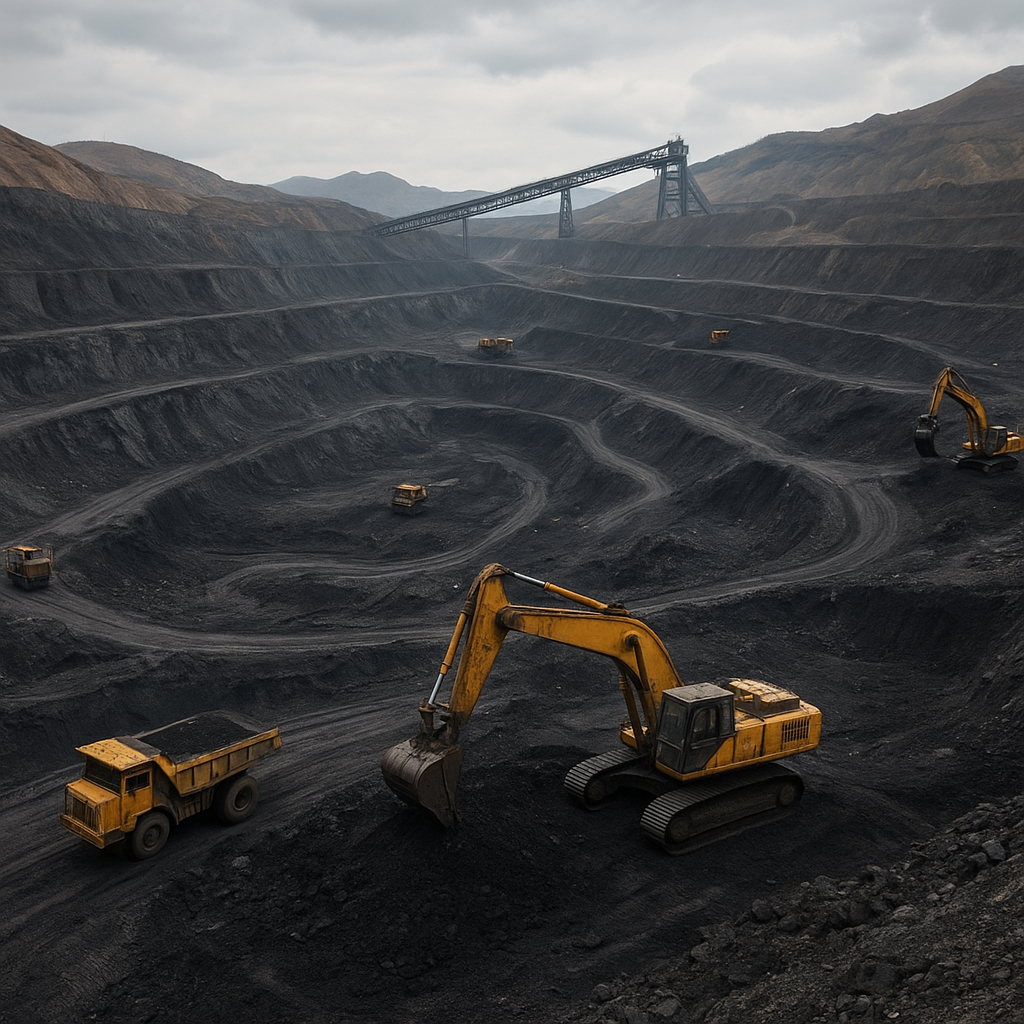
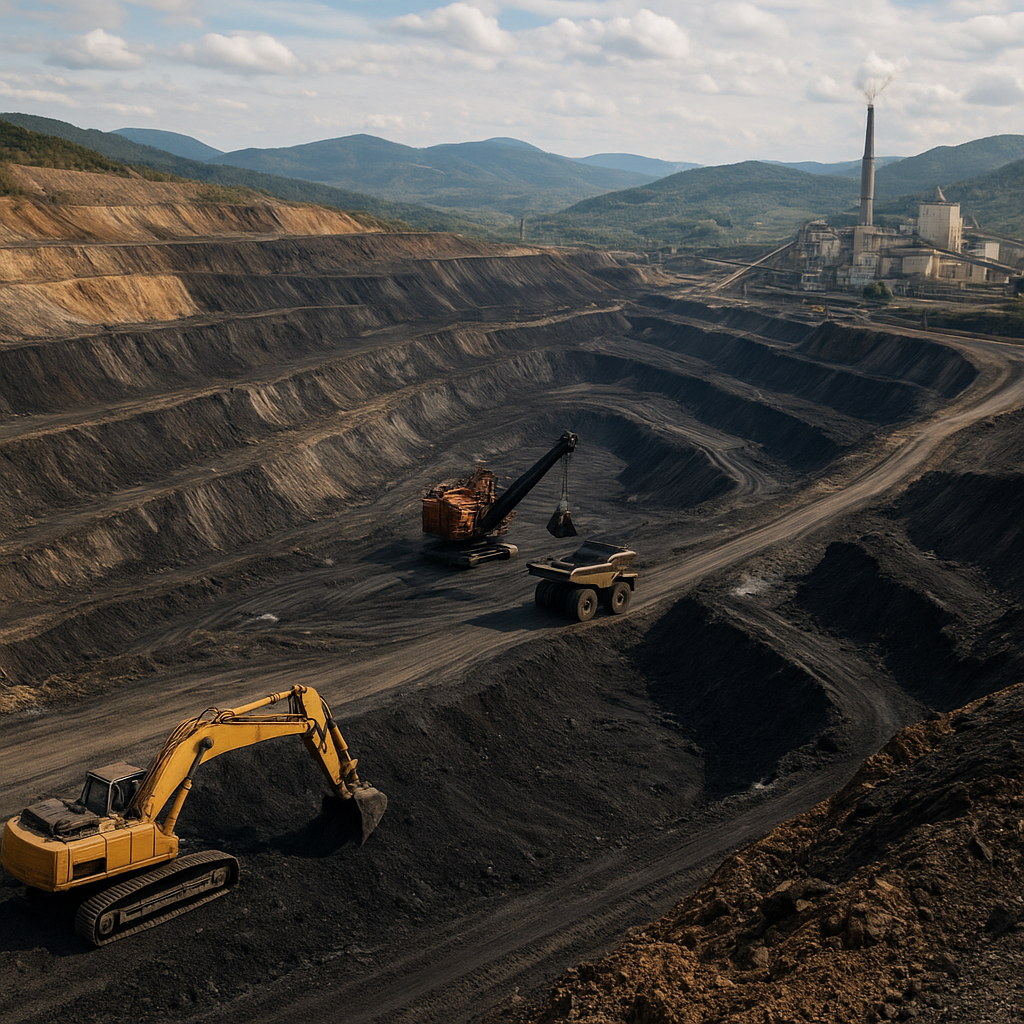
The Daliuta coal mining complex, located in northern China, is an important component of the country’s sprawling coal industry. Nestled within one of China’s most productive coal regions, the mine supplies fuel for power generation, industrial processes and chemical feedstocks while shaping regional economies and infrastructure. This article reviews the mine’s location and geology, the types of coal extracted and mining methods used, its economic and industrial significance, available statistical and environmental information, and prospects for the future.
Location, Geological Setting and History
Daliuta is situated in the northern part of Shaanxi Province within the larger Ordos Basin, one of China’s foremost coal-bearing regions. The basin stretches across parts of Shaanxi, Inner Mongolia, Ningxia and Shanxi provinces and contains some of the country’s largest and most accessible coal seams. The immediate area around the Daliuta complex is characterized by extensive sedimentary strata deposited during the Carboniferous–Permian and later periods, which host thick and laterally continuous coal seams.
Geological characteristics
- The Daliuta area is part of the Ordos Basin, known for its thick sequences of Carboniferous and Permian coals.
- Coal seams here tend to be relatively thick and continuous, favoring large-scale mechanical mining.
- Coal rank in the basin typically ranges from sub-bituminous to bituminous, with variations of volatility and ash depending on stratigraphic position.
- Groundwater and overburden conditions influence mine design; in many parts of the basin, low groundwater influx favors open-pit operations or shallow underground mining.
The Daliuta site rose to prominence alongside broader regional development programs from the late 20th century onward, as China expanded coal extraction to secure energy supplies for industrialization and electrification. Over the past several decades the area has seen systematic expansion of pit size, mechanization, and infrastructure connections to national transport networks.
Coal Type, Mining Methods and Processing
Daliuta produces coal predominantly used for power generation and industrial feedstock. The mined coal characteristics and the chosen extraction techniques reflect both the geology and economic priorities of the operators.
Coal types
- Thermal coal is the dominant product, used primarily for electricity generation in thermal power plants.
- Some sections yield higher-rank bituminous coal suitable for partial metallurgical use and for blending into coking coal mixes.
- Coal quality varies across the mine: moisture, ash and sulfur contents depend on seam and depth; beneficiation plants often upgrade the product to meet market specifications.
Mining methods and on-site processing
- Large-scale mechanized methods are common, including both open-pit (surface) mining where overburden geometry permits and underground longwall or room-and-pillar mining in deeper or more structurally constrained areas.
- Heavy mining equipment—bucket-wheel excavators, draglines, giant shovels and continuous miners—supports high-volume extraction rates.
- Coal is usually processed on-site in preparation plants that remove impurities, reduce ash and adjust size for transport or downstream chemical use.
- Associated by-products, such as coalbed methane, are often recovered where feasible to improve safety and capture value from fugitive gas.
Economic, Industrial and Regional Importance
Daliuta’s economic footprint extends beyond raw output. It contributes to energy security, regional employment, infrastructure development and supports downstream industries such as power generation, coal-to-chemicals and metallurgy.
Contribution to energy and industry
- The mine supplies coal to local and regional power plants, helping to stabilize electricity supply in northern China, particularly during high-demand seasons.
- Coal from Daliuta also feeds industrial users and chemical plants involved in coal-to-liquid and coal-to-chemical processes, reflecting China’s strategy to diversify energy feedstocks.
- Its role in regional supply chains reduces the need for longer-haul coal transport from other basins, lowering logistics costs and enhancing local energy resilience.
Employment and socioeconomic effects
- The mine complex supports several thousand direct jobs in extraction, processing, maintenance and administration and many more indirectly via transport, services and supply sectors.
- Local governments have historically relied on coal revenues and associated taxes to fund infrastructure, healthcare and education projects in mining districts.
- Economic diversification remains a priority for host communities; revenues from Daliuta have enabled investments in roads, rail links and community facilities while also creating dependency on resource cycles.
Production, Reserves and Statistical Overview
While precise, up-to-date production figures for individual mines can change year to year and are sometimes aggregated at company or regional levels, Daliuta is generally regarded as a high-capacity operation within the Ordos Basin. The basin itself is among China’s largest coal provinces, with very large estimated reserves.
Reserves and scale
- The Ordos Basin contains some of China’s most significant coal endowments; conservative public estimates place reserves in the basin at well over 100 billion tonnes, making it a strategic national resource.
- Daliuta, as part of this basin, benefits from thick, laterally continuous seams that allow for long-term production planning and large-scale operations.
Production capacity and output
- Published figures for comparable large mines in the region typically report annual outputs in the range of several million to tens of millions of tonnes; Daliuta’s annual production has been described in industry sources as being in the higher end for single-site complexes in northern Shaanxi (estimates vary by year and source).
- Output is directed mostly to domestic markets—power generation and industrial applications—with transport organized around dedicated heavy-haul railway connections and road links.
Transportation and logistics
- The mine benefits from integration into China’s heavy freight railway network, which is essential for moving large coal volumes to coastal ports, industrial centers and inland power plants.
- Logistics investments—rail spur lines, loadouts, conveyor systems—reduce unit transport costs and improve turnaround times for large shipments.
Environmental, Safety and Social Considerations
Like all large coal operations, Daliuta presents environmental and safety challenges that must be managed to ensure long-term viability and community acceptance.
Environmental impacts and mitigation
- Surface disturbance from open-pit mining changes local landscapes and land use; reclamation and progressive land rehabilitation are key mitigation measures.
- Dust, noise and particulate emissions from mining and coal handling require control measures such as dust suppression, covered conveyors and green belts.
- Water management is critical where mining intersects aquifers; best practice includes controlled dewatering, treatment of mine water and restoration initiatives to minimize impacts on local water supplies.
- Methane management is important for safety and climate impacts—capturing and utilizing coalbed methane reduces greenhouse gas emissions and can supply a local energy source.
Safety and operational standards
- Large Chinese mines have invested in mechanization and remote monitoring to reduce occupational hazards and improve productivity.
- Safety systems include gas monitoring, automated equipment shutoffs, and rigorous mine planning to limit roof collapses and other underground risks.
- Training programs and emergency response planning are emphasized to reduce accident rates and protect workers’ health.
Social license and community engagement
- Local communities often benefit from job opportunities and improved infrastructure, but also face dislocation and environmental health concerns; operators and authorities typically negotiate compensation programs, resettlement plans and development funds.
- Long-term economic transition strategies—such as developing alternative industries and retraining programs—are increasingly part of regional planning to prepare for eventual coal phase-down scenarios.
Technological Innovation, Efficiency and Future Prospects
The future of Daliuta, like many large coal sites in China, will be shaped by technological adaptation, policy drivers and market demand.
Technology and efficiency improvements
- Automation of large excavators, remote-controlled mining units and digital mine management systems improve operational efficiency and safety.
- Beneficiation and washing advances help lower ash and sulfur content of delivered coal, improving combustion efficiency and emissions performance at power plants.
- Integration with coal-to-chemicals and coal-to-liquids technologies provides alternate revenue streams and helps buffer the mine against fluctuations in thermal coal demand.
Policy context and market dynamics
- China’s energy policy continues to prioritize reliability and affordability of power, keeping demand for coal-based generation significant in the medium term while also pursuing renewables and decarbonization goals.
- Regional coal demand patterns, environmental regulations and carbon intensity targets will influence how rapidly production at sites like Daliuta is scaled up, maintained or phased down.
- Global coal markets affect export opportunities, but many large inland mines primarily serve domestic needs and are less exposed to international price swings.
Long-term outlook
- In the near to medium term, Daliuta is expected to remain an important domestic coal supplier given its geology and infrastructure.
- Over the longer horizon, technological shifts—improved emissions controls, methane utilization and potential conversion of mining assets into other industrial uses—will support value preservation even as national energy mixes evolve.
Interesting and Lesser-Known Facts
- Daliuta sits within one of the most geologically consistent coal provinces in China, which is why large, mechanized operations are economically feasible.
- Some projects in the Ordos region have been pioneers in capturing and using coalbed methane both to improve mine safety and to supply cleaner-burning fuel locally.
- Large-scale mines in the region often operate integrated logistics complexes—wash plants, loadouts and railheads co-located with extraction sites—to maximize throughput and minimize handling losses.
- Mining-led regional development has created a landscape where modern industrial towns have grown in areas that were, several decades ago, sparsely populated grazing lands.
Summary
Daliuta is a representative example of China’s large-scale coal mining capability: geologically advantaged, industrially integrated and economically significant at a regional level. It produces primarily thermal coal and some higher-rank products, using a mix of open-pit and mechanized underground methods, and is linked to major rail and industrial networks. While precise annual figures for the mine vary with reporting and operational conditions, its strategic value stems from its sizeable reserves, high-capacity infrastructure and role in local employment and regional development. Like all major coal complexes, it faces environmental and social challenges that require active management—particularly in areas of reclamation, methane mitigation and community transition planning. The future of Daliuta will depend on balancing continued domestic energy needs with environmental commitments and technological adaptation to maintain economic viability in a changing energy landscape.