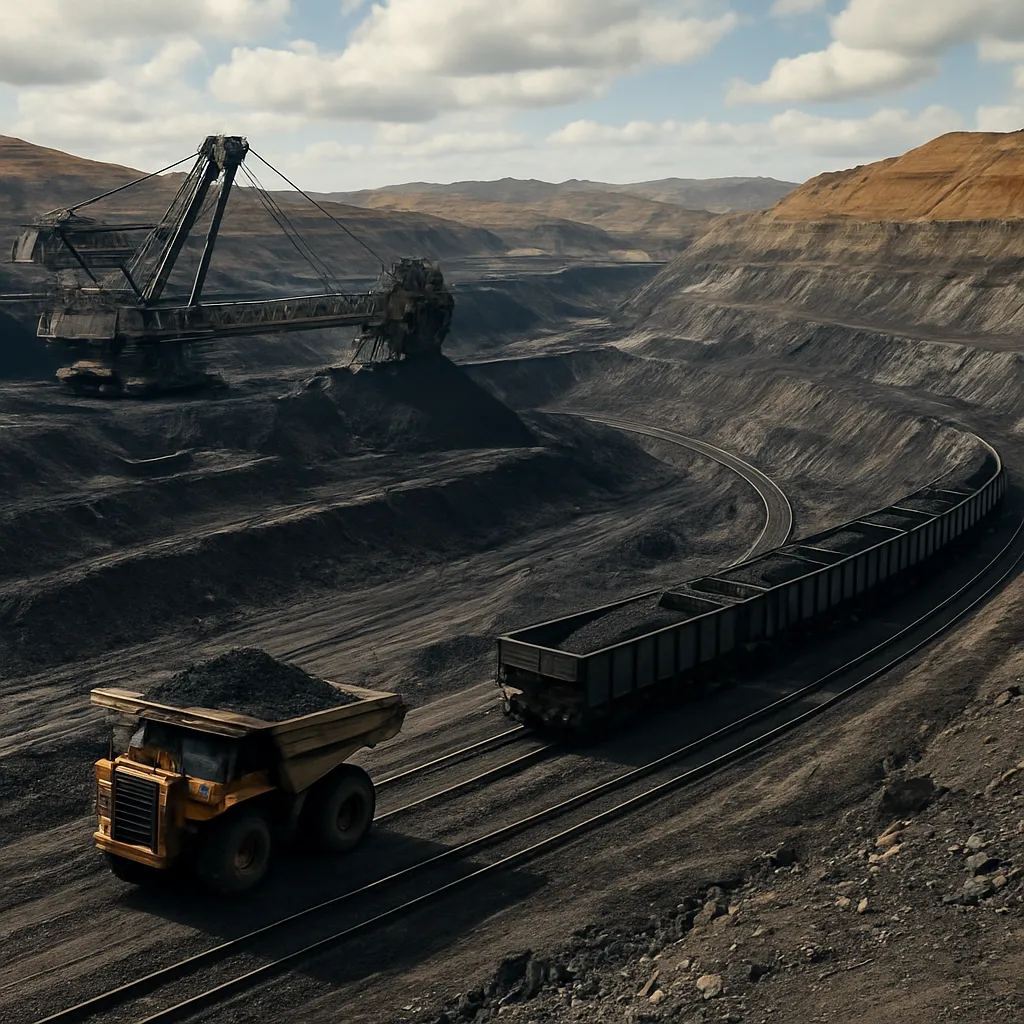
Coal Valley Mine — Australia — coal mining sites is an exploration of a coal mining locality that illustrates both the historical depth and contemporary dynamics of Australia’s coal industry. This article describes where such mining occurs, the types of coal produced, geological and operational features, economic and social impacts, environmental management practices, and the strategic importance of coal for national and global markets. The narrative combines place-specific characteristics (as found in Coal Valley–type deposits) with broader Australian industry data to provide a complete picture for readers interested in mining, energy policy, or regional development.
Location, geology and the nature of Coal Valley-type deposits
Coal Valley-type mining sites in Australia are commonly located in sedimentary basins formed in the Paleozoic and Cenozoic eras. These basins — examples include the Bowen Basin, Gunnedah Basin, Sydney Basin, and smaller Tertiary basins — contain layered sequences of sandstones, shales and coal seams. A Coal Valley Mine typically sits where a seam or seams are near enough to the surface to be mined economically. Depending on the region, the deposit can range from thick, laterally continuous seams to thinner, more discontinuous lenses.
Geologically, Australian coal ranges from lignite (brown coal) to bituminous and anthracite grades, though the majority of export-focused production is high-quality bituminous coal used for steelmaking and power generation. Coal Valley-style deposits may contain thermal coal suitable for electricity generation or metallurgical (coking) coal used in iron and steel production. The exact coal rank depends on burial depth, heat, and time; many eastern Australian basins produce high-grade coking coal in addition to thermal grades.
Mining methods at Coal Valley sites are driven by seam depth and geometry. Where seams are shallow, open-cut (surface) mining is common, employing large draglines, shovels and haul trucks. For deeper or structurally complex seams, underground methods such as longwall or bord-and-pillar techniques may be used. The choice of method affects operational cost, recovery rates, safety profile and subsequent land rehabilitation needs.
Operations, coal quality and production practices
A Coal Valley Mine typically includes the following operational components: extraction area (open pit or portals to underground drives), coal handling and processing facilities (wash plants, screening), rail or road loadout for transport, and associated infrastructure (workshops, mine offices, accommodation). Modern operations employ a mixture of heavy mobile equipment, fixed plant and increasing automation — from GPS-guided haulage to remote vehicle operation and real-time fleet management systems.
Coal quality at such sites is described by calorific value, volatile matter, ash content, fixed carbon, moisture and sulphur levels. High-quality metallurgical coal is valued for low ash and low volatile content that enables coking; thermal coal is judged primarily by energy content (measured in kcal/kg or MJ/kg) and combustion characteristics. Many Australian mines produce coals tailored to specific markets: high-grade coking coals for steelmakers in East Asia and thermal coals for power utilities.
Processing often involves washing (dense medium separation), screening and blending to meet contractual specifications. Washing improves product quality by reducing ash and impurities but generates a coal washery reject stream that needs environmental management. Coal Valley-style operations often blend from multiple seams or stockpiles to maintain consistent product quality for customers.
Economic significance and market role
Coal remains an important economic commodity for Australia. While global energy transitions are shifting demand patterns, Australia still ranks among the world’s top producers and exporters of coal. The industry generates substantial export revenue — often in the range of tens of billions of Australian dollars annually — and supports regional economies through employment, service industries and infrastructure investment.
At the site level, a Coal Valley Mine contributes to the local economy in multiple ways: direct employment of operations, maintenance and administrative staff; contracting opportunities for drilling, haulage, engineering and environmental services; and indirect employment via accommodation, retail and municipal services. Many mining towns and regional centres evolve with the life cycles of nearby mines, with local governments relying on royalties and business rates derived from mining activity.
Globally, Australian coal is pivotal for two major industries:
- Steel production: Australia is a key supplier of metallurgical coal (coking coal), which is essential for blast furnace steelmaking.
- Power generation: Thermal coal exported to Asia and used domestically still accounts for a substantial share of the region’s electricity supply, although its role is evolving as renewables expand.
Statistical context and broader industry figures
Exact production figures for a specific Coal Valley Mine depend on the mine’s size, life-of-mine plan and whether it is primarily an export or domestic supplier. At the national level, Australia’s coal industry produces hundreds of millions of tonnes annually. Exports represent a large portion of production, making Australia one of the leading coal exporters worldwide. The economic value of coal exports fluctuates with commodity prices and global demand cycles but has historically been a major export earner.
Employment in the coal sector is regionally significant: while automation and productivity gains have moderated labour needs, tens of thousands of direct jobs are still supported across extraction, processing and transport. Indirect employment multiples increase the industry’s footprint in local economies, particularly in regional and remote areas where alternative large employers may be limited.
Financially, a mid-sized open-cut Coal Valley operation can represent capital expenditures in the hundreds of millions to low billions of dollars over its life cycle — covering mine development, processing plant, haul roads, rail links and rehabilitation commitments. Operational costs vary by geography, seam characteristics, labour rates and regulatory obligations.
Environmental management, rehabilitation and community engagement
Modern Coal Valley-type mines operate under strict regulatory frameworks that require environmental impact assessment, continuous monitoring, and post-mining rehabilitation plans. Key environmental aspects include water management (preventing contamination of groundwater and surface water), dust and noise control, handling of spoil and reject material, and progressive land rehabilitation.
Rehabilitation aims to return disturbed land to a productive use — which may be native habitat, agriculture, forestry, recreation or other land-use options agreed with landowners and regulators. Successful rehabilitation programs combine reshaping of landforms, topsoil management, revegetation with native species, and long-term monitoring to ensure stability and biodiversity outcomes.
Community engagement is central to sustainable operations. Mining companies typically invest in local infrastructure, educational programs, health services and training initiatives. They establish community consultative committees, negotiate land access agreements with traditional owners and seek to address cumulative impacts on housing, roads and services. The social licence to operate is now widely recognized as being as important as formal regulatory approval.
Health and safety practices
Safety is a top priority. Mining sites enforce rigorous health and safety systems, including hazard identification, risk assessment, emergency response planning and continuous training. For underground operations, ventilation and gas monitoring are critical; for surface operations, haul road management and equipment maintenance prevent incidents. Advances in automation—such as remotely operated haul trucks and predictive maintenance systems—are reducing exposure of personnel to high-risk tasks while improving productivity.
Technological trends and productivity
Coal Valley-style mines are increasingly adopting technologies to enhance efficiency and reduce environmental footprint:
- Automation: autonomous haulage systems, remotely operated shovels and drills.
- Digitalization: real-time fleet management, predictive analytics and mine-to-port logistics optimization.
- Processing improvements: fine-coal recovery and water-efficient washery technologies to lower reject volumes and water use.
- Emissions mitigation: methane capture and utilization where feasible, and dust suppression systems.
These developments lower operating costs per tonne and can improve safety and environmental performance.
Regulatory and market pressures shaping the future
Coal Valley Mine operations, like all Australian coal projects, face evolving regulatory, market and societal pressures. Policies targeting greenhouse gas emissions, carbon pricing mechanisms, and investor expectations around environmental, social and governance (ESG) performance influence investment decisions. Simultaneously, market demand for metallurgical coal for steelmaking remains resilient even as thermal coal markets adjust due to competition from gas and renewables.
Transition scenarios often result in a portfolio approach: some mines may extend life by supplying steelmaking markets, others may diversify into services, reclamation work or alternative land uses post-closure. Governments and industry collaborate on just transition frameworks to support affected workers and communities.
Case features and interesting facts relevant to Coal Valley-type sites
– Many Coal Valley-style deposits have a long working history: in some regions, small-scale coal extraction began in the 19th century and evolved into large modern operations. This layered history influences land tenure, cultural heritage constraints and existing infrastructure.
– Coal can be multifaceted in value: seams with interburden or impurities may be suited to different processing pathways, while lower-grade rejects have been trialed for use in cement manufacture, soil stabilization, or as feedstock for emerging clean-coal technologies.
– Water stewardship is a defining challenge: efficient recycling in wash plants and careful management of tailings or ponded water are vital to limit environmental impact and maintain social acceptance.
– Rehabilitation success stories across Australia demonstrate that former coal pits can be converted to lakes, wetlands, pasture or native bushland, offering biodiversity and community benefits when properly planned and funded.
Strategic importance and concluding outlook
Coal Valley Mine, as a representative of Australian coal mining sites, exemplifies the complex balance between resource development, economic benefit and environmental responsibility. Coal continues to support industries, jobs and export earnings, particularly through high-value metallurgical coal used in steelmaking. At the same time, regulatory pressures, market shifts and climate commitments are driving innovation in operations, improvements in environmental performance, and planning for mine closure and community transition.
For stakeholders — from policymakers to local communities and investors — the task is to ensure that operations are conducted with high standards of safety, environmental care and community engagement, while exploring diversification pathways and technological solutions that reduce emissions and enhance long-term regional resilience. Coal Valley-type mines will therefore likely remain important for some years, but their roles and practices will evolve in response to global and domestic trends.


