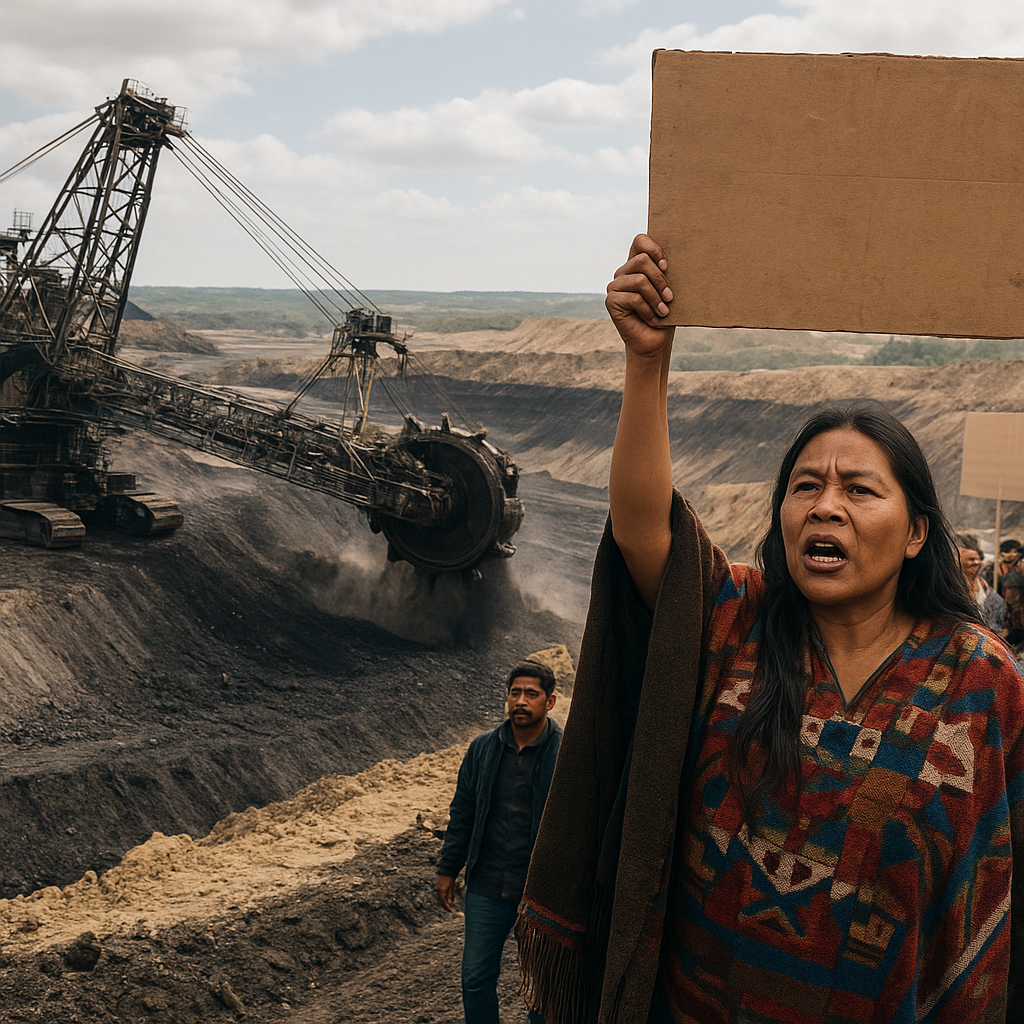
The global energy landscape continues to be shaped by the enduring significance of coal, a resource whose abundant reserves have powered industries, fueled economic growth, and sustained millions of livelihoods. While the energy transition gains momentum, the complex interplay between extractive activities and the rights of Indigenous communities demands urgent attention. This article delves into the multifaceted world of coal, examines trends in coal stocks and financial markets, and highlights critical issues related to Indigenous rights through diverse global case studies.
Global Coal Reserves and Market Dynamics
Coal remains one of the most plentiful fossil fuels on Earth, with major deposits concentrated in regions such as the Asia-Pacific, North America, Europe, and southern Africa. Despite growing renewable alternatives, coal still accounts for a significant share of electricity generation in many countries. Several factors influence market dynamics:
- Demand Trends – Emerging economies often rely on coal for stable baseload power, while some industrialized nations phase out older coal plants in favor of gas or renewables.
- Production Costs – Extraction is relatively cheap in areas with rich seams and established infrastructure, but remote or geologically complex sites can see costs skyrocket.
- Environmental Regulation – Stricter emission standards and carbon pricing mechanisms have reshaped competitiveness, driving investment toward cleaner technologies.
- Technological Innovation – Advances in carbon capture, utilization, and storage (CCUS) may extend the economic life of certain coal operations.
Understanding the ebb and flow of coal markets is essential for investors and stakeholders who seek to navigate this evolving sector responsibly.
Coal Stocks: Investment Trends and Risk Management
Publicly traded coal companies offer investors exposure to both the physical commodity and its supply chain. Over the past decade, bull and bear cycles have influenced share prices, while environmental, social, and governance (ESG) concerns have added new dimensions to portfolio strategy. Key considerations include:
- Investment Diversification – Balancing coal equities with renewable energy assets can mitigate price volatility linked to regulatory shifts and fuel substitution.
- Credit Risk – Coal firms carrying heavy debt loads may face refinancing challenges as lenders impose stricter environmental covenants.
- Operational Efficiency – Companies that upgrade machinery, embrace automation, and optimize logistics often outperform peers in margin stability.
- Investor Activism – Shareholders increasingly pressure boards to adopt decarbonization roadmaps or return capital through buybacks and dividends.
By incorporating rigorous analysis of market fundamentals, investors can better assess potential returns and the risk profile of coal-related securities.
Indigenous Rights and Community Engagement
Throughout the coal belt, Indigenous groups bear disproportionate social and environmental burdens. Effective engagement and respect for indigenous cultural landscapes are vital to achieving equitable outcomes. Below are illustrative case studies:
Australia: The Carmichael Mine Conflict
- The Adani Group’s proposed project in Queensland has faced legal challenges from the Wangan and Jagalingou traditional owners, who assert their rights under native title legislation.
- Allegations of inadequate consultation and breaches of the duty to negotiate in good faith have sparked protests, court battles, and global campaigns by climate activists.
Canada: Treaty 8 and the Coal Moratorium in British Columbia
- In 2018, the provincial government imposed a five-year ban on new large-scale coal mine applications within the territories covered by Treaty 8.
- The moratorium recognized the inherent title claims of First Nations communities, emphasizing the need for Free, Prior, and Informed Consent (FPIC) in resource development.
United States: Navajo Nation’s Struggles Near the Four Corners
- The Navajo Nation has experienced the environmental legacy of coal-fired power generation, including water contamination and land degradation.
- Efforts to diversify the local economy and invest in solar farms reflect a drive toward empowerment and energy sovereignty.
Policy and Regulatory Frameworks
The intersection of coal extraction and Indigenous rights is framed by a patchwork of national laws and international norms. Several instruments and principles guide responsible conduct:
- United Nations Declaration on the Rights of Indigenous Peoples (UNDRIP) – Affirms FPIC, cultural preservation, and land rights.
- Equator Principles – A risk management framework for financial institutions to assess and manage environmental and social risk in projects.
- National Legislation – Varies widely; some countries enforce legislation requiring community agreements, while others lack clear protocols.
- Judicial Precedents – Landmark court decisions can establish binding requirements for consultation and consent processes.
Progress toward robust legal protections is uneven, and ongoing advocacy is crucial to enhance transparency and equity in resource governance.
Environmental and Social Impacts of Coal Operations
Beyond the financial and legal dimensions, coal mining exerts profound effects on ecosystems and communities. Key impact areas include:
- Land Disturbance – Open-pit mines can displace entire watersheds, fragment habitats, and disrupt wildlife migration corridors.
- Water Resources – Acid mine drainage and siltation threaten downstream water quality, affecting agriculture and potable supplies.
- Air Pollution – Particulate matter, sulfur dioxide, and nitrogen oxides from mining and combustion endanger public health.
- Cultural Heritage – Sacred sites and traditional hunting grounds may be irreparably altered or destroyed.
Mitigation measures—such as progressive rehabilitation, biodiversity offsets, and shared benefit schemes—can reduce harm but require genuine collaboration with affected populations.