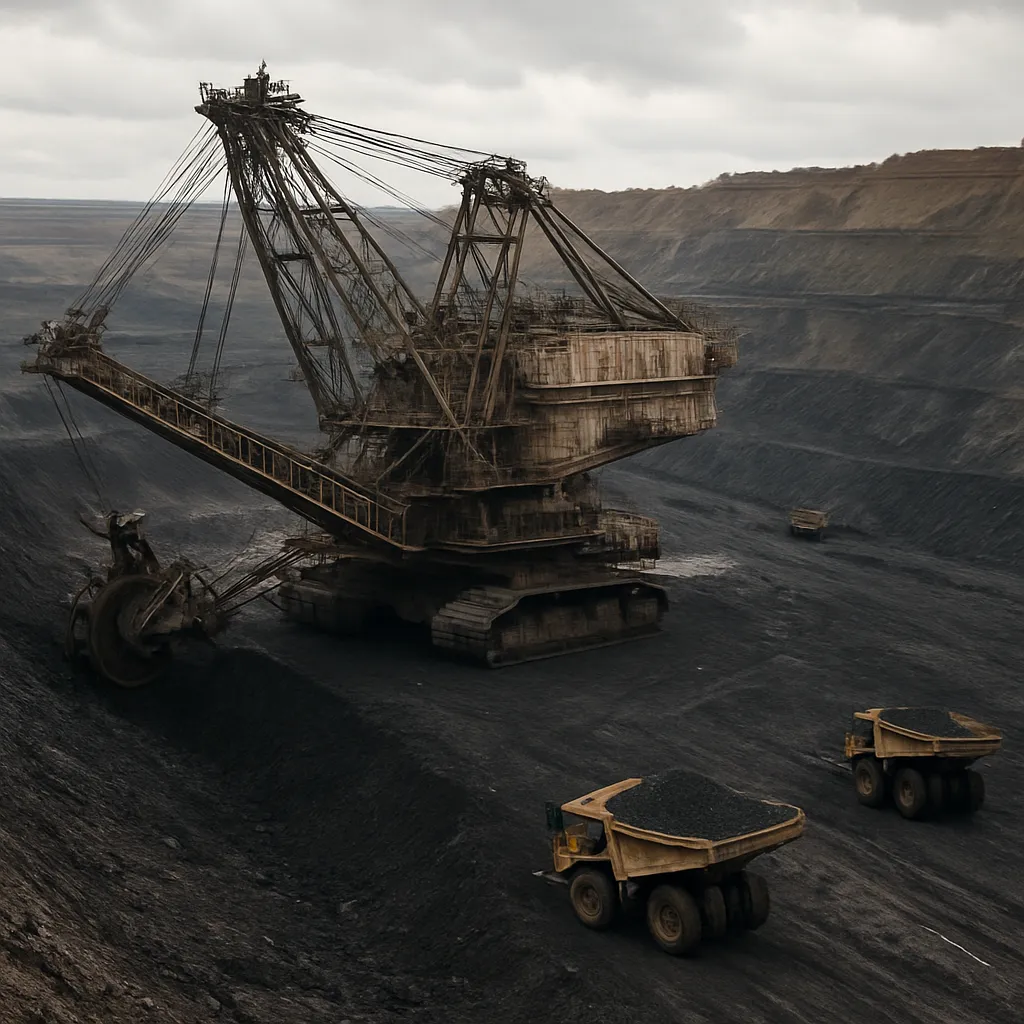
Chertinskaya-Koksovaya Mine – Russia

The Chertinskaya-Koksovaya Mine is part of Russia’s extensive coal mining sector and is recognized principally for its role in supplying coal suitable for metallurgical and energy uses. This article provides an overview of the mine’s location and geology, the type and quality of coal produced, its economic and industrial significance, operational and social aspects, and prospects for the future. Where specific published figures on the mine are limited, broader regional and national statistics are provided to place the operation in context.

Location and geological setting

The Chertinskaya-Koksovaya Mine is located within one of Russia’s major coal-bearing areas. Mines with the “Koksovaya” designation typically indicate an association with **coking coal** (coal suitable for conversion into coke used in steelmaking). While detailed public domain mapping of every mine is not always complete, such operations are commonly situated in Russia’s large basins, notably the Kuznetsk Basin (Kuzbass)

Geological characteristics

  • Coal seams in these basins are usually interbedded with shales, sandstones and occasional carbonate horizons; seam thickness varies from thin layers to very thick accumulations exceeding several meters.
  • Coal ranks associated with metallurgical uses are generally in the **bituminous** range — suitable for coke manufacture due to favourable volatile matter, calorific value and caking properties.
  • Typical geological challenges include variable seam dip, faulting, and roof instability in some sectors, requiring a mix of surface and underground mining techniques depending on depth and seam geometry.

What is mined: coal type and quality

As the name implies, Chertinskaya-Koksovaya focuses on coal that can be used for **metallurgical** purposes, though many Russian mines produce coal graded for both thermal (power generation) and coking (steel) markets. Key characteristics and uses include:

  • Coking coal (metallurgical coal): Used to produce coke via carbonization. Coke is essential for blast furnace ironmaking and still constitutes a major feedstock for integrated steel plants.
  • High-calorific-value bituminous coal: Preferred for coke production because of good caking properties and relatively low ash and sulfur content.
  • Thermal coal fractions: Some seams or washery products may be directed to power generation when not suitable for metallurgical processing.

Precise chemical and physical specifications (calorific value, ash, volatile matter, sulfur, phosphorus content) for Chertinskaya-Koksovaya are generally reported by operators and buyers. In the absence of direct public tables for each mine, typical ranges for Russian metallurgical coals are:

  • Gross calorific value: roughly 24–32 MJ/kg
  • Ash content: commonly 5–15% after washing, depending on the seam and beneficiation
  • Sulfur: often below 1–1.5% in high-quality coking coals

Mining operations and production

Operations at mines classed as coking coal producers frequently combine extraction, on-site processing (coal preparation plants or washeries), and logistics for delivery to domestic steel mills or export terminals. Mining methods depend on seam depth and thickness:

  • Open-pit (surface) mining: used where seams are shallow and extensive; can yield very large annual volumes with lower extraction costs.
  • Underground mining: applied where seams are deeper or where surface disturbance must be minimized; techniques include longwall and room-and-pillar systems.

Production figures specific to Chertinskaya-Koksovaya are limited in wide-release public databases. To provide context, consider the broader scale of Russian coal mining:

  • Russia’s total coal production in recent years has ranged around 400–450 million tonnes per year (pre-war and recent variability depending on export constraints and domestic demand).
  • The Kuznetsk Basin (Kuzbass) accounts for a substantial share — often cited as supplying more than half of Russia’s coal output, with numerous mines producing from under 1 million tonnes per year to tens of millions for the largest open pits.
  • Individual large coking-oriented mines in major basins can produce several million tonnes annually, while smaller operations produce in the hundreds of thousands of tonnes range.

Where specific mine-level data are published by companies, they typically report annual production, reserve estimates, and product quality. For Chertinskaya-Koksovaya, potential figures would include total proven and probable reserves (often millions to tens of millions of tonnes) and annual extraction rates aligned with the mine’s scale and method.

Economic and industrial significance

The role of a coking coal mine like Chertinskaya-Koksovaya extends beyond the immediate sale of raw material. Its significance can be viewed across multiple dimensions:

Contribution to the steel industry

  • Metallurgical coal is a critical input for integrated **steel** production. Without reliable coking coal supplies, blast furnace operations face feedstock shortages or increased costs importing coke or substitute reducing agents.
  • Strategically located coking coal mines reduce supply-chain costs and improve the competitiveness of domestic steelmakers.

Regional economic impact

  • Mining operations are major employers in many remote or industrial regions, providing direct jobs in extraction, processing, transport, and indirect jobs through services and supply chains.
  • Taxes and royalties from mining contribute to local and regional budgets, supporting infrastructure, healthcare and education.

Exports and trade balance

  • Russia is one of the world’s largest coal exporters. In recent years, around half of production has been destined for export markets, though the split between thermal and metallurgical coal shifts with global demand.
  • Coking coal is a significant export commodity because of its role in steelmaking. Export revenue depends on global metallurgical coal prices, freight costs and geopolitical factors affecting trade corridors.

Logistics, infrastructure and markets

Efficient transport links are vital for coking coal mines. Typical logistical pathways include:

  • Rail transport to domestic steel factories or port terminals. Russia’s heavy-rail network, including the Trans-Siberian and Baikal-Amur corridors, is central to coal logistics.
  • River and sea shipment (where accessible) to domestic coastal steelworks or to export hubs such as Novorossiysk, Vostochny, Vladivostok, or Baltic ports.
  • On-site coal preparation plants to wash and blend products to meet specific buyer quality requirements.

Market demand for the mine’s product is primarily driven by domestic steelmakers and international buyers in Asia and Europe. In recent years, the Asian market (China, South Korea, Japan) has been a major destination for Russian metallurgical coal, alongside certain European buyers.

Employment, workforce and social aspects

Coal mining historically provides substantial local employment and shapes community identity. Typical social aspects related to a mine like Chertinskaya-Koksovaya include:

  • Direct workforce: miners, engineers, plant operators, maintenance staff. The number varies by mine size — from a few hundred at small operations to several thousand at major complexes.
  • Indirect employment: contractors, suppliers, transport and logistics workers, service sector jobs in local towns.
  • Community impacts: revenue for local governments, investments in housing, schools and clinics often tied to the mine’s presence.

Modern mines also invest in worker training, mechanization and safety programs. However, the historical record shows that mining communities can be vulnerable to commodity price swings, closure of operations, and environmental liabilities.

Environmental and safety considerations

Coal mining, particularly at scale, raises environmental and occupational safety concerns. Key points relevant to Chertinskaya-Koksovaya-style operations are:

  • Land disturbance and landscape changes from open-pit mining; long-term reclamation is necessary to restore ecosystems.
  • Water management challenges: handling of mine drainage, prevention of contamination from tailings and washery effluents.
  • Air quality impacts: dust, particulate emissions from handling and transport, and greenhouse gas emissions when coal is burned downstream.
  • Underground mining risks: methane accumulation, roof falls and the need for ventilation and rigorous safety protocols.

Regulatory frameworks, company compliance programs and community engagement affect how these issues are managed. Increasingly, mining firms implement measures for sustainability, methane capture, water treatment and progressive rehabilitiation of mined land.

Statistics and data context

While precise, up-to-date mine-level statistics for Chertinskaya-Koksovaya are not always freely published, the following national and regional figures provide context for the mine’s potential scale and importance:

  • Russia coal production: historically around 400–450 million tonnes per year in the late 2010s and early 2020s (figures vary year-by-year with market and policy influences).
  • Coal exports: Russia exported roughly 180–250 million tonnes per year in years prior to major geopolitical disruptions and trade shifts; a meaningful portion comprised metallurgical coal and coke.
  • Kuzbass share: the Kuznetsk Basin often contributes more than half of national coal production, with numerous large coking and thermal coal mines.

For project-level metrics — annual production, reserves (measured and indicated), stripping ratios (open-pit) or completed development plans (underground) — company reports, regulatory filings or regional mining records should be consulted for authoritative data on Chertinskaya-Koksovaya.

Technological developments and operational improvements

Technological modernization is a priority for enhancing efficiency and safety in coal mining. Technologies and practices relevant to mines like Chertinskaya-Koksovaya include:

  • Automation and remote operation of haulage, excavators and longwall faces to improve productivity and worker safety.
  • Advanced coal preparation technologies to improve washability, reduce ash and enhance coking properties.
  • Real-time monitoring systems for methane and geotechnical stability in underground operations.
  • Methane capture and use: capturing methane from coal seams can reduce greenhouse emissions and provide a fuel source.

Investment in such technologies is influenced by commodity prices, regulatory incentives (or penalties), and corporate sustainability strategies.

Future prospects and strategic outlook

The future role of a coking coal mine like Chertinskaya-Koksovaya is shaped by several intersecting trends:

  • Global steel demand: coking coal demand tracks the pace of global steel production. Decarbonization efforts in steelmaking (hydrogen-based direct reduced iron, electric arc furnace recycling) could change long-term coking coal demand, but transition pathways will likely take decades.
  • Supply-chain geopolitics: trade patterns, sanctions, and freight economics influence which markets Russian coal serves.
  • Domestic policy: investments in modernizing mines, environmental regulation and regional development priorities affect operational viability.
  • Resource depletion and reserves management: as accessible reserves dwindle, companies balance developing new seams versus prolonging life-of-mine through improved recovery techniques.

Adaptive strategies for mines include diversifying product mixes (coking vs thermal), improving product quality through beneficiation, investing in lower-emission technologies, and engaging in reclamation and social programs to maintain a social license to operate.

Interesting facts and broader context

  • Coking coal remains an indispensable commodity for traditional blast-furnace steel production and therefore retains strategic industrial importance even as low-carbon steelmaking technologies advance.
  • The term “Koksovaya” in a mine name signals that product quality and marketing are tailored toward the metallurgical sector rather than solely power generation.
  • Russia’s geology yields some of the largest and thickest coal seams in the world, enabling very large-scale surface operations where conditions permit.
  • Regional mines often shape local culture and infrastructure: many towns and transport links were built specifically to serve mining complexes.

Concluding remarks

Chertinskaya-Koksovaya Mine exemplifies the class of Russian coal operations focused on supplying coking material to domestic and international steel industries. While mine-specific public statistics may be limited in general-purpose sources, the mine sits within a national coal sector of substantial scale and strategic significance. The mine’s future will depend on the evolution of global steel demand, technological adaptation, environmental regulation, and the economics of coal extraction and transport. For detailed technical or numerical data on reserves, annual production and product specifications, company reports and regional mining registries should be consulted to obtain authoritative mine-level figures.

Related Posts

  • April 9, 2026
El Descanso Coal Mine – Colombia

This article examines the El Descanso coal mine in Colombia, exploring its location, the type of coal produced, geological setting, mining methods, economic and social roles, and environmental and regulatory…

  • April 8, 2026
Eagle Eye Coal Mine – Mozambique

The Eagle Eye Coal Mine in Mozambique represents a noteworthy node in the country’s expanding coal landscape. Located in the heart of the central coal-bearing basins, the project is part…