The Bayangaole Coal Mine, located in northwestern China, is a notable operation within the country’s extensive coal-mining landscape. Situated in a region historically rich in mineral resources, the mine plays a role in both regional development and the national energy supply. This article outlines the mine’s location and geology, the types of coal produced, operational and economic characteristics, available statistics and estimates, environmental and social implications, and the mine’s broader significance for industry and local communities. Where precise public data are limited, approximate ranges and contextual comparisons are provided to give a realistic picture of Bayangaole’s scale and impact.
Location and Geological Setting
The Bayangaole Coal Mine lies in the broader northwestern provinces of China, in an area often associated with the Bayingolin Mongol Autonomous Prefecture and adjacent basins that host numerous coal deposits. The name Bayangaole (often romanized in different ways) reflects local Mongolian linguistic roots—Bayangol commonly translates to “rich river” or “prosperous valley,” a toponym often used in mining districts across Inner Asia.
Geologically, the mine is part of a sedimentary basin characterized by Permian to Tertiary coal-bearing sequences. Coal seams in the region are typically interbedded with sandstones, siltstones and occasional marine or lacustrine shales, reflecting changing depositional environments over geological time. The seams vary in thickness and depth; some outcropping seams facilitate surface mining while deeper seams necessitate underground methods. This geologic variability influences the mine layout, extraction techniques and the quality of coal recovered.
Coal Types and Quality
Bayangaole produces primarily thermal coal used for electricity generation and industrial heat, with localized zones of higher-grade material. The main characteristics of the mined coal include:
- Rank: Predominantly sub-bituminous to high-volatile bituminous coal, reflecting moderate carbon content and lower to medium calorific values compared to premium coking coals.
- Moisture and ash: Many seams in northwestern China have moderate inherent moisture and variable ash contents, necessitating washing and beneficiation for some market uses.
- Coking potential: Portions of the deposit may contain semi-coking or low-volatile bituminous intervals suitable for blending into coking coal mixes, but the mine’s primary market is thermal consumers.
- Impurities: Typical trace elements and sulphur content are generally comparable with other continental collieries, and emissions control is an operational focus.
When beneficiated, Bayangaole coal can achieve specifications acceptable for regional power stations and for use as a blended feedstock in industrial boilers and some steelmaking sintering processes. The balance between washed and raw coal sales depends on local demand, transport economics, and processing capacity.
Mining Methods and Infrastructure
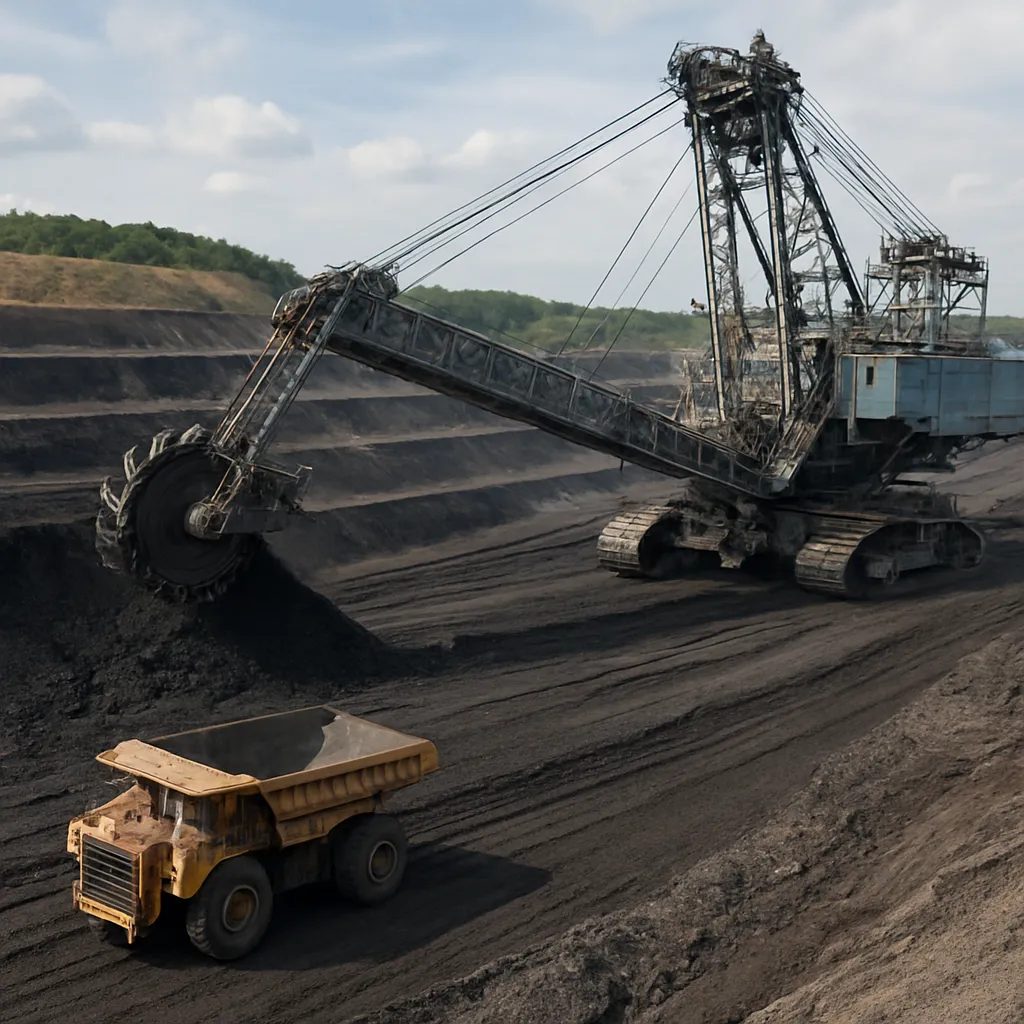
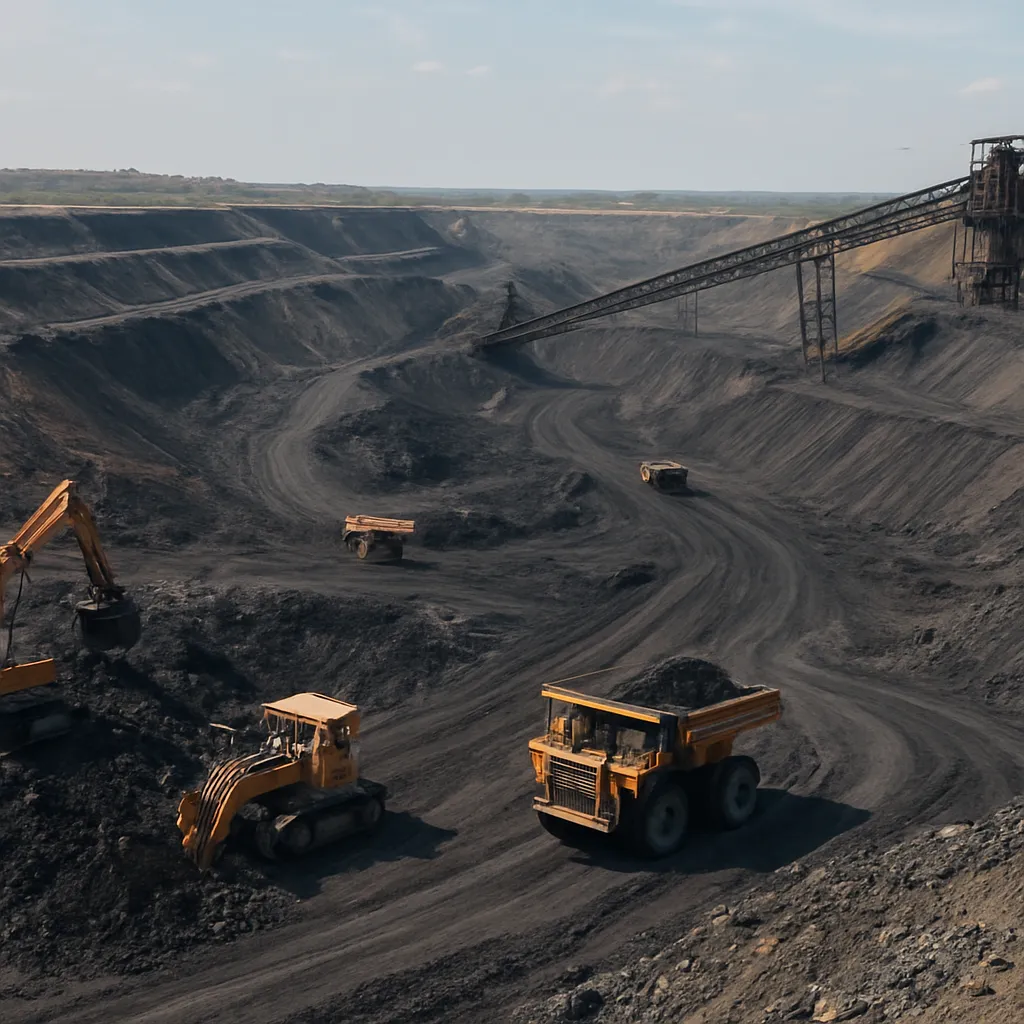
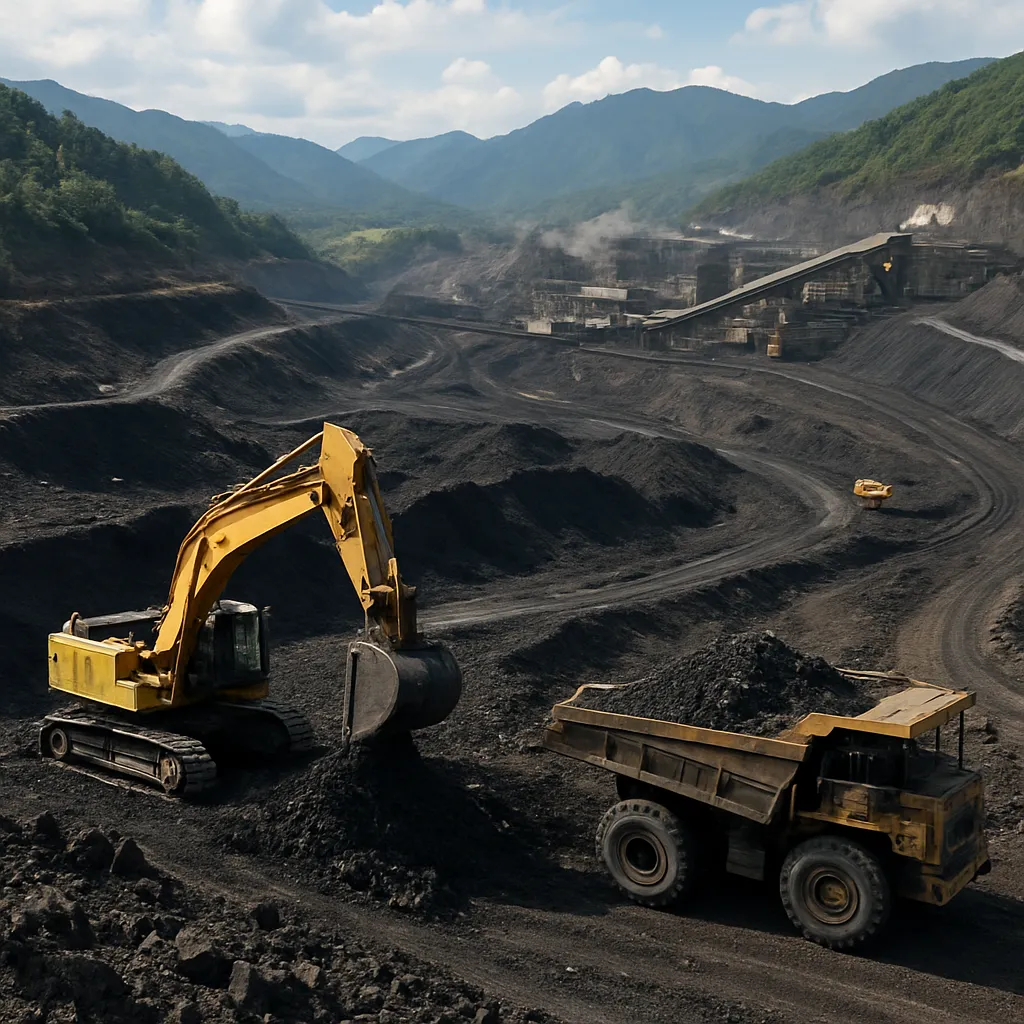
Operations at Bayangaole employ a mix of surface (open-pit) and underground mining techniques depending on seam depth and geography. Open-pit methods predominate where seams are shallow and continuous, providing lower extraction costs and higher productivity per worker. Underground sections utilize room-and-pillar or longwall systems in deeper, higher-quality seams.
Key infrastructure supporting the mine includes haul roads, on-site processing and washing plants, stockyards, and connections to regional transport networks. Rail links are particularly important: proximity to a railway line determines the mine’s ability to move large volumes to coastal ports or inland power plants. Many mines in the region also maintain conveyor belts to processing facilities and export yards to minimize truck traffic and dust.
Production, Reserves and Economic Indicators
Publicly available granular statistics for Bayangaole specifically are limited in many international databases, but regional context and industry reporting allow for reasoned estimates. Typical coal operations in the region range from small local pits producing under 1 million tonnes per year to large complexes producing several million tonnes annually. Based on available regional analogues and mining infrastructure observed in similar operations, Bayangaole’s annual production capacity is plausibly within the range of 1–6 million tonnes per annum.
Reserve estimates for mines of this type often fall between several tens of millions to a few hundred million tonnes of in-situ coal. For Bayangaole, conservative reserve ranges of 50–300 million tonnes could be consistent with a multi-decade operation, depending on seam continuity and mining recovery rates. These figures depend heavily on geological surveys, cut-off grades and economic parameters used in resource reporting.
Economically, Bayangaole contributes to local GDP through direct mine output, wages, taxes and payments to service providers. Key economic metrics include:
- Annual coal output (estimated): 1–6 million tonnes.
- Local employment (direct): likely in the hundreds to low thousands, depending on mechanization and mine scale; indirect employment multiples raise this figure via services, transport and processing.
- Capital investment: construction of a modern mine and preparation plant often requires tens to hundreds of millions of US dollars equivalent, depending on scale and mechanization.
- Fiscal contribution: royalties, corporate taxes and local fees contribute to provincial and municipal budgets, supporting infrastructure and social services.
On a national scale, a mine of Bayangaole’s size would represent a modest but meaningful contribution to China’s coal supply, which is measured in billions of tonnes annually. For regional energy security, consistent annual deliveries from mines like Bayangaole are critical to power and industrial consumers.
Market Role and Supply Chains
Bayangaole’s coal primarily serves nearby coal-fired power plants, industrial users (cement, brick-making, and local industry) and regional heating networks. Where higher-grade fractions exist, coal from the mine can be blended for metallurgical applications. The mine’s proximity to transport arteries determines whether it primarily serves domestic inland markets or participates in export channels, with rail and port logistics shaping its commercial reach.
Prices for thermal coal in China are influenced by domestic demand, coal-to-gas substitution policies, seasonal heating demand, and macroeconomic factors. Mines like Bayangaole are sensitive to these dynamics—higher domestic electricity demand and constraints on imports can raise local prices and profits, while oversupply or stringent environmental controls can compress margins.
Employment, Social Impact and Community Relations
Coal mining provides substantial employment in relatively remote areas, and Bayangaole is no exception. Jobs range from miners and processing plant operators to administrative staff and maintenance crews. Local procurement of goods and services stimulates businesses in logistics, hospitality and construction.
Community relations are an operational priority. Mines commonly invest in housing, healthcare, education and road improvements as part of social responsibility programs. Worker safety training and occupational health programs address risks associated with dust, noise and underground hazards. The mine’s social license to operate depends on maintaining these relationships and minimizing negative impacts on traditional livelihoods and the local environment.
Environmental Management and Safety
Environmental management at Bayangaole focuses on several key areas:
- Air quality: dust control measures (water spraying, covered conveyors, and baghouse filters at processing plants) reduce particulate emissions to nearby communities.
- Water use and protection: in arid northwestern China, water is a scarce resource. Efficient water recycling in washing plants and careful management of effluents and tailings are critical to local ecosystems and agriculture.
- Mine land reclamation: progressive reclamation of disturbed areas, topsoil management and revegetation are standard practices to restore lands post-mining.
- Greenhouse gases: methane emissions from coal seams and CO2 from coal combustion are monitored; many operations implement methane capture and utilization where economically feasible.
- Safety: adherence to national mining safety regulations, mechanization to reduce manual handling, and emergency response systems aim to minimize accidents. China’s regulatory framework has strengthened in recent years, driving improvements in safety performance.
Balancing economic benefits with environmental protection remains a challenge. There is growing pressure—both domestically and internationally—for cleaner energy and reduced reliance on coal, which shapes operational strategies and long-term planning for mines like Bayangaole.
Statistical Context and Comparative Metrics
While mine-specific statistics for Bayangaole may not be uniformly published in open international databases, several comparative metrics help place it in context:
- China’s total coal production: roughly 3.7–4.0 billion tonnes per year in recent years, making it the world’s largest coal producer. A mid-sized regional mine producing a few million tonnes thus accounts for a small fraction of national output but can be dominant at the prefectural level.
- Productivity: modern open-pit operations can reach annual outputs of several million tonnes with a relatively small workforce through high mechanization, whereas underground operations are generally more labor-intensive.
- Reserves-to-production ratio (R/P): a mine with 100 million tonnes of recoverable reserves and 2 million t/y production would have an R/P of about 50 years—a useful indicator of longevity under stable production.
Given the mine’s regional role, its most material statistical impacts are likely measured in provincial production shares, employment numbers and local fiscal contributions rather than as a major national producer.
Technological and Operational Innovations
Bayangaole, like many Chinese coal operations, benefits from ongoing modernization. Technology trends include:
- Automation: remote-controlled loaders and drilling rigs reduce personnel exposure to hazardous environments and improve productivity.
- Processing advances: improved washeries and conveyor systems increase yield from raw coal and reduce ash and sulphur levels.
- Methane capture: where practicable, methane drainage and utilization reduce greenhouse gas emissions and provide a supplemental energy source.
- Digitalization: use of real-time monitoring, fleet-management software and predictive maintenance improves operational efficiency and safety.
Adoption of these technologies depends on capital availability, seam characteristics and corporate strategy. Where deployed, they reduce unit costs and improve the mine’s environmental footprint.
Future Prospects and Strategic Considerations
The future trajectory of Bayangaole is shaped by several interacting forces:
- National energy policy: China’s long-term plans aim to balance coal security with emissions reduction. Continued demand for thermal coal in the medium term supports mine operations, but transitional policies favoring renewables and gas could reduce demand over decades.
- Local development: investments in regional industry, infrastructure and population growth sustain demand for reliable, locally sourced energy.
- Environmental regulation: increasingly stringent emissions standards and carbon targets incentivize cleaner mining practices and potential diversification into lower-emissions activities.
- Market economics: coal price volatility and transport costs determine profitability. Mines with efficient logistics and access to processing can maintain competitiveness even in tighter markets.
Strategic options for the mine’s operators include optimizing beneficiation to meet higher-value markets, investing in emission-reducing technologies, and diversifying revenue streams through service provision, land rehabilitation projects, or participation in carbon management schemes.
Interesting and Contextual Notes
- Toponymy: The name Bayangaole reflects Mongolian linguistic heritage common across Xinjiang and Inner Mongolia, underlining the region’s cultural mix and historical ties to pastoral livelihoods.
- Regional integration: Mines like Bayangaole are often integrated with local industrial clusters—cement, metallurgy, and power generation—creating vertically linked supply chains that are resistant to single-market shocks.
- Seasonality: Demand for thermal coal in northern China is highly seasonal, peaking in winter for heating; this affects stockpiling strategies and transport logistics at the mine.
- Research and exploration: continuing geological exploration in the surrounding basin can reveal new seams or extensions, altering reserve estimates and future planning horizons.
Summary
The Bayangaole Coal Mine represents a typical example of a regional Chinese coal operation with significant local economic importance. Mining predominantly thermal coal of sub-bituminous to bituminous rank, the mine supports employment, regional energy supply and industrial activity. While specific, publicly accessible statistics for Bayangaole are limited, contextual estimates place annual output in the low single-digit millions of tonnes with reserves potentially sufficient for multiple decades of production, depending on extraction rates. Challenges include managing water use, methane and dust emissions, and adapting to national energy transitions toward lower emissions. Opportunities exist through technological upgrades, improved beneficiation, and deeper integration with local infrastructure and markets.
Overall, Bayangaole’s story is emblematic of many medium-sized coal mines across China: a balance of economic utility, environmental responsibility and evolving strategic roles as the country navigates its energy transition. Its continued operation will depend on geological realities, market economics, regulatory frameworks and the mine operator’s ability to modernize while maintaining strong community relations.