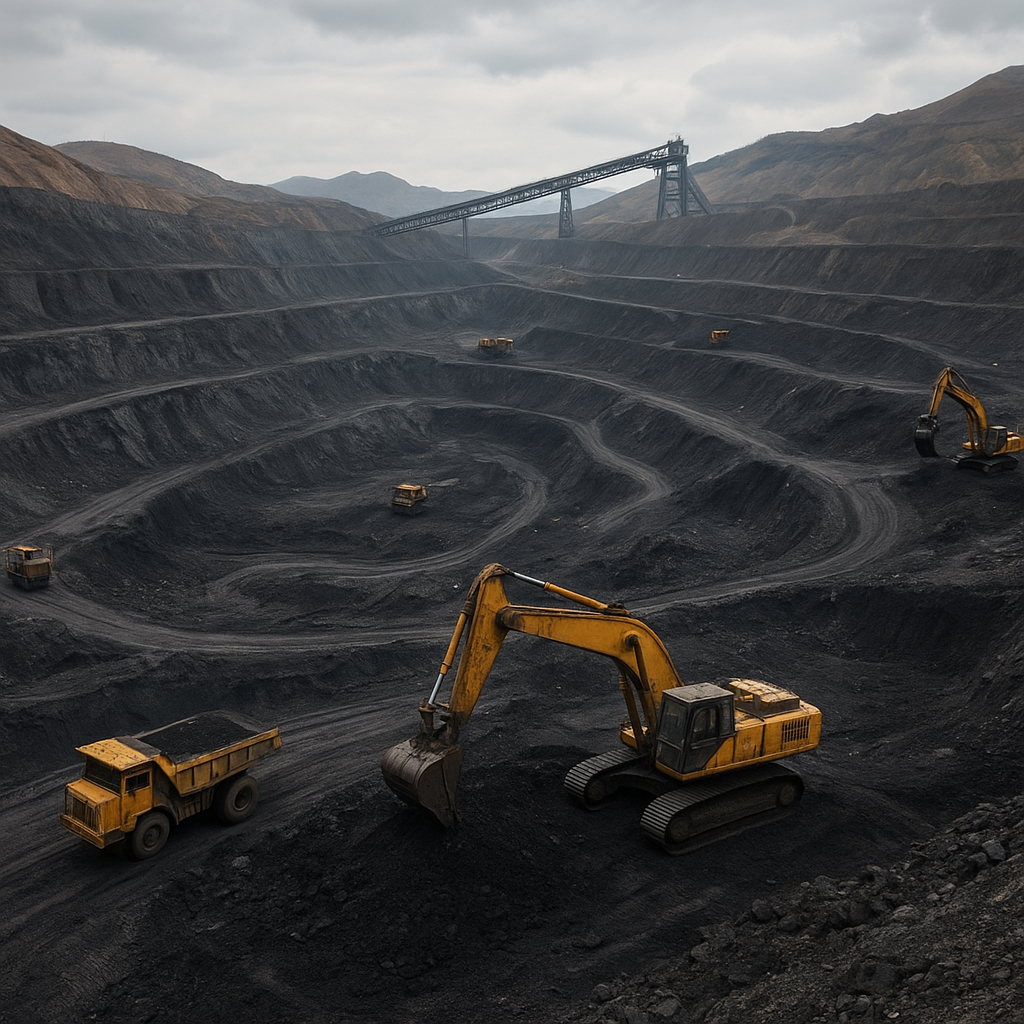
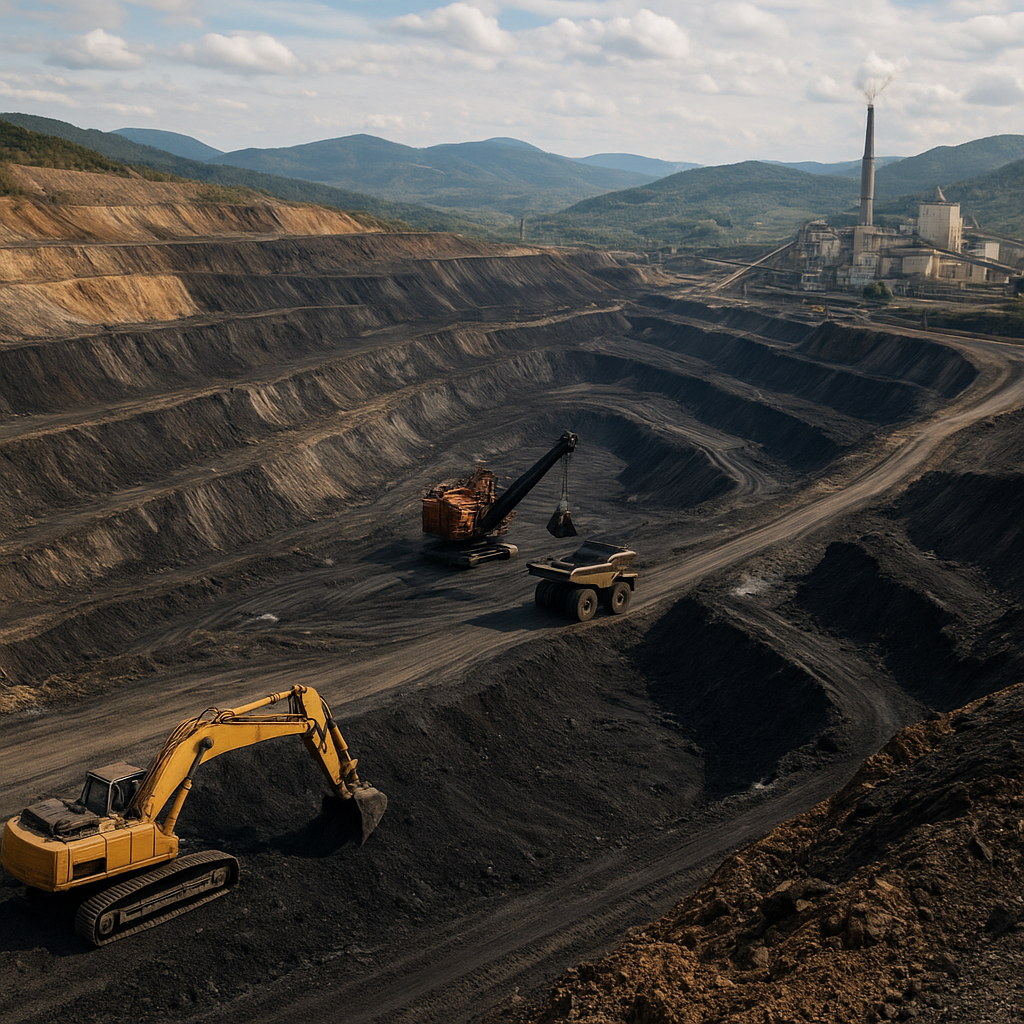
The Antaibao Coal Mine is one of the better-known coal production sites in northern China. It plays a role in supplying fuel for regional power generation and industry, and it illustrates many of the technical, economic and environmental dynamics that characterize large-scale coal mining in China today. This article examines the mine’s location and geology, the type of coal it produces, its operational and economic importance, environmental and social impacts, and its outlook in the context of China’s energy transition.
Location and geological setting
The Antaibao Coal Mine is located in Shanxi Province, a core area of China’s historic coal belt in the northern part of the country. Shanxi is known for extensive Permian and Carboniferous coal-bearing strata, which form part of the larger North China Plain and adjacent mountain ranges. The mine sits in terrain that combines plateaus and low mountain ranges, where thick, laterally continuous coal seams are commonly exposed or reachable by surface and near-surface mining methods.
Geologically, the coal-bearing formations in this region are typically bituminous in rank, often varying from low- to medium-volatile bituminous coal. Seam thicknesses can range from a few meters to tens of meters in the most productive basins, which makes the area favorable both for open-pit (surface) mining and for large-scale underground operations, depending on local seam depth and overburden.
Types of coal produced and uses
Antaibao produces coal that is primarily used for thermal power generation and industrial heat. The frequent characteristics of regional coals include:
- Bituminous rank: Suitable for combustion in power plants and some industrial boilers.
- Calorific value: Moderate to high relative to lower-rank coals (exact calorific values vary by seam and wash plant).
- Ash and sulfur content: Variable; some local seams have relatively high ash contents that require washing and beneficiation to meet power-plant specifications.
- Coking potential: While the region also contains coking-quality coals, the material produced specifically at Antaibao is predominantly steam coal rather than prime metallurgical coke coal.
Steam coal from Antaibao is typically routed to regional thermal power stations, some of which are sited nearby to minimize rail transport costs and emissions from logistics. Part of the coal production may also enter the broader domestic market for industrial use, cement manufacture, and district heating.
Mining methods, infrastructure and operations
Large mines in Shanxi, including Antaibao, generally employ a combination of modern bulk-mining techniques. Depending on seam depth and geology, Antaibao has used open-pit (surface) mining methods where feasible and mechanized longwall or room-and-pillar methods underground where seams are deeper. Key operational elements include:
- Heavy machinery: Electric rope shovels, draglines, large excavators and high-capacity haul trucks for surface mining; longwall shearers and powered supports for underground faces.
- Coal preparation plants: Washery facilities to reduce ash and sulfur and to prepare coal to meet power plant quality specifications.
- Rail and road logistics: Connections to provincial rail arteries, local roads and conveyor systems that supply nearby power plants and national markets.
- Overburden management: Progressive reclamation where possible, and engineered spoil dumps and water management systems to deal with runoff and subsidence risks.
Economic and industrial significance
The Antaibao Coal Mine contributes to the local and regional economy in several measurable ways. Coal mining in Shanxi has historically been a major source of employment, fiscal revenue and industrial input, and Antaibao is part of that broader economic fabric. Its significance can be described across a few dimensions:
Employment and local economy
Large mines provide direct employment — miners, engineers, plant operators, and support staff — and indirect employment through services, logistics, and suppliers. Payrolls, procurement and local taxes help sustain municipal finances and community services in mining districts.
Energy supply and industrial feedstock
Coal from Antaibao helps ensure reliable fuel supplies for regional power plants, cement factories and other heavy industry. Proximity of mines to power stations reduces transportation costs and supports continuous base-load power generation in regional grids.
Fiscal contribution
Coal mines typically generate fees, royalties, and taxes that are significant for provincial governments. This revenue is used for infrastructure, social services and sometimes for reclamation and environmental mitigation programs, though the balance between revenue generation and environmental expenditure varies by locality.
Production levels and statistics
Reliable and up-to-date production figures for individual mines like Antaibao can be patchy in publicly available sources, and annual output may vary with market demand, regulatory changes and mine expansion or contraction. General contextual statistics that help situate Antaibao:
- China’s coal output: China produces several billion tonnes of coal annually (historically around 3.7–4.2 billion tonnes per year in the 2010s and early 2020s), making it by far the world’s largest producer.
- Shanxi Province contribution: Shanxi is one of the top-producing provinces and has accounted for a substantial share (often approaching or exceeding 20–25%) of national production in recent decades.
- Individual mine scale: Large modern mines in Shanxi commonly produce in the low- to mid-single-digit millions of tonnes per year. Production at Antaibao has been characterized as a sizeable contributor within its local basin, though precise current annual tonnage figures should be checked against company reports or provincial mining bureau publications for the latest data.
Because corporate and government publications sometimes aggregate figures at group or provincial levels, researchers seeking exact annual production for Antaibao should consult the mine operator’s annual report (if publicly listed), local government statistical yearbooks, or authoritative industry databases maintained by Chinese mining authorities or independent analysts.
Logistics, markets and supply chain
Coal logistics are an essential part of the Antaibao operation. Typical supply chains include:
- On-site handling: Crushing, screening and washing to produce saleable coal sizes and quality.
- Transport: Rail is the backbone of medium- to long-distance movement; short-haul transfers may rely on conveyor belts or trucks.
- Downstream buyers: Local and regional power plants are major customers; industrial users and commodity traders also buy and redistribute coal across national markets.
- Export potential: While Shanxi coal primarily serves domestic demand, coal from northern China historically has also reached coastal export terminals when market conditions and logistics permit.
Environmental and social impacts
Antaibao, like other large coal mines, has significant environmental and social footprints. Understanding these impacts is crucial both for policy and for community wellbeing.
Air quality and emissions
Mining activities, coal handling and combustion in nearby power plants contribute to emissions of particulate matter (PM), nitrogen oxides (NOx), sulfur dioxide (SO2) and greenhouse gases (primarily CO2). To meet tightening environmental standards, mines and plants increasingly install dust suppression, flue-gas desulfurization and selective catalytic reduction systems.
Water and land use
Coal washing and mine dewatering demand substantial water resources; management of wastewater and mine effluent is critical. Surface mining alters landforms and can disrupt ecosystems. Progressive reclamation, contouring of spoil heaps, and soil restoration programs are commonly implemented, although effectiveness varies by project.
Subsidence and geotechnical risk
Underground mining can cause ground subsidence, impacting housing, roads and agricultural land. Monitoring, planned subsidence zones and compensation schemes are typical mitigation approaches.
Community and health impacts
Local communities benefit economically but can also face health impacts from air and water pollution. Occupational safety is a major concern: China has reduced mining fatalities significantly over the past decades through regulation and technology, but mining remains a hazardous industry requiring continued attention to safety management and worker training.
Technology, safety and environmental management
Modern mines like Antaibao incorporate advanced technologies to increase efficiency, lower emissions and improve safety. Examples include:
- Automated equipment: Remote-controlled longwall systems, automated hauling and fleet management to reduce human exposure to hazards.
- Continuous monitoring: Real-time sensors for gas, water inflow, ground movement and air quality that feed centralized control centers.
- Coal beneficiation: Improved washery technologies to reduce ash and sulfur content, thereby increasing energy efficiency and lowering emissions on combustion.
- Reclamation practices: Progressive backfilling of pits, soil remediation and community-focused land reuse (parks, agricultural plots or industrial zones).
Investments in these areas are driven both by regulatory pressure and by economic incentives: higher-quality coal fetches a premium, and safer operations reduce the financial and reputational cost of accidents.
Regulatory and policy context
The operation of Antaibao is influenced by national and provincial policies. Key policy themes affecting coal mines in China include:
- Capacity control: National policies periodically cap or consolidate coal mining capacity to stabilize prices and reduce overcapacity.
- Environmental regulation: Stricter emissions and water-use standards force mines and downstream plants to invest in cleaner technology.
- Energy security: Coal remains central to China’s strategy for stable base-load electricity, even as renewables expand.
- Just transition considerations: There is growing attention to how coal-dependent communities can diversify economically as the national energy mix shifts.
Regional and national significance
While Antaibao is one mine among many in China’s vast coal sector, it exemplifies the role of large-scale mines in meeting the country’s energy needs. Its coal supports power generation, fuels industry and contributes to local fiscal revenues and employment. At the same time, Antaibao highlights the trade-offs between economic development and environmental stewardship that are central to China’s ongoing energy and industrial transformation.
Challenges and future outlook
The future of Antaibao will depend on multiple interacting factors:
- Market demand: Domestic electricity demand and industrial activity will determine short- and medium-term coal needs.
- Policy shifts: Stronger emissions targets, carbon pricing or accelerated coal phase-down policies could reduce demand for thermal coal from mines like Antaibao.
- Technological evolution: Advances in carbon capture and storage (CCS) for power plants, improved coal washing and lower-emission combustion technologies could extend the operational life of coal assets while reducing environmental impacts.
- Community adaptation: Diversification of local economies and investment in post-mining land uses will shape social outcomes as mining intensity evolves.
Operators and authorities face the dual challenge of maintaining reliable energy supplies and local livelihoods while progressing toward national goals on air quality and greenhouse gas mitigation. The balance they strike will determine the long-term trajectory for Antaibao and similar mines.
Interesting facts and broader context
Some additional points that illustrate the wider significance of Antaibao and comparable operations:
- Integration with power plants: Many Chinese mines are closely integrated with power generation assets, creating vertically linked supply chains that reduce transportation costs and can improve fuel quality coordination.
- Scale economies: Large mines in Shanxi benefit from economies of scale, enabling investment in mechanization and washery capacity that smaller operations may lack.
- Historical transition: Shanxi’s coal industry has shifted from numerous small pits to fewer large, mechanized mines during decades of consolidation and modernization.
- Data transparency: While provincial and national aggregates are routinely published, site-level data (production, reserves, workforce) are often released only in company or local government reports, complicating external analysis.
Summary
Antaibao Coal Mine is a representative example of a major Chinese coal-production site: geologically advantaged, economically important to its region, and technologically adaptive while facing substantial environmental and social challenges. It supplies thermal coal primarily for power generation and regional industry and fits within the larger narrative of China’s reliance on coal even as the country invests heavily in cleaner energy sources. For precise and current production statistics or operational details, consulting the mine operator’s publications and provincial mining bureau records is recommended, since site-level figures can change with expansions, modernization programs and shifting market conditions.