The Baganuur coal mine is one of Mongolia’s most important and long-standing mining operations. Located to the east of the national capital, it has been a cornerstone of domestic coal supply, regional employment and local industry since the late 20th century. This article examines the mine’s location, geology and production, the type and quality of coal extracted, its economic and strategic role in Mongolia, available statistical estimates, environmental and social impacts, and prospects for the future. In the text below several key terms are emphasized for clarity.
Location, History and Geological Setting
The Baganuur deposit and its associated mining town are situated in central-eastern Mongolia, approximately east of Ulaanbaatar. The site developed during the socialist industrialization period of Mongolia and became a major center of mining and regional settlement. Baganuur is built around a large open-pit coal mine and associated infrastructure, including a processing area, workshops, and a rail link to the capital.
Geologically, the Baganuur field is part of Mongolia’s widespread Cenozoic and Mesozoic coal-bearing basins, where sedimentary sequences include interbedded clays, sandstones and coal seams. The deposit is typically described as a low- to medium-rank brown coal (commonly referred to as lignite or sub-bituminous coal in various technical classifications), with seams that are relatively thick and laterally extensive, enabling large-scale open-pit extraction. The coal formed in continental sedimentary environments, characterized by ancient peat bogs and fluvial-lacustrine systems that later were buried and altered under pressure and heat to yield the present resource.
Since initial development in the Soviet-assisted era, Baganuur’s surface mine has been expanded and modernized in stages. Over decades the operation has supplied coal primarily for domestic energy generation and district heating in the capital region, while supporting an urban community built around mining employment and services.
Mining Operations, Infrastructure and Coal Quality
Mining Method and Infrastructure
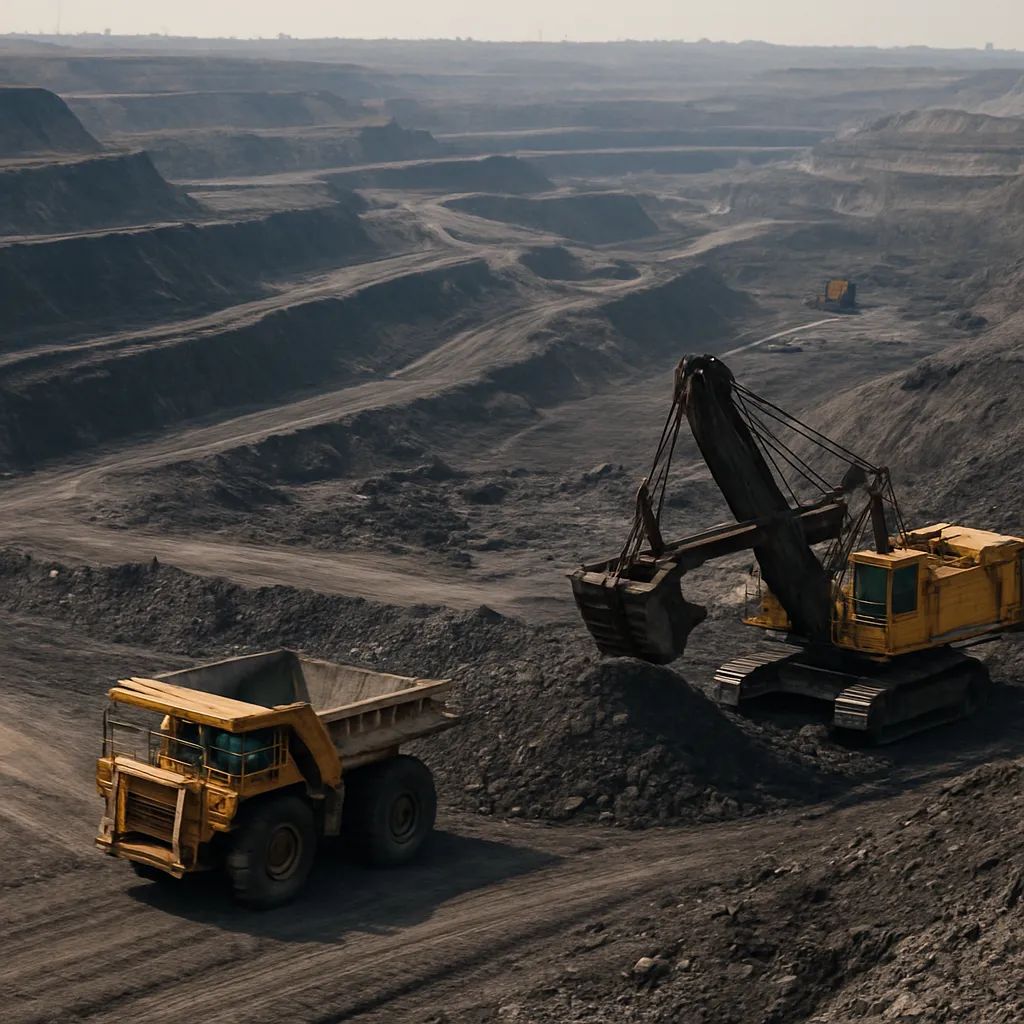
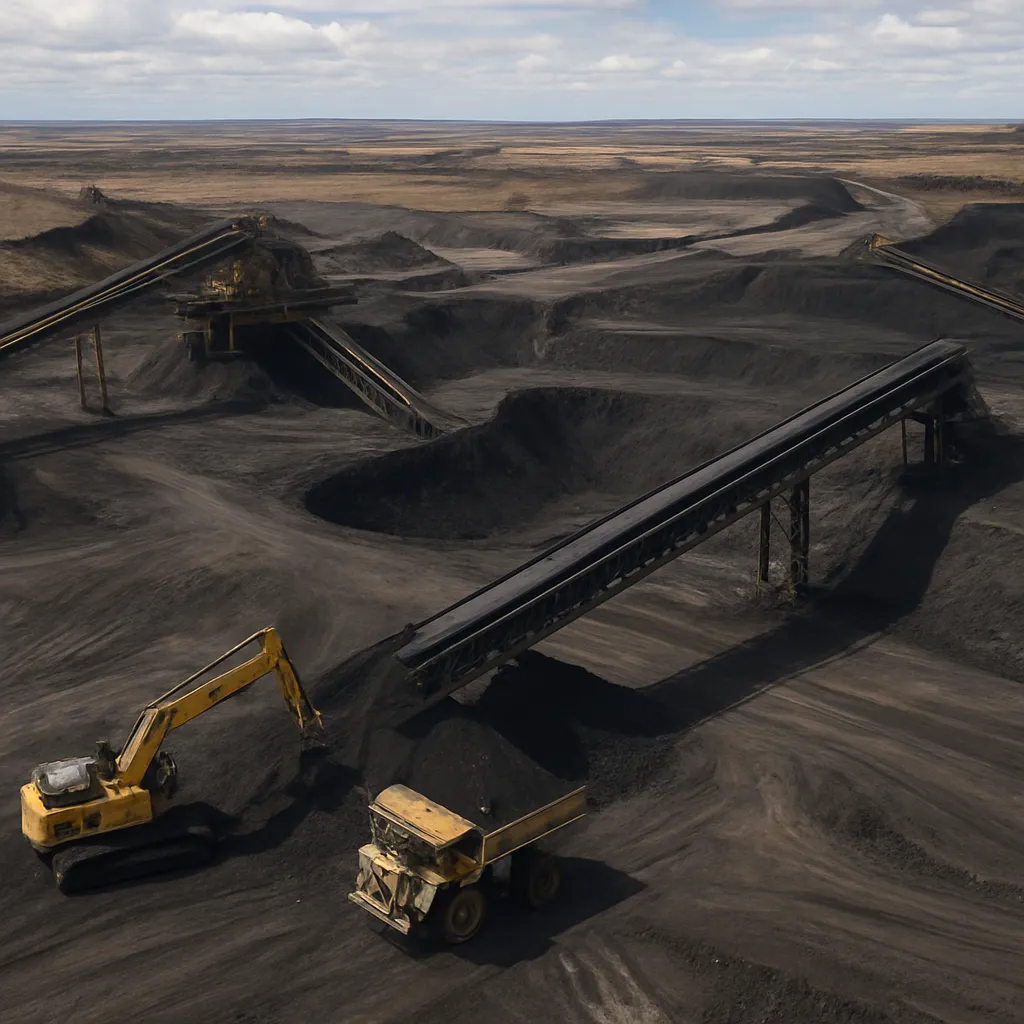
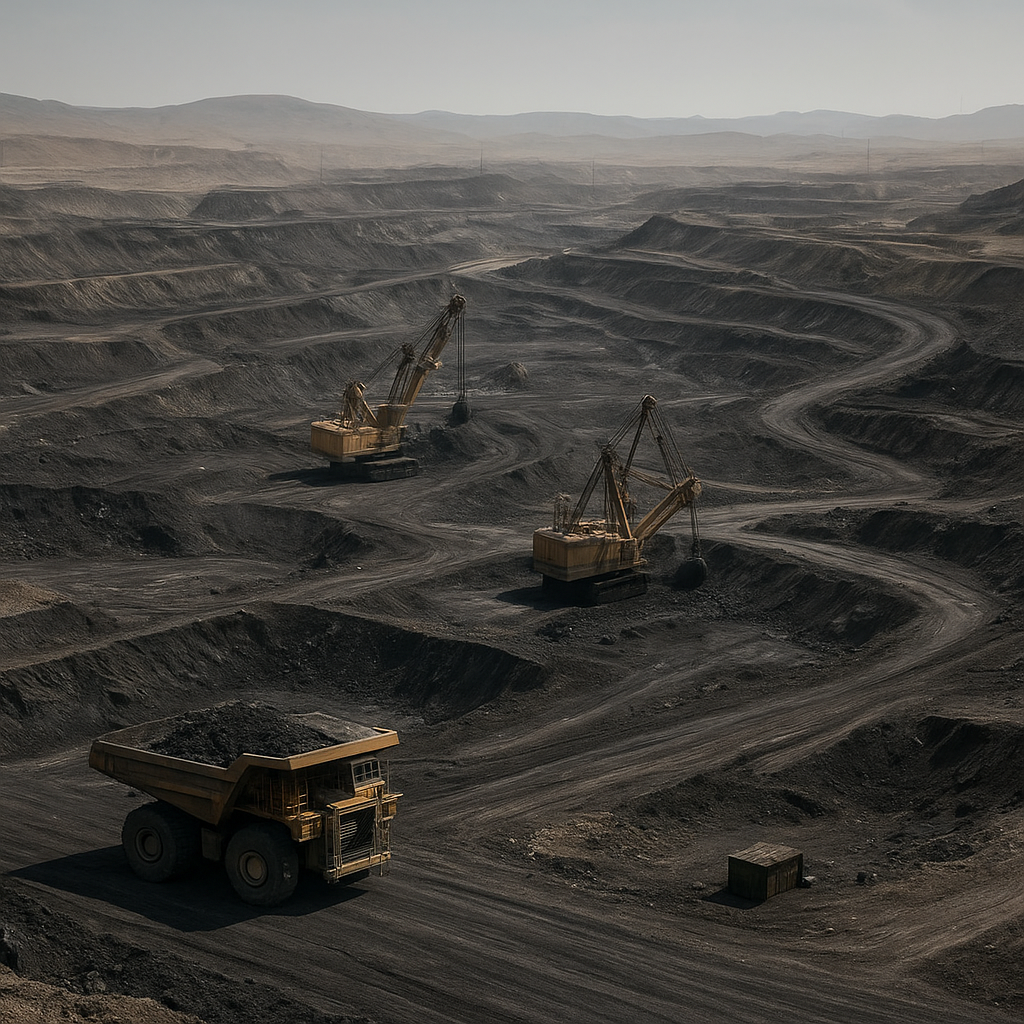
Baganuur is operated as an open-pit mine using conventional large-scale surface mining methods: drilling and blasting where required, followed by loading with shovels and haul trucks or belt conveyor systems into processing and stockpile areas. The mine complex includes facilities for coal crushing, screening, and sometimes coarse cleaning to adapt product quality for different end-users. A local coal-fired thermal plant and regional logistics hubs are integral to operations.
Transport infrastructure is central to Baganuur’s role. The mine is connected to Ulaanbaatar by a rail spur and road network that enable bulk movement of coal to the city’s thermal power plants and district heating systems. The railway link also allows for any potential export shipments, although Baganuur coal has been used predominantly for domestic consumption due to its quality and the logistics economics of exporting through existing corridors.
Coal Type and Quality
The coal mined at Baganuur is generally characterized as low- to medium-rank brown coal / sub-bituminous coal. Typical properties reported for this class of Mongolian domestic coal include:
- Calorific value: moderate, often in the range of roughly 3,000–5,000 kcal/kg on an as-received basis, depending on seam and processing;
- Moisture: relatively high compared with higher-rank coals, which reduces net heating value and increases transport energy costs;
- Ash content: moderate to high, requiring attention to handling and combustion performance in power plants;
- Sulfur: generally low to moderate, which is favorable compared with some higher-sulfur international coals;
- Volatile matter: relatively high, consistent with brown coal rank.
Because of those characteristics, Baganuur coal has traditionally been suited for local thermal power generation and district heating, where boilers and combustion equipment can be tailored to lower-grade coal. Washing and beneficiation can improve calorific value and reduce ash for certain customers, but beneficiation adds cost and is not always used for the portion of production dedicated to immediate domestic heating needs.
Economic Role, Employment and Regional Importance
Baganuur’s significance extends beyond the mine’s direct production: it is a focal point of regional economic activity and an element of Mongolia’s national energy system. The mine provides coal to multiple stakeholders and underpins livelihoods in the local town and nearby areas.
Energy Security and Domestic Supply
One of Baganuur’s foremost roles is contributing to the energy security of Ulaanbaatar and central Mongolia. The coal it supplies fuels combined heat and power plants (CHP) and district heating systems that are essential during Mongolia’s long, cold winters. Because Mongolia faces severe winter heating demand and air quality challenges, domestic coal mines such as Baganuur are strategically valuable for ensuring reliable fuel supply to the capital and surrounding provinces.
Employment and Local Economy
The mining complex and the town that grew around it sustain thousands of jobs—directly in mining, processing, transport and power generation, and indirectly through services, retail and public administration. Employment estimates reported over time vary, but the operation historically has employed several thousand people when considering direct and indirect jobs. The town’s public services, schools and health centers are integrated with the mine’s socioeconomic fabric, making Baganuur a single-industry town in many respects.
Contribution to National Coal Production
While Mongolia’s coal output in recent decades has been dominated by large open-pit deposits intended for export (notably projects in the South Gobi), Baganuur has consistently contributed a meaningful share of domestic coal production. Its percentage share of national output shifts with changing demand and with the rapid growth of export-oriented mining, but Baganuur remains one of the important domestic producing mines supplying urban energy systems.
Production, Reserves and Statistics
Precise figures for production and reserves can fluctuate by source and reporting year. Available public information and energy-sector reporting provide a range of typical values that can be summarized as follows.
- Annual production: Over recent decades Baganuur’s annual mined and sold coal volumes have typically ranged from roughly 3 to 7 million tonnes per year, depending on operational plans, domestic demand from Ulaanbaatar’s power plants, and market conditions. Some annual reports from the 2000s and 2010s documented production in the mid-single-digit millions of tonnes.
- Reserves and resources: Various technical and government publications have described Baganuur’s coal resources and reserves in terms of several hundred million tonnes. Proved reserves and larger resource estimates commonly fall within a range that can be characterized as several hundred million tonnes—large enough to sustain multi-decade production at current rates. Exact reserve figures depend on the classification used (proved vs. probable vs. inferred) and on the outcome of successive exploration and resource assessment campaigns.
- Employment: The workforce associated with the mine and local power and service infrastructure has been reported in ranges from a few thousand to several thousand people; indirect employment multiplying the direct workforce results in a larger local economic footprint.
- Market share: Baganuur’s share of Mongolia’s total coal production has declined as export-oriented mines in the South Gobi expanded, yet Baganuur remains a major supplier to the domestic market and an essential contributor to Ulaanbaatar’s fuel mix.
Because operators, state entities and independent analysts use differing methods for estimation, the figures above are best viewed as indicative ranges rather than single definitive numbers. For planning and policy work, parties typically refer to company annual reports, national mining cadaster statistics and energy ministry publications for the most recent audited data.
Environmental, Social and Technical Challenges
Air Quality and Emissions
Coal combustion for heat and power has clear environmental consequences. Baganuur coal’s relatively high moisture and ash content can reduce combustion efficiency and increase emissions of particulate matter if not combusted in appropriately designed boilers with adequate emission controls. Ulaanbaatar’s well-known air-quality problems are driven by multiple factors—household burning, vehicle emissions, meteorological inversions and industrial emissions—so the role of Baganuur coal should be understood in a broader context. Cleaner combustion technology at centralized CHPs and measures to improve household heating are both relevant to tackling winter pollution.
Mining Footprint and Rehabilitation
Open-pit mining creates significant landscape disturbance: large excavated benches, spoil piles, and altered drainage patterns. Rehabilitation and progressive reclamation are technical and regulatory challenges. Operators and regulators are increasingly focused on planning for mine closure and land rehabilitation to restore or repurpose disturbed land, reduce erosional risks, and manage water quality. Given Mongolia’s fragile steppe and semi-arid ecosystems in parts of the country, responsible rehabilitation is important to limit long-term impacts.
Social Dynamics
Single-industry towns like Baganuur may face economic vulnerability if production declines or if ownership and management change. Social services, housing and local business depend heavily on the mine’s fortunes. Ensuring economic diversification, providing retraining and planning for post-mining transition are long-term policy concerns.
Operational Economics and Market Dynamics
Baganuur’s economics are shaped by domestic energy demand, fuel price dynamics, logistics costs and the policy environment for energy and mining. Key factors include:
- Domestic demand: Winter heating needs drive seasonal demand spikes. Central planning and contracts with Ulaanbaatar’s CHPs provide predictable off-take for much of the mine’s production.
- Transportation costs: Proximity to Ulaanbaatar is an advantage, but rail and road capacity constraints and maintenance needs can affect delivered-cost competitiveness. Investments in transport infrastructure directly improve economic efficiency.
- Quality-adjusted pricing: Because Baganuur coal is lower in calorific value than some export coals, pricing for domestic supply reflects quality and processing level. Beneficiation or blending can alter value but adds processing costs.
- Regulatory and fiscal regime: Royalties, taxes and state ownership models influence the mine’s profitability and the revenue captured by national and local governments. State involvement in mining in Mongolia has been prominent, with a range of ownership and contracting models implemented over time.
Modernization, Projects and Future Outlook
Like many legacy mining operations, Baganuur faces both opportunities and challenges in the coming decades. Areas likely to shape its trajectory include:
- Technological upgrades: Modernization of mining equipment, processing plants and rail-loading systems can increase productivity and reduce unit costs. Introducing more efficient boilers and pollution-control systems in associated power plants improves environmental performance.
- Value chain integration: Opportunities to add value through beneficiation, pelletization or briquetting for specific domestic applications could expand market options. However, capital costs and market feasibility must be assessed carefully.
- Energy transition pressures: Global and national shifts toward lower-carbon energy systems create long-term questions about coal demand. For Mongolia, a phased approach that balances immediate heating needs, energy security and pollution reduction is politically and economically complex.
- Rehabilitation and post-mine planning: Strengthening closure planning and community transition programs will help manage long-term liabilities and support sustainable local development.
- Policy and investment: Continued public and private investment decisions—whether directed at cleaner coal combustion, renewable alternatives for heating, or infrastructure expansion—will influence Baganuur’s role in Mongolia’s energy mix.
Interesting Facts and Broader Significance
- Baganuur represents a model of a mining-centered town that grew rapidly in the late 20th century around a single resource, illustrating socioeconomic patterns common in resource-rich countries.
- The mine’s close functional link to Ulaanbaatar’s heating system demonstrates how mine locations near population centers can be both advantageous for logistics and consequential for urban air quality policy.
- Because of its long operational history, Baganuur provides an archive of institutional experience in Mongolia’s mining sector, including lessons in state-industry relations, operational modernization and community impacts.
- Baganuur’s coal is an example of how lower-rank coals remain economically important at national and regional levels, even as international markets focus on higher-rank export coals and as global energy systems begin to shift.
Concluding Observations
The Baganuur coal mine is a strategically important Mongolian asset with a long record of supplying domestic energy needs, supporting employment and anchoring a regional community. Its coal is characterized by lignite/sub-bituminous properties that make it suitable for local power generation but less competitive in export markets without upgrading. Production has historically been in the multi-million tonne range annually and is backed by substantial resource estimates sufficient for many decades of operation at current rates. The mine’s future will be shaped by investments in modernization, evolving domestic energy policy, environmental management practices and broader market trends.
For readers seeking more granular or up-to-date numeric data (annual production by year, audited reserve statements, employee counts and fiscal contributions), company annual reports, Mongolia’s mining cadaster and the national energy ministry’s statistical releases are the most direct primary sources. Baganuur’s ongoing evolution offers a useful case study of the practical trade-offs between energy security, economic development and environmental sustainability in a country with a cold climate and abundant mineral resources.