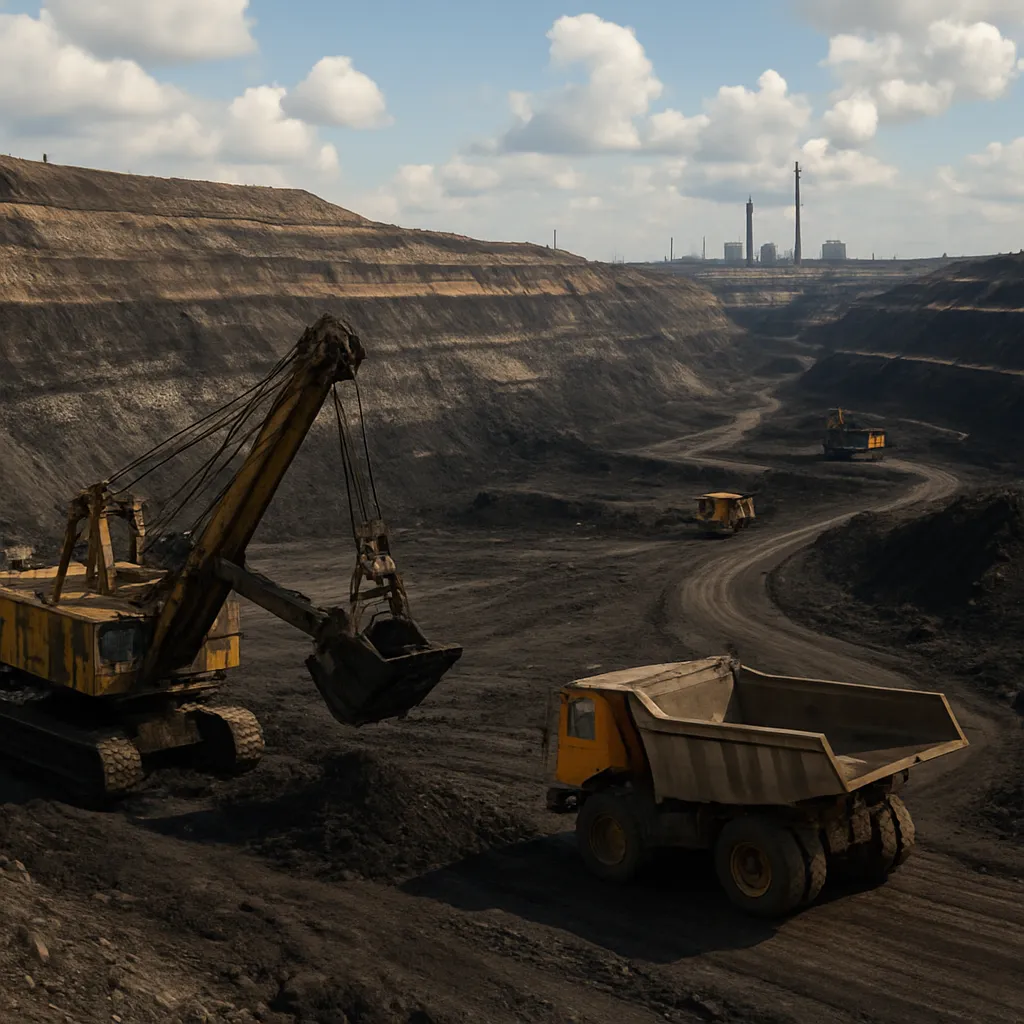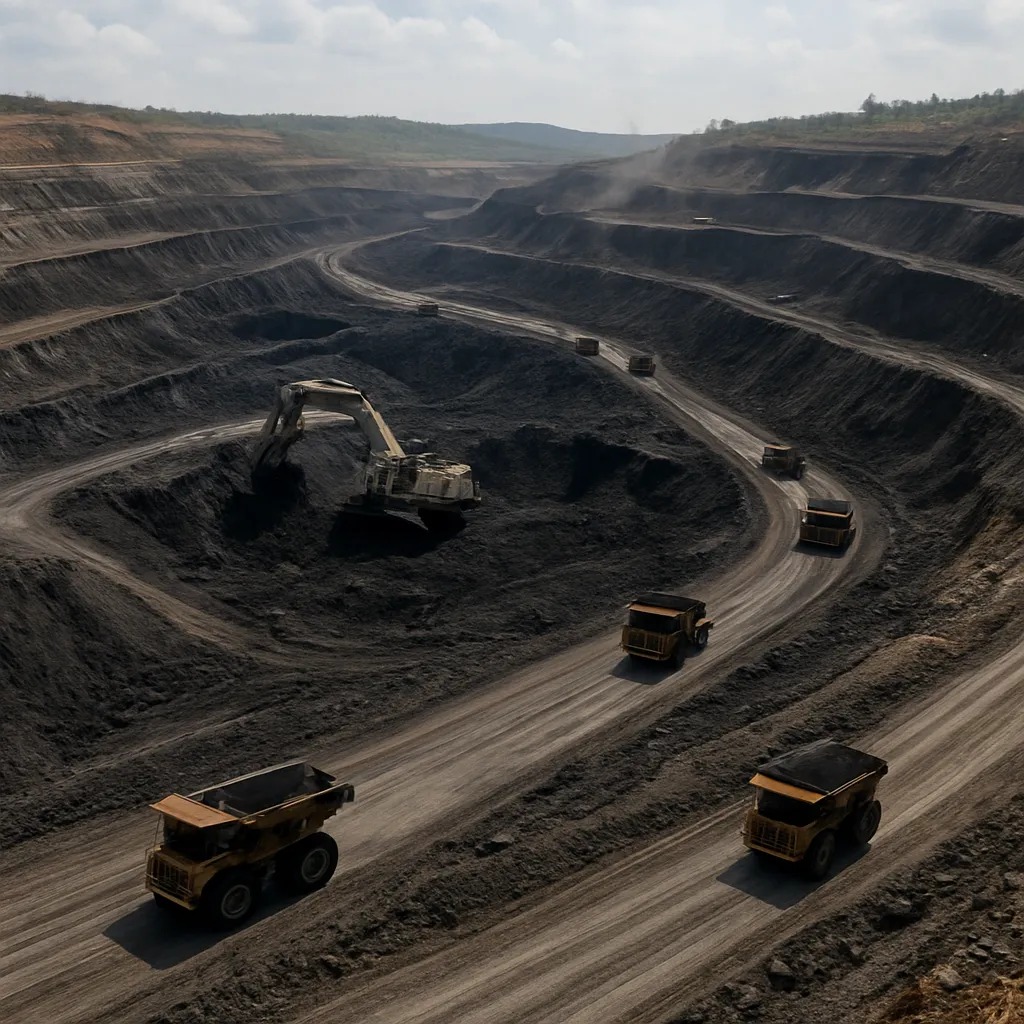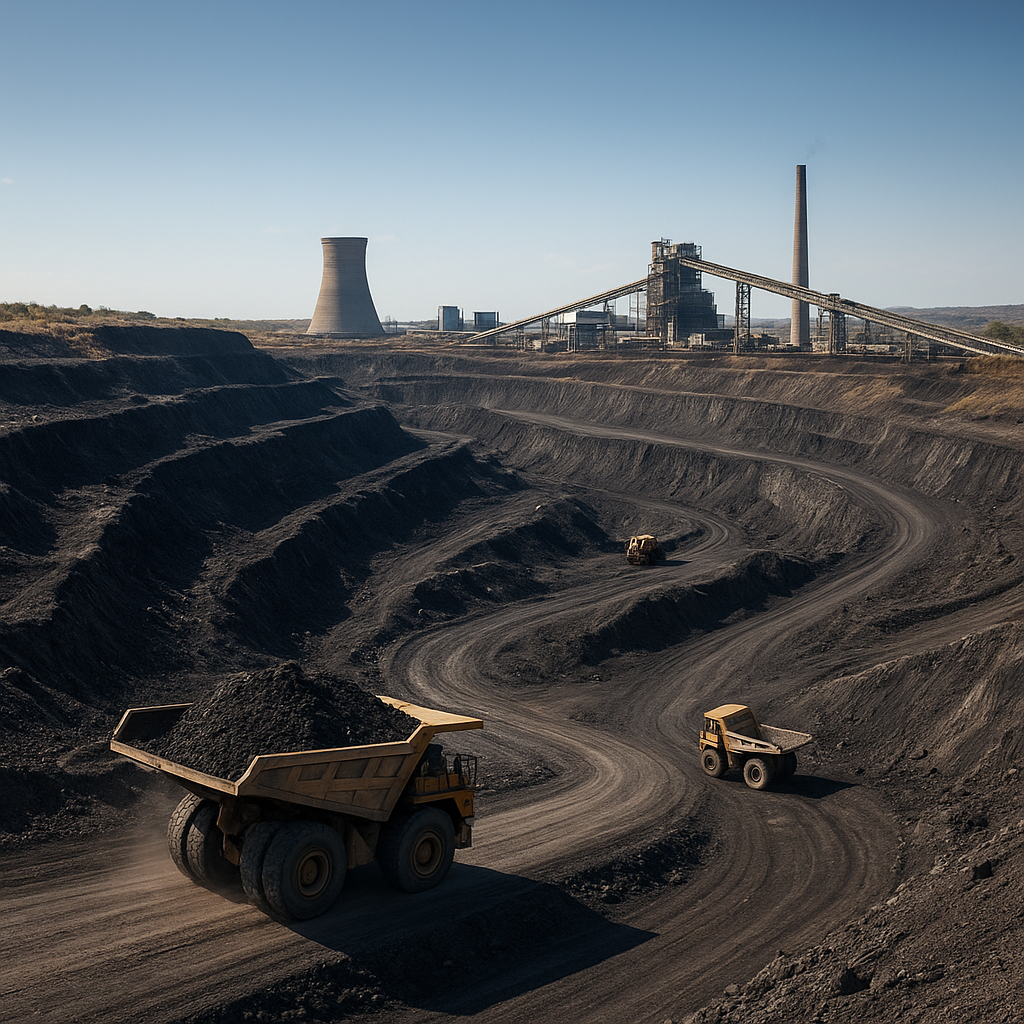
The Mogalakwena Thermal Mine is often referred to in regional discussions about coal development in Limpopo, South Africa. Located within a district that is better known for its rich mineral endowment — notably platinum-group metals — the name is sometimes used to describe thermal coal operations or exploration projects in and around the Mogalakwena Local Municipality and the adjoining Waterberg coal basin. This article describes the geological setting, the nature of the coal, economic and social importance, environmental and regulatory aspects, and the outlook for thermal coal activity in the Mogalakwena area. Where the formal name “Mogalakwena Thermal Mine” is not widely recorded in public databases, the text treats it as representative of coal activities in the local Limpopo/Waterberg context and reviews verified regional patterns and implications.
Location, geology and coal characteristics
The Mogalakwena region lies in the northern part of South Africa’s Limpopo Province, a landscape of bushveld, low hills and agricultural settlements. Geologically, Limpopo borders the vast Waterberg coalfield, one of South Africa’s most important coal-bearing basins. The coal-bearing strata in the area belong to the Permian and younger Karoo-related sequences which host significant accumulations of thermal coal used primarily for power generation.
Coal in the Waterberg–Mogalakwena region is typically:
- medium- to low-rank (sub-bituminous to bituminous) thermal coal suitable for electricity generation;
- characterised by variable ash content, often higher than coals from the Mpumalanga (Witbank/eMalahleni) fields;
- often low in sulfur relative to some other South African coals, which is advantageous for compliance with emissions controls;
- found in relatively thick seams in certain sub-basins, enabling open-pit extraction where overburden conditions are favourable.
The hydrological and sedimentary context influences coal quality: Waterberg coals can have higher moisture and ash but are attractive for long-life, large-scale surface mining projects due to the continuity of seams and extensive reserves reported for the broader basin. While precise seam thickness and quality vary by licence area, the regional geology supports both dedicated power-plant supply and export-quality blends after beneficiation.
Operations, ownership and production context
There is limited public documentation naming a single large operation titled strictly “Mogalakwena Thermal Mine”; instead, thermal coal activity in the area occurs as part of a patchwork of exploration licences, development projects and operating mines across municipal boundaries in Limpopo and adjoining districts. Major coal producers in the broader Waterberg region (for example, Grootegeluk in Lephalale) demonstrate the form large-scale thermal coal projects take in the basin — extensive open pit operations, integrated beneficiation and direct supply contracts with baseload power stations.
Typical attributes of mining operations in the region include:
- open-cast (open-pit) extraction methods for shallow, continuous seams;
- on-site or nearby beneficiation (washing) plants to reduce ash and improve calorific value for either domestic use or export;
- long-life projects planned for decades because of extensive coal volumes;
- integration with rail and road logistics to move product to power stations or export terminals.
Ownership profiles in the Limpopo coal sector mix large diversified mining companies, mid-tier coal producers and a range of junior explorers. Some projects are developed in partnership with local stakeholders and community trusts as part of social and empowerment commitments. Where projects carry the Mogalakwena descriptor it is often because of the municipal or geographic association rather than a single corporate brand. Production figures specific to a “Mogalakwena Thermal Mine” are not consistently published; regional coal production across South Africa historically numbers in the order of hundreds of millions of tonnes annually, with much of that destined for domestic power generation.
Economic and social significance
Coal mining in the Mogalakwena/Waterberg area plays several interlinked economic roles:
- Direct provision of thermal coal to South Africa’s national grid via Eskom and to industrial users, supporting baseload electricity generation that underpins economic activity across the country;
- Employment and local procurement that boost municipal revenues and household incomes in often rural districts;
- Attraction of ancillary investment in infrastructure — roads, rail upgrades, water pipelines and electricity substations — which can yield wider development benefits;
- Generation of royalties, taxes and export earnings that contribute to provincial and national government budgets.
At the municipal level, coal projects (including those in the broader Mogalakwena area) typically create a few hundred to several thousand direct jobs during peak construction and long-term operations. Indirectly, employment in services, transport and contracting can significantly increase total local job creation. Revenues from mining leases and corporate social responsibility programmes fund local community projects such as schools, clinics and small enterprise development, although distribution of benefits can be uneven.
On a national scale, coal remains a strategic energy resource. Historically, roughly 70–90% of South Africa’s electricity has been derived from coal-fired power stations — a range that reflects annual variation and policy changes. This high dependence means that any supply changes in the Limpopo coal supply chain can have implications for electricity security and industrial competitiveness, making mines in the region economically important even beyond their direct output.
Environmental, social and regulatory considerations
Coal mining in the Mogalakwena area raises a set of well-recognised environmental and social challenges that projects must manage under South African law and international best practice:
Water and hydrology
Water is a scarce and valuable resource in parts of Limpopo. Open-pit mining and coal beneficiation consume and potentially contaminate surface and groundwater. Projects must obtain water use licences and implement water management plans that include monitoring, recycling and treatment to avoid impacts on agricultural and community water supplies.
Land use, biodiversity and rehabilitation
Surface mining modifies landscapes, removes vegetation and can fragment habitats. Limpopo’s biodiversity values (including endemic plant and animal species) require project-level impact assessments and rehabilitation plans. Progressive rehabilitation — restoring contour, soil and vegetation as mining advances — is a regulatory expectation, and financial provisioning for final rehabilitation is mandatory under South African mining legislation.
Air quality and dust
Dust from blasting, haul roads and coal handling is a community and occupational health issue. Mitigation includes water sprays, covered conveyors, buffer zones and monitoring programmes to control particulate emissions and sulphur dioxide where applicable.
Community engagement, land rights and socio-economic impacts
Meaningful consultation with local communities, including traditional authorities and rights-holders, is essential. Issues often include land access, compensation, job expectations and the distribution of social benefits. Projects generally adopt local employment targets and skills training but face scrutiny over the adequacy and sustainability of benefits once mines close or downscale.
Regulatory framework and compliance
Mining operations must comply with national acts such as the Mineral and Petroleum Resources Development Act (MPRDA), the National Environmental Management Act (NEMA), and related environmental regulation. Licensing processes require environmental impact assessments (EIAs), public participation, water use licences and mine closure plans, overseen by national and provincial departments.
Statistical context and publicly available figures
Precise, consistently reported statistics specifically tied to “Mogalakwena Thermal Mine” are scarce in public repositories. Nevertheless, placing potential operations in regional and national context helps understand scale and significance:
- South Africa is one of the world’s largest coal producers and consumers; annual production has historically been in the order of several hundred million tonnes, primarily consumed domestically for power generation and industry.
- The Waterberg coalfield—geographically proximate to Mogalakwena—has been described in industry literature as containing large coal volumes, often expressed as tens of billions of tonnes of in-situ coal, making it a long-life resource for multiple projects.
- Coal-fired generation has supplied the majority of South Africa’s electricity historically; coal’s share has been close to 80% in many recent years though this is subject to change as the energy mix evolves.
- Major Waterberg operations such as Grootegeluk demonstrate the potential scale of projects: integrated mining, beneficiation and long-term off-take arrangements with large power stations. Such projects routinely produce multiples of millions of tonnes per annum when fully ramped-up.
Given these patterns, any Mogalakwena-area thermal mine would likely be planned as a medium- to large-scale operation designed to supply baseload demand or longer-term contracts. Production lifespans are frequently planned in multi-decade horizons given the size of deposits and capital investment required.
Industry significance and linkages
Coal projects in the Mogalakwena and Waterberg region are strategically important for several reasons:
- Energy security: They support Eskom’s coal requirements and thus national electricity supply reliability.
- Industrial feedstock: Coal is used by steel, cement and chemical plants; secure supply chains reduce input price volatility for downstream industries.
- Export potential: With beneficiation, some coals can be blended to meet export specifications, generating foreign exchange and strengthening trade balances.
- Employment and skills development: Mining projects drive investment in technical training and establish a skilled workforce that can be mobilised across the broader mining sector.
From a policy viewpoint, balancing these economic contributions with decarbonisation ambitions makes Waterberg-area coal projects part of broader debates on energy transition, just transition planning for workers, and the pace at which South Africa diversifies toward lower-carbon energy sources.
Challenges, community impacts and mitigation measures
Mogalakwena-area projects face multiple operational and social challenges. Key issues and common mitigation strategies include:
- Community expectations vs. reality: clear, binding local content and hiring commitments; transparent benefit-sharing agreements; and independent monitoring can improve trust.
- Environmental risk: rigorous baseline studies, continuous environmental monitoring, and adaptive management plans reduce long-term impacts.
- Water scarcity: implementing water-efficient beneficiation technologies, re-use and closed-loop systems and cooperation with catchment management authorities alleviates pressure on local supplies.
- Closure planning: progressive rehabilitation and financial provisioning for mine closure ensures landscapes and livelihoods have a transition pathway post-mining.
These practices are increasingly demanded by regulators, financiers and international buyers. Lenders and export-credit agencies commonly require clear social and environmental risk management prior to financing major developments.
Future outlook and strategic considerations
The future of thermal coal activity in and around Mogalakwena will be shaped by several converging forces:
- national and global energy transition dynamics that progressively reduce long-term demand for coal in some markets but may sustain demand in the near to medium term where baseload coal generation remains essential;
- the economics of coal extraction and beneficiation in the Waterberg relative to other coalfields, with logistics and plant efficiencies determining competitiveness;
- policy developments in South Africa related to emissions, carbon pricing and just transition frameworks that influence investment decisions;
- access to finance and insurance: capital costs and availability of international financing can accelerate or constrain project development;
- technological factors: improvements in coal cleaning, emissions controls at plants, and co-firing or carbon capture pilots could extend the technical viability of coal-based systems under stricter emissions regimes.
For a named operation described as “Mogalakwena Thermal Mine”, prospective developers would need to align with provincial development plans, secure water and mining licences, negotiate community and land access agreements, and demonstrate robust environmental, social and governance (ESG) credentials to attract off-take partners and financiers.
Concluding observations
The Mogalakwena descriptor, when applied to thermal coal mining, reflects the geographic intersection of a resource-rich part of Limpopo adjacent to the Waterberg coal basin. While a single, widely documented mine under the exact name “Mogalakwena Thermal Mine” is not prominent in public mining registries, the region’s coal projects collectively illustrate the opportunities and challenges of developing thermal coal in a province that is also central to South Africa’s platinum industry.
Key takeaways:
- The area supports significant thermal coal potential associated with the broader Waterberg basin and Limpopo province.
- Coal quality in the region tends toward medium- to low-rank thermal types with variable ash levels; beneficiation is often required for higher-value markets.
- Economic benefits include jobs, local procurement and contributions to national energy security, while environmental and social impacts require rigorous management.
- Future viability depends on market demand, policy settings, investment conditions, and the effectiveness of community engagement and environmental mitigation.
For site editors or planners placing a specific Mogalakwena thermal coal project on a map or in a database, it is recommended to consult provincial mining licence databases, company disclosures and environmental impact assessment records to obtain precise production figures, ownership details and the most recent compliance status. In the absence of a singular high-profile project bearing exactly the Mogalakwena Thermal Mine name, understanding regional coal dynamics and the Waterberg context provides the best lens through which to view local coal mining activities.