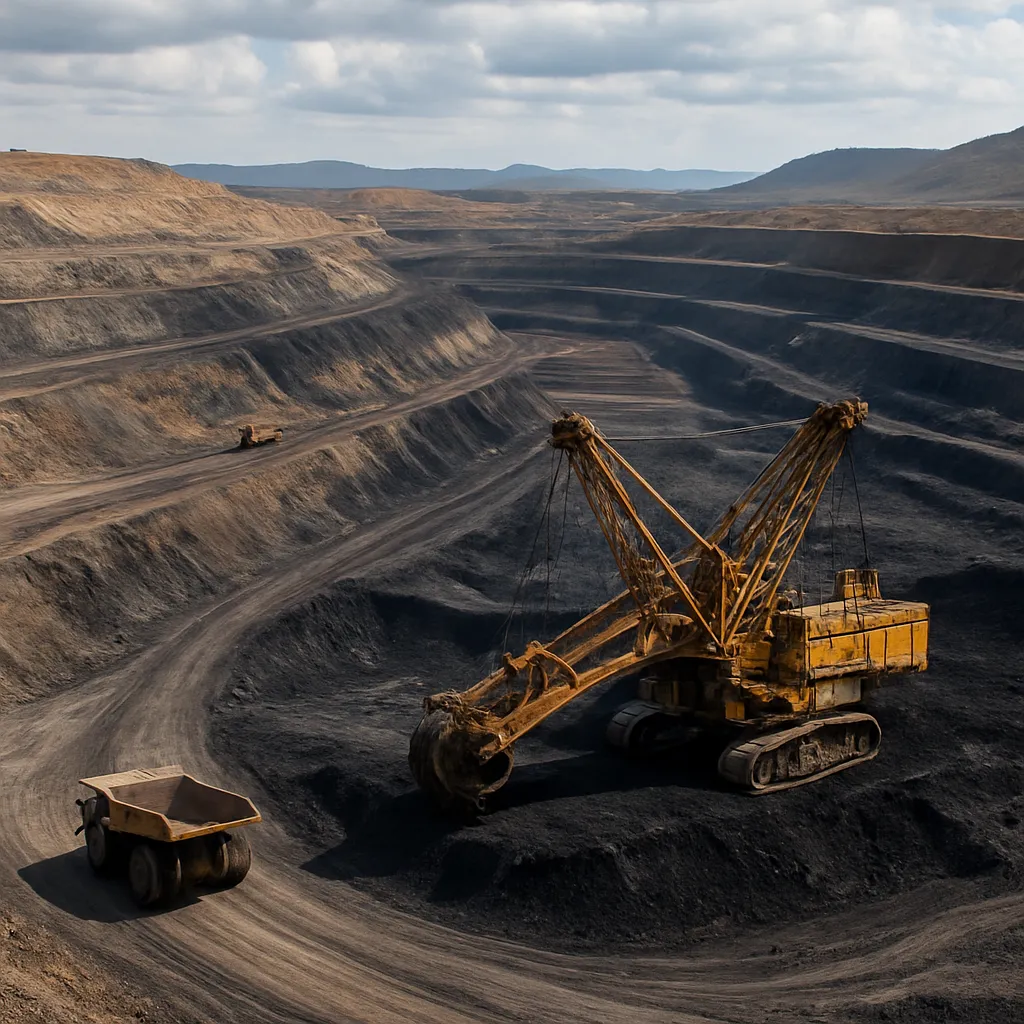
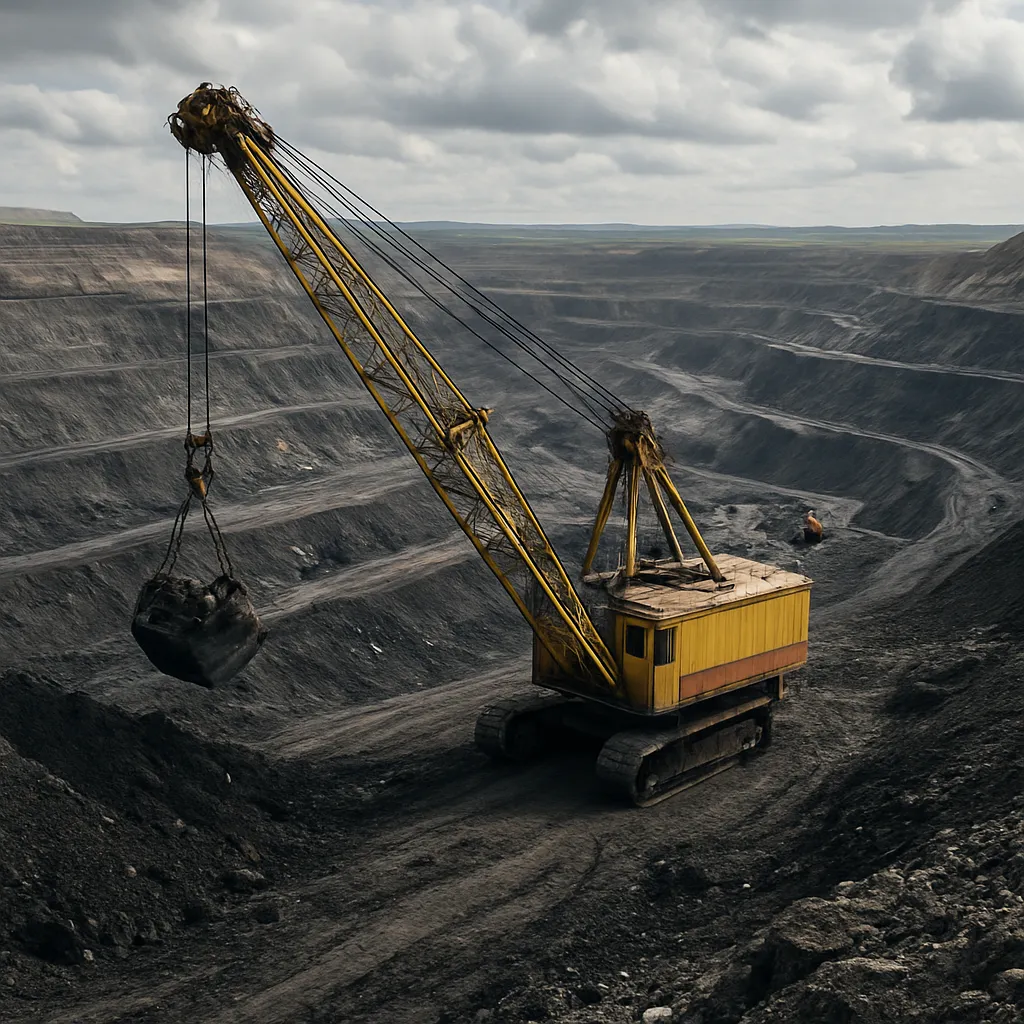
The Mafube Coal Mine is a noteworthy component of South Africa’s extensive coal industry, situated within a region that has fueled the country’s energy and industrial development for more than a century. This article examines the mine’s location, geology, mining methods, the type and quality of coal produced, economic and social contributions, environmental management practices, and the strategic importance of Mafube within both regional and national contexts. Where precise figures are not publicly verifiable, explanations are given in context and typical ranges for similar operations are provided to give a realistic perspective.
Location, geology and geological setting
The Mafube Coal Mine lies in the heart of South Africa’s coal-bearing strata, within the broader Highveld/Waterberg coalfields which dominate the country’s coal production. While the primary coal-producing province in South Africa is Mpumalanga, coal reserves and mining activity also extend into adjacent areas including the Free State and Limpopo provinces. Mafube is part of this geological corridor, characterized by extensive Permian-age coal seams within the Karoo Supergroup.
Geological characteristics
- Coal seams in the Mafube area are commonly associated with the Vryheid Formation and underlying Permian sedimentary sequences.
- The coals are typically medium- to high-ash coals with variable sulphur content, reflective of depositional environments and local mineral matter.
- Typical seam thicknesses across collieries in this region range from less than a metre to several metres; where economic extraction occurs, seams of 1–5 metres are often exploited.
The geological setting gives rise to different coal qualities, with the dominant product often being thermal coal used primarily for electricity generation domestically and for some export markets. In certain layers, coal ranks may reach bituminous grades suitable for specific industrial uses, though Mafube’s strategic value is often tied to its role in the power-generation supply chain.
Mining methods, infrastructure and operations
Mafube’s configuration reflects standard approaches in South African coal mining: a mix of open-pit (surface) and, in some settings, underground mining where appropriate. The chosen method depends on seam depth, thickness, overburden characteristics and economic considerations.
Surface versus underground operations
- Surface mining: Employed where coal seams are near the surface, enabling large-scale removal of overburden with heavy earthmoving equipment. It allows higher throughput and lower unit costs in many cases.
- Underground mining: Applied where seams are deeper or where surface impact must be minimized. Methods can include bord-and-pillar or room-and-pillar systems with mechanized extraction.
Infrastructure to support Mafube includes haul roads, rail or trucking linkages to power stations and export terminals, water-management systems, and on-site coal handling and washing facilities when beneficiation is economically justified. Many coal operations in the region are connected to South Africa’s rail network to move product to the national power utility (Eskom) or to export points along the coast.
Coal type and quality
The coal from Mafube is principally thermal coal—used to generate electricity in coal-fired power stations and for some industrial heat applications. Coal characteristics that determine market value include calorific value (energy content), ash content, volatile matter, and sulphur content.
Typical quality parameters
- Calorific value: Generally in the range typical for South African thermal coals (moderate to high calorific values depending on seams and wash processes).
- Ash content: Can be variable and is a key target for beneficiation to improve burn characteristics and reduce transport costs per unit of energy.
- Sulphur and moisture: Managed via processing and blending to meet end-user specifications and environmental limits.
Coal beneficiation (washing) is often applied at mines comparable to Mafube to enhance calorific value and reduce ash and impurities, thereby increasing marketability and reducing emissions at the point of combustion.
Economic importance and market role
Mafube contributes to local and national economies through employment, direct and indirect taxes and royalties, and as a supplier to South Africa’s energy sector. Coal remains a central pillar of South Africa’s energy matrix, underpinning electricity generation and supporting heavy industry such as steel, cement, and chemicals.
Employment and local economy
- Local employment: Mines typically employ hundreds to a few thousand people depending on scale. Mafube plays a role in sustaining livelihoods in nearby towns through direct jobs in mining, plant operations, logistics, and ancillary services.
- Local procurement: Coal mines often contract local suppliers for goods and services—transport, catering, equipment maintenance—supporting a network of small and medium enterprises.
- Royalties and taxation: Sales generate government revenues through mineral royalties and corporate taxes which fund provincial and national budgets.
Although specific proprietary figures for Mafube (such as exact annual production and workforce size) depend on corporate disclosures, the mine’s influence is comparable to other medium-scale collieries in South Africa—providing a critical link between resource endowment and energy security.
Production statistics and market destinations
Publicly accessible, mine-level statistical details vary by operator and reporting cycle. In general, South African coal mines that mirror Mafube in scale often produce from several hundred thousand to a few million tonnes of coal per year. The principal markets for this coal are:
- Domestic electricity generation (supply contracts or spot sales to Eskom and private power producers).
- Domestic industry (steelmaking, brick and cement production) where specific coal grades are required.
- Export markets, in cases where logistics and quality justify shipment (typically higher-value, lower-ash coals are targeted for export).
At a national level, South Africa historically produced well over 200 million tonnes of coal annually, with the Mpumalanga region accounting for the largest share. While Mafube is not necessarily a top-tier mega-mine by global rankings, it forms part of the cumulative production that sustains national power generation and export income.
Environmental management and social responsibility
Coal mining presents significant environmental challenges, and Mafube is subject to South African environmental laws and industry-best practices aimed at mitigating impacts. Key areas of focus include water management, dust and air emissions control, rehabilitation of disturbed land, and community engagement.
Typical environmental measures
- Water management systems to prevent acid mine drainage and to recycle process water.
- Dust suppression via water spraying, covered conveyors and enclosures for stockpiles.
- Progressive rehabilitation of mined-out areas: reshaping, topsoil replacement and revegetation with indigenous species.
- Methane monitoring and safety practices for underground operations to control greenhouse gas and explosion risks.
Social investment programs at coal mines often include skills training, support for local schools and clinics, and enterprise development initiatives. Effective stakeholder engagement aims to ensure that communities near Mafube derive tangible benefits from the mine’s operations while voicing concerns about environmental and health impacts.
Regulatory context and compliance
Mafube operates under South African mining legislation and regulations administered by entities such as the Department of Mineral Resources and Energy (DMRE) and provincial environmental authorities. Key compliance areas include:
- Mining rights and environmental authorizations.
- Workplace safety regulations enforced by the Department of Employment and Labour.
- Reporting on social and labour plans that commit mines to community development and employment equity measures.
Compliance is important not only for legal reasons but also for maintaining a social licence to operate—critical in a country where mining has historically been scrutinized for its environmental and social footprint.
Strategic significance and industrial linkages
Mafube’s coal contributes to multiple downstream sectors and supports the broader industrial base of South Africa. Coal-fired generation remains integral to the national grid, and mines such as Mafube provide coal that helps keep industrial processes running across the country. The mine also plays a role in regional economic stability by:
- Supporting logistics chains (road and rail freight services).
- Stimulating secondary industries (equipment servicing, chemical suppliers, construction).
- Serving as a potential feedstock source for future coal-to-liquids or gasification projects where economics and policy allow.
Given global trends toward decarbonisation, coal mines increasingly examine diversification strategies and carbon management solutions to remain viable in the medium to long term.
Challenges, risks and future prospects
Mafube faces the common set of challenges confronting coal operations worldwide: fluctuating coal prices, operational risks, regulatory changes, community expectations, and the long-term pressure from climate policy. Specific considerations include:
- Market volatility: Demand for thermal coal can be cyclical and dependent on global energy markets and domestic electricity demand.
- Policy and finance: Increasing scrutiny from financiers and insurers regarding coal-related investments may affect future capital access.
- Rehabilitation liabilities and closure planning: Mines must budget for long-term closure costs and post-mining land use planning.
- Technological shifts: Opportunities for efficiency gains (automation, digital monitoring) must be balanced against socio-economic responsibilities when changing workforce structures.
Nevertheless, in the near term, Mafube and similar mines remain strategically important to South Africa’s energy security. Many operators are exploring options such as improving efficiency, reducing methane emissions, and investing in community transition programs to align with a changing energy landscape.
Interesting insights and contextual facts
- Historical role: Coal mining has been a cornerstone of South Africa’s industrialisation, and contemporary mines like Mafube continue that legacy by providing fuel and jobs.
- Supply chain complexity: The logistics chain from mine to power station involves multiple stakeholders—mine owners, rail operators, power utilities, and municipalities—each influencing mine economics.
- Technological adaptation: Modern collieries increasingly deploy remote monitoring, predictive maintenance and automated equipment to enhance safety and productivity.
- Community relations: Successful operations integrate local procurement and skills development to ensure that surrounding communities benefit from mining activity.
Summary and concluding observations
Mafube Coal Mine plays a role consistent with many mid-sized coal operations in South Africa: supplying thermal coal for domestic electricity generation and industrial use, providing employment and economic stimulus to local communities, and facing the twin demands of operational efficiency and environmental stewardship. While exact mine-level statistics depend on operator disclosures and periodic reporting, the broader context is clear: coal remains a key component of South Africa’s energy mix for the foreseeable future, even as the country and its mining sector navigate transitions toward cleaner energy sources and more sustainable practices. In that environment, mines such as Mafube will need to balance production objectives with robust environmental management and community engagement to maintain long-term viability and social licence.