The Bokaro coal mining area, located in the mineral-rich heart of eastern India, is an important component of the country’s coal-producing landscape. This article examines the location, geology, types of coal extracted, mining practices, economic and industrial significance, environmental and social impacts, and future prospects associated with the Bokaro coal complex. The aim is to provide a thorough, balanced overview for readers seeking to understand why this area matters for India’s energy, industry, and regional development.
Location, Geological Setting and Historical Context
The Bokaro coalfield lies in the state of Jharkhand, within the broader Damodar Valley coal belt, which is one of India’s most important coal provinces. The Damodar Valley extends across parts of Jharkhand and West Bengal and includes several major coalfields such as Jharia, Raniganj, Karanpura and Bokaro. Geologically, the region belongs to the Gondwana sedimentary sequence of the Indian subcontinent. Coal seams here were formed during the Permian to Carboniferous periods and are embedded in a sequence of sandstones, shales, and coal measures.
Commercial mining in the Damodar Valley began in the 19th century under British colonial interest; the growth of heavy industry in independent India—most notably the establishment of the Bokaro Steel Plant in the 1960s—further spurred the development of local coal resources. Coal nationalization in the early 1970s reorganized mining under public sector entities, and since then the landscape of ownership and operation has included public sector companies, state-level units, and in some cases captive or private operations supplying nearby industries.
Types of Coal and Resource Characteristics
The coal from the Bokaro area is generally part of the bituminous class common to the Damodar Valley. Within that broad category, coal types range from high-volatile bituminous to medium-volatile grades. In practical terms, most coal mined in and around Bokaro is used for thermal power generation, industrial boilers, and to an extent for metallurgical processes where coking or semi-coking coals are required—although high-quality coking coal is often sourced from other fields or imported to meet stringent metallurgical needs.
- Calorific value: Typical coal in the region offers moderate calorific value, sufficient for power plants but often with higher ash content than some imported coals.
- Ash and moisture: Many seams exhibit elevated ash percentages and variable moisture; these parameters influence the need for washing or beneficiation prior to specific industrial uses.
- Sulfur and trace elements: Sulfur levels are generally not extreme but require monitoring both for combustion emissions and for environmental management.
- Seam thickness and depth: The area contains a mix of workable seam thicknesses, with both near-surface seams amenable to opencast methods and deeper seams requiring underground extraction.
Mining Methods, Infrastructure and Operations
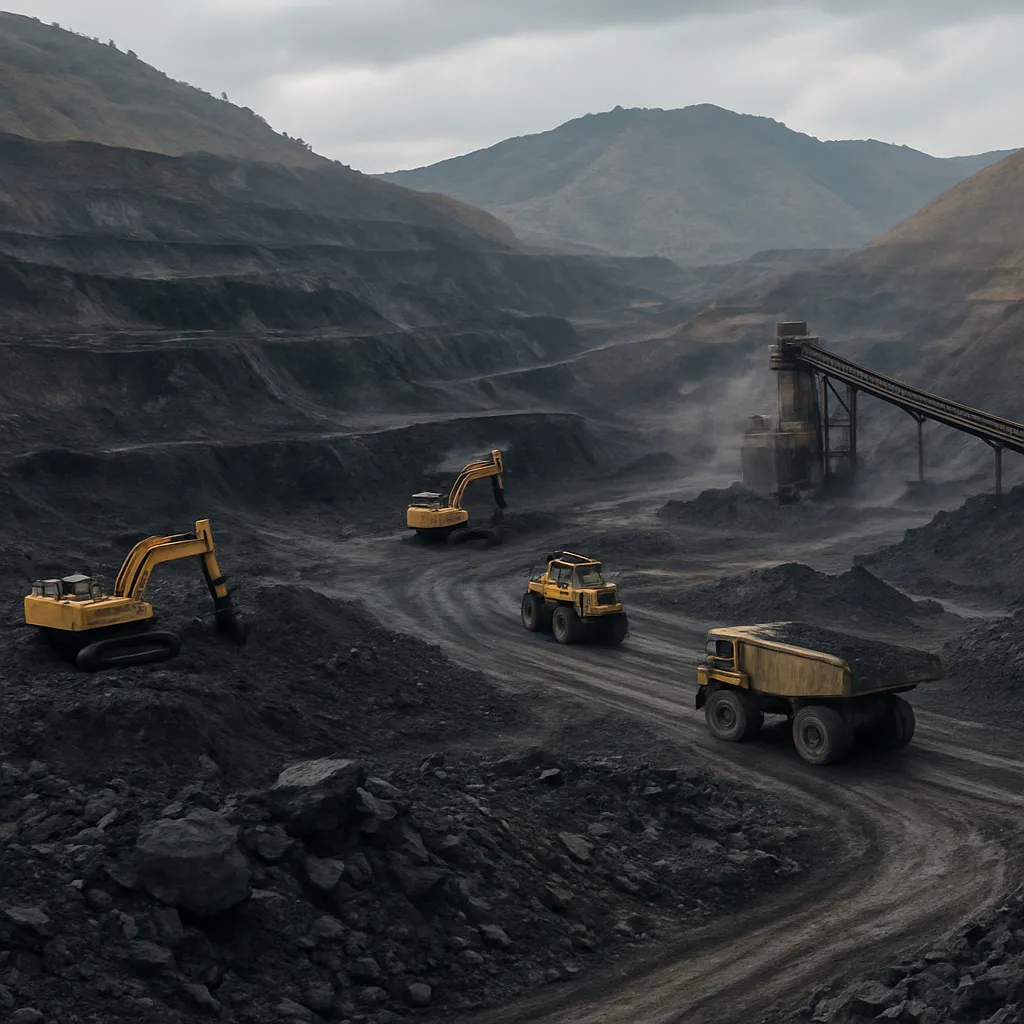
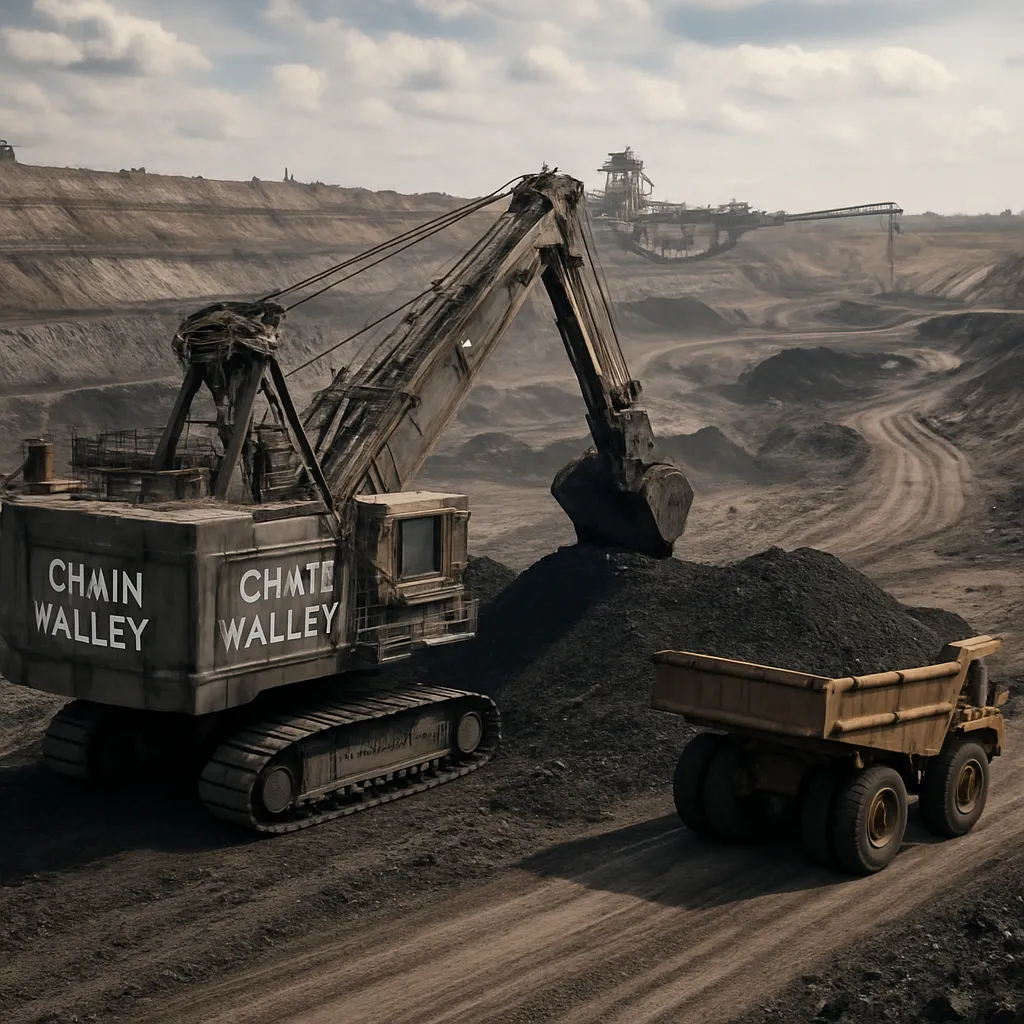
Mining in the Bokaro coalfield uses a combination of open-cast (surface) and underground mining methods. Over recent decades, opencast mining has become the predominant means of extraction for large, shallow deposits due to its higher productivity and lower cost per tonne. Underground mines remain important where deposits are deeper or where environmental and social constraints limit surface excavation.
- Opencast techniques include conventional drilling, blasting, large excavators, and haulage by dump trucks. Progressive mechanization has increased output and safety.
- Underground methods involve bord-and-pillar and mechanized longwall-style techniques where appropriate, with increasing attention to worker safety and methane management.
- Coal beneficiation plants and washery units are used to improve quality by reducing ash content, enabling some coal to meet industrial specifications for power plants and steel mills.
- Transport infrastructure—rails, roads, and conveyor systems—connect mines to local consumers (notably the Bokaro Steel Plant and thermal power stations) and to the national rail network for wider distribution.
Economic and Industrial Significance
The Bokaro coal mining area supports multiple economic functions at local, regional, and national levels. It is a vital source of fuel for power generation and an important supplier to the heavy industry cluster centered on the Bokaro and Dhanbad regions. The proximity of coal to major industrial consumers reduces transport costs and underpins competitiveness for local steel and power producers.
- Employment and livelihoods: Mining and associated services provide direct jobs in extraction, engineering, maintenance and transportation, and indirect employment in supply chains and local commerce.
- Revenue and fiscal effects: Coal extraction contributes to state and central revenues through royalties, taxes, and dividends where public sector companies operate. Local municipalities and districts receive fiscal transfers that support basic services.
- Industrial linkage: The coal plays a role in the feedstock needs of the Bokaro Steel Plant and regional thermal power stations, stabilizing energy supplies and supporting industrial manufacturing.
Statistical Snapshot and Data Considerations
Precise production and reserve figures for discrete mines or for the entire Bokaro coalfield are reported periodically by government agencies such as the Ministry of Coal, Coal India Limited and its subsidiaries, and the Geological Survey of India. Some general points for readers interested in statistics:
- Reserve estimates are compiled in classes (proved, indicated, inferred) and are revised as geological surveys and mining operations provide new information.
- Annual production from Bokaro-area mines fluctuates with market demand, operational capacity and regulatory factors. Production is typically measured in million tonnes per year for larger opencast projects.
- Quality parameters (calorific value, ash, moisture) are reported per-sample and averaged for mine outputs, and these influence whether coal is routed to a washery prior to dispatch.
For project-level or mine-level numbers—such as annual tonnages, exact reserve tonnages, or washery capacities—consult the latest public disclosures of state and central coal companies or the Geological Survey of India for authoritative and up-to-date figures.
Environmental and Social Impacts
Coal mining in Bokaro, as in other coal-producing regions, brings significant environmental and social consequences that must be managed through planning, regulation and mitigation measures. Key concerns include:
- Land use and displacement: Opencast operations require large land areas; acquisition and resettlement of affected communities have social and economic implications and necessitate compensation, rehabilitation and livelihood restoration efforts.
- Air and water pollution: Dust emissions, particulate matter, and discharge from mine dewatering and washery effluents can degrade air and water quality. Fluvial systems in the Damodar Valley require protective measures to prevent contamination.
- Subsidence and legacy hazards: Underground mining legacy areas can present risks of ground subsidence; proper monitoring, backfilling where possible, and community awareness programs are essential.
- Biodiversity and land reclamation: Loss of vegetation and habitat is a concern; modern mining plans increasingly include progressive reclamation and afforestation to restore ecosystem functions after mining ends.
Regulatory frameworks, environmental clearances, and ongoing monitoring are the mechanisms through which these impacts are reduced. Additionally, corporate social responsibility and community development programs can improve outcomes for local populations.
Labor, Safety and Technological Developments
Worker safety remains a focal point in coal mining operations. Improvements over recent decades include mechanization, better personal protective equipment, mine ventilation systems, methane monitoring, and emergency response protocols.
- Automation and mechanization: Increasing use of large-scale excavators, computerized dispatch systems, and mechanized roadheaders in underground contexts raises productivity and can reduce direct exposure to hazardous tasks.
- Environmental technology: Dust suppression systems, effluent treatment plants, and improved washery technologies help bring mining operations closer to compliance with stringent environmental norms.
- Safety culture: Training, incident reporting, and investment in rescue and firefighting equipment are central to reducing workplace accidents and improving community trust in mining enterprises.
Socioeconomic Challenges and Community Relations
The social fabric of communities around Bokaro is shaped by the interplay of mining employment opportunities and the disruptions caused by industrialization. Some of the recurrent challenges include:
- Ensuring sustainable, long-term livelihoods after mine closure or where mechanization reduces labor needs.
- Maintaining health services and educational infrastructure in mining towns and resettled villages.
- Equitable sharing of economic benefits so that local populations receive a fair share of the revenue generated from resource extraction.
Community engagement, transparent grievance redress, and participatory planning are key to better outcomes. Several mining companies operate social programs for health, education, small-business development and vocational training targeted at affected communities.
Role in National Energy Security and Industry
On a national scale, coalfields like Bokaro contribute to India’s broader energy security. Coal remains a primary fuel for electricity generation and intensive industries such as steelmaking. The availability of domestic coal helps buffer India from volatility in global energy markets and supports steady industrial output. At the same time, India’s energy transition goals—toward renewables, gas, and cleaner coal technologies—shape the role that Bokaro and similar coalfields will play over the coming decades.
- Link to metallurgy and power: Even when not direct suppliers of premium coking coal, Bokaro-area coals often feed thermal power plants that supply electricity to steel mills and industrial clusters.
- Strategic value: Domestic coal reduces import dependence for certain grades of coal and provides feedstock security for large industrial consumers within the region.
Rehabilitation, Mine Closure and Future Outlook
As seams are exhausted and economic conditions change, mining operations must consider closure, land rehabilitation, and legacy management. Best practices include staged reclamation, conversion of worked-out pits to water bodies or recreational areas (where safe), and re-vegetation plans tailored to local ecology. Looking forward:
- Demand for coal from Bokaro will depend on India’s energy policy, the pace of power-sector decarbonization, and how efficiently local coal can be made compatible with modern environmental standards through washing, blending and emissions control.
- Technological advances—such as coal-gasification, carbon capture and storage (CCS) where applicable, and higher-efficiency thermal plants—could alter the market for Bokaro coal over time.
- Investments in community resilience, skills retraining, and alternative livelihoods will be important for sustainable regional development once mining activity declines.
Interesting and Lesser-Known Aspects
Beyond core mining activity, the Bokaro area hosts a number of interesting features that reflect the social and industrial history of the region:
- Industrial cluster formation: The proximity of steel production, power generation and coal supply created an industrial cluster that influenced urban growth patterns, migration and the development of associated services.
- Cultural mosaic: Mining migration created multi-ethnic communities with diverse languages, traditions and livelihoods, contributing to the cultural character of towns in the Damodar Valley.
- Innovation in mine rehabilitation: Pilot programs on reclamation and water resource management in old mine areas have informed broader practices elsewhere in India.
Practical Information for Researchers and Stakeholders
Researchers, policymakers and investors interested in the Bokaro coal complex should look to the following sources and approaches for detailed information:
- Official publications by the Ministry of Coal and state mining departments for statutory data on reserves, lease areas and production.
- Annual reports and technical papers from major operators—both public sector companies (such as Coal India subsidiaries operating in Jharkhand) and private or captive mine owners—for operational figures, safety records and environmental performance.
- Geological Survey of India reports for detailed reserve classification, seam geometry and stratigraphy.
- Local government and civil society reports for information on social impact, resettlement records and community programs.
Conclusion
The Bokaro coal mining region remains a strategically significant part of India’s coal landscape owing to its geological endowment, proximity to heavy industry, and role in local and regional development. While coal extraction continues to sustain jobs, energy supplies and industrial production, the future of Bokaro’s mining depends on balancing economic benefits with environmental protection, worker safety, community welfare and evolving national energy policies. Thoughtful deployment of technology, careful planning for mine closure and rehabilitation, and inclusive socioeconomic programs can help ensure that the legacy of mining in the Bokaro area is managed responsibly and contributes to long-term regional well-being.