The Jhingurdah mine is one of the notable coal mining operations in central India, located in the coal-rich belt of the country and operated within the portfolio of a major public coal company. This article gives a comprehensive overview of the mine’s location, geological context, mining methods, the type and quality of the extracted material, economic and industrial significance, environmental and social implications, and prospects for the future. The aim is to provide both descriptive and analytical perspectives on how this mine fits into regional energy supply and national coal strategy.
Location, ownership and historical context
The Jhingurdah colliery lies in the vicinity of the Singrauli coalfield in the state of Madhya Pradesh (administratively part of the Singrauli district and adjacent areas). The mine is operated by Northern Coalfields Limited, a major subsidiary of India’s state-owned Coal India Limited, which manages a group of collieries across the region. Historically, the Singrauli area rose to industrial prominence in the latter half of the 20th century as India expanded thermal power generation and heavy industry; mines such as Jhingurdah were developed to meet the rising domestic demand for coal.
Geologically, the deposit belongs to the Gondwana sequence of India, containing multiple coal seams formed during the Permian to lower Mesozoic periods. These seams are typical of central Indian coalfields and are interbedded with sandstones, shales and occasional carbonaceous layers. Over decades of exploration and development, the mine has evolved from initial underground workings to incorporate more modern mining methods and surface infrastructure to support extraction and dispatch.
Geology and quality of the mined material
The extracted material from Jhingurdah is part of the broader Gondwana coal formation. The characteristics of the coal include variations from medium to relatively higher calorific content compared with lower-grade lignites, falling typically in the band used primarily for thermal electricity generation and certain industrial processes. The coal is best described as thermal coal (non-coking in predominant use), with ash and moisture content that can vary seam-to-seam.
Quality parameters commonly considered for policy and commercial valuation include gross calorific value (kcal/kg), ash percentage, total moisture, volatile matter and fixed carbon. While exact seam-level figures vary, coal from the Singrauli belt — including Jhingurdah — is valued for its contribution to power plants that are designed to operate with Indian bituminous and high-ash coals. The coal’s characteristics mean it is broadly suitable for pulverized fuel firing in thermal plants and for other large-scale industrial boilers after standard beneficiation or blending operations.
Mining methods, infrastructure and operations
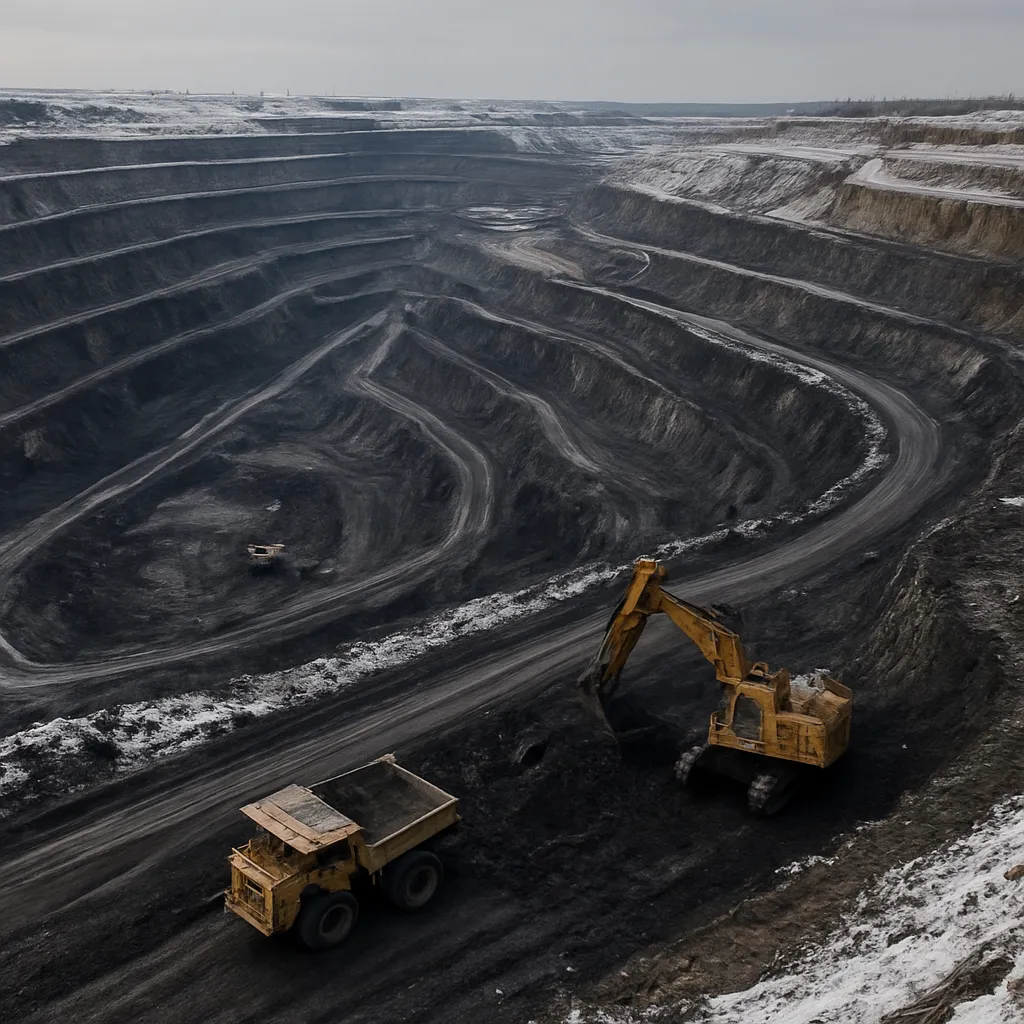
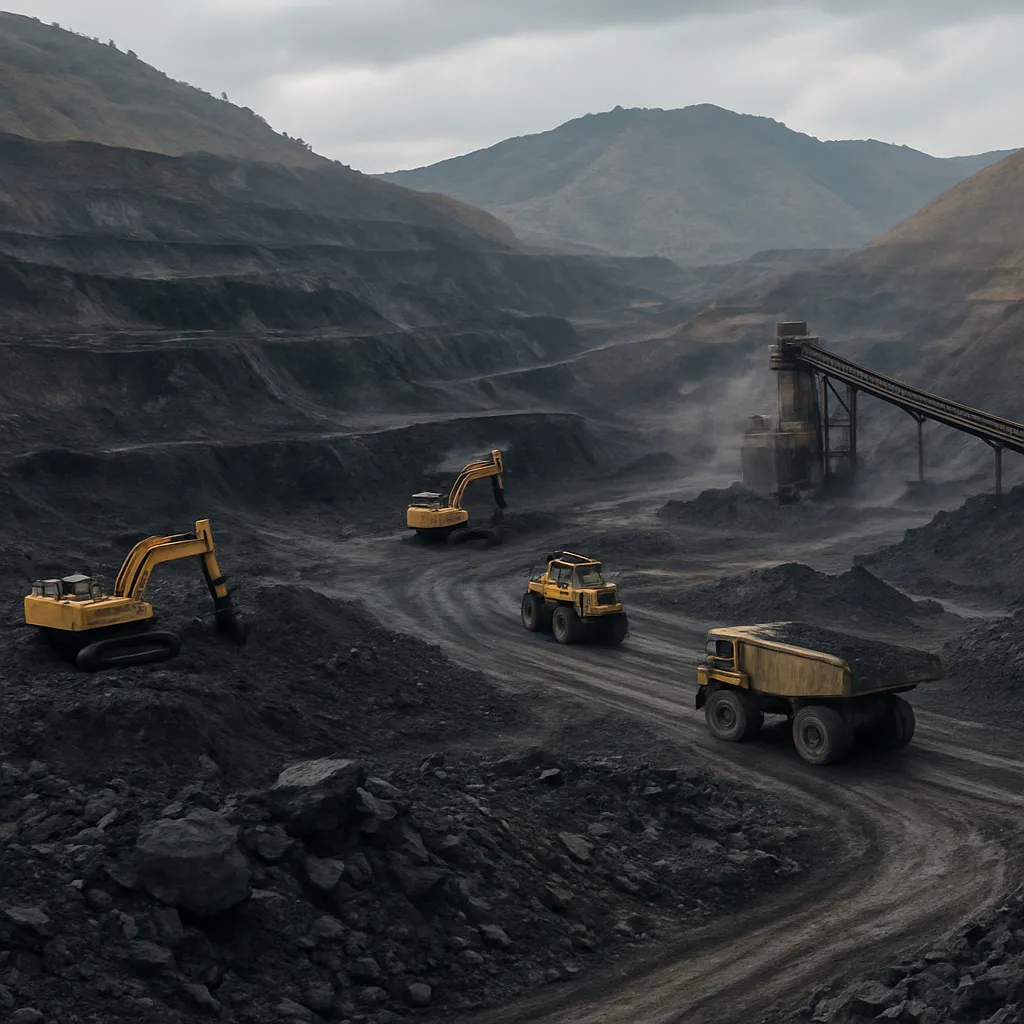
Jhingurdah’s operations combine a range of mining practices adapted to the local seam geometry and economic conditions. Historically, underground mining dominated in many Indian collieries in the region; over time, mechanized underground techniques and selective opencast operations have been introduced where surface conditions and overburden ratios make open mining feasible and economical.
Key mine infrastructure elements include:
- pit head and surface handling systems for loading and stockpiling
- transport links (road and rail sidings or connectivity to regional railway networks) to dispatch coal to thermal plants and industrial customers
- ventilation, dewatering and safety systems for underground faces
- workshops and maintenance units for heavy mining equipment
- community and administrative facilities to support workforce and local engagement
Modernization efforts typically focus on improving mechanization levels, optimizing coal recovery, enhancing mine safety, and reducing the environmental footprint. Mines like Jhingurdah are often subject to periodic reviews and planning updates to extend life-of-mine through inclinations such as improved face recovery, expansion of permissible opencast areas, or development of adjacent blocks.
Economic importance and industrial connectivity
Coal extracted from Jhingurdah plays a practical role in meeting local and regional energy demands. The mine’s output is dispatched predominantly to thermal power plants and industries in central and northern India. This coal supply supports electricity generation, which in turn enables economic activities such as manufacturing, mining-related services, cement production, and other energy-intensive industries clustered in the broader Singrauli-Vindhyan industrial belt.
The economic contributions of the mine include:
- direct employment of a workforce comprising miners, engineers, technicians and administrative personnel;
- indirect employment via contractors, transporters, suppliers and local service economies;
- royalties, taxes and mineral-related fees paid to state and central governments;
- local infrastructure support and social investment through corporate social responsibility (CSR) programs.
On the corporate level, mines under the umbrella of Northern Coalfields Limited form an important component of Coal India’s strategy to maintain domestic coal supplies. While Jhingurdah is not among India’s largest single mines, it is a strategically useful mid-sized colliery that contributes to district-level employment and energy security.
Statistical snapshot and production profile
Precise year-to-year production numbers fluctuate with resource allocation, market demand and regulatory conditions. Jhingurdah is, by common industry descriptors, a mine producing in the low-to-mid millions of tonnes per annum range at peak operation phases — typical of mid-sized regional collieries. Its recoverable reserves are sufficient to sustain operations over multiple decades at current extraction rates, though exact reserve figures can be revised following new exploration and mine planning exercises.
Production trends in the region are influenced by several factors:
- national power demand and dispatch patterns of utilities;
- policy changes around coal allocation and linkage arrangements;
- investments in mine modernization and mechanization;
- seasonal and operational disruptions such as monsoon-related constraints or planned maintenance;
- logistics capacity, particularly rail loadings and road transportation availability.
In aggregate terms, the Singrauli coalfield — in which Jhingurdah is situated — contributes a meaningful share of central India’s coal output. At the national level, India is one of the world’s largest coal producers and consumers, and regional collieries feed a substantial portion of the nation’s thermal electricity generation capacity.
Social and environmental considerations
Like all large-scale mining operations, Jhingurdah presents both social opportunities and environmental responsibilities. The mine is a source of livelihoods and local development, but mining activity also creates challenges that require active management.
Major social and environmental themes include:
- land use and resettlement — expansion of opencast workings can require land acquisition and rehabilitation of displaced communities; proper resettlement planning and livelihood restoration are essential;
- air quality and dust management — mining, crushing and loaded transport generate particulate emissions that must be mitigated via dust suppression, covered conveyors and greenbelts;
- water resources — dewatering operations and effluent management must be balanced with local water availability; treated mine discharge and water recycling are typical measures;
- biodiversity and afforestation — progressive reclamation and replanting of mined-out areas help restore ecological function;
- mine safety and health — continuous emphasis on occupational safety, ventilation, monitoring for methane and other hazards, and emergency preparedness;
- community health and social infrastructure — mines often invest in clinics, schools, roads and sanitation through CSR initiatives to reinforce local development.
Technology adoption that reduces fugitive dust, captures or safely vents methane, and improves energy efficiency at the mine site contributes to better environmental performance. In recent years, national regulatory emphasis and corporate sustainability reporting have pushed mines to document air and water quality, greenhouse gas emissions, and rehabilitation progress.
Safety, technology and innovation
Safety remains a central priority for underground and surface mining. Practices adopted in mines like Jhingurdah include mechanized face operations, enhanced ventilation systems, real-time monitoring of gas and ground conditions, personal protective equipment standards, and regular drills and safety audits.
Technological improvements that are increasingly relevant include:
- automation and semi-automation of heavy equipment to reduce exposure of personnel to hazardous tasks;
- use of remote monitoring, IoT sensors and data analytics to optimize face performance and reduce downtime;
- enhanced geology and seam mapping using geophysical surveys and digital models to increase recovery and reduce waste;
- methane management and potential methane capture for energy use or flaring reduction where economically viable;
- improvements in coal handling and washery practices to deliver customer-specified quality while minimizing environmental impacts.
Adoption pace depends on capital availability, regulatory incentives, and the strategic importance assigned by the operator. Public-sector collieries often pursue modernization through phased upgrades and pilot projects before wider roll-out.
Regional and national significance
At a regional level, Jhingurdah is an important economic node, contributing to municipal revenues and industrial supply chains. At the national level, collieries in central India underpin the country’s heavy reliance on coal for baseload power generation and certain industrial processes. Even as India pursues renewable energy expansion and emissions reductions, coal mines will continue to play a transitional role for several years due to the existing fleet of coal-fired power plants and industrial demand.
Policy developments around domestic coal utilization, power sector reforms, and emissions control can materially affect future investment and operational decisions for mines like Jhingurdah. Strategic efforts to improve coal quality through beneficiation, reduce transport losses, and optimize linkages to end-users are ongoing priorities.
Challenges and future outlook
Key challenges for Jhingurdah and similar mid-sized collieries include balancing continued production with increasing environmental regulation, modernizing aging infrastructure, and maintaining social license to operate. Specific factors shaping future prospects include:
- energy transition pressures and potential shifts in dispatch patterns for coal-fired power plants;
- availability of capital for modernization and mechanization investments;
- logistics enhancements to reduce transit times and costs to power plants and industrial customers;
- improved environmental compliance, including ash management and effluent treatment;
- community engagement and upskilling of the workforce to ensure local benefits continue.
Opportunities exist in exploring complementary revenue streams such as coal-bed methane recovery, value-add through coal washery products, and rehabilitating mined land for productive uses that enhance local livelihoods. Continued investment in safety and technology can help extend resource life while minimizing environmental impacts.
Interesting facts and concluding observations
Some noteworthy points about Jhingurdah and its context:
- The mine is part of a larger coal landscape that has powered industrialization and electricity supply in central India for decades.
- While not the largest mine in India, Jhingurdah is a representative example of mid-sized collieries that collectively supply a substantial proportion of domestic production.
- Operations must constantly reconcile short-term production goals with long-term sustainability and community expectations.
- Investment in mechanization, digital monitoring and environment-friendly practices can significantly improve operational efficiency and reduce the social and environmental footprint of mining.
- Through employment, local procurement and CSR activities, the mine anchors several local economies and supports social infrastructure in surrounding communities.
In summary, the Jhingurdah mine is an integral element of regional coal mining activity under Northern Coalfields Limited. It produces thermal-grade coal essential for power generation and industry, contributes to local employment and economic activity, and faces the same complex mix of environmental, social and technological challenges that characterize modern coal mining. The mine’s future will depend on how effectively it implements modernization, meets evolving regulatory expectations, and contributes to a sustainable development pathway for the region — balancing production needs with long-term environmental stewardship and community welfare.