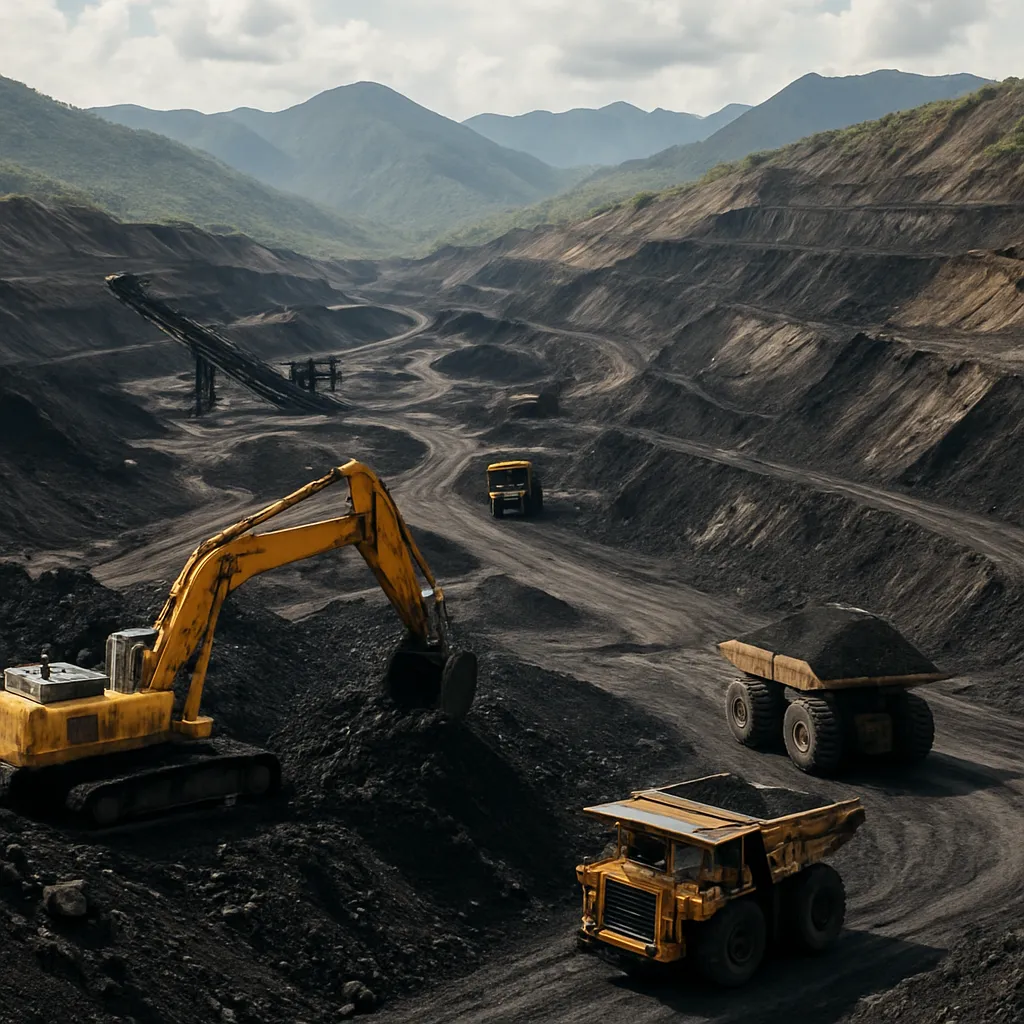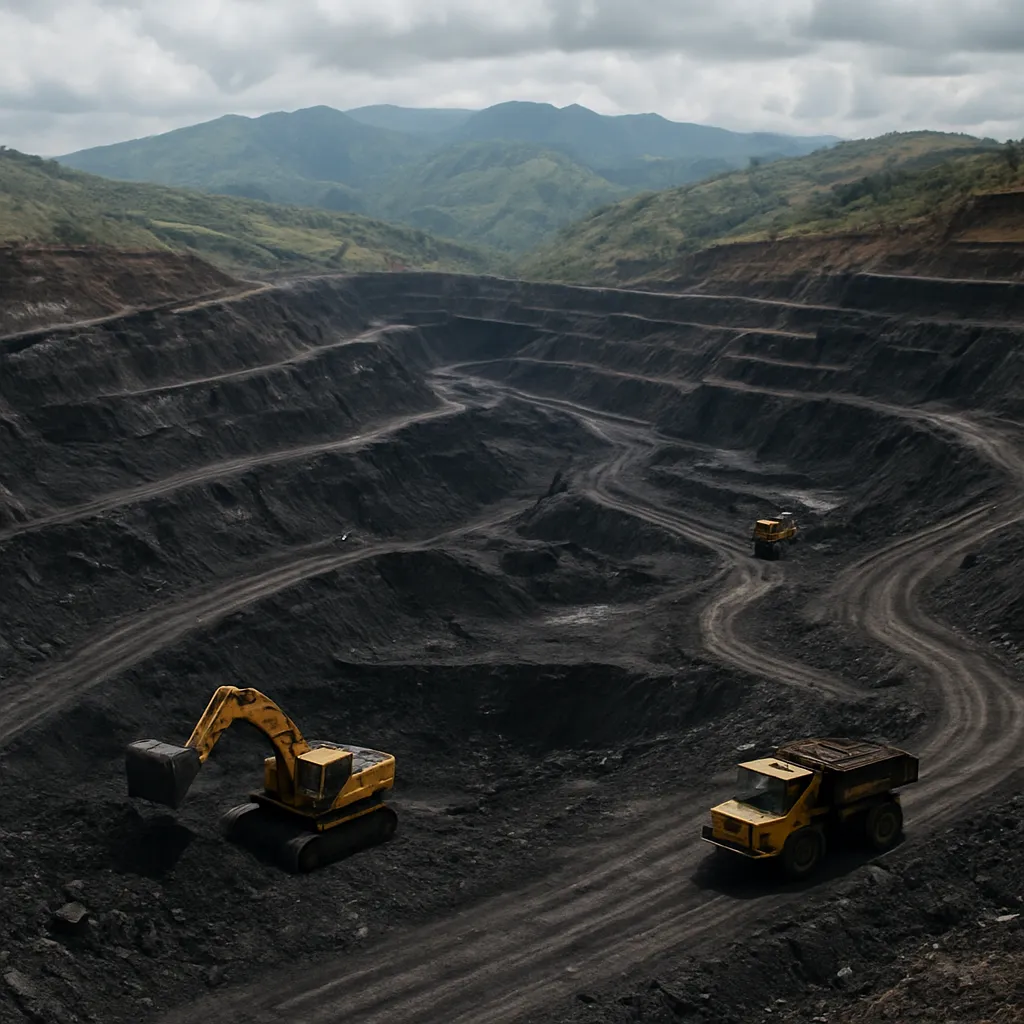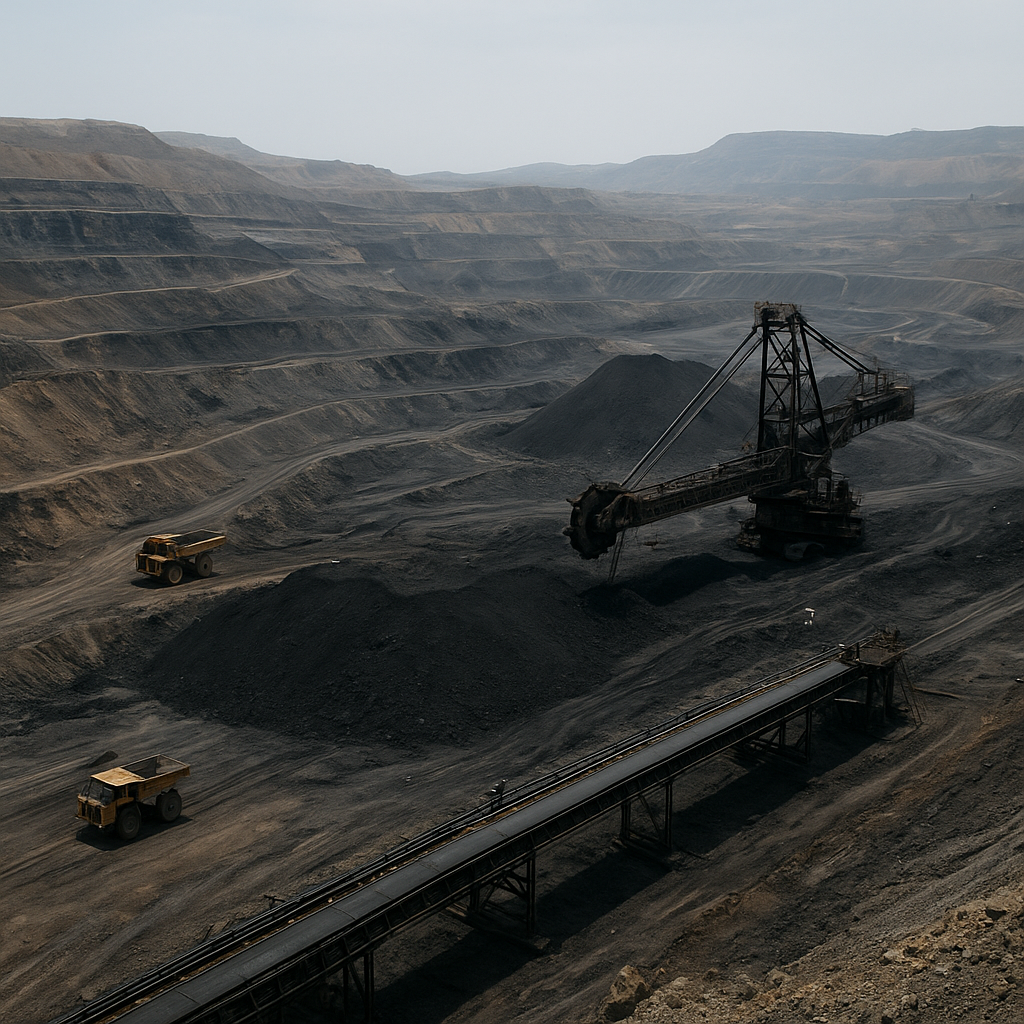
The Fuxin Haizhou Mine is an important element in the industrial and historical landscape of northeastern China. Located within the Fuxin coalfield in Liaoning Province, this mining complex has been part of a broader network of coal extraction sites that drove regional economic development for much of the 20th century. The following article explores the mine’s location and geology, what types of coal are extracted, the economic and social significance of operations, environmental challenges and remediation efforts, and the current and future role of the Haizhou mining area in a changing energy and industrial context.
Location and geological setting
The Haizhou mining area lies within the Fuxin coal basin in western Liaoning Province, in the northeast of the People’s Republic of China. The Fuxin coalfield is one of the country’s historically significant coal-producing regions and forms part of the larger geological belts of coal-bearing strata that extend across northeastern China. The region’s geological structure includes multiple sedimentary layers formed during the Carboniferous–Permian to Mesozoic eras, hosting several coal seams of varying thickness and depth.
The local topography is characterized by a mix of low hills and plains, where historic underground workings and surface facilities are interspersed with towns and agricultural land. Because of the layered geology, mining in the Haizhou area has included a combination of underground longwall mining and room-and-pillar methods, and in some peripheral deposits, selective shallow open-pit extraction.
Coal type and mining methods
The coal produced in the Haizhou area is typically classified as part of the broader Fuxin coal characteristics, dominated by low- to medium-rank coals. These coals are primarily used for power generation and, in certain seams with higher fixed carbon and lower volatile matter, for industrial uses such as coking or metallurgical purposes after appropriate beneficiation.
- Major coal categories: bituminous and sub-bituminous ranks predominate, with locally variable ash and sulfur contents depending on seam and horizon.
- Mining methods: a historical emphasis on underground extraction methods (longwall and chamber-and-pillar) tailored to seam thickness and geotechnical conditions, supplemented where feasible by shallow open-pit operations.
- Associated resources: some areas within and near the Fuxin basin have potential for coalbed methane (CBM) and associated gas recovery, which has attracted pilot projects and interest in methane capture to reduce greenhouse gas emissions and improve mine safety.
Historical development and production trends
The Fuxin coalfield—including the Haizhou mining area—has a long history extending back to the early 20th century when modern industrial-scale mining expanded in northeastern China. Throughout much of the 20th century, the coal industry here was a cornerstone of local employment and heavy industry, supplying thermal coal to power plants and raw material to regional metallurgy and manufacturing.
Production trends evolved through several distinct phases:
- Early expansion (pre-1950s to 1970s): Rapid scale-up of extraction infrastructure to meet industrial demand across the region.
- Peak industrial era (1970s–1990s): The mines reached high levels of annual output, supporting energy-intensive industries in Liaoning and beyond.
- Restructuring and decline (2000s onward): With resource depletion in some seams, rising operating costs, and national policy shifts toward efficiency and environmental control, many older mines were scaled down, consolidated, or closed, prompting economic transition challenges for mining communities.
Exact historical production figures for individual pits in the Haizhou area vary depending on sources and measurement methods. Collectively, the Fuxin coalfield produced millions of tonnes per year at its peak decades, contributing significantly to regional coal output. In recent decades production has fallen from historical peaks as high-quality and easy-to-access reserves have been mined out, and as national energy strategies changed.
Economic significance and regional impact
The Haizhou mine has been central to the local economy for generations. Coal extraction generated direct employment in the mines and ancillary jobs in transport, equipment maintenance, processing, and services. Mining operations spurred the development of rail and road links, power infrastructure, and local industrial facilities.
Key economic roles include:
- Employment and social stability: Mining was a primary employer in Fuxin and surrounding districts. Even as many mines have been scaled back, legacies of an industrial labor force influenced urban planning, education, and social services.
- Energy supply: Coal from Haizhou and neighboring mines supplied thermal power plants and industrial boilers in Liaoning and northeastern China, contributing to reliability of electricity and industrial process heat for the region.
- Industrial supply chain: The mine’s output supported steelmaking and other heavy industries, either directly as coking feedstock (where applicable) or indirectly as a fuel source for metallurgical plants.
Over recent decades, the region has faced the difficulties typical of mature coal regions: declining production, unemployment as mines close or reduce workforces, and the need to diversify the economic base toward manufacturing, services, and technology. Provincial and municipal authorities have implemented retraining programs, incentives for new industries, and infrastructure projects aimed at economic transition.
Statistics, reserves and production figures (overview and caveats)
Determining precise reserve and production numbers for a single mine complex can be challenging because official statistics in China often aggregate outputs at company, municipal or provincial levels, and because reserve estimations are periodically revised as exploration and extraction proceed. In general terms:
- Reserves: Publicly available estimates for the broader Fuxin coalfield have historically been reported in the order of hundreds of millions to billions of tonnes of in-situ coal across numerous seams. Exact remaining recoverable reserves in the Haizhou sector depend on seam continuity, thickness, and economic viability.
- Production: At its peak period, the collective Fuxin-area mines produced several million tonnes per year. Over the last two decades, annual regional output has trended downward as higher-grade and easier-to-mine resources were exhausted and as environmental restrictions and market forces favored consolidation and closures.
- Employment: The coal industry in Fuxin historically employed tens of thousands of workers when the basin was at full production; modern mechanization and industry restructuring have reduced workforce numbers substantially, necessitating social and labor policy responses.
Because these figures are aggregates and subject to revision, they should be interpreted as indicative rather than definitive. Analysts referencing Haizhou should consult official provincial mine assessments, company annual reports, and peer-reviewed geological surveys for the most up-to-date quantitative data.
Environmental challenges and mine reclamation
Like many legacy coal mining areas, Haizhou faces environmental issues that include:
- Mine subsidence: Underground voids can lead to land sinking, damaging buildings, roads, irrigation, and farmland. Affected areas often require engineering remediation and careful land-use planning.
- Water management: Disruption of groundwater regimes, acid mine drainage risks in some zones, and water contamination are concerns that require ongoing monitoring and mine-water treatment strategies.
- Air quality and dust: Coal handling, processing, and transport generate dust. Additionally, coal combustion regionally has contributed to air pollution issues that China has made national priorities to control.
- Ecological degradation: Vegetation loss and soil compaction near mining infrastructure affect biodiversity and agricultural productivity.
In response, local and provincial authorities, often with central government support, have advanced a suite of remediation measures including:
- Land reclamation programs to stabilize subsidence zones and restore topsoil where possible.
- Water treatment plants and controlled discharge systems to reduce pollution downstream.
- Afforestation and vegetative cover projects aimed at dust suppression and ecological restoration.
- Repurposing of former pit areas for new uses such as industrial parks, solar farms, and controlled wetlands where feasible.
Additionally, pilot projects for methane capture and utilization from old mine workings have been explored as a means to reduce greenhouse gas emissions and improve safety, while also providing a small-scale energy resource.
Social consequences and community responses
The decline of large-scale coal mining in Haizhou and the broader Fuxin area led to profound social implications. Communities that had long relied on mining wages and company-provided social services faced rising unemployment, migration of younger workers to larger cities, and the challenge of economic restructuring.
Policy responses included:
- Retraining schemes and vocational education to move workers into new sectors such as logistics, modern manufacturing, and services.
- Infrastructure investments to attract external firms and create new employment opportunities, including upgraded transport links and business parks.
- Social safety nets and targeted subsidies to support displaced miners and their families during transition phases.
Community-led initiatives have sometimes focused on small-scale entrepreneurship, local tourism (including industrial heritage tourism), and conservation projects that seek to combine economic regeneration with environmental restoration.
Industrial importance and links to wider supply chains
The Haizhou mine’s outputs historically fed into regional energy grids and industrial consumers. While raw coal passes through processing facilities and transport corridors, its role in broader supply chains includes:
- Providing thermal coal to power generation facilities, stabilizing grid inputs for local industry and households.
- Feeding coking and metallurgical processes in cases where higher-grade coal seams were available or beneficiation improved product quality.
- Enabling support services—transport, equipment manufacturing, and engineering—distributed across northeastern China, contributing to regional industrial ecosystems.
As national energy policy shifts toward cleaner fuels, renewable energy deployment, and improved energy efficiency, the Haizhou area’s traditional linkages to heavy industry have been recalibrated. Some of the former industrial competence—skilled labor, mechanical engineering, and heavy logistics—can be retooled to support new manufacturing and energy technologies.
Technological evolution and safety
Mining technology has evolved significantly from the earliest days of Haizhou operations. Mechanization, improved roof-control systems, and modern ventilation and methane monitoring have increased efficiency and safety where investments were made. Key technological priorities have included:
- Automation and mechanized longwall systems to increase extraction rates while reducing direct manual labor hazards.
- Advanced monitoring systems for gas emission, ground movement, and water ingress to mitigate major accident risks.
- Mine-water recycling and treatment technologies to minimize environmental discharge.
Despite improvements, legacy mines require continual investment to meet modern health, safety, and environmental standards. Where such investment could not be economically justified, mine closure and controlled reclamation became the preferred policy to reduce ongoing liabilities.
Future prospects and strategic considerations
The future of Haizhou and the Fuxin mining region hinges on several intersecting factors:
- Resource economics: Remaining reserves may be technically recoverable, but the economic viability depends on global and domestic coal prices, extraction costs, and alternative fuel competitiveness.
- Policy and environmental constraints: National commitments to air quality improvement, carbon intensity reduction, and renewable energy expansion will limit large-scale expansion of coal extraction in many regions.
- Economic diversification: Success in transitioning local economies to non-coal sectors—advanced manufacturing, renewable energy deployment (e.g., solar farms on reclaimed mine land), logistics, and services—will determine long-term social stability.
- Rehabilitation potential: Well-executed reclamation and redevelopment can convert former mining areas into productive land uses, mitigating long-term environmental liabilities and creating new investment opportunities.
Potential niche opportunities include coalbed methane development, localized coal-to-chemical processing with carbon control measures where economically feasible, and the use of former mine sites for renewable energy installations—strategies that can leverage existing grid connections and industrial skill sets.
Interesting facts and lesser-known aspects
- The Fuxin basin’s mining legacy left a distinctive cultural imprint: company towns, specialized vocational traditions, and industrial architecture that can be of interest for industrial heritage projects.
- Reclamation programs in parts of Liaoning have experimented with turning subsidence lakes and lowland areas into managed wetlands that support biodiversity and recreational use.
- Some older mine infrastructure has been reused creatively—former workshops and warehouses repurposed for light manufacturing, community centers, or training facilities.
Conclusions
The Haizhou mine within the Fuxin coalfield represents both the legacy and the contemporary challenges of China’s coal-mining heartlands. Historically fundamental to local economies and regional industrialization, the mine and its peers now face a transitionary era defined by declining production in some sectors, urgent environmental remediation needs, and opportunities for economic diversification. Strategic planning that combines reclamation, targeted technology investments (for methane capture and safer mining where operations continue), and social policies to retrain and re-employ former miners can help the Haizhou area navigate its path from a traditional coal-mining base toward a more diversified and sustainable regional economy.
For stakeholders—government planners, industry investors, local communities, and environmental groups—understanding the geology, history, and socioeconomic context of Haizhou is vital. While definitive numerical reserves and up-to-date production figures should be sought from the latest geological surveys and company reports, the qualitative picture is clear: Haizhou is emblematic of many mature mining districts worldwide—rich in legacy value and in need of forward-looking strategies to secure a resilient future.