This article provides a comprehensive profile of the Liugou Coal Mine in China, combining available contextual information about Chinese coal mining with what is known or reasonably inferred about mines carrying the name Liugou. Because detailed, independently verifiable production and reserve figures for this specific mine are not readily available in public sources accessible here, the text emphasizes the mine’s likely geological setting, typical coal types and quality, economic and industrial roles, environmental and social implications, and technological and regulatory contexts. Key concepts in this article are highlighted for emphasis: Liugou, China, coal, thermal, coking, reserves, production, employment, environment, infrastructure.
Location and geological setting
Liugou Coal Mine is one of many coal-producing sites in the People’s Republic of China. The precise geographic coordinates and administrative location for a mine named Liugou can vary—there are multiple localities with similar names across northern and central China. Coal mining in China is concentrated in several major basins and provinces, including Shanxi, Inner Mongolia, Shaanxi, Hebei, Shandong, Heilongjiang and Jilin. Mines named Liugou are most commonly found in coal-bearing terrains associated with these basins, but exact placement should be confirmed via local government records, company disclosures, or geological surveys.
From a geological standpoint, Chinese coal basins host a wide range of coal ranks from lignite (low rank) to anthracite (high rank). The dominant commercial output historically has been low- to medium-rank bituminous coals used for electricity generation and industrial heating, and higher-grade coking coals in specific basins that feed steelmaking. Typical geological features for a mine like Liugou would include multiple coal seams of varying thickness separated by strata of sandstone, siltstone, shale and occasional conglomerates. The depth, dip and seam continuity determine whether mining is carried out by open-pit (surface) or underground methods.
Mining methods and on-site operations
The method of extraction at a coal mine depends on seam depth, thickness and overburden. Chinese operations use a spectrum of techniques:
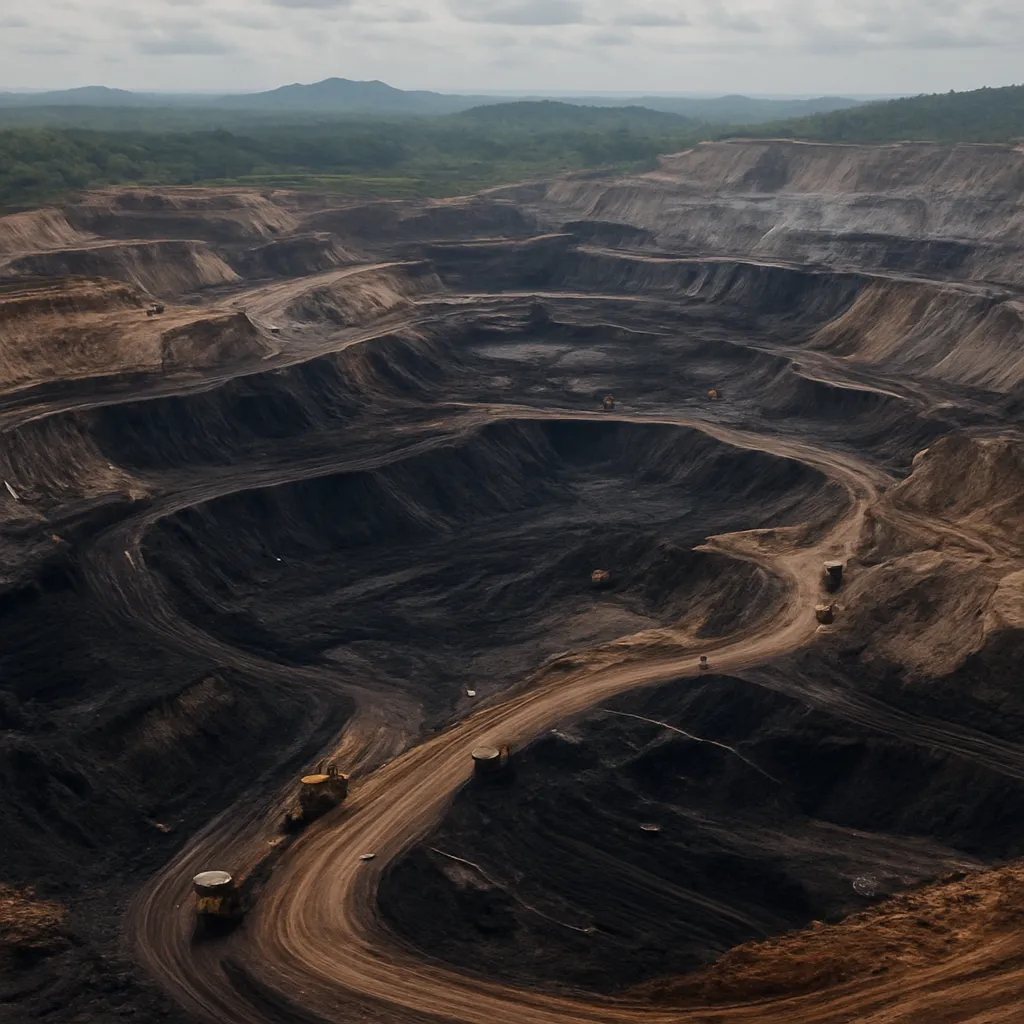
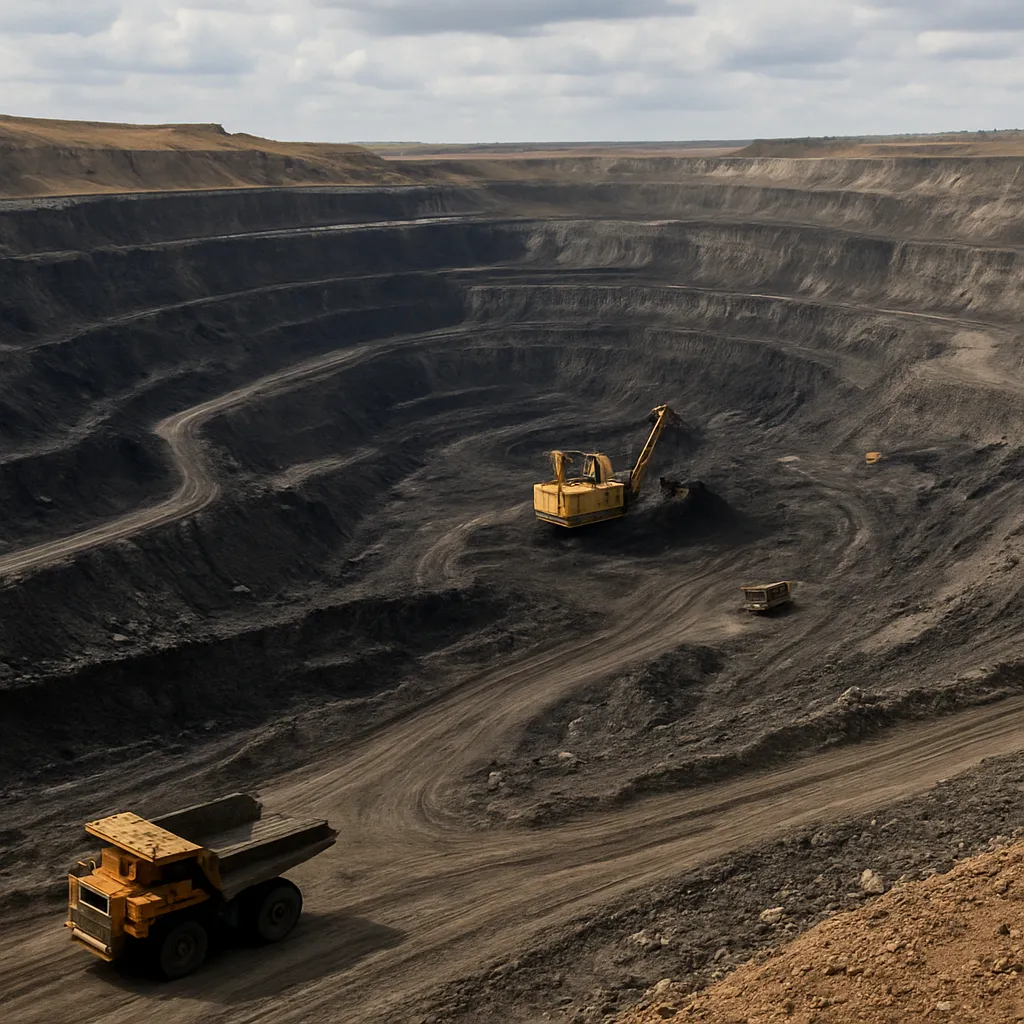
- Surface mining (open-pit/strip mining): Applied where seams are shallow and economically recoverable by removing overburden. Open-pit operations favor high throughput and mechanization but have larger surface footprints.
- Underground mining (room-and-pillar, longwall): Employed where seams are deeper. Longwall mining with fully mechanized shearers and powered supports is an advanced and widely used technique in many Chinese collieries, offering high productivity per face.
- Hybrid approaches and benching: Some deposits require mixed methods or sequential extraction methods tailored to local geology.
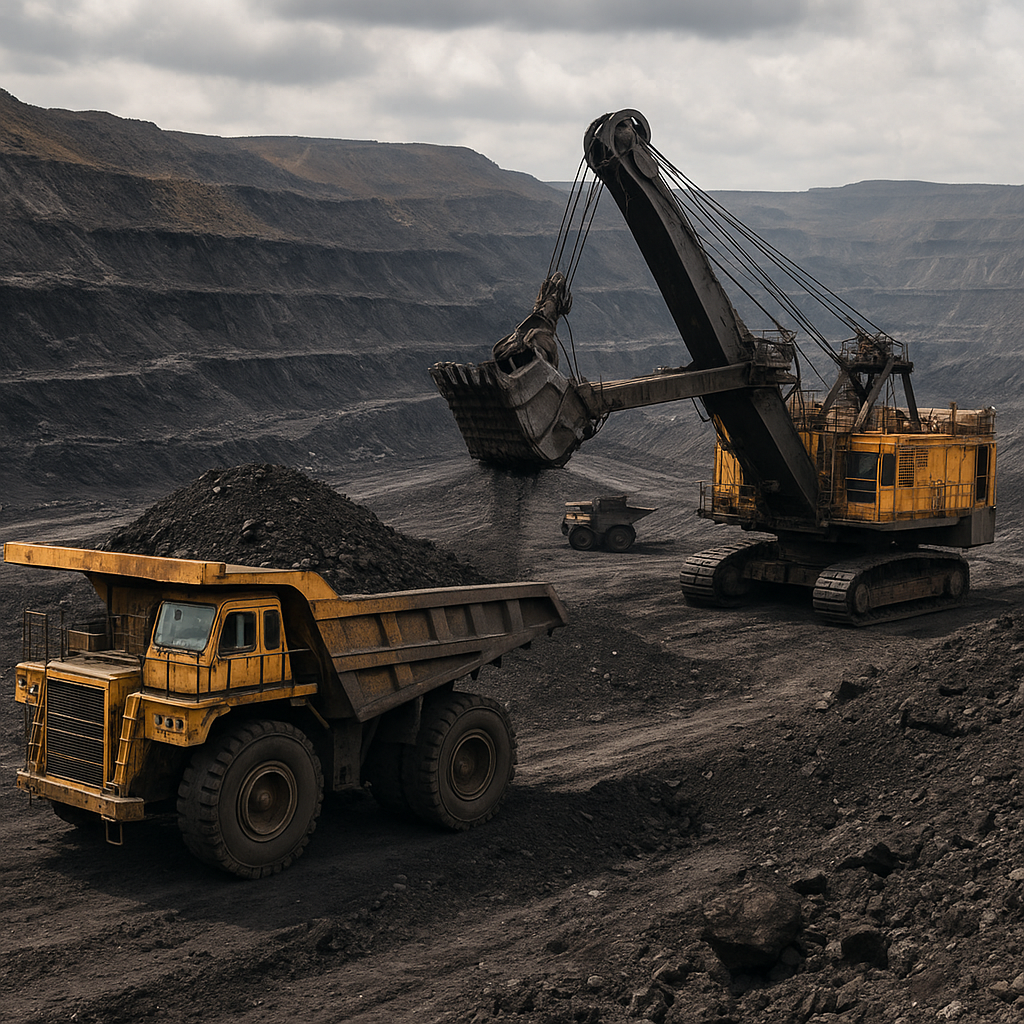
If Liugou is a conventional underground production site, it likely uses mechanized roadheaders or longwall shearers, conveyor belts for material transport, and modern ventilation systems. Surface mines would rely on large excavators, haul trucks, and crusher-conveyor corridors to move product to railheads or wash plants.
Coal type, quality and end uses
Coal from any given Chinese mine can be characterized by rank (lignite, sub-bituminous, bituminous, anthracite), calorific value (kcal/kg or MJ/kg), ash content, sulfur content and coking properties (for metallurgical uses). For Liugou, absent specific laboratory data, the most likely scenarios are:
- Production of thermal coal suitable for power generation and industrial boilers if the deposit is bituminous to sub-bituminous. This coal typically features moderate to high ash content and variable sulfur.
- Production of coking coal (metallurgical grade) if the deposit is located within a coking-coal-bearing sub-basin; such coal has higher carbon content, suitable volatile matter and plasticity properties required for coke-making in steel plants.
- Mixed outputs where multiple seams yield different qualities, enabling both thermal sales and selective metallurgical-grade extraction.
Typical Chinese thermal coals have gross calorific values ranging roughly from 4,000 to 7,000 kcal/kg depending on rank; ash can range widely (10–40% by weight), and sulfur content often varies from low (<0.5%) to moderate (>1%). Metallurgical coals have stricter specifications and command higher prices.
Production, reserves and statistical context
Specific, independently verifiable production and reserve figures for Liugou Coal Mine are not available in the public dataset accessible here. However, understanding any single mine’s significance requires placing it within the national and regional statistical framework:
- China is the world’s largest coal producer and consumer. In recent years, Chinese annual coal production has been in the order of several billion tonnes, making China responsible for a very large share of global production and consumption.
- Individual mines in China vary enormously in scale: some large state-owned collieries produce several million tonnes per year, while smaller local or private mines may yield tens or hundreds of thousands of tonnes annually.
- Reserves reporting also varies. State-owned groups and listed companies typically publish proven and probable reserves according to Chinese mineral resource classification and, where applicable, international standards; small operators may not publish detailed reserves publicly.
For a mine named Liugou, production could plausibly range from modest local-scale output (hundreds of thousands of tonnes per year) up to larger-scale operations (millions of tonnes), depending on seam size and investment. Without a specific operator name or province, precise numbers cannot be responsibly stated here.
Economic and regional significance
Coal mines like Liugou commonly play multiple economic roles at local and regional levels:
- Employment: A mine supports direct mining jobs (operators, engineers, technicians), indirect jobs (transport, equipment maintenance, suppliers) and induced employment through local spending. In aggregate, the Chinese coal sector has historically supported millions of livelihoods when including direct and indirect employment.
- Government revenue: Taxes, royalties and fees from coal mining are important sources of local and provincial government revenue. Land reclamation charges and environmental fees are additional fiscal streams tied to the sector.
- Industrial supply chains: Coal supplies to power plants, cement kilns, brickworks and steel plants anchor local industrial activity. Mines located near major rail corridors or river ports can supply distant customers efficiently, increasing their market reach.
- Infrastructure development: Mining investment often drives infrastructure upgrades—roads, rail spurs, electrical substations and communications networks—which benefit broader regional development.
The economic multiplier for mining can be significant in underdeveloped regions. Conversely, regional economies that depend heavily on a single mine can face vulnerability to commodity price shocks, regulatory changes and eventual resource depletion.
Logistics, transport and markets
Efficient transport is critical to a coal mine’s competitiveness. Typical logistics for Chinese mines include:
- Rail transport: Bulk movement by rail is the backbone of long-distance coal logistics within China. High-capacity freight corridors connect interior coal basins to coastal power plants and ports.
- Road haulage: Shorter-distance delivery to local power plants or industrial consumers often relies on trucks; road upgrades are common near productive mines.
- Conveyor belts and overland pipelines: For mine-to-plant operations situated close together, continuous conveyors or slurry pipelines (less common) are used.
- Export via ports: If coal quality is suitable and the mine has access to port facilities, some coal may be exported, though much Chinese production is consumed domestically.
A mine named Liugou would typically link into a regional transportation network—rail spur or road—to reach consumer markets. Integration with national rail logistics enhances the potential commercial value of produced coal.
Environmental, social and safety considerations
Coal mining carries significant environmental and social impacts that are regulated and monitored at multiple levels in China:
- Surface impacts: Open-pit operations disrupt landforms and ecosystems. Reclamation and progressive rehabilitation are standard mitigation strategies, but implementation quality varies.
- Subsidence and groundwater: Underground extraction can cause land subsidence, affecting buildings and agriculture; seepage and dewatering can alter groundwater regimes and local water availability.
- Air pollution and dust: Mining and transport generate dust and particulate matter. Combustion of coal also contributes to regional air quality problems unless mitigated by emission controls at power plants and industrial users.
- Water pollution: Acid mine drainage and high total dissolved solids in mine effluents can threaten surface waters and local water supplies without proper treatment.
- Methane and greenhouse gases: Coal seams often contain methane; uncontrolled release is a safety hazard and a contributor to greenhouse gas emissions. Methane capture for utilization (as coalbed methane) or flaring is a mitigation approach.
- Occupational safety: Chinese mines have historically improved safety performance, but mining remains hazardous. Modernization, stricter enforcement and technology adoption have reduced accident rates in many regions.
Regulatory standards, environmental impact assessments and community consultation are now more prominent in permitting and operational oversight. Mines are often required to prepare and implement environmental management plans, mine closure plans and social compensation programs for affected communities.
Technology adoption and modernization
Recent decades have seen significant technological progress in Chinese coal mining, which would likely apply to a mine such as Liugou if it has seen recent investment:
- Mechanization: Widespread use of mechanized loaders, longwall systems, and automated conveyors increases productivity and reduces labor intensity.
- Digitalization: Real-time monitoring of ventilation, methane concentrations, equipment status and personnel tracking improves safety and operational efficiency.
- Emissions control: Dust suppression systems, wastewater treatment, and on-site waste management reduce environmental footprints.
- Gas management: Ventilation, methane drainage and utilization facilities convert a safety and emissions risk into a potential energy resource.
- Mine rehabilitation: Progressive reclamation using engineered landforms and vegetative covers aims to restore post-mining land uses.
Futhermore, some Chinese coal companies participate in pilot projects for carbon capture, utilization and storage (CCUS) at coal-fired plants or mine-mouth facilities—part of broader efforts to reconcile continued coal use with national carbon-reduction goals.
Regulatory, policy and market context
The trajectory of any Chinese coal mine is influenced strongly by national and regional energy policy:
- Energy security: China emphasizes secure and stable domestic coal supply to ensure electricity reliability and support heavy industry. This often supports continued operation of domestic collieries.
- Environmental targets: Commitments to peak carbon emissions and achieve carbon neutrality later in the century place pressure on reducing coal intensity and improving efficiency.
- Market reforms: Price liberalization, coal-to-gas switching policies in some regions, and competition from renewables affect demand and price stability for coal producers.
- Safety regulations: Tighter mine-safety enforcement has led to consolidation in the sector, with closures of small, unsafe mines and increased role for larger, more compliant operators.
For Liugou, these policies translate into operational imperatives: meeting environmental standards, adopting safer practices, and aligning production plans with regional energy demand projections.
Data availability and research avenues
Because specific numeric data for Liugou Coal Mine is not included in the public sources available here, those seeking precise figures should consult:
- Company annual reports and technical disclosures if the mine is operated by a state-owned enterprise or a listed company.
- Local or provincial bureau of natural resources / geological survey publications, which can include mine permits and reserve certificates.
- Academic and industry papers that profile regional coal fields and include mine-level case studies.
- Satellite imagery and open-source mapping for an independent assessment of mine footprint, infrastructure and visible throughput indicators.
Such primary sources typically provide the most reliable production, reserve and employment data for a named mine.
Future outlook and strategic considerations
The long-term prospects for a mine like Liugou will be shaped by several interacting factors:
- Resource lifecycle: The size of recoverable reserves and the economic strip ratio or underground mining feasibility determine operational longevity.
- Market demand: Regional demand for thermal coal (power generation) and metallurgical coal (steelmaking) affects price and investment incentives.
- Environmental regulation: Stricter emissions and land-use rules can increase compliance costs and encourage investment in cleaner technologies or diversification.
- Technological change: Automation and digital tools can reduce operational costs while improving safety and environmental performance.
- Economic diversification: For mining-dependent communities, planning for post-mining economies—tourism, agriculture, renewable energy projects, logistics hubs—can reduce social risk when mines close.
Given the national emphasis on balanced energy transition, mines that modernize, reduce environmental impacts and integrate methane utilization are better positioned to remain viable in the medium term. Conversely, small, high-cost, or environmentally non-compliant operations face closure or restructuring pressures.
Conclusions
Liugou Coal Mine, as a representative site within China’s extensive coal sector, illustrates the multifaceted role of coal extraction in supplying energy and industrial raw material, generating local economic benefits, and presenting environmental and social challenges. While specific production and reserve statistics for Liugou are not available here, the mine’s likely significance can be appraised through the broader context of Chinese coal geology, mining technology, logistics networks, regulatory environment and market dynamics. Key focal points for any detailed assessment are the mine’s exact location and operator, reserve estimates, annual production volumes, coal quality assays, transport linkages, environmental performance records and workforce composition. In the current policy and market environment, mines that emphasize technological modernization, environmental compliance and integration with regional development goals are positioned to contribute sustainably to local economies while aligning with China’s evolving energy strategy.