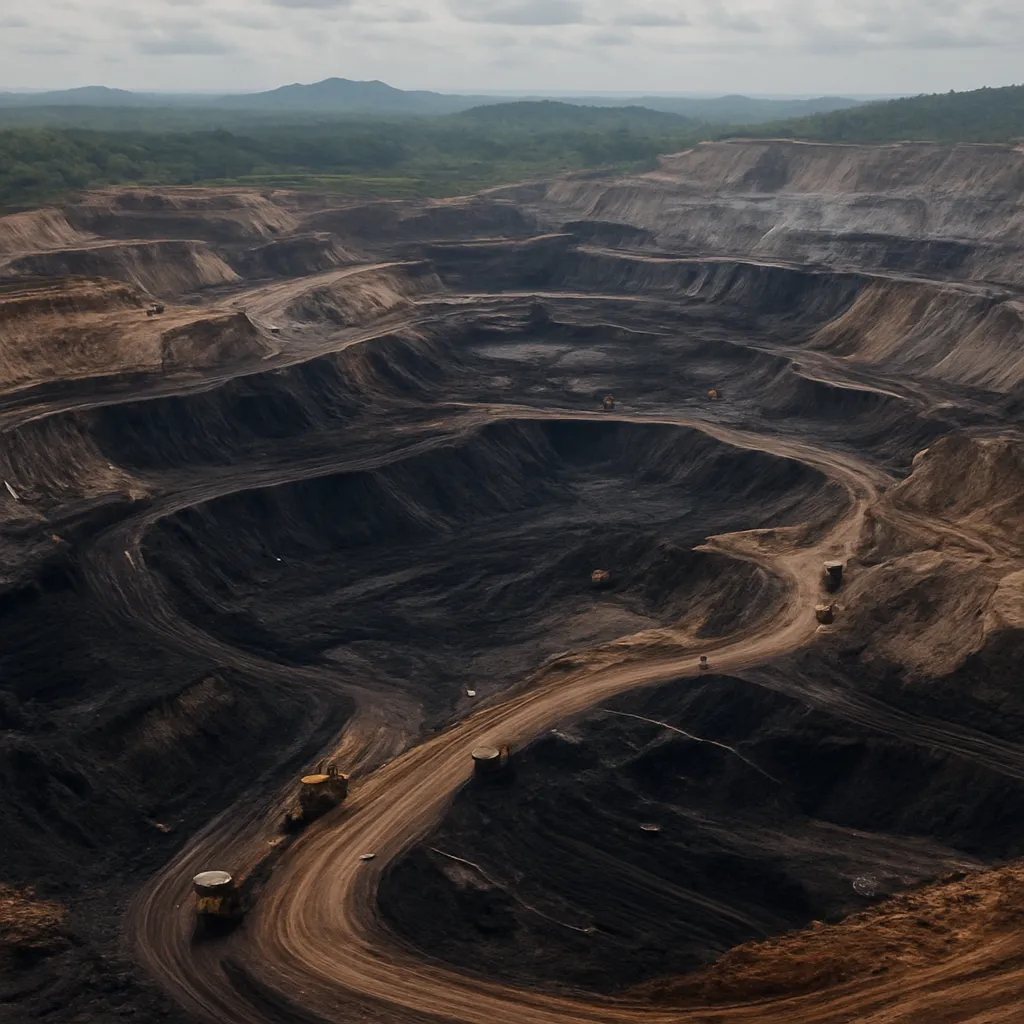
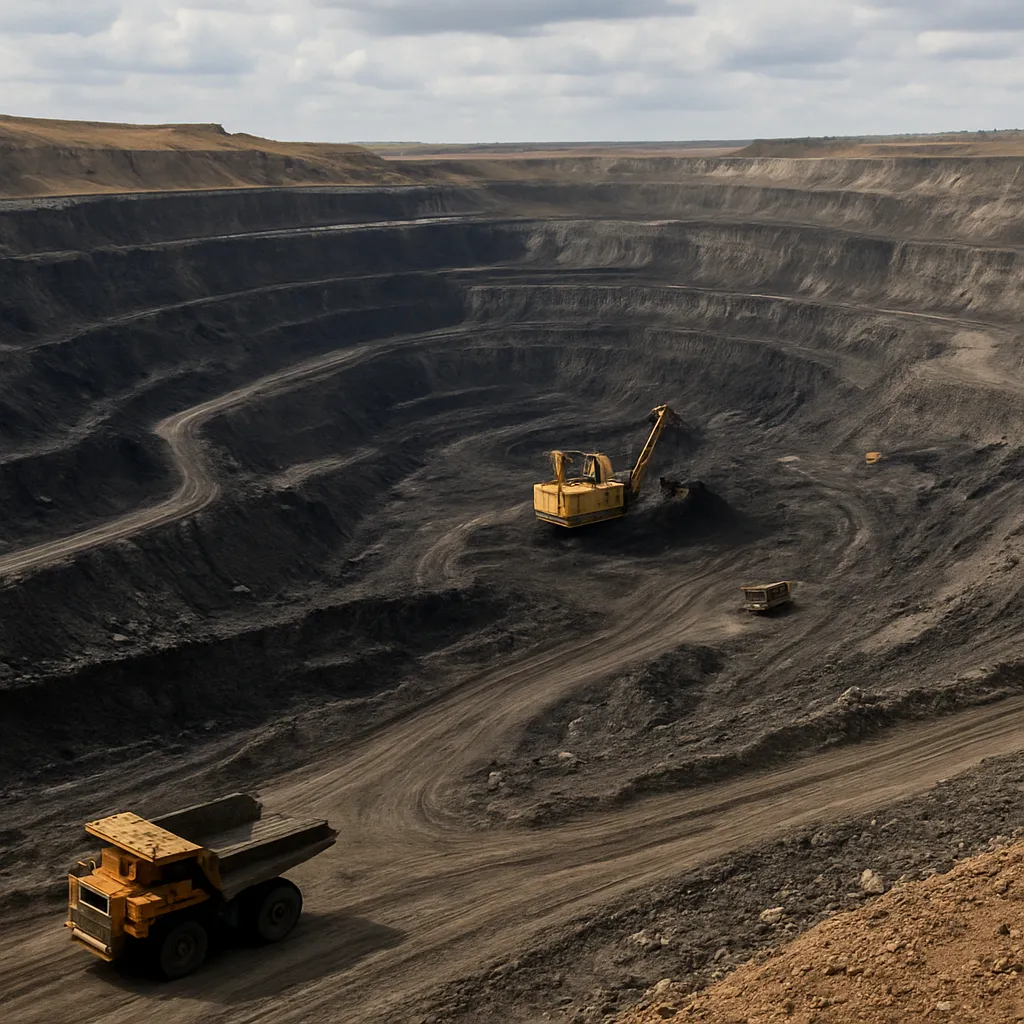
The Zhundong Coal Field in northwestern China is one of the country’s most discussed and strategically important coal provinces. Located in the eastern part of the Junggar (Dzungarian) Basin in Xinjiang, Zhundong has attracted attention for its vast reserves, development potential for power generation and coal-chemical projects, and its role in China’s energy and industrial planning. This article provides an overview of where Zhundong is found, what types of coal occur there, economic and statistical information where available, the field’s industrial significance, environmental and social implications, and the outlook for future exploitation and infrastructure.
Location, geology and discovery
The Zhundong Coal Field (准东煤田, often referred to simply as Zhundong) is situated in eastern Junggar Basin in northern Xinjiang Uygur Autonomous Region. The basin itself is a broad interior basin bounded by mountain ranges; Zhundong occupies part of its eastern margin and the surrounding plains. The coal-bearing sequences in the basin were recognized and explored more intensively in the late 20th and early 21st centuries as geological surveys and national resource mapping expanded into western China.
Geologically, the coal-bearing strata in the Junggar Basin are part of multi-layered sedimentary sequences deposited in inland basins through the late Paleozoic to Mesozoic. While precise stratigraphic details vary across the basin, the Zhundong area contains multiple coal seams at different depths and of different ranks. Reports characterise the coal as ranging from lower-rank sub-bituminous and bituminous types to higher-grade bituminous coals in some pockets, making the field suitable both for thermal power generation and — where higher-quality seams are present — for coking or metallurgical uses after appropriate processing.
Large-scale interest intensified in the 2000s and 2010s when national and provincial agencies, together with major state-owned coal companies, targeted Xinjiang as a key western coal base. The discovery and evaluation of Zhundong were promoted as part of national strategies to diversify energy supply, increase domestic coal self-sufficiency, and support west-to-east energy transport corridors.
Reserves, resources and quality
Zhundong is widely described in public and technical literature as one of China’s most extensive coal resource areas. Estimates reported in various geological surveys and media accounts place the total geological coal resources in the broader Zhundong area in the order of hundreds of billions of tonnes. A commonly cited figure in multiple summaries is roughly 300–400 billion tonnes of in-place coal resources; however, such numbers represent geological resources, not immediately recoverable reserves.
Recoverable and economically viable reserves are significantly lower than geological totals. Conservative assessments used in planning and commercial feasibility normally reduce geological figures by factors reflecting depth, seam continuity, mining conditions, environmental constraints, and economic parameters. Published planning documents and project appraisals generally present recoverable reserves for large-scale development measured in the tens of billions of tonnes rather than hundreds of billions.
Coal quality across Zhundong is heterogeneous. Key aspects include:
- Rank: predominantly bituminous and sub-bituminous types in many seams; some seams may be of higher metallurgical quality depending on local geology.
- Ash and sulphur: ash content varies by seam and requires beneficiation for high-value uses; sulphur tends to be moderate but must be managed for environmental compliance.
- Moisture and volatile matter: lower-rank seams display higher moisture/volatile content, which affects heating value and transport economics.
Mining operations, companies and scale of production
Development of Zhundong has involved multiple actors: central state-owned enterprises, provincial and local mining companies, and sometimes joint ventures combining national capital with local partners. The Xinjiang regional government, motivated by economic development and energy security goals, has facilitated exploration and the issuance of mining rights and infrastructure investment. Major state coal groups have shown interest in building integrated mines and linking them with power stations and coal-to-chemical projects.
Production from Zhundong has been ramping up incrementally as new mines move from exploration into commercial output. Planned and operational mine capacities in the region are typically in the millions of tonnes per annum (Mtpa) for individual mines; the aggregate annual output of the Zhundong area as a whole is designed to reach tens of millions of tonnes annually as development matures. Exact annual production figures fluctuate with project commissioning schedules, market demand, and regulatory approvals.
Besides conventional surface and underground mining, the Zhundong region is also the focus of projects for coal conversion (coal-to-liquids, coal-to-chemicals) and value-added processing. These downstream projects are intended to convert raw coal into higher-value products that can be used domestically or exported, creating integrated industrial clusters around mining hubs.
Economic and industrial significance
Zhundong plays several interlinked economic roles:
- Energy security: as a large domestic coal source, Zhundong contributes to China’s strategy of ensuring stable coal supplies for power generation, especially during seasonal peaks in demand.
- Industrial feedstock: higher-grade seams support metallurgical and chemical industries when beneficiated or converted, contributing to steelmaking feed and downstream chemical production.
- Regional development: investment in mines, railways, power plants and processing facilities generates employment, infrastructure spending, and local GDP growth in Xinjiang.
- Trade and logistics: coal transported from Zhundong supports coal-hungry industrial centers elsewhere in China; export potential exists but is constrained by transport economics and international competition.
From a macroeconomic viewpoint, integrating Zhundong into national supply chains reduces reliance on coastal or northern coal basins and helps diversify the geographic distribution of extraction. The capital-intensive nature of large mines and downstream projects has also attracted substantial fixed investment, which feeds provincial construction sectors and service industries.
Infrastructure and logistics
One of the keys to unlocking Zhundong’s value is transport and power infrastructure. Because Zhundong is inland and remote relative to major industrial centers, rail links, roads, and power transmission lines have been priorities for planners:
- Rail: heavy-haul rail is the principal cost-effective mode for transporting bulk coal long distances. New or upgraded railway connections that tie the Zhundong area into national trunk lines enable shipments to eastern and southern provinces.
- Roads and local logistics: feeder roads, mine access routes and internal haul systems are necessary for day-to-day operations.
- Power transmission: large coal-fired power plants in or near the coalfield require grid connections to move electricity out of Xinjiang to demand centers.
- Processing and conversion facilities: on-site or near-field beneficiation, gasification, or liquefaction plants reduce transport of raw coal and enable higher value product flows.
Investor and government documents emphasise that without coordinated investment in these systems, many of the region’s reserves would remain stranded and uneconomic to develop.
Environmental, social and regulatory considerations
Mining in an arid and ecologically fragile region such as eastern Xinjiang presents multiple challenges:
- Water scarcity: large-scale mining and coal conversion are water-intensive. In a region where water resources are limited, competition between industrial, agricultural and community needs requires strict management and potential technological solutions (e.g., water recycling, seawater desalination if economically justifiable at distance, or water-saving mining methods).
- Air quality and emissions: dust, particulate matter, and greenhouse gas emissions from mining, transport and coal combustion are of concern. Advanced dust suppression, high-efficiency combustion, and emission controls are required to meet national environmental standards.
- Land disturbance and reclamation: open-pit operations and associated infrastructure alter landscapes and require restoration plans and compensation mechanisms.
- Socioeconomic impacts: mining can bring jobs and improved services but can also trigger displacement, cultural impacts on local communities, and changes to traditional land use.
Regulatory oversight by central and regional authorities has tightened in recent years, with more emphasis on environmental impact assessments, stricter emissions targets, and conditional approvals for large coal chemical projects. These regulations shape the pace and design of Zhundong developments.
Coalbed methane and alternative resource potential
Coalfields often host significant quantities of coalbed methane (CBM), and Zhundong is no exception. CBM offers both energy value and an environmental benefit by recovering methane that would otherwise vent to the atmosphere. Exploration and pilot projects for CBM extraction have been proposed or implemented in many Chinese coalfields as part of broader resource utilisation strategies.
Additionally, the coal-to-chemicals and coal-to-liquids pathways explored around Zhundong are part of a national push to use abundant coal resources as feedstock when domestic oil and gas are limited, though these processes bring high carbon intensity unless paired with carbon capture and storage (CCS) or other mitigation strategies.
Statistics, estimates and data uncertainties
Because Zhundong spans a large area and has been subject to multiple rounds of exploration, different sources report varying numbers for resources and reserves. Key points to keep in mind:
- Geological resource estimates often cited for the Zhundong region are in the order of a few hundred billion tonnes (commonly referenced ranges around 300–400 billion tonnes), but such figures include all identified coal in place, irrespective of depth or mining feasibility.
- Economically recoverable reserves are much smaller and typically estimated in planning documents at tens of billions of tonnes. The exact recoverable figure depends strongly on assumed price trajectories, technological improvements (e.g., deeper mining, improved beneficiation), and environmental constraints.
- Annual production targets for the whole Zhundong area have been discussed in the range of several tens of millions of tonnes per year when major projects are fully operational. Individual modern open-pit operations commonly aim for single-digit to low double-digit Mtpa capacities.
- Employment and investment figures likewise vary by project: large integrated developments (mining plus processing plus power) may involve capital expenditures of several billion RMB each and support thousands of direct and indirect jobs during construction and operation phases.
Role in China’s energy transition and policy context
Zhundong sits at a policy crossroads. On one hand, China has long sought to secure domestic coal supplies to fuel industry and power systems; Zhundong contributes directly to this objective. On the other hand, China’s commitments to peak carbon emissions and to reach carbon neutrality by mid-century require a rethinking of coal use. This leads to several competing dynamics:
- Short-to-medium term: coal remains central to energy security and industrial feedstock needs, so Zhundong development is promoted under controlled and regulated conditions to ensure reliable supply.
- Long-term: pressure to decarbonise will push developers and regulators to consider technologies such as high-efficiency low-emission (HELE) power plants, carbon capture, utilisation and storage (CCUS) on coal-based chemical projects, and greater emphasis on methane recovery to reduce greenhouse gas emissions.
- Balancing regional development and national climate goals requires careful project selection, rigorous environmental controls, and strategies to ramp up low-carbon investments in parallel with any remaining coal-based expansions.
Interesting facts and developments
Several noteworthy aspects of Zhundong include:
- Strategic location: Zhundong’s position in Xinjiang connects it to China’s Western Development initiatives and potential export corridors to Central Asia when geopolitics and markets allow.
- Integrated industrial parks: planners have envisaged coal-mining zones linked to power plants, chemical processing and steelmaking inputs — an integrated approach aimed at maximising local value-added.
- Technology demonstration: some projects around Zhundong have served as pilots for large-scale coal conversion, CBM extraction and water-saving mining practices in arid regions.
- Contested arithmetic: widely cited large resource numbers have spurred debate among analysts about how much of Zhundong is genuinely accessible or economically extractable without significant environmental cost.
Challenges and the outlook
Key challenges that will shape Zhundong’s future include:
- Environmental constraints and water availability in an arid region; technology and policy must align to protect scarce resources.
- Market dynamics: demand for coal for power and industry will shift according to China’s decarbonisation pace, global energy prices, and competitiveness of alternatives.
- Infrastructure financing: large upfront capital is needed to build rail, power lines and conversion plants; securing financing is linked to long-term commodity price expectations and government support.
- Regulatory risk: tighter emissions and land-use policies could restrict or reshape project designs, particularly for coal-to-chemical ventures with high CO2 intensity.
However, Zhundong’s enormous geological potential, its role in regional economic plans, and investments already made in infrastructure mean it will likely remain an active focus for coal and associated industries for at least the next decade. The exact scale and nature of that activity will depend on how economic, environmental and political factors converge.
Conclusion
The Zhundong Coal Field is a major element of China’s coal resource landscape. Rich in geological reserves and located in the strategically important Xinjiang region, Zhundong offers substantial potential to supply coal for power generation, industrial feedstock and conversion to chemicals and fuels. At the same time, its development raises important environmental, water-resource and social considerations that require rigorous planning and technology choices. Reported geological resource figures are large — commonly cited in the hundreds of billions of tonnes — but economically recoverable quantities are substantially smaller and subject to market, regulatory and technical constraints. How China balances the short-term imperatives of energy security and regional development with long-term decarbonisation commitments will determine the ultimate trajectory of Zhundong’s role in the nation’s energy and industrial landscape.