The following article provides a detailed overview of the Yimin Mine in China, addressing its location, geology, operational profile, economic and social significance, environmental and safety considerations, and future prospects. Where mine-specific public data are limited, the discussion places Yimin within the broader context of Chinese coal mining to give a clear picture of its likely role and impact. The text highlights the most important concepts with bold emphasis to guide readers through key points.
Location, Geological Setting and Mineral Characteristics
The Yimin Mine is one of several coal mining sites in the northern regions of China. Its exact administrative placement is typically reported within a northern province or autonomous region known for large-scale coal basins; mines with the Yimin name have been associated in the public record with areas that include parts of Inner Mongolia and neighbouring provinces. These territories are part of China’s major coal-producing belts, which host extensive Permian to Cenozoic coal-bearing formations.
Geologically, the coal seams exploited at the Yimin Mine are most commonly characterized as thermal coals—ranging from sub-bituminous to bituminous rank—suitable primarily for electricity generation and certain industrial heating applications. The stratigraphy typically includes interbedded sandstones, siltstones and mudstones, with occasional roof and floor aquifers that affect mining design. Coal quality factors such as calorific value, moisture, ash content and sulfur vary between beds; many northern Chinese seams are relatively low in sulfur but may have variable ash levels, influencing processing and market uses.
Mining Methods, Infrastructure and Operations
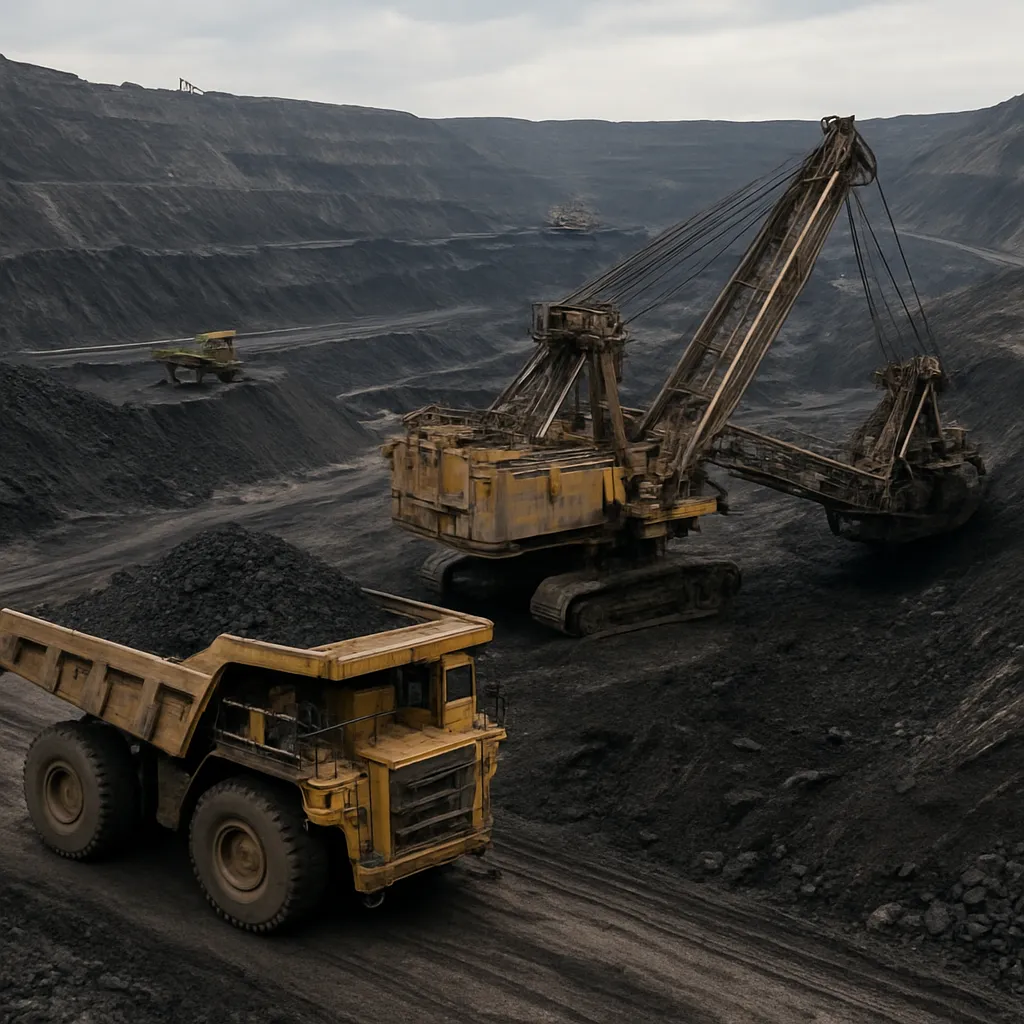
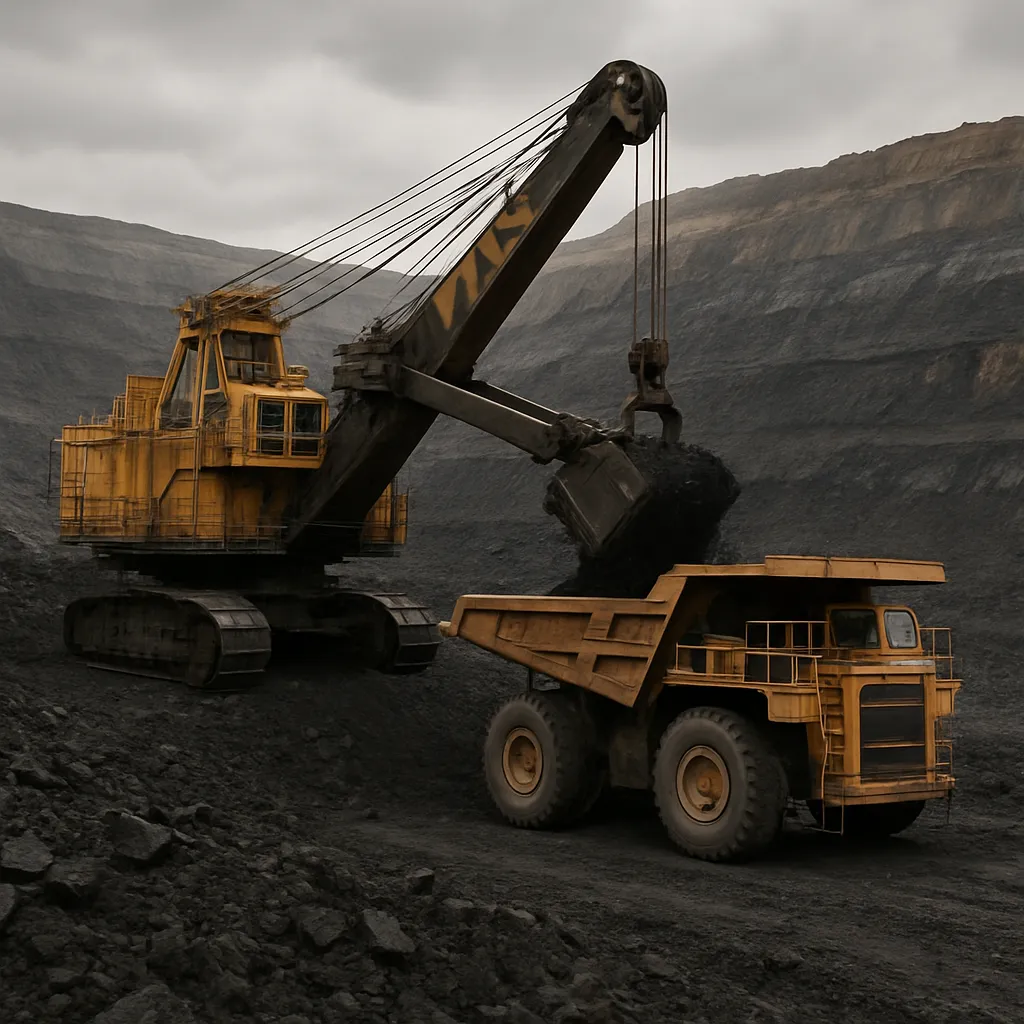
Yimin Mine employs conventional surface or underground mining methods depending on local seam depth and thickness. In many northern Chinese coalfields, large-scale open-pit operations are common where seams are shallow and laterally extensive, while deeper seams are exploited by longwall or room-and-pillar underground techniques. The mine’s infrastructure typically includes:
- processing facilities such as wash plants to reduce ash and improve calorific value;
- rail and road links for coal dispatch to power plants and industrial consumers;
- on-site maintenance yards and heavy equipment fleets (shovels, draglines, longwall shearers, conveyors);
- support buildings for administration, safety, and worker accommodation.
Operational priorities include maximizing safe recoverable reserves, stabilizing production rates, and meeting contractual coal quality specifications for domestic power utilities and industrial clients. Typical modern mines in the region pursue incremental mechanization to improve productivity and reduce labor intensity while complying with evolving regulatory standards.
Economic Role and Regional Significance
The economic importance of the Yimin Mine extends beyond raw coal extraction. At a local and regional level, the mine contributes directly through employment, procurement of goods and services, and tax and royalty payments to municipal and provincial budgets. Indirectly, coal from Yimin fuels thermal power plants that provide electricity for households, manufacturing, and resource processing, thereby underpinning broader economic activity.
In national terms, even medium-sized mines in China play a role in energy security by contributing to a diversified supply base; coal remains a major component of China’s energy mix, particularly for base-load electricity generation and heavy industry. Therefore, the output from mines like Yimin helps stabilize fuel supply to nearby power stations and industrial hubs, reducing reliance on long-distance transport.
Employment, Community and Social Impact
A typical mine of this scale supports a workforce that spans mining, processing, maintenance, logistics and administrative functions. The presence of the mine often leads to the development of auxiliary services—housing, retail, healthcare and education—which alters the socio-economic profile of adjacent towns. Local government strategies frequently emphasize maximizing local employment and vocational training to increase the proportion of local residents in the workforce.
However, mining towns also face challenges: dependency on a single industry, cyclical employment patterns tied to coal prices and demand, and the need to plan for eventual mine closure and economic transition. Progressive operators and regional planners increasingly invest in diversification programs and environmental rehabilitation to mitigate these longer-term risks.
Production, Reserves and Statistics — Available Data and Context
Publicly accessible, mine-specific statistics for Yimin Mine—such as precise annual tonnage, proven reserves and long-term contractual commitments—are variable in availability. Many Chinese mines publish output in corporate or government reports, but smaller or locally operated mines may have limited transparent reporting. Broad contextual points that help interpret available data include:
- China’s overall coal production represents the largest share of global output, and regional basins in the north and northeast contribute significant portions of national supply.
- Modern mid-to-large mining complexes in northern China commonly produce in the range of a few million to tens of millions of tonnes per year, depending on scale and mechanization levels.
- Reserve estimates for a specific mine depend on geological surveys and reporting classification (proven, probable, inferred). Many operations invest in periodic resource re-evaluation to guide long-term planning.
Without definitive contemporary figures for Yimin Mine in the public domain, it is prudent to treat any single-number claims with caution. Industry directories, regional statistical yearbooks, and company reports are the primary sources for reliable mine-level statistics and should be consulted for precise figures.
Environmental Management and Regulatory Compliance
Environmental management is a central concern for mining operations across China, including mines like Yimin. Key environmental issues include:
- air emissions (dust, particulate matter) from mining and transport;
- water management (dewatering of workings, treatment of mine water to control salinity and contaminants);
- tailings and waste rock disposal, and associated acid mine drainage risks where sulfide minerals are present;
- land disturbance and habitat fragmentation requiring progressive reclamation.
Regulatory pressures at both national and provincial levels have tightened over recent years, requiring operators to adopt pollution control technologies, rehabilitate disturbed land, and report environmental performance. Typical mitigation measures at modern sites include dust suppression systems, wastewater treatment facilities, progressive backfilling and revegetation programs, and continuous monitoring of air and water quality.
Health, Safety and Risk Management
Mining safety remains a top operational priority. Modern mines apply layers of engineering controls, monitoring, and administrative procedures to mitigate hazards such as roof collapse, methane gas accumulation, and heavy equipment accidents. Practices include:
- geotechnical monitoring and ground support systems in underground operations;
- ventilation management and gas drainage to control methane;
- real-time equipment diagnostics and collision-avoidance systems for surface fleets;
- rigorous training programs, emergency preparedness drills and safety audits.
Regulatory enforcement and corporate safety culture significantly influence incident rates. Many operators report steady improvements in lost-time incident metrics as mechanization and digital monitoring expand across the sector.
Market Dynamics and Value Chain Integration
Coal from Yimin Mine is integrated into regional value chains that include power generation companies, industrial users (steel, cement, chemical), and, in some cases, coal trading markets. Market dynamics affecting the mine’s economics include:
- domestic power demand and seasonal demand cycles;
- coal quality premiums or discounts tied to calorific value, ash and sulfur content;
- logistics costs and availability of rail or port capacity;
- policy-driven shifts such as emissions standards that encourage a move to higher-quality coal or to alternative fuels.
Contract structures vary from long-term supply agreements with local utilities to spot sales to traders. Mines that can consistently deliver specified quality and reliability maintain stronger market positions.
Ownership, Governance and Corporate Structure
Mines named Yimin may be operated by state-owned enterprises, provincial mining groups or private companies. Ownership structure affects investment capacity, access to financing, and relationships with local authorities. State-backed operators often have better access to capital for mechanization, environmental upgrades and safety improvements, as well as stronger ties to state-controlled power purchasers.
Historical Development and Cultural Context
Many coalfields in northern China have histories that date back decades, often developing rapidly during eras of industrialization. Mines evolve through exploratory phases, infrastructure build-out, and subsequent modernization. The social fabric of mining communities reflects this history, with multi-generational employment in mining, local cultural practices tied to the industry, and a legacy of mine-related landmarks and institutions.
Future Prospects and Strategic Challenges
The medium-term outlook for a mine such as Yimin is shaped by both local geology and broader energy trends. Key future-facing considerations include:
- the pace of national and regional energy transitions that could moderate long-term coal demand;
- investment in clean-coal technologies and emissions controls that sustain coal’s role in a lower-emissions energy system;
- technological adoption—automation, remote operations and digital monitoring—to boost productivity and safety;
- economic diversification of host communities to prepare for mine closure or reduced production scenarios.
Effective planning that combines operational efficiency, environmental stewardship and community development will determine how sustainably mines like Yimin can operate in coming decades.
Data Gaps, Research Needs and Where to Find More Information
While the overview above provides a comprehensive view, mine-specific numeric details such as current production, proven reserves, workforce size and precise ownership data may not always be available in public sources for Yimin Mine. For authoritative statistics and updates, the following sources are recommended:
- official provincial or municipal statistical yearbooks and energy bureaus;
- company annual reports and environmental impact assessments (EIAs) where the operator is publicly listed or regulated;
- industry publications, trade journals and academic studies focused on Chinese coal mining;
- international energy agencies and research institutes that publish country-level coal data and regional analyses.
Summary
The Yimin Mine plays a representative role within China’s vast coal mining sector: it is an energy-resource site that provides coal for power and industry, supports local economies through employment and fiscal flows, and confronts the contemporary challenges of environmental management and safety. While specific, up-to-date statistics for Yimin may require consultation of local or company reports, the mine’s operational and strategic context is clear—balancing the need to supply reliable energy with the imperatives of modernization, emissions control and community resilience. Continued attention to technological modernization, regulatory compliance and sustainable planning will shape the mine’s contribution to regional development and the broader energy system in the years ahead.