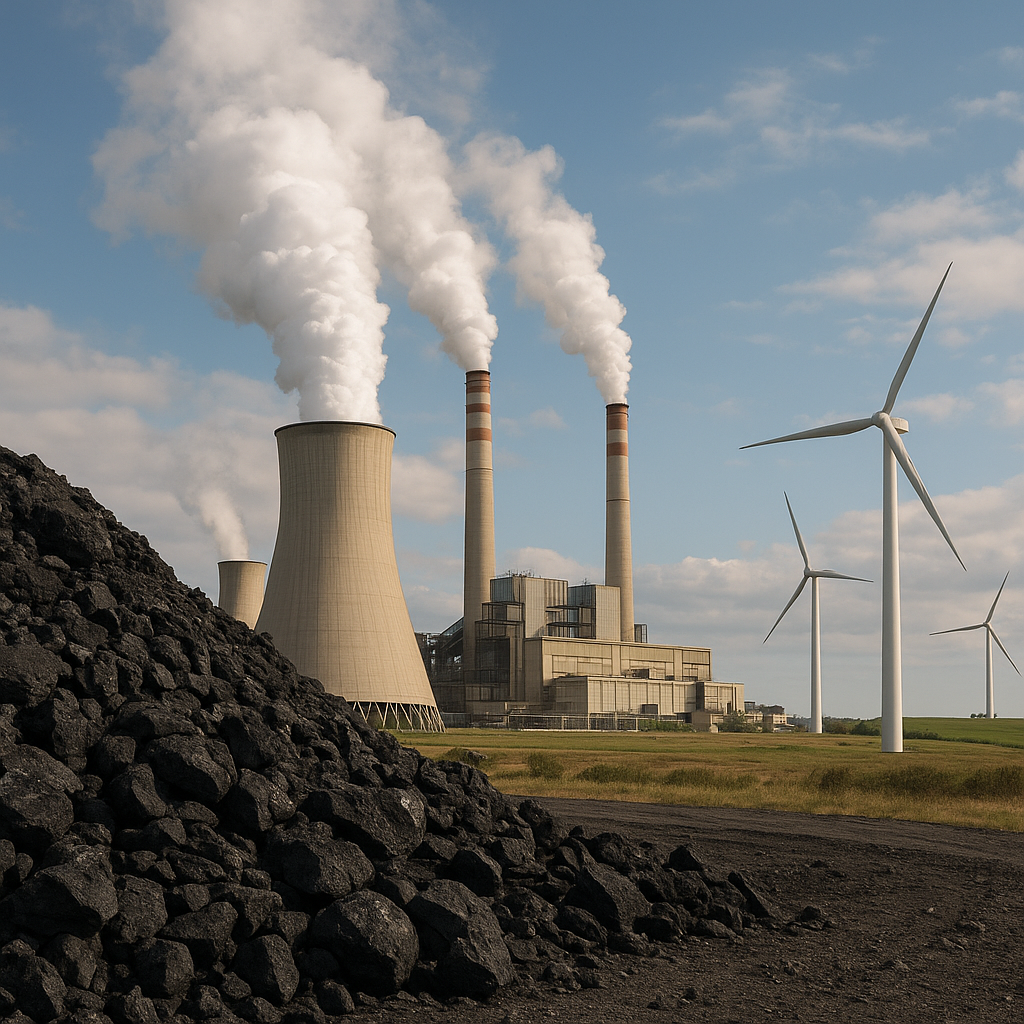
The global conversation around energy is undergoing a profound transformation, driven by the urgent need to mitigate climate change and reduce greenhouse gas emissions. Amid the push for cleaner alternatives, coal remains a contentious yet pivotal player. This article explores the evolving place of coal in the modern energy landscape, examines the performance of coal stocks in financial markets, and assesses strategies that reconcile traditional fuel sources with a decarbonizing world.
Energy Transition and the Role of Coal
The concept of an energy transition encompasses a shift from high-carbon fossil fuels toward low- and zero-carbon resources. While renewables like wind and solar have seen exponential growth, coal still accounts for a significant share of global electricity generation. Understanding coal’s role requires dissecting both its advantages and challenges.
Advantages of Coal
- Abundant reserves: Coal is one of the most plentiful fossil fuels, ensuring energy security for many nations.
- Reliability: Unlike intermittent solar or wind, coal-fired plants offer stable base-load power output.
- Economic impact: In coal-producing regions, mining and processing support jobs and local economies.
Challenges and Criticisms
- High carbon footprint: Coal combustion is one of the largest sources of CO2.
- Air quality concerns: Emissions of sulfur dioxide, nitrogen oxides, and particulates lead to health risks.
- Transition pressure: Governments face mounting regulation to phase out coal in favor of greener alternatives.
Production, Consumption, and Global Dynamics
Coal production and consumption are not uniformly distributed. Regions such as Asia-Pacific continue to rely heavily on coal-fired power, while Europe and North America have seen gradual declines.
Leading Producers and Consumers
- China: The world’s top producer and consumer, responsible for nearly half of global coal use.
- India: Rapidly growing demand due to industrialization and urbanization.
- United States and Australia: Major exporters, shaping global trade flows.
Market Forces and Price Volatility
Prices for coal can be volatile, influenced by factors such as shipping costs, geopolitical tensions, and weather patterns. For instance, cold winters or hot summers can spike electricity demand, driving up coal prices. Conversely, oversupply from new mines or weakened industrial activity can depress market values.
Coal Stocks: Market Trends and Investment Outlook
Investing in coal stocks encompasses both commodity traders and equity shares of mining companies. The outlook for these investments hinges on a complex interplay between regulatory developments, technological innovation, and shifting consumer preferences.
Key Investment Drivers
- Policy and Regulation: Emissions targets and carbon pricing mechanisms directly impact profitability.
- Technological Advances: Cleaner coal technologies—like carbon capture and storage—can extend the asset life of coal plants.
- Global Demand Shifts: Emerging economies may sustain or even grow coal consumption despite declines in developed markets.
Risks and Opportunities
Investors must weigh the following:
- Regulatory Risk: Stricter sustainability mandates can render coal assets stranded.
- Reputational Risk: Ethical investing trends may steer capital away from fossil fuel companies.
- Turnaround Potential: Consolidation in the sector and improved operational efficiency might restore resilience to select players.
Decarbonization Strategies and Future Pathways
A decarbonizing world raises the question: can coal coexist with net-zero goals? The answer may lie in a spectrum of hybrid solutions that leverage innovation and policy alignment.
Clean Coal Technologies
Also known as advanced fossil fuel methods, these technologies aim to reduce environmental impact.
- Carbon Capture, Utilization, and Storage (CCUS): Capturing CO2 emissions from power plants and either storing them underground or using them in industrial processes.
- Integrated Gasification Combined Cycle (IGCC): Converting coal into syngas to improve combustion efficiency and lower pollutant output.
- Coal Washing and Beneficiation: Removing impurities before combustion to minimize sulfur and ash content.
Policy Frameworks and Market Mechanisms
Governments and international bodies play a crucial role in guiding the transition away from unabated coal.
- Carbon Pricing: Establishing a cost for CO2 emissions, either through taxes or cap-and-trade systems, incentivizes cleaner alternatives.
- Subsidy Reforms: Redirecting subsidies from coal to renewable energy projects can accelerate market penetration for green technologies.
- Just Transition Strategies: Ensuring that coal-dependent communities receive funding for re-skilling and economic diversification.
Alternative Uses of Coal Resources
Innovative approaches may repurpose coal beyond power generation:
- Chemical Feedstocks: Coal can be processed into methanol or ammonia, supporting fertilizer and chemical industries.
- Graphene and Advanced Materials: Research is exploring coal-derived carbon nanomaterials with applications in electronics and manufacturing.
- Hydrogen Production: Coal gasification coupled with CCUS to produce ‘blue hydrogen’ as a low-carbon energy carrier.
Conclusion
The future role of coal in a decarbonizing world is neither fixed nor monolithic. While traditional coal power may wane in many regions, the resource continues to support energy security, economic livelihoods, and industrial processes. Investors in coal stocks face a landscape marked by regulatory hurdles and market uncertainty, but opportunities emerge where technology and policy intersect. Ultimately, a balanced strategy that integrates sustainability, innovation, and pragmatism could shape a pathway where coal contributes to—and does not impede—the global decarbonization agenda.