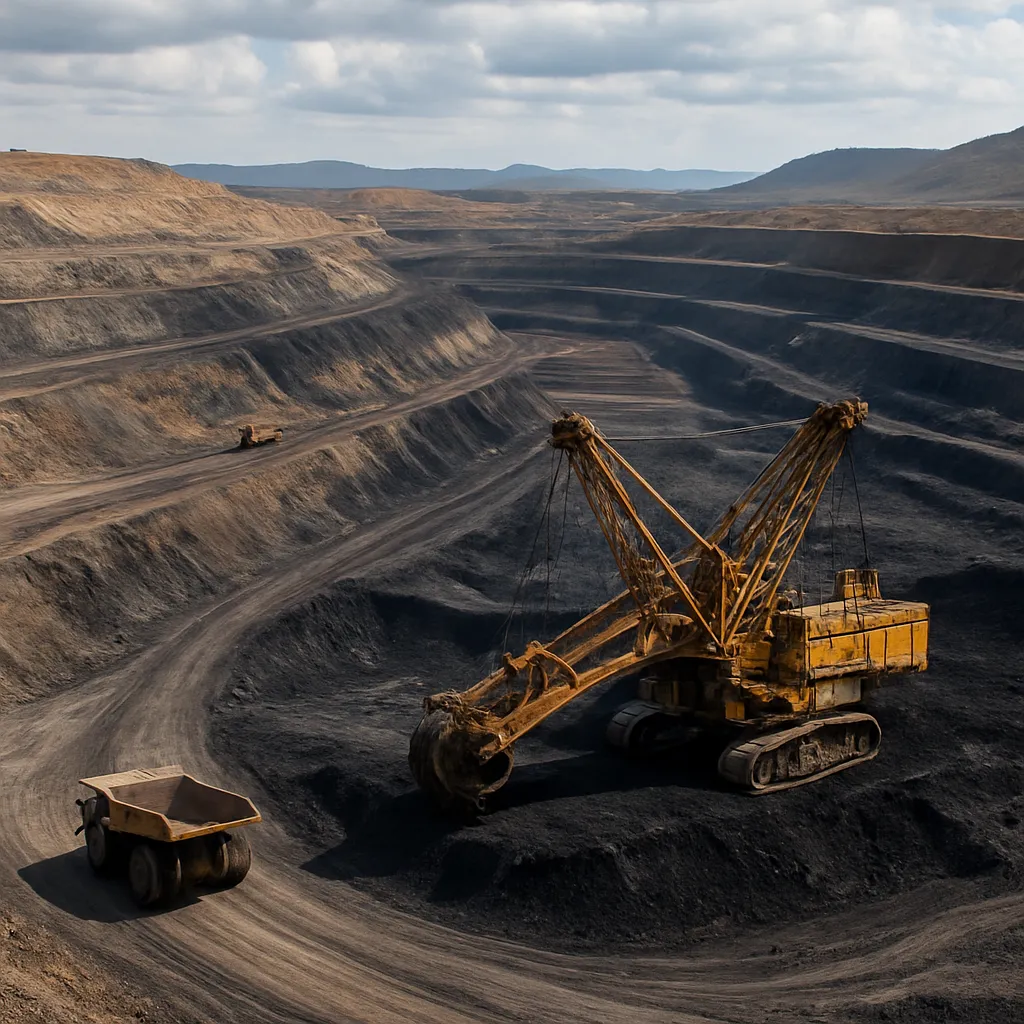
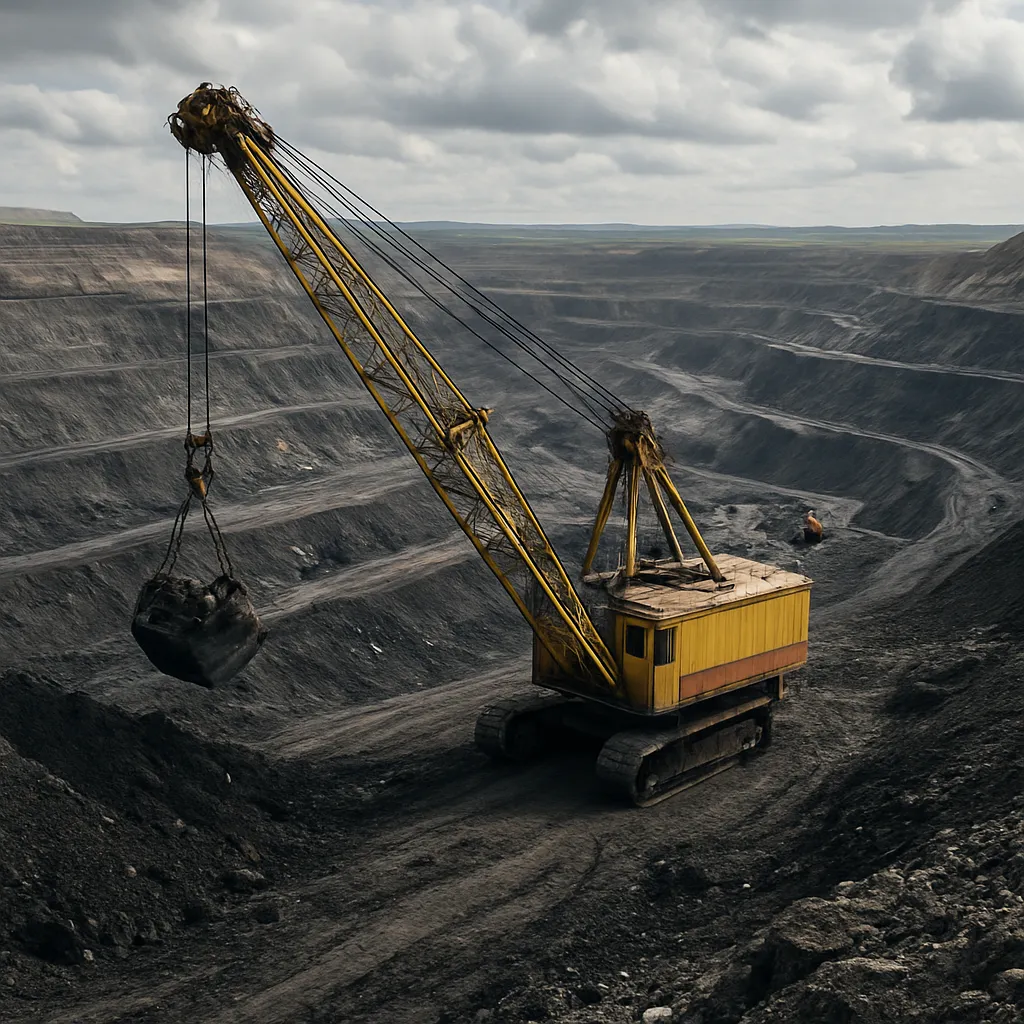
The Goonyella Riverside Mine is one of Australia’s prominent coal operations located in the heart of the Bowen Basin. This article provides a comprehensive overview of the mine’s location, geology, types of coal produced, operational history, economic and statistical data, logistical connections, environmental practices and its role within both the Australian and global coal industries. The mine combines large-scale underground mining techniques with integrated rail and port logistics to supply key export markets with high-quality coal used primarily in steelmaking and power generation.
Location, geology and mine design
Situated in central Queensland, the Goonyella Riverside complex is located near the town of Moranbah within the Bowen Basin, one of Australia’s most important coal-bearing provinces. The Bowen Basin extends over tens of thousands of square kilometres and hosts numerous high-yield thermal and metallurgical coal deposits formed during the Permian period. Goonyella Riverside exploits multiple seams of high-quality coal that have favourable thickness, continuity and depth for large-scale underground extraction.
The mine operates predominantly as an underground longwall operation, a method chosen because it delivers high productivity and relatively low surface footprint compared with vast open-cut mines. Longwall mining at Goonyella Riverside targets contiguous, mechanically suitable seams that allow for the installation of longwall panels and the use of modern shearers and hydraulic roof supports. The geology of the area features structurally continuous coal seams with relatively stable roof conditions, although like all Bowen Basin operations the site requires detailed geological modelling and real-time monitoring to manage faulting, gas, and water inflows.
History, ownership and operations
Goonyella Riverside is operated by the BHP Mitsubishi Alliance (BMA), a long-standing joint venture between BHP and Mitsubishi. The BMA group runs several major mines in the Bowen Basin and has invested in continuous technology upgrades and infrastructure to maintain export capacity and product quality. The Goonyella Riverside complex evolved through expansions and integration of neighbouring assets, with development milestones including the transition to modern longwall fleets, automation of surface handling systems and improvements in rail loading and logistics.
The mine’s workforce comprises a mix of direct employees and contract personnel, and staffing levels vary with production cycles and capital projects. Goonyella Riverside has historically been an important local employer, contributing to the regional economy both through direct wages and the support of local services, suppliers and contractors.
Coal types, quality and end uses
Goonyella Riverside is principally known for producing high-grade metallurgical coal, commonly referred to as coking coal, and pulverized coal injection (PCI) grades. These coals are prized by steelmakers because they convert into coke with strong structural properties, are low in ash and sulfur, and display favourable caking characteristics. The mine’s product suite typically includes:
- Hard coking coal used in blast furnace coke ovens for primary steel production.
- PCI coal used to reduce coke consumption in modern blast furnaces by injection directly into the furnace hearth.
- Lower-rank thermal coal blends for power stations in selected markets (produced or blended depending on contracts and market demand).
Typical quality metrics for high-grade metallurgical coal include low ash content (often below 10-12% on an air-dried basis), low sulfur (generally under 1%), and strong vitrinite reflectance and coking response. These characteristics help Goonyella Riverside coal command premium prices in international markets that rely on consistent coke performance, such as Japan, South Korea and Taiwan, as well as steelmakers in China and other industrialising nations.
Production, reserves and statistical overview
Goonyella Riverside is a significant producing mine within the Bowen Basin. While specific figures change over time with production plans, capital projects and market conditions, the mine has historically delivered annual production in the range of several million tonnes. Recent operational outputs have typically been in the ballpark of around 10–12 million tonnes per annum (Mtpa) of saleable coal, including both metallurgical and PCI grades, though annual production can vary depending on longwall panel sequencing, maintenance shutdowns and market-driven adjustments.
Reserves and resources at Goonyella Riverside are substantial, with combined measured, indicated and inferred resources running into the hundreds of millions of tonnes. Proven and probable reserves support ongoing mining for multiple decades under current operating assumptions and long-term mine plans. These reserves are reported under standard industry classifications and regularly updated to reflect mining progress, exploration outcomes, seam modelling and economic factors.
From a broader perspective, the Bowen Basin—and Queensland as a whole—plays a dominant role in Australia’s coal export industry. Australia is among the world’s largest exporters of metallurgical coal, and mines like Goonyella Riverside contribute materially to export tonnages, export revenues and regional employment. Key statistical highlights associated with operations of this scale include:
- Annual export tonnage contribution to Queensland’s total coal exports.
- Direct and indirect employment generating significant regional economic activity.
- Royalty and tax payments to Queensland and Australian governments, as well as producer capital investment into infrastructure.
Logistics, rail and port connections
Efficient logistics are a cornerstone of Goonyella Riverside’s business model. Coal is transported from the mine to coastal export terminals via an integrated rail network. The site utilises the dedicated Goonyella rail corridor, which connects Bowen Basin mines to the Hay Point/Dalrymple Bay coal export facilities, among other port options.
Dalrymple Bay Coal Terminal (DBCT) and associated port infrastructure at Hay Point are major export gateways, equipped to handle large-capacity vessels and to blend and stockpile multiple coal products. Rail haulage and load-out systems at Goonyella Riverside are designed to supply consistent product specifications for export, with on-site coal handling and washing processes ensuring quality control before shipping.
Market destinations and economic significance
The bulk of Goonyella Riverside coal is destined for international steelmakers and industrial consumers in East and Southeast Asia. Prominent markets include Japan, South Korea, China, Taiwan and increasingly diverse markets in Southeast Asia and India, depending on global demand and contract structures. Metallurgical coal prices have historically been cyclical, closely tied to global steel demand, inventory levels, and alternative supply sources; mines like Goonyella Riverside are therefore economically sensitive to macroeconomic conditions and industrial policy in major steel-producing countries.
At the regional level, the mine’s economic significance is reflected through:
- Direct employment in mining operations and indirect employment across supply chains (transport, services, equipment suppliers).
- Payments of royalties and taxes that fund public services in Queensland.
- Capital investment in local infrastructure (roads, housing, community projects), often driven by the needs of a fly-in fly-out (FIFO) workforce and regional growth.
Environmental management and community engagement
Like all modern Australian coal operations, Goonyella Riverside implements a suite of environmental management measures to reduce impacts and comply with regulatory frameworks. Major areas of focus include:
- Water management: active monitoring, treatment and controlled discharge practices to protect surface and groundwater quality.
- Land rehabilitation: progressive rehabilitation of disturbed areas, replacement of topsoil and re-establishment of vegetation to promote biodiversity recovery.
- Air quality and dust control: use of water sprays, enclosed conveyors, and dust suppression at loading points to mitigate particulate emissions.
- Methane and gas management: monitoring and capture systems where practicable to reduce greenhouse gas emissions associated with underground mining.
- Noise and amenity: design and scheduling measures to minimise disruption to nearby communities.
Community engagement is also a key element of the mine’s social license to operate. The mine supports local community projects, invests in training and local procurement where possible, and engages with Indigenous stakeholders regarding land access and cultural heritage protection. BMA and its contractors typically implement community benefit programs and employment initiatives aimed at supporting small businesses and workforce development in mining towns such as Moranbah.
Safety, technology and operational innovation
Safety is central to operations at Goonyella Riverside. The mine utilises modern longwall equipment, remote monitoring and automation to reduce exposure of workers to hazardous conditions. Key technology and innovation themes include:
- Automation of longwall shearer and roof support systems to improve productivity and safety.
- Real-time geotechnical monitoring to manage ground conditions and mitigate operational risks.
- Improved fleet management for underground mobile equipment, with telematics and predictive maintenance to reduce downtime.
- Use of sophisticated coal quality measurement systems (e.g., online ash monitors) to ensure consistent product specifications and minimize penalties at port and on shipment.
Continuous improvement programs and digital initiatives are commonly deployed to optimise mine sequencing, reduce costs and improve environmental outcomes. The adoption of predictive analytics and digital twins in mine planning has been accelerating across the Bowen Basin, including at Goonyella Riverside.
Challenges, market dynamics and future outlook
Goonyella Riverside operates within a complex and evolving market environment. Key challenges and factors influencing future operations include:
- Coal price volatility driven by global steel demand, substitution, and macroeconomic conditions.
- Competition from other metallurgical coal producers in Australia and overseas.
- Regulatory and social pressures related to greenhouse gas emissions, climate policy and the long-term transition of energy and industrial systems.
- Operational risks such as geological variability, equipment reliability, and workforce dynamics.
Despite these challenges, the demand for high-quality coking coal remains significant for integrated steel producers that rely on blast furnaces. As long as blast furnace steelmaking continues to represent a material share of global steel production, mines producing premium metallurgical coal like Goonyella Riverside are expected to retain strategic importance. At the same time, the industry is adapting by investing in emissions reduction, improving efficiency, and exploring market diversification for lower-emissions steelmaking pathways.
Interesting facts and broader industry context
Several points highlight the broader significance and some interesting aspects of the Goonyella Riverside operation:
- Goonyella Riverside is part of a clustered mining region where multiple operations share rail, port and service infrastructure—this aggregation improves logistical efficiency and enables economies of scale.
- The name “Goonyella” is used for the regional rail corridor that connects Bowen Basin operations to export terminals, demonstrating how geological nomenclature can be tied to industrial infrastructure.
- Longwall mining at this site showcases how advanced underground mining techniques can produce large volumes of coal while limiting the surface footprint compared with equivalent open-cut operations.
- Goonyella Riverside coal is an example of an Australian metallurgical coal product that supports global steel production chains and therefore plays a role in international industrial value chains.
Summary
Goonyella Riverside is a major metallurgical coal complex in Queensland’s Bowen Basin, producing high-quality coking coal and PCI grades for export markets. Operated by the BHP Mitsubishi Alliance (BMA), the mine uses modern longwall underground techniques, integrated rail logistics via the Goonyella rail corridor, and port services at Hay Point/Dalrymple Bay to move coal to key customers in Asia and beyond. With substantial reserves, multi-million-tonne annual production capacity, and ongoing investments in technology, safety and environmental management, Goonyella Riverside remains strategically important within Australia’s coal industry and the global metallurgical coal market.