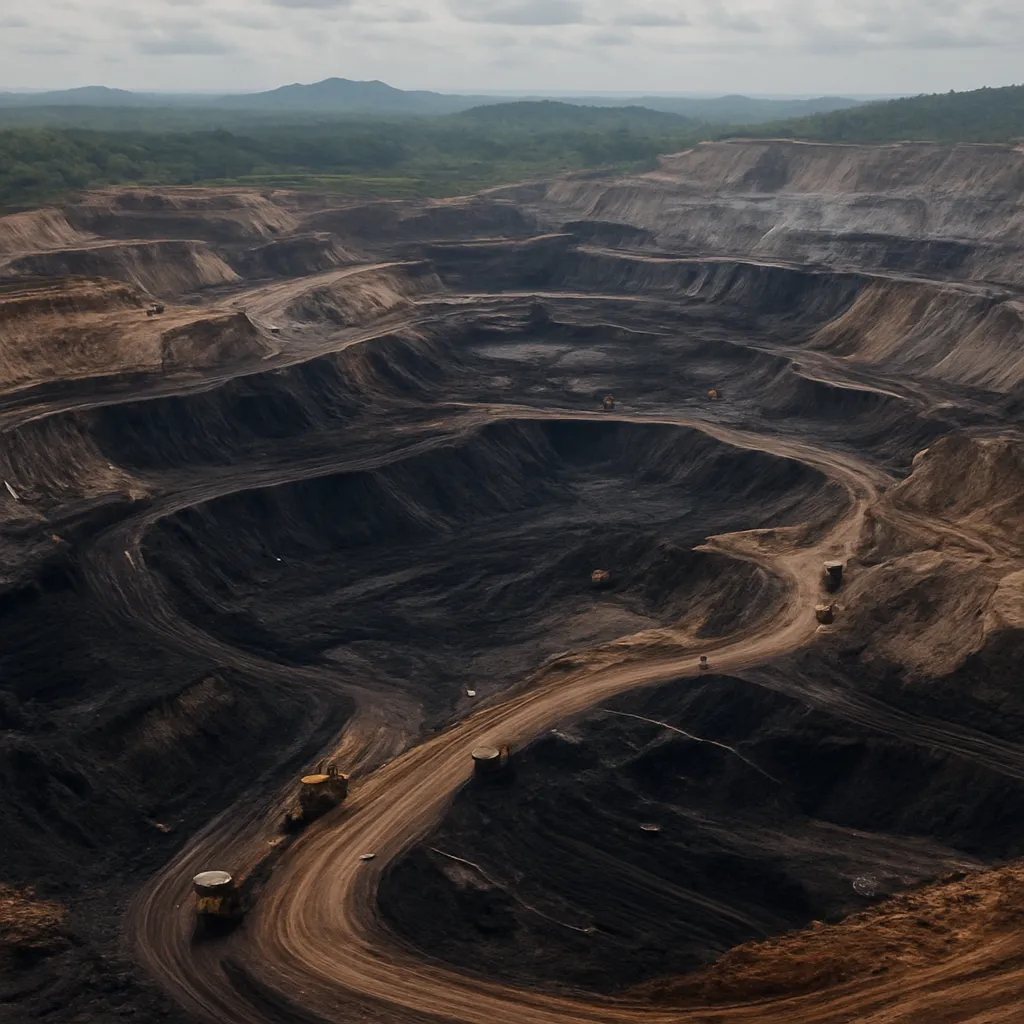
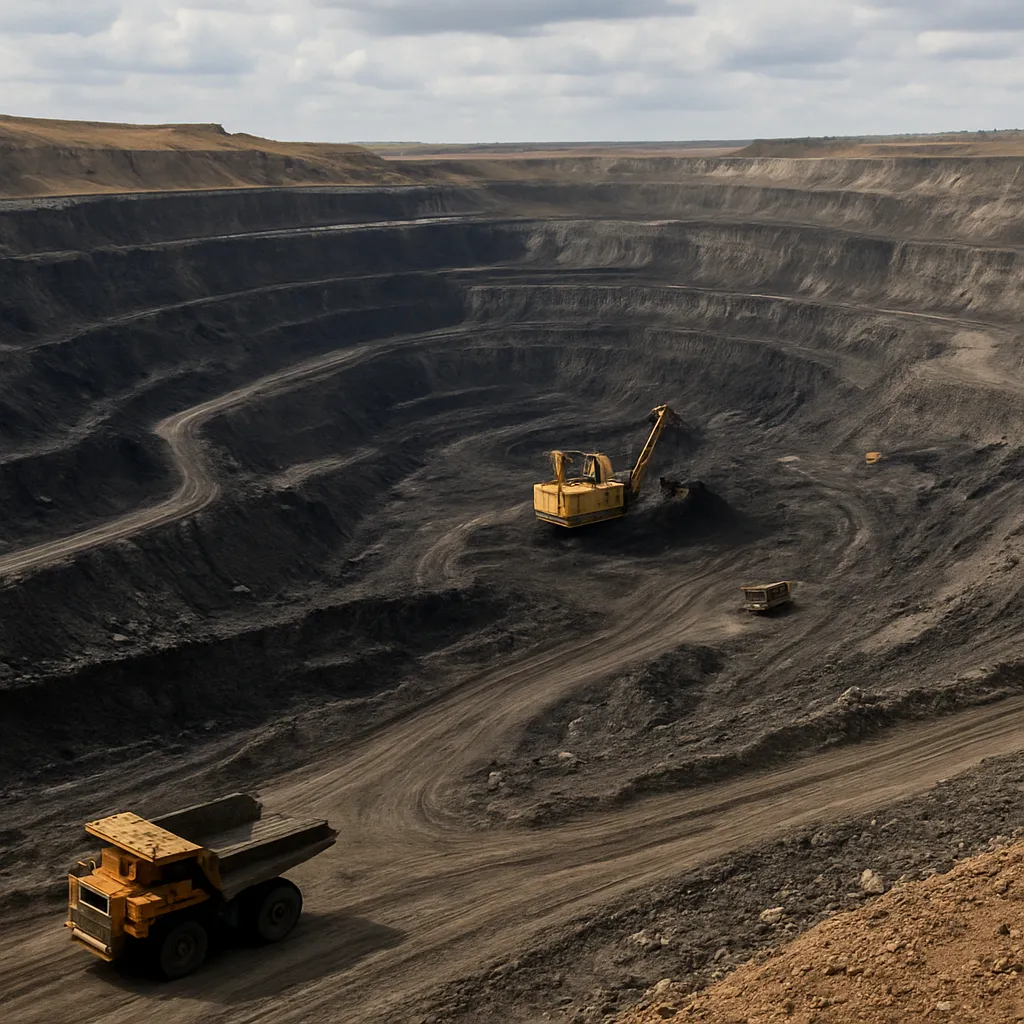
The Black Thunder Mine is one of the most prominent coal mining operations in the United States, located in the heart of the Powder River Basin. This article provides a comprehensive look at the mine’s location and geology, the type and quality of coal it produces, operational methods, its economic and industrial importance, environmental management and reclamation practices, and the challenges and prospects it faces in a changing energy landscape. The goal is to give a balanced, factual overview of why Black Thunder remains a key asset in American coal production and how it fits into broader regional and national energy systems.
Overview and Location
The Black Thunder Mine sits in northeastern Wyoming, within the larger and highly productive Powder River Basin (PRB). The PRB stretches across parts of northeast Wyoming and southeast Montana and is globally known for vast, relatively shallow coal deposits that have driven large-scale surface mining. Black Thunder is positioned near the community of Wright in Campbell County and is accessible to major rail corridors that connect coalfields to power plants across the United States.
As a large-scale surface operation, Black Thunder occupies an extensive footprint of land, with contiguous mine pits, overburden storage areas, coal processing and loadout facilities, maintenance yards, and associated infrastructure. The strategic location in the PRB gives the mine access to some of the most economical and logistically efficient coal transport routes in the nation, particularly via unit trains that carry coal to electric utilities throughout the Midwest and West.
Geology and Coal Characteristics
Coal from Black Thunder is part of the PRB’s widespread coal seams, mainly from the Fort Union Formation. The coal is classified as sub-bituminous, which is a lower-rank coal compared with bituminous and anthracite types. Key physical and chemical characteristics of PRB coal typically include:
- Low sulfur content, making it attractive for power plants needing to meet sulfur dioxide (SO2) emissions limits without extensive flue gas desulfurization.
- Relatively low energy density per ton compared with higher-rank coals — PRB sub-bituminous coal commonly has lower Btu content per pound due to higher moisture content.
- High moisture and volatility compared with bituminous coal, which affects transport economics (more tons required per unit of energy) but often remains cost-competitive because of large seam continuity and ease of extraction.
- Generally uniform seam thickness over large areas, facilitating mechanized, high-volume surface mining.
The combination of low sulfur and consistent seam geometry has made PRB coal — including that from Black Thunder — a preferred fuel for many electricity-generating plants in the United States, especially after stricter air quality regulations in the late 20th century favored low-sulfur coals.
Mining Methods and Operational Practices
Black Thunder is a large-scale surface mine, employing a mix of open-pit mining techniques optimized for high throughput. Common operational elements include:
- Draglines and other massive earth-moving equipment to remove overburden (rock and soil above coal seams).
- Truck-and-shovel or shovel-and-truck fleets for overburden removal and coal hauling within the pit.
- Conveyor systems and crushers to prepare coal for rail loadout, along with stacker/reclaimer systems in stockyards.
- High-capacity unit train loadout facilities that load trains of 100 to 120 rail cars — a logistical backbone that enables transportation of large coal volumes to distant power plants.
Because the PRB seams are relatively shallow and continuous, mechanization is highly effective, allowing economies of scale that drive production costs down compared with underground or more geologically complex mines. The mine’s layout, haul roads, and processing infrastructure are designed around maximizing daily tonnage while managing overburden placement and site reclamation concurrently.
Production, Economic Role, and Market Dynamics
Black Thunder has historically been among the highest-producing coal mines in the United States, responsible for producing tens of millions of tons of coal annually during its peak operating years. This volume places it among the large single-site producers globally, and its output has played a substantial role in supplying coal-fired power plants across the country.
Economically, the mine contributes to multiple levels of the economy:
- Local and regional employment: The mine provides direct jobs in mining, equipment maintenance, and transportation, and supports indirect employment in service industries, contracting, and supply chains.
- Tax and royalty revenues: Operations generate payments to state and local governments through severance taxes, property taxes, and royalties on leased federal or private lands.
- Energy supply: Black Thunder’s coal has been a cornerstone feedstock for electricity generation, helping to manage regional baseload demands and offering a cost-competitive fuel option for utilities.
Market dynamics affecting Black Thunder include the long-term decline in U.S. coal-fired generation due to the growth of natural gas-fired generation, renewable energy deployment, energy efficiency gains, and environmental regulation (including greenhouse gas considerations). Despite these pressures, PRB coal’s low-sulfur profile and low delivered cost have kept mines like Black Thunder competitive for certain markets and plant fleets.
Statistical Context and Notable Figures
While annual production numbers vary year by year based on demand, price, and operational factors, several general statistical points help place Black Thunder within the national coal landscape:
- The Powder River Basin region has been the largest coal-producing region in the United States by tonnage for many recent decades, accounting for a large share of U.S. coal production due to mines like Black Thunder.
- Black Thunder is frequently listed among the top-producing mines in the U.S., often producing multiple tens of millions of short tons in strong years.
- Unit trains carrying PRB coal from major mines can number in the dozens per week, with typical train sizes allowing efficient long-haul shipments to distant power plants.
These points underscore the mine’s significance in terms of mass production and logistical scale rather than focusing solely on per-unit energy metrics, where low-rank coal is disadvantaged by Btu content but compensated for by low extraction and delivery costs.
Environmental Management and Reclamation
Surface coal operations like Black Thunder are subject to a comprehensive regulatory framework that covers environmental protection, land disturbance, reclamation, and water management. Key environmental practices and obligations include:
- Progressive reclamation — reclaiming disturbed areas contemporaneously with active mining so that once a portion of the mine is finished, topsoil is replaced, landforms are regraded, and vegetation is re-established.
- Protection of water resources, including management of surface runoff, sediment control, and monitoring of groundwater where applicable.
- Air quality controls for dust and particulate emissions at the mine site and handling facilities.
- Wildlife and habitat mitigation measures, often done in coordination with state and federal agencies, to restore native vegetation and manage post-mining land uses such as rangeland, wildlife habitat, or return to agricultural use where feasible.
Despite reclamation efforts, coal mining and combustion carry significant environmental footprints — notably greenhouse gas emissions when coal is burned for electricity. This broader climate impact informs energy policy and market demand, influencing the long-term outlook for coal mines.
Socioeconomic and Regional Significance
The economic ripple effects of Black Thunder extend beyond payroll. Local communities and regional governments often rely on the mine’s fiscal contributions and indirect economic activity. This includes:
- Support for local businesses supplying equipment, materials, housing and services for the mining workforce.
- Infrastructure investments in roads, rail, and utilities that may accompany large-scale mining operations.
- Community investments and philanthropic efforts by mine operators aimed at education, healthcare, and civic projects.
At the same time, communities face challenges such as boom-bust cycles tied to commodity prices, the social impacts of large transient workforces, and the need to plan for economic diversification as energy markets evolve.
Ownership, Corporate History, and Industry Context
Over the decades, ownership and corporate structures in the U.S. coal industry have shifted due to mergers, acquisitions, and asset sales. Large surface operations like Black Thunder have been owned and managed by major coal companies or subsidiaries that specialize in PRB extraction. These corporate realignments reflect strategic shifts in the industry as companies rationalize portfolios, respond to market conditions, and manage regulatory obligations, including reclamation and long-term environmental liabilities.
Challenges, Risks, and Future Outlook
The future of Black Thunder, like many coal mines, depends on a mix of market, regulatory, technological, and social factors:
- Market competition from natural gas and renewables has reduced domestic coal-fired generation, lowering demand and pressuring coal prices.
- Regulatory and policy drivers related to air quality and climate change can further constrain coal use unless carbon management technologies are widely deployed.
- Operational efficiencies and cost competition: mines that can maintain low production costs, logistical advantages, and reliable supply chains remain more resilient.
- Potential technological developments, such as carbon capture and storage (CCS), could extend the viability of coal-fired generation if deployed economically, which would affect the long-term demand for large-scale coal mines.
In the near term, mines in the PRB with the right combination of cost structure and contractual relationships with plant owners will continue to play a role in U.S. electricity supply, even as the overall national coal tonnage moves within a longer-term declining trend.
Interesting Facts and Notable Features
- Scale of operation: Black Thunder is widely recognized for its massive daily and annual throughput compared with typical mines, reflecting the PRB model of high-volume, low-cost coal production.
- Rail logistics: The use of long unit trains to move coal efficiently to distant plants is a defining logistical feature.
- Reclamation efforts: The mine engages in progressive reclamation, with restored lands often used for rangeland or wildlife habitat after mining concludes.
- Workforce and technology: Large-scale mechanization reduces per-ton labor needs but increases demand for skilled operators, technicians, and logistics professionals.
- Market role: Black Thunder’s low-sulfur coal helped many utilities meet earlier air quality standards without costly retrofits, shaping coal flows and plant fuel choices for decades.
Conclusion
Black Thunder Mine stands as a key example of modern, large-scale surface coal mining in the United States. Its location in the Powder River Basin, the nature of its sub-bituminous coal, and its operational emphasis on scale and efficiency have combined to make it an influential supplier to the U.S. power sector. While broader market and policy trends — including competition from natural gas and renewable energy and concerns over greenhouse gas emissions — present clear challenges, the mine’s logistical advantages, production capabilities, and experience in environmental management and reclamation continue to make it a central institution within America’s coal industry.