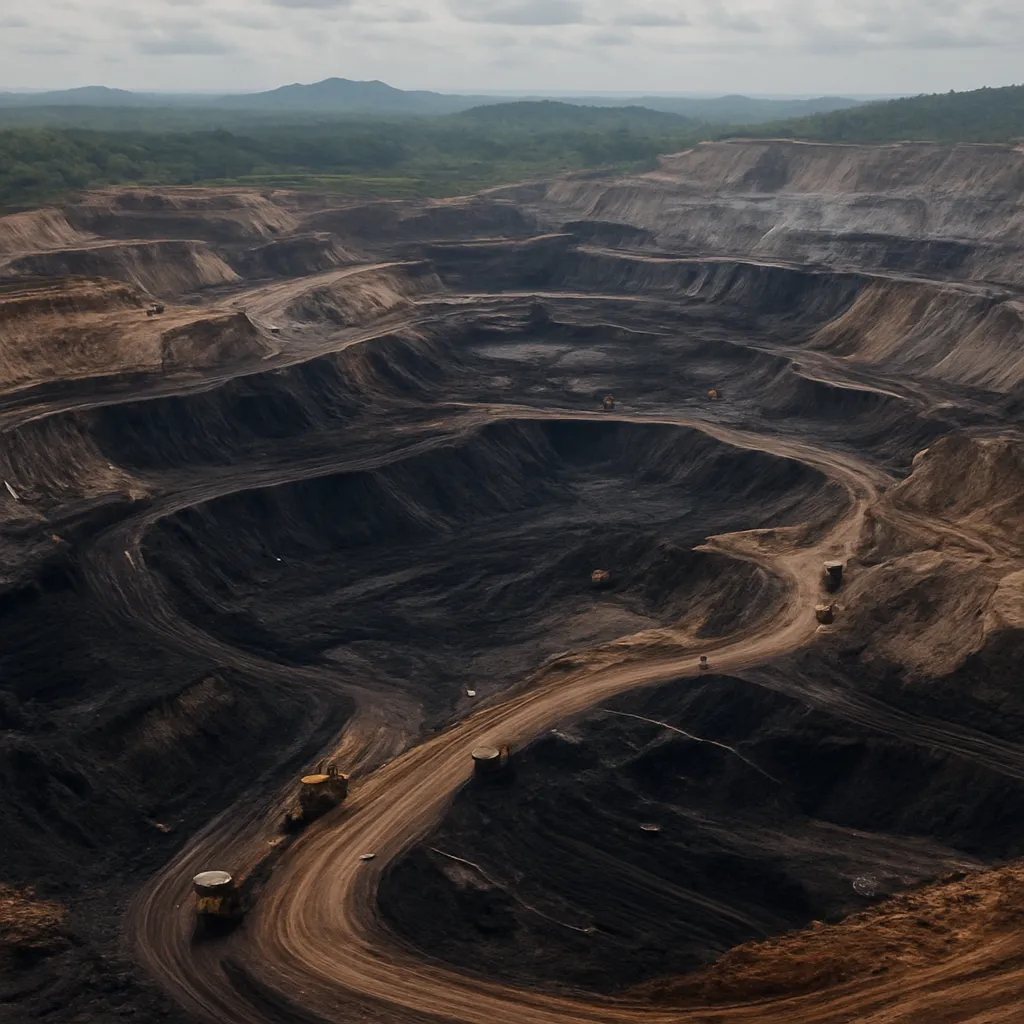
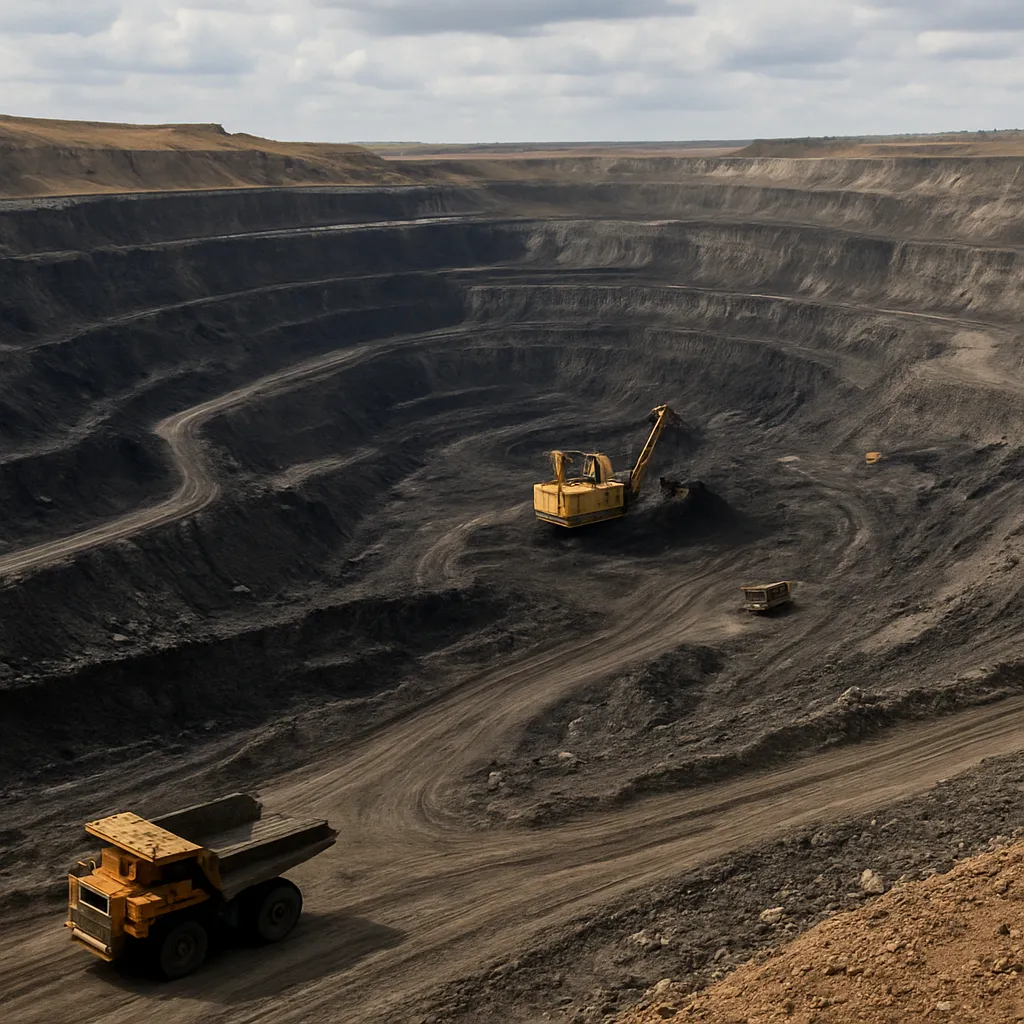
The North Antelope Rochelle Mine, located in the heart of Wyoming’s Powder River Basin, stands as one of the most prominent coal mining operations in the world. Combining vast reserves, high annual production volumes and an outsized role in the United States’ electricity fuel mix, the mine illustrates both the historical centrality and the contemporary challenges of coal in a changing energy landscape. This article examines the mine’s location and geology, operational characteristics, economic and industrial significance, environmental and social implications, and prospects for the future.
Location, Geology and Coal Characteristics
Geographic setting: The North Antelope Rochelle Mine is situated in northeastern Wyoming, within the Powder River Basin, one of the largest coal-producing regions in the United States. The mine property lies near towns such as Gillette and Wright and spans a large contiguous area in Campbell and Converse counties. The Basin’s broad, relatively flat expanses host thick, near-surface coal seams that have been economically attractive for large-scale surface mining.
Geology and seam characteristics: Coal in the Powder River Basin is predominantly sub-bituminous. Beds mined at North Antelope Rochelle are typically low in sulfur and relatively low in energy content compared with bituminous coals from the Appalachian Basin. Typical as-received heating values for Powder River Basin coals range in the lower thousands of Btu per pound (commonly around 8,000–9,000 Btu/lb), with moisture and volatile content higher than harder coals. The favorable element of these seams is their low sulfur concentration (often well under 1%), which historically made PRB coal attractive to utilities seeking to meet emissions regulations without expensive flue gas desulfurization retrofits.
Scale of reserves: The area hosts enormous tonnages of relatively shallow coal. While exact values change with new assessments and mining plans, recoverable reserves at and around the North Antelope Rochelle complex are measured in the multiple billions of tons, making it one of the largest single-site coal reserves in the world. This scale has allowed long-term, continuous operations and very high yearly production volumes.
History of the Mine and Ownership
The North Antelope and Rochelle areas historically comprised separate mining operations that were eventually merged in practice into one major mining complex due to contiguous leasehold and seam continuity. Over the decades the property has been operated by large coal companies; in recent decades the operation has been associated with Peabody Energy, which managed significant activities in the Powder River Basin. The mine rose to exceptional prominence in the late 20th and early 21st centuries as demand for low-sulfur PRB coal expanded across the U.S. power sector.
At its peak operating scale, North Antelope Rochelle was widely reported as the largest coal mine in the world by annual production. Its prominence also reflected decades of investment in large-scale surface mining equipment, rail logistics and reclamation programs.
Production, Logistics and Technology
Mining methods and equipment
North Antelope Rochelle is a large-scale open-pit surface mine (strip mine). Operations employ conventional surface mining methods: removal of overburden (soil and rock above the coal seam), extraction of coal using large electric shovels and hydraulic excavators, and haul truck transport to crushers and stacking conveyors. The operation has used some of the world’s largest mining equipment and fleets of heavy-duty haul trucks and shovels to move extraordinary volumes of earth and coal.
Because of the shallow depth and lateral continuity of the seams, strip mining at very large scale is the economical extraction method. Coal is often loaded onto unit trains—dedicated long trains carrying coal cars—and shipped to power plants across the country.
Transportation and logistics
- Railroads: Most coal from North Antelope Rochelle moves by rail, using unit trains that can exceed 100 cars. Major rail carriers such as BNSF Railway historically handled large volumes from PRB mines, connecting the basin to power plants in the Midwest, South, and West.
- Supply chain scale: The mine’s output has been large enough to require continuous coordination among mining, rail scheduling, utility purchases and export possibilities when market conditions allow.
Production volumes and workforce
Over multiple years the mine has reported annual outputs among the highest of any coal operation worldwide. At its historical peak during the late 20th and early 21st centuries, annual production often exceeded 100 million short tons in certain years. Production has fluctuated with market demand, fuel-switching trends, natural gas competition, and environmental policy changes; in more recent years annual output has varied substantially from these peak levels. Employment at the mine has been significant, ranging into the low thousands at peak activity but varying with mechanization, production scale and market-driven workforce adjustments. The operation has also relied on contract labor and substantial local supply chains.
Economic and Industrial Importance
The economic and industrial significance of North Antelope Rochelle extends beyond its immediate payroll and purchasing. Several important themes highlight its role:
- Domestic electricity generation: Coal from the mine has supplied numerous electricity generating stations across the United States. Powder River Basin coal’s cost and low sulfur content made it a favored choice for many utilities during decades when coal dominated baseload generation.
- Unit cost advantage: PRB coal, including that from North Antelope Rochelle, has historically offered a low delivered cost per million Btu compared with many eastern coals. This price advantage stems from large-scale bulk mining, favorable seam geometry, and efficient rail logistics, helping PRB coal capture a substantial share of the U.S. coal market in the early 21st century.
- Regional economic impact: The mine contributes to local and state economies via employment, royalties and taxes, as well as through demand for services such as equipment maintenance, trucking, and construction. Revenues and royalties from coal production have been important to Wyoming’s state and county budgets.
- Market influence: As one of the largest single sources of coal by tonnage, production levels at North Antelope Rochelle have had a measurable effect on national supply balances and price behavior, particularly for PRB coal markets.
Statistical Overview and Notable Figures
Because production and financial indicators change year to year, exact numbers vary based on the reporting year. Key statistical themes and illustrative figures include:
- Annual production: Historically, the mine’s annual output has been among the world’s largest for a single mine. Peak-year volumes surpassed 100 million short tons in several years, while other years—especially during multi-year declines in domestic coal demand—saw lower production on the order of tens of millions of tons.
- Reserves: Recoverable reserves at the combined North Antelope Rochelle complex are measured in the multiple billions of short tons, supporting the mine’s long-term operation profile.
- Market share: At its height, coal from the mine represented a significant single-source portion of U.S. coal production and a substantial fraction of Powder River Basin output. Powder River Basin coal itself has provided a large portion of all U.S. coal mined annually in recent decades, at times accounting for more than a third of total U.S. coal production.
- Employment: Direct employment has historically been in the hundreds to low thousands on-site, with broad indirect employment across service and supply sectors in the region.
Note: exact year-by-year metrics should be consulted from company reports (Peabody Energy and its successors), U.S. Energy Information Administration (EIA) data, and state mining agency reports for up-to-date figures. These sources provide verified monthly and annual production, employment, reserve estimates and financial metrics.
Environmental, Land and Social Considerations
Large-scale surface mining creates visible and measurable environmental impacts, and North Antelope Rochelle has not been an exception. Key issues and mitigation approaches include:
- Land disturbance and reclamation: Strip mining removes overburden, altering topography and vegetation. U.S. regulation requires progressive reclamation of disturbed areas. Operators implement backfilling, grading and revegetation to restore land for wildlife habitat, grazing or other post-mining uses.
- Water: Mining impacts on surface and groundwater are monitored and regulated. Water handling, sediment control, and mitigation of any impacts to aquifers are part of permitted operations.
- Methane and greenhouse gases: Coal mining releases methane, a potent greenhouse gas. Large surface mines can also contribute substantial CO2 emissions indirectly when their coal is combusted for power generation. Some operations implement methane capture and monitoring programs to reduce fugitive emissions.
- Air quality and particulates: Dust control measures—such as water sprays, vegetative buffers and paved roads—are used to minimize particulate emissions from active areas and haul roads.
- Community and social effects: While the mine provides jobs and revenues, it can also create boom-bust economic cycles in nearby communities tied to commodity prices. Workforce housing, local services, and infrastructure are affected by changing production levels.
Reclamation, Biodiversity and Post-Mining Land Use
Modern surface mining in the U.S. is governed by reclamation standards designed to return land to a useful post-mining condition. For North Antelope Rochelle, reclamation efforts have included reshaping landforms, replacing topsoil, reestablishing native grasses and shrubs, and rehabilitating wildlife habitat. Reclaimed areas are often used for grazing, wildlife habitat or, less commonly, industrial or recreational purposes. The success of reclamation varies by site and is monitored by state agencies.
Challenges and the Path Ahead
The mine operates within a shifting macro energy and regulatory environment. Several dynamics shape its near- and mid-term prospects:
- Competition from natural gas and renewables: The rise of inexpensive natural gas (from shale production) and rapid cost declines in wind and solar have reduced market demand for coal in many regions. Utilities have retired coal-fired plants or shifted to gas and renewables, affecting coal demand.
- Regulatory and environmental pressures: Climate policy, emissions standards, and investor pressure on carbon risk influence coal investment and consumption patterns.
- Logistics and markets: Rail capacity, plant retirements, and export market opportunities influence shipment volumes. Exporting PRB coal is logistically more challenging due to distance to ports, affecting the mine’s exposure to international markets.
- Operational adaptability: Large mines with low production costs have some resilience to low price environments, but extended declines can prompt scaling back of operations, workforce reductions, or shifts in investment strategy.
Despite these pressures, sizeable reserves and historically low production costs mean that operations like North Antelope Rochelle remain critical to certain segments of the power market and to regional economies for as long as competitive demand persists.
Interesting Facts and Notable Features
- The mine has been described as one of the world’s largest single coal-producing complexes, both by reserves and by annual tonnage in its peak years.
- Coal from the Powder River Basin, including that mined at this complex, played a central role in enabling utilities to comply with sulfur dioxide emission limits without adding flue-gas desulfurization equipment to older plants.
- The scale of equipment and logistics—monster shovels, fleets of haul trucks, and unit-train operations—makes the mine an example of modern, industrial-scale surface mining.
- Local economic multipliers include supplier networks, rail handling employment, and royalty streams to landowners and state governments.
Concluding Perspective
The North Antelope Rochelle Mine exemplifies the economic and technical dimensions of large-scale coal mining in the United States: vast reserves, historically massive production volumes, and a pivotal role in powering American industry and homes for decades. At the same time, it is at the intersection of evolving market forces, environmental policy, and social expectations about energy and land use. Its future trajectory will reflect broader trends in energy demand, policy choices addressing climate change, and the economic competitiveness of coal versus other fuels and technologies.
For readers seeking the most current, year-specific production, employment and reserve numbers, official sources such as the U.S. Energy Information Administration (EIA), Wyoming state mineral agencies and company reports from the mine operator provide authoritative, updated statistics and filings.