The Nigahi mine is one of the notable coal-producing locations in the central Indian coal belt. Located within the broader Singrauli coalfield, Nigahi plays an important role in regional coal supply chains, powering thermal plants and supporting industries in the surrounding districts. This article provides a comprehensive overview of the Nigahi operation: its location and geology, the type and quality of the coal mined, operational and economic details, social and environmental aspects, and its role in India’s energy landscape and local economy.
Location and geological background
Nigahi is situated in the Singrauli coalfield region of central India, a productive and strategically important coal-bearing area. The coalfield spans parts of Madhya Pradesh and Uttar Pradesh and is within reach of a cluster of large thermal power stations and heavy industries. The mine is geographically embedded in a landscape of rugged ridges and plateaus, with coal seams that are part of the ancient Gondwana sequence, formed during the late Paleozoic–early Mesozoic eras.
Geological characteristics
The coal seams at Nigahi belong to the Gondwana formations typical of central India. These seams are generally laterally extensive, but vary in thickness and depth. Coal in the Singrauli area is often characterized by higher ash and moisture content compared with the higher-grade coking coals found elsewhere, which makes it primarily suited for combustion in thermal power plants rather than metallurgical applications. The strata include multiple seams interbedded with sandstones, shales and occasional bands of clay, making mining operations dependent on seam geometry and overburden characteristics.
Accessibility and infrastructure
One advantage of Nigahi’s location is its proximity to major electricity consumers and large thermal stations, reducing haulage distances and logistics costs. Road and rail links developed to service the Singrauli belt allow coal movement to nearby powerhouses. The presence of power plants, railheads and coal handling facilities has encouraged the growth of ancillary infrastructure such as workshops, stores, and housing for workers in the region.
Mining methods, operations and technology
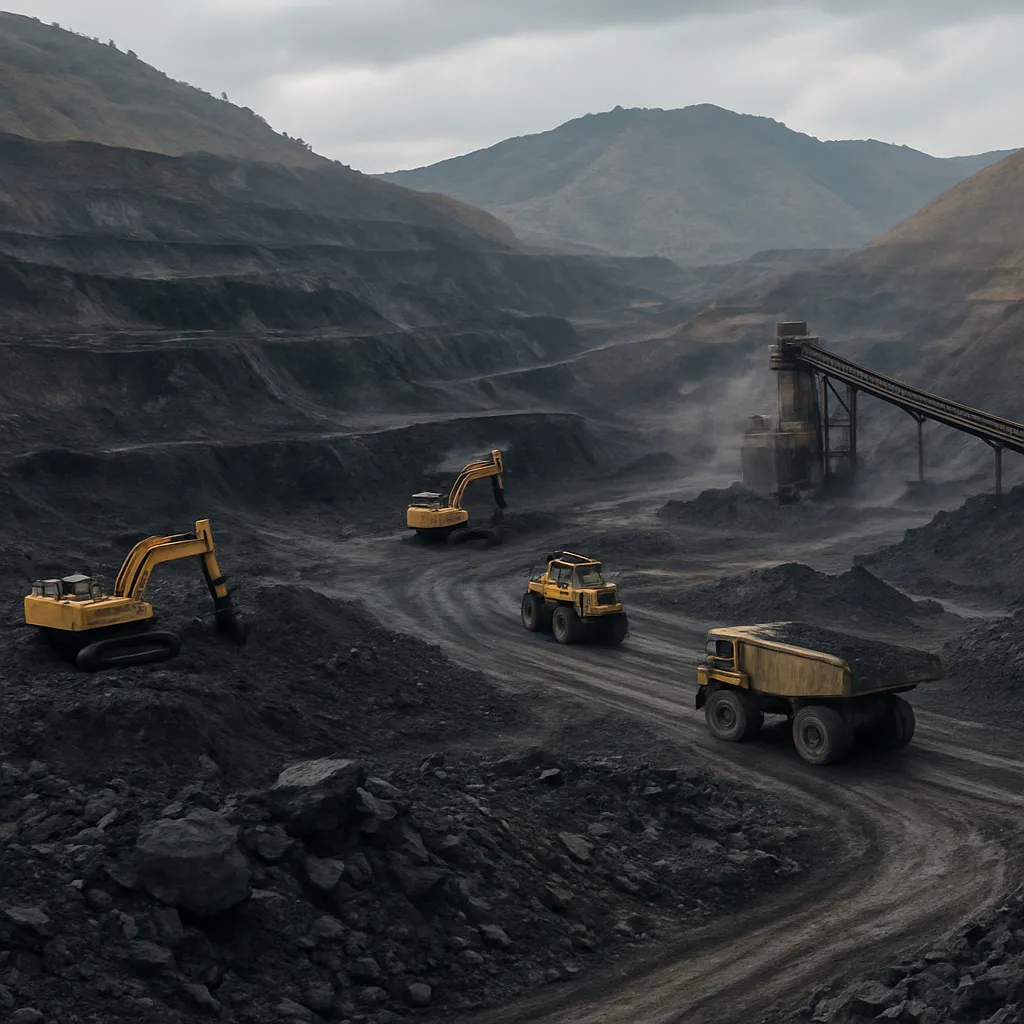
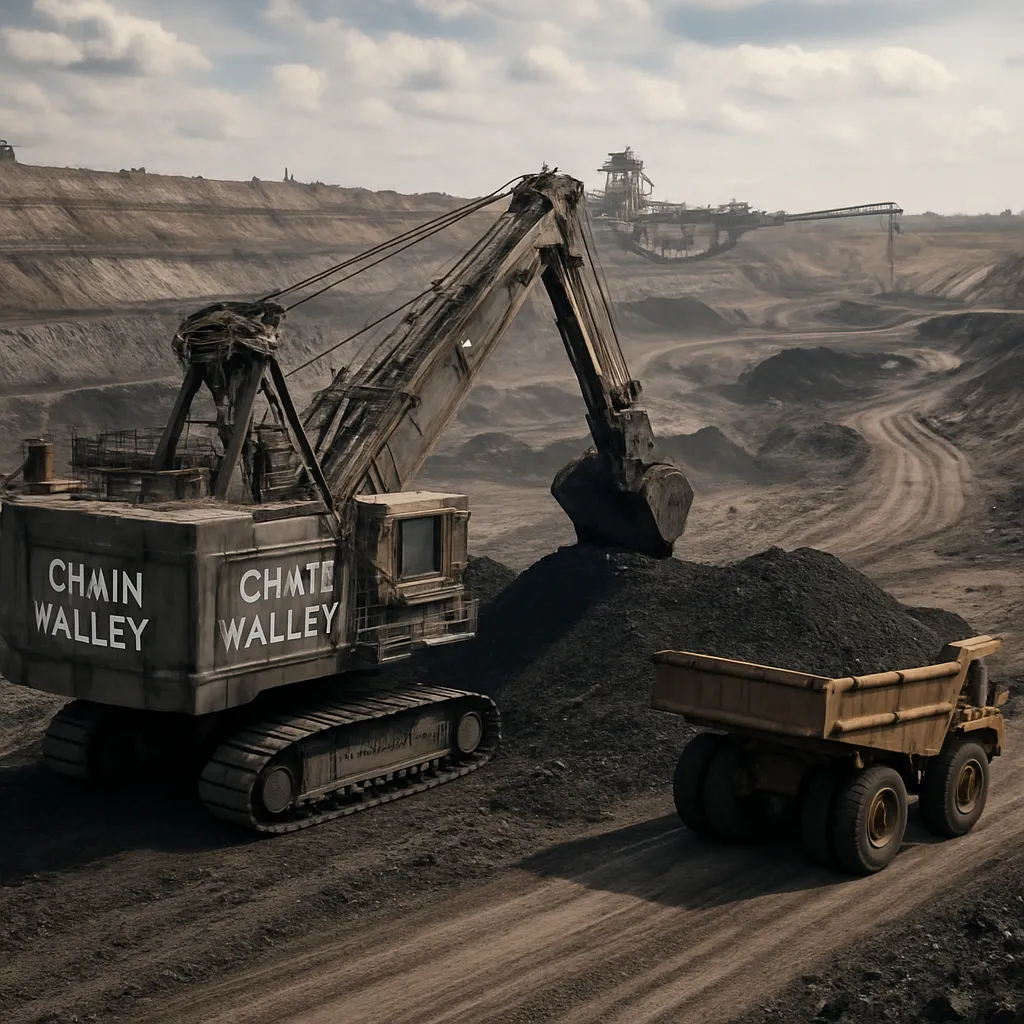
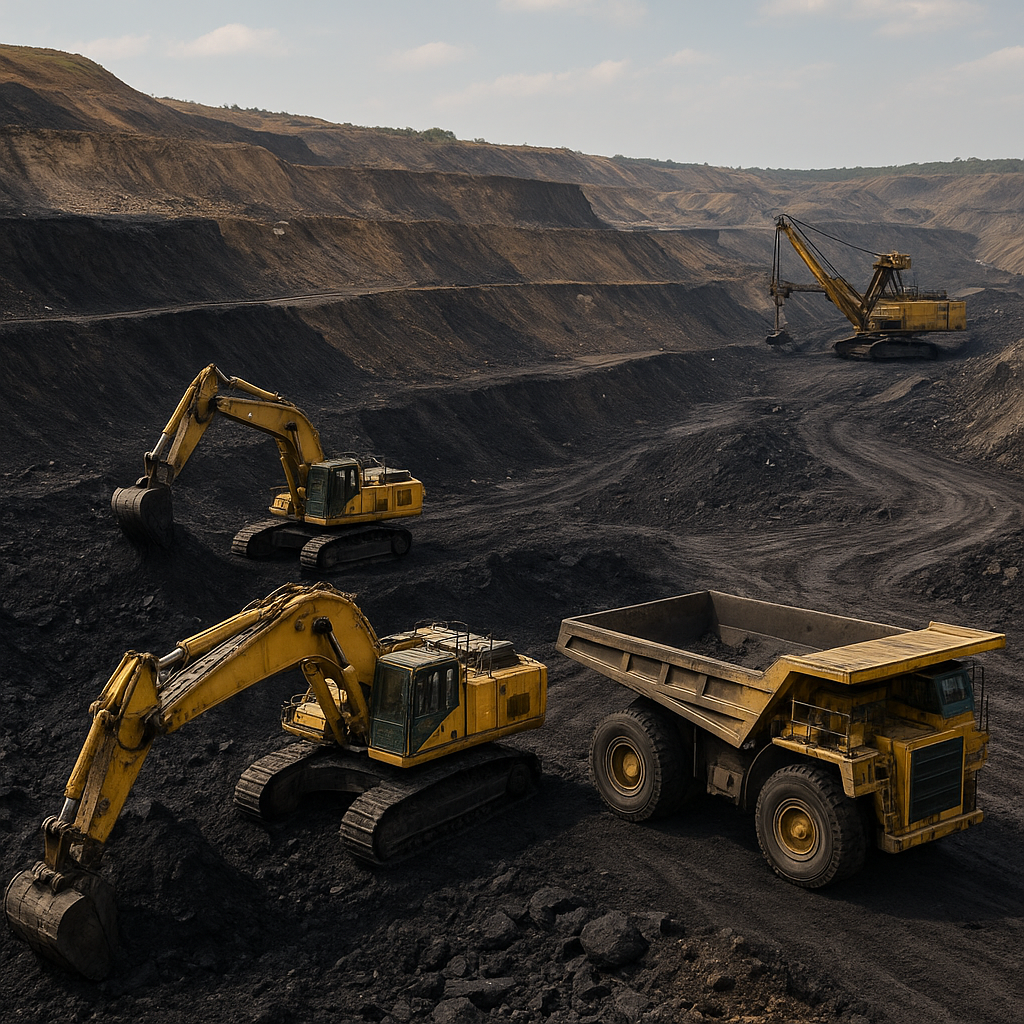
Mining at Nigahi is primarily through large-scale opencast methods, although local stratigraphy may require complementary underground workings or sections of mechanized underground extraction where opencast is not feasible. Opencast mining is favored because of seam depth and economics: it offers higher extraction rates and simpler mechanization, albeit with greater surface disturbance.
Equipment and mechanization
- Typical heavy equipment used includes draglines, rope shovels, hydraulic shovels, large capacity dump trucks and dozers.
- Mechanized drilling and blasting are common in overburden removal, while coal extraction uses shovels and trucks or continuous miners where applicable.
- Coal handling and preparation plants (washery) are often employed to reduce ash and improve calorific value before dispatch to consumers.
Modernization efforts in many Indian coalfields have emphasized increased mechanization, deployment of high-capacity equipment, adoption of digital mine management tools, and safety systems for both surface and underground sections. Nigahi, as part of the Singrauli cluster, has seen investments aimed at increasing efficiency and reducing unit production costs, though the degree of modernization varies with project age and financing.
Coal quality, types and end uses
Coal from Nigahi is typically non-coking, thermal-grade coal used primarily for electricity generation. Its calorific value generally falls in the medium to low grade range compared to premium metallurgical coal. Important characteristics include higher ash content and variable moisture, which affect transport economics and combustion performance.
Quality parameters (typical)
- Calorific value: commonly in the range of approximately 2,500–4,200 kcal/kg (gross, as-received), depending on seam and washing.
- Ash content: often high relative to premium coals; values may range from ~25% to 40% or higher in raw coal.
- Moisture and volatile matter: significant moisture and volatiles influence combustion behavior and handling.
Because of these properties, coal from Nigahi is primarily supplied to nearby thermal power plants where it is burnt for electricity generation. In many cases, coal is shipped to washery facilities to lower ash content and improve calorific value before feeding it to boilers; washed coal is increasingly demanded by modern thermal stations to improve plant efficiency and reduce emissions.
Production, economics and statistical context
Nigahi is part of a high-output coal belt that contributes significantly to the overall coal production of India. While production statistics for individual mines can vary year-on-year, Singrauli-area mines collectively account for a substantial share of the state and national output. Nigahi’s production capacity and actual annual production have been influenced by mine life, reserves, mechanization and regulatory clearances.
Production capacity and reserves (estimates)
- Reserves: Nigahi sits over sizable proven and inferred reserves typical of the Singrauli block — often estimated in the tens to hundreds of millions of tonnes for larger contiguous blocks. Exact reserve figures depend on the latest geological surveys and reporting standards.
- Nominal or target production: Many mines in the area operate in the range of several million tonnes per annum. Nigahi’s normative capacity has been reported in various public sources as being in the multi-million tonnes per year band, though specific figures should be confirmed from the operator’s latest annual reports.
The mine’s output supports multiple stakeholders: central and state-owned power plants, industrial consumers, and the local economy through employment and service demand. Coal revenue contributes to both the operating company’s financials and to government receipts through royalties and taxes.
Economic significance
- Energy security: Coal from Nigahi helps meet regional power demand and supports India’s grid stability, particularly for baseload generation.
- Local employment and livelihoods: The mine and its supply chain provide direct and indirect employment, supporting thousands of workers including skilled staff and contract labor.
- Revenue and taxes: Coal extraction generates royalties, lease payments and taxes that benefit state and central governments.
Beyond direct monetary benefits, coal production stimulates related sectors — transport, equipment supply, construction, and services. However, this economic value must be balanced against environmental and social costs associated with large-scale surface mining.
Social and community impact
The coal mining sector in the Singrauli region, including Nigahi, has mixed social outcomes. On one hand, mining activity has led to employment opportunities, infrastructure development, and increased access to services for nearby communities. On the other hand, mining-led displacement, loss of traditional livelihoods (agriculture, forest-based resources) and issues of health and pollution have been recurring concerns.
Resettlement and livelihood
Large opencast projects typically require land acquisition and rehabilitation of displaced families. Resettlement and rehabilitation (R&R) programs are legally mandated and practiced to varying degrees of success, involving provision of alternative land, housing, financial compensation and livelihood support. Effective R&R requires sustained follow-up, skills training and social investment to ensure long-term community welfare.
Employment and skills
Employment at Nigahi includes permanent employees, contract workers, and a wider community engaged through indirect employment. Skill development programs, vocational training and local hiring policies can enhance socioeconomic benefits, though contractualization of labor remains a challenge in ensuring stable livelihoods and worker protections.
Environmental issues and mitigation
Environmental impacts associated with opencast mining at Nigahi and similar sites include land degradation, deforestation, dust and particulate emissions, groundwater table changes, and coal waste (ash and overburden). Managing these impacts is integral to mine planning and operations, and involves both regulatory compliance and corporate responsibility initiatives.
Key environmental challenges
- Surface disturbance and loss of topsoil and vegetation.
- Airborne dust and particulate pollution affecting local air quality.
- Water pollution and changes to local hydrology due to runoff and discharge.
- Generation and management of overburden and coal refuse.
Mitigation and rehabilitation measures
Mining companies and regulators apply a range of mitigation strategies:
- Progressive reclamation and reforestation of backfilled areas to restore land use and ecological function.
- Installation of dust suppression systems, green belts, and air quality monitoring.
- Construction of settling ponds and treatment systems to manage mine water and reduce contamination of downstream waterbodies.
- Operation of washeries and coal beneficiation units to improve fuel quality and reduce ash transported to consumers.
- Implementation of modern waste management practices for ash disposal, including engineered ash ponds or conversion to concrete and construction uses where feasible.
Regulatory oversight by central and state environmental agencies, along with environmental clearances and public interest litigation in some cases, shapes how mitigation is implemented. Corporate social responsibility (CSR) programs also channel funds into local health, education and infrastructure projects.
Role in the energy sector and industrial ecosystem
Nigahi, as part of the Singrauli coal cluster, is integrated into a regional industrial ecosystem dominated by thermal power generation. The proximity of mines to large power plants reduces logistical costs and ensures relatively stable fuel supply for baseload electricity. This linkage reinforces the strategic importance of the mine for regional energy planning and grid reliability.
Downstream beneficiaries
- Large thermal power stations that require steady coal supplies for uninterrupted generation.
- Cement and other energy-intensive industries in the region that use coal or beneficiated coal products.
- Railways and coal logistics companies that manage mine-to-power coal movement.
Given India’s energy mix, coal’s role remains significant despite increasing renewable capacity. Mines like Nigahi continue to be crucial over the medium term for meeting industrial and residential electricity demand, though policy emphasis on emissions reduction and cleaner technologies is encouraging complementary investments in coal washing, flue gas cleaning and more efficient combustion technologies.
Challenges, modernization and future outlook
The Nigahi mine faces a range of operational, environmental and market challenges that will influence its future trajectory. At the same time, opportunities for modernization and improved sustainability exist.
Operational challenges
- Managing high ash and moisture content in raw coal, which affects thermal efficiency and transport economics.
- Balancing production targets with environmental and social compliance requirements.
- Maintaining mining safety and reducing occupational hazards in a high-volume opencast environment.
Modernization opportunities
- Investment in mechanization and digital mine management to increase productivity and reduce unit costs.
- Expansion or optimization of washery capacity to supply higher-quality coal to modern thermal plants.
- Adoption of emission control technologies in recipient power plants (e.g., flue gas desulfurization, electrostatic precipitators) to reduce air pollution.
- Enhanced land reclamation, water management and community development programs to improve environmental and social outcomes.
From a strategic perspective, Nigahi will likely remain an important source of thermal coal for the next decade and beyond, subject to national energy policy choices, investment in cleaner coal technologies, and the pace of renewable energy adoption. Efforts to improve coal quality through washing, and to reduce emissions at the point of combustion, will influence the mine’s role in a decarbonizing energy system.
Interesting facts and lesser-known aspects
- Regional coal hub: Nigahi is part of one of India’s most concentrated coal-power-industrial clusters; the Singrauli belt includes several major power plants and multiple mines operating in proximity.
- Technological mix: Many operations combine classic large-dragline opencast methods with modern hydraulic equipment, reflecting a hybrid approach to scale and precision.
- Community initiatives: Operators in the area have funded local schools, health camps and drinking water projects as part of CSR obligations, though the scale and impact vary.
- Environmental monitoring: Given regulatory focus, mines like Nigahi often have ongoing environmental monitoring programs for air, water and noise that feed into compliance reports.
Summary
Nigahi is a representative and strategically important coal mine within the Singrauli coalfield of central India. Producing primarily thermal-grade coal, the mine supports nearby power plants, provides local employment, and contributes to regional economic activity. Its coal’s relatively high ash content and moderate calorific value necessitate beneficiation and careful handling to maximize efficiency in power generation. The mine’s operations reflect broader trends in the Indian coal sector: large-scale opencast extraction, gradual modernization, and increasing attention to environmental mitigation and social responsibility. Looking ahead, Nigahi’s role will be shaped by investment in washery and emission control technologies, regulatory developments, and national energy strategy emphasizing a balance between energy security and environmental sustainability.